




Designs That Shaped Childhoods Across the MENA Region
How parks playgrounds and public spaces shaped childhoods across the MENA region through design and community.

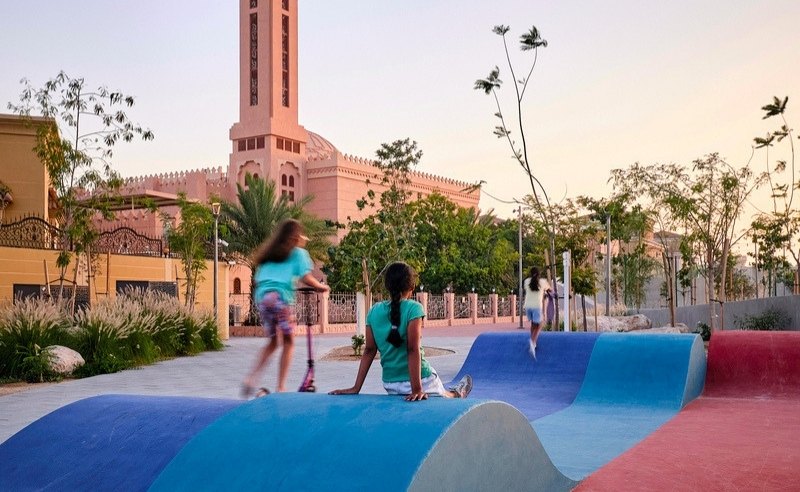
Across the Middle East and North Africa, childhood has long been connected to shared outdoor spaces. Children played in courtyards, neighbourhood streets, public squares, and small local gardens that were closely tied to everyday life. As cities expanded and temperatures became harder to manage, many play spaces shifted indoors into malls and private entertainment centres.
Recently, however, architects and designers across the region have started returning to outdoor play, creating parks and playgrounds that respond to climate, community needs, accessibility, and education. Some projects focus on cooling and biodiversity, while others create safe spaces for refugee children or design environments that support different physical abilities.
Together, these projects show how playgrounds and parks can shape childhood memories while also reflecting the social and environmental conditions around them.
Cultural Park for Children, Cairo, Egypt
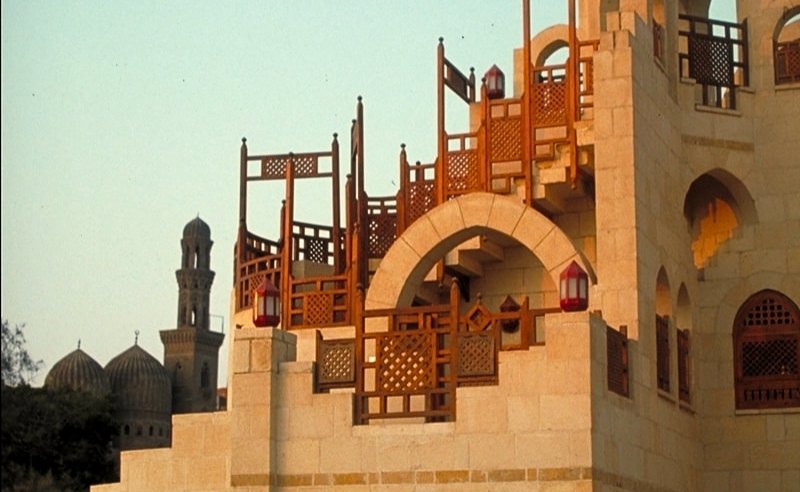
Designed by architect Dr Abdelhalim Ibrahim in 1989, Cairo’s Cultural Park for Children was created in Sayeda Zeinab as a public space connected closely to the surrounding neighbourhood. Instead of building strong walls around the park, the project used openings, small cultural spaces, and community facilities to encourage people to move through the site freely. Existing trees were kept as part of the design, while the park added a library, theatre, gardens and shaded walkways. Local craftsmen and materials were used during construction, and residents took part in building the park through festivals and public events. The project treated play as part of daily community life rather than separating it behind fences.
Playgrounds for Refugee Children, Bar Elias, Lebanon
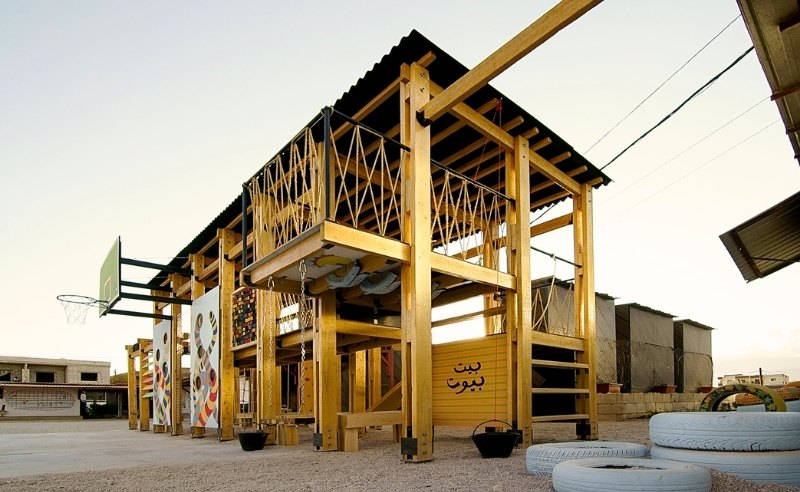
Created by CatalyticAction, these playgrounds were designed for Syrian refugee children living in informal settlements in Lebanon’s Bekaa Valley. The project focused on creating safe places where children could play, rest, and feel comfortable within difficult living conditions. Rather than designing the playgrounds for the children, the architects involved them directly in drawing ideas, making decisions, and helping build the structures. The playgrounds were built using simple modular timber systems along with reused materials such as tyres, ropes, and crates, making them easy to move or rebuild if needed. The design process itself became part of the children’s experience, giving them a sense of ownership over the space.
Silk Tree Park, Tehran, Iran
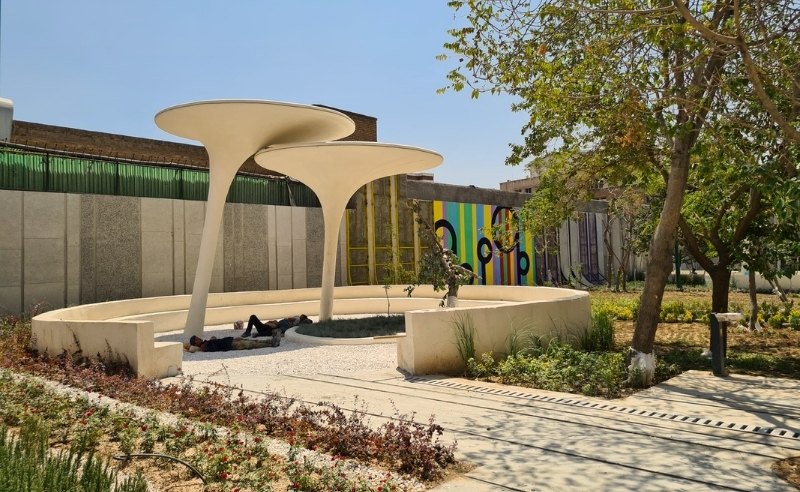
Designed by Ashrafi & Zad, Silk Tree Park was created beside Tehran’s Sports Federation for the Deaf and Hard of Hearing. The park was designed specifically to support Deaf and hard-of-hearing users through careful spatial planning. Circular seating areas allow people to see each other clearly while communicating through sign language, while planting and pathways were arranged to avoid sudden approaches from behind. Shade structures were also designed to reduce harsh light and make facial expressions easier to read. The park combines sports, cycling, skating and gathering spaces within one accessible flat surface, creating an environment where inclusion is built directly into the layout.
Al Fay Park, Abu Dhabi, UAE
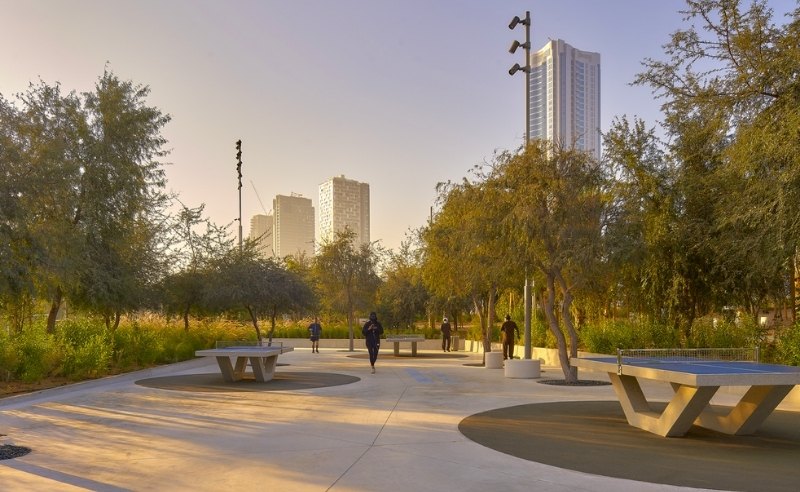
Designed by Danish landscape studio SLA, Al Fay Park explores how public parks in Gulf cities can respond better to climate conditions. Located in downtown Abu Dhabi, the park uses native trees, grasses, and plants to create shaded areas and naturally cooler outdoor spaces. Sloped entrances help guide cooler air into the site, while dense planting reduces heat and sand movement. Alongside sports courts and playgrounds, the park includes walking routes and quiet seating areas placed within the landscape. The design encourages people to spend more time outdoors by making the environment more comfortable throughout the year.
Qatar TotalEnergies Playground, Doha, Qatar
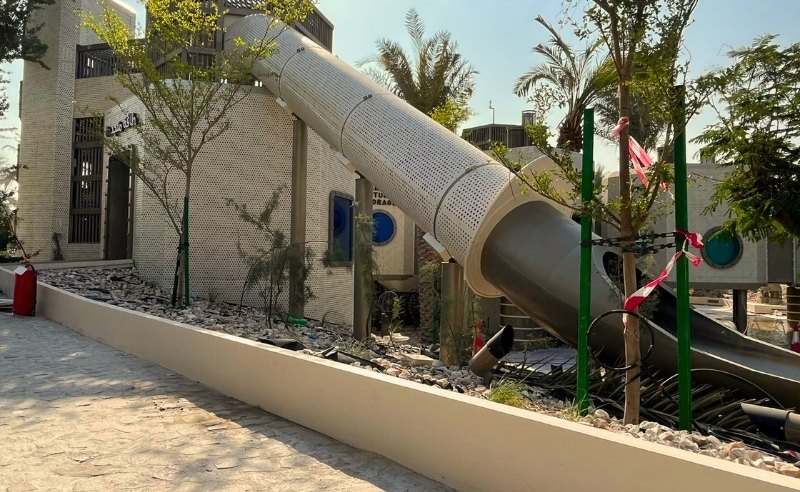
Located at the National Museum of Qatar, the Qatar TotalEnergies Playground turns learning about energy into a physical play experience. The playground is divided into fifteen zones that explain different stages of energy production, from oil extraction to renewable energy systems. Children move through the site by climbing, pumping water, turning levers, crawling through structures and interacting with mechanical elements that explain how energy works. Solar panels and wind turbines are also integrated into the playground itself. Instead of separating education from play, the design combines both into one continuous journey through the site.
104 Neighbourhood Parks, Abu Dhabi, UAE
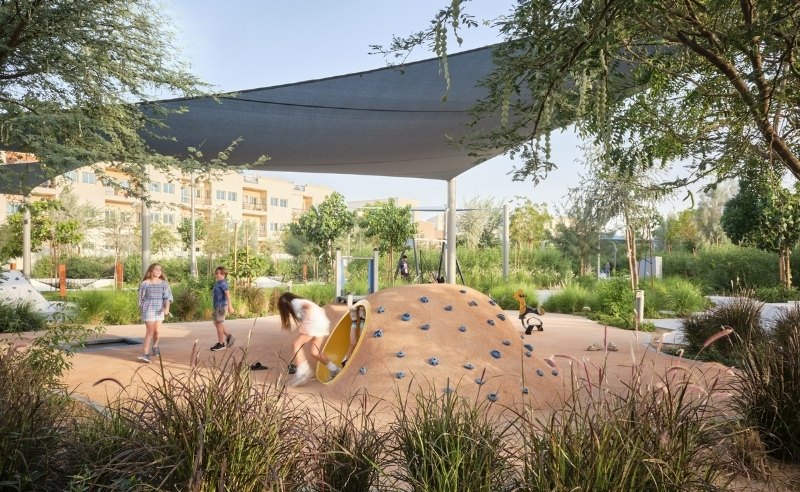
Also designed by SLA, this project introduced 104 public parks across different Abu Dhabi neighbourhoods. Built on previously empty land, the parks include shaded playgrounds, sports courts, walking paths, picnic areas, and planting designed specifically for the local climate. Native trees and drought-resistant plants help cool the spaces while reducing water use. Each park was designed according to the needs of its surrounding community, bringing outdoor play and gathering spaces closer to residential areas. Together, the parks show how small local public spaces can become part of everyday life across the city.
- Previous Article SceneNoise x Amsterdam Dance Event Present CROSSFADE: Egypt
- Next Article Saudi Film Rebate Increased to Up to 60% for Productions