





Casa La Femme Turns Egyptian Food Into a West Village Affair
Casa La Femme opened in SoHo in 1989 and later moved to Charles Street in the West Village, where it has spent decades making Egyptian food feel personal and unmistakably public.
Egyptian food is not exactly scarce in New York, but it does, for the most part, tend to keep to itself. Much of the city’s Egyptian restaurant scene is clustered in Astoria’s “Little Egypt,” a stretch of Queens mostly dominated by hookah lounges and halal butcher shops. Casa La Femme, by contrast, sits at 140 Charles Street in the West Village, where it has spent decades making a case for Egyptian dining in a far more theatrical key. In a city that collects global cuisines by the dozen, this one has managed something rarer: longevity, personality, and a founder with a mission. “I wanted to put Egyptian food on the map,” Medhat Ibrahim said to SceneEats. “It’s been really a passion project of mine for 35 years.”
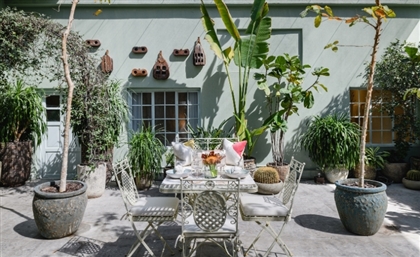
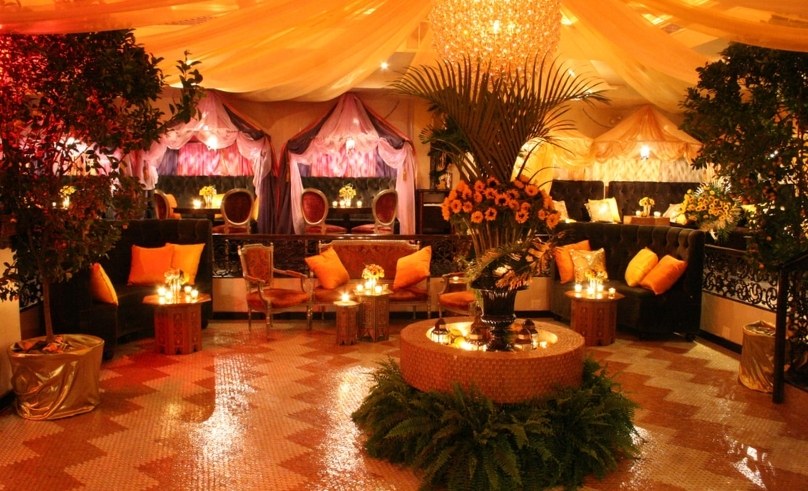
Ibrahim arrived in the United States from Egypt at the young age of 12, studied at NYU, and built an early career in finance before turning toward hospitality, drawn to the unpredictability of it. The restaurant grew out of something more personal than a business plan. Before opening Casa La Femme, he would invite friends over and have his mother cook for them, testing whether the food could resonate outside the home. It did, emphatically. “They didn't want to have to come to my mom's house every single day to be able to have this great food,” he said, recalling the early response. What followed in 1989, with the first location in SoHo, was an attempt to translate that domestic warmth into a public setting, something that could feel, at least in part, like stepping into someone’s home.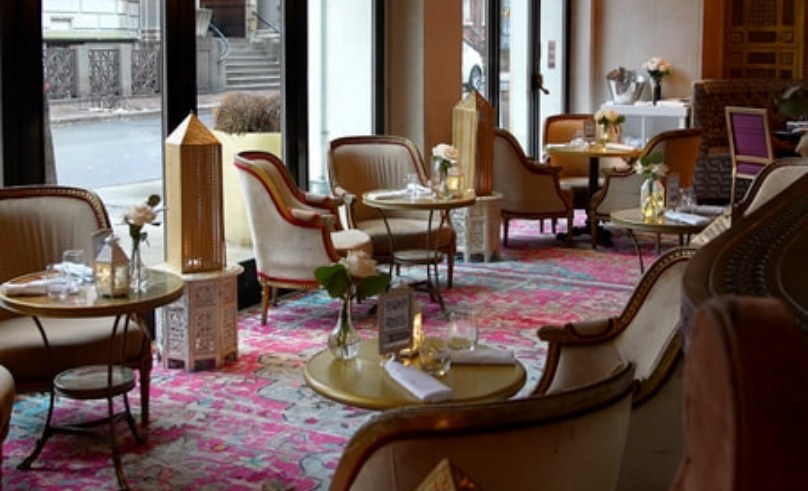 The restaurant has since moved across Manhattan, eventually settling into a large, expansive space in the West Village, where the scale allows for something much more communal-oriented rather than your simple hole in the wall. With this location, the interiors lean comfortably into atmosphere, decorated with palm fronds, low lighting, carved details, and the signature tents that line the perimeter of the space. These are light, diaphanous enclosures that soften the room and create little pockets of privacy. In the center, more open seating takes over, with upholstered chairs and curved booths that are grounded and comfortable against the more theatrical edges of the room.
Ibrahim has long described the restaurant as an escape from the city’s pace, and the language he returns to is telling. “I wanted it to become like a little vacation for New York as a little oasis,” he said.
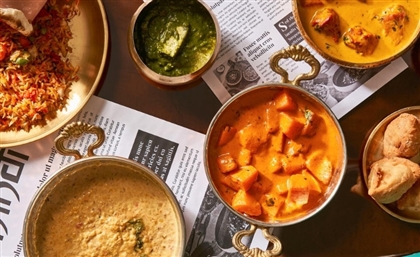
Still, the kitchen remains the anchor. The menu draws heavily from Egyptian staples, particularly dishes associated with northern cities like Alexandria and Port Said, but it also—very actively—fights the current of reinvention that so often defines contemporary dining. “The only way we modernize those dishes and recipes is by how we present them to our guests,” Ibrahim said. What arrives at the table bespeaks that approach. Bread comes out warm with the scent of sesame and oregano, followed by a sequence of classic mezzes—a tangy hummus made with harissa, spicy feta, zabadi made with Greek yogurt, folded with mint and garlic, and good-old gibnah domiaty.
From there, the grill takes over. Yes, there are chicken and shrimp kabobs, but they almost read as supporting acts once the lamb comes into view. The riash (natural grass-fed lamb chops) are also to die for, with natural juices squirting out as soon as knife and meat make contact. By the time dessert lands, you may be wondering if there’s enough room. But take one look at the bassbusa and let it do all the talking. At Casa La Femme, the bassbusa comes in the form of coconut-semolina cupcakes, compact and playful in appearance, while the baklava leans into a fuller composition with coconut, pistachio, almond and walnuts layered generously together.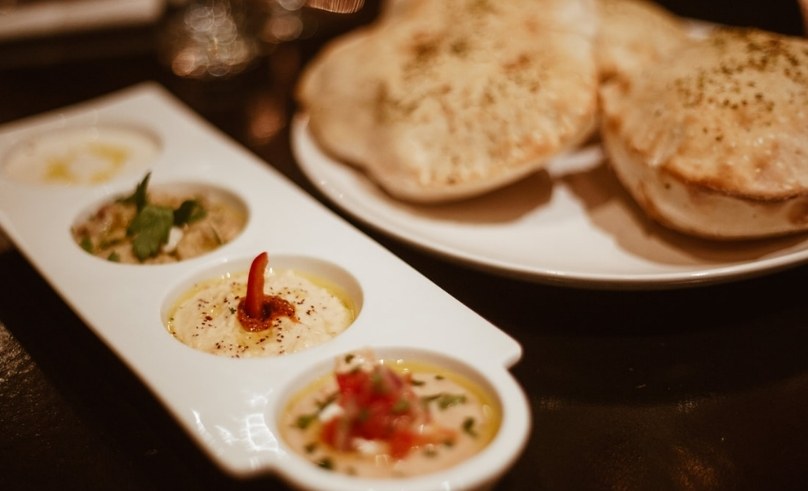 For Ibrahim, both the flavors and the atmosphere are tied directly to how he understands the role of the restaurant. Egyptian cuisine, he argues, has long been overlooked in international dining, even as neighboring food cultures gained visibility. “Sadly enough, we've never really celebrated our cuisine,” he said. That sentiment runs through Casa La Femme as both a motivation and a structure. “Food tells the story better than anyone else,” Ibrahim said. At Casa La Femme, that story unfurls across a large room in the West Village, through a combination of familiar dishes and technique controlled to a tee. For that alone, the result of this venture is something that sits far apart from the rest of New York’s Egyptian dining scene.
- Previous Article SceneNoise x Amsterdam Dance Event Present CROSSFADE: Egypt
- Next Article Saudi Arabia Launches PPP Tender for 50 Public Parks