





Arab World Institute Design Prize Announces 2026 Winners
Arab World Institute announces its 2026 Design Prize winners, recognising projects rooted in craft and regional knowledge.

The Arab World Institute has announced the winners of its 2026 Design Prize, spanning architecture, furniture, contemporary craft and material research. The fourth edition focused on ‘tradition and transmission’ and ‘identities and futures’, looking at how designers are working with regional materials, craft knowledge and cultural references today.
The jury was chaired by Egyptian architect Shahira Fahmy, the first Egyptian to serve as president of the Arab World Institute Design Prize jury. “Design in the Arab world has always carried memory, resourcefulness and a strong understanding of place,” Fahmy says.
Fahmy was joined by Aidan Imanova, AD Middle East’s Head of Editorial Content; Nicolas Bellavance-Lecompte, director and founder of NOMAD design fair; Mette Degn-Christensen, director of Downtown Design; Michèle Maria Chaya, co-founder of MARIAGROUP; Memia Taktak, founder of DZETA agency; Sheikha Reem Al-Thani, Deputy Director General of Al Riwaq and Public Art at Qatar Museums; and Arnaud Morand, Exhibition Curator and Head of Arts & Creative Industries at AFALULA.
The awards were presented at the Institut du Monde Arabe in Paris on September 9th, with an exhibition of the shortlisted and winning projects running from September 10th to 20th.
Aseel Alamoudi, ‘Playformation’
Emerging Talent Award
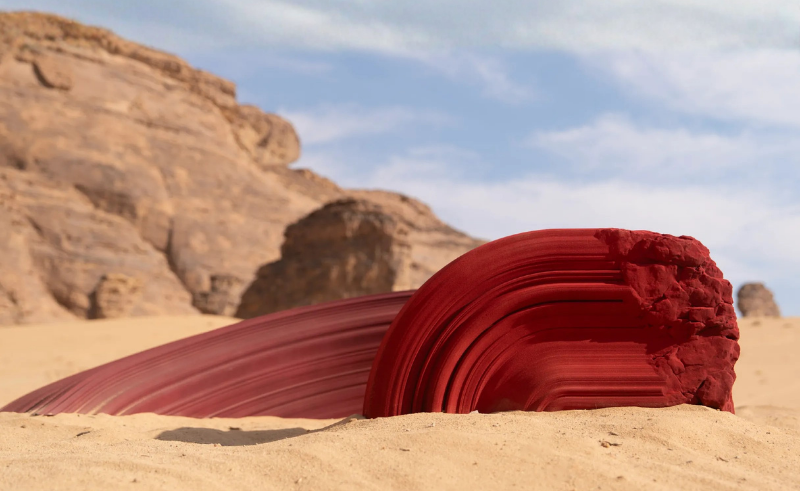
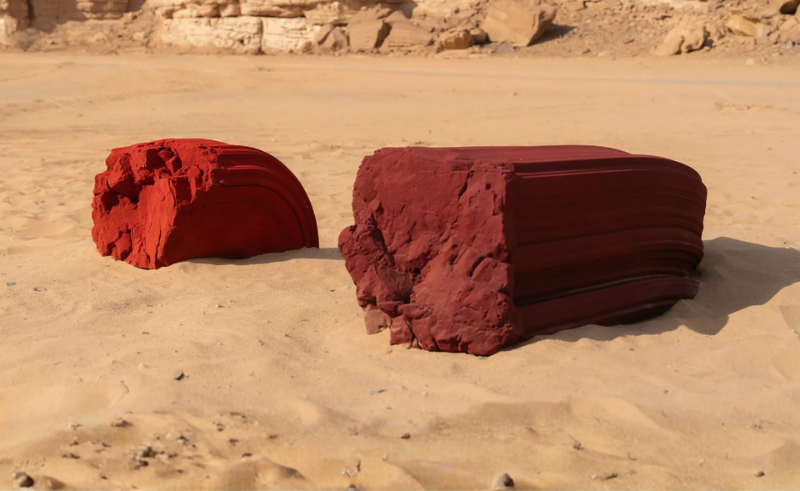
Saudi architect and artist Aseel Alamoudi developed ‘Playformation: The Curve & The Dot’ during a residency in AlUla. The project consists of two 3D-printed seating pieces inspired by the curves and joints of the surrounding rock formations.
The idea came from watching children turn everyday elements into places for play. “I saw two boys climbing a sign and jumping from a planter. It showed me how instinctively children create their own playgrounds,” Alamoudi tells SceneHome. “I wanted something open-ended, where play comes from curiosity.”
The pieces are 3D-printed at full scale using sand, giving them a granular surface that echoes the desert around them. Wind and use will gradually alter the surfaces, allowing the furniture to change over time.
Altin, Yasmine Sfar and Mehdi Kebaier, ‘Our AlUla Trilogy’
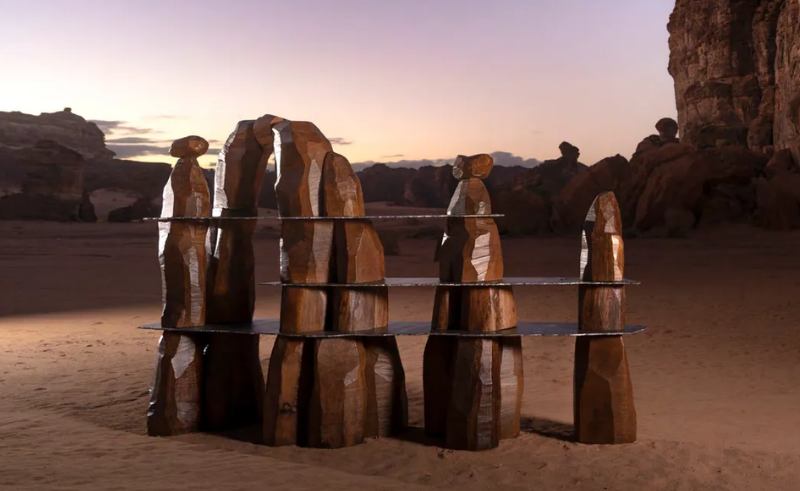
Contemporary Craftsmanship Award
Tunisian studio Altin created ‘Our AlUla Trilogy’ during a residency in AlUla, producing three pieces named ‘Wadi’, ‘Waha’ and ‘Yusr’. The collection uses palm wood, fibrillum and plant fibres, drawing on the importance of the date palm in both Tunisia and Saudi Arabia.
The project also builds on Altin’s experience working with Tunisian artisans. That knowledge informed the making process as the studio explored how familiar craft materials and techniques could be applied within the context of AlUla.
Foukhar Studio, Christopher Ghoussoub, ‘Foukhar Beit Chabeb’
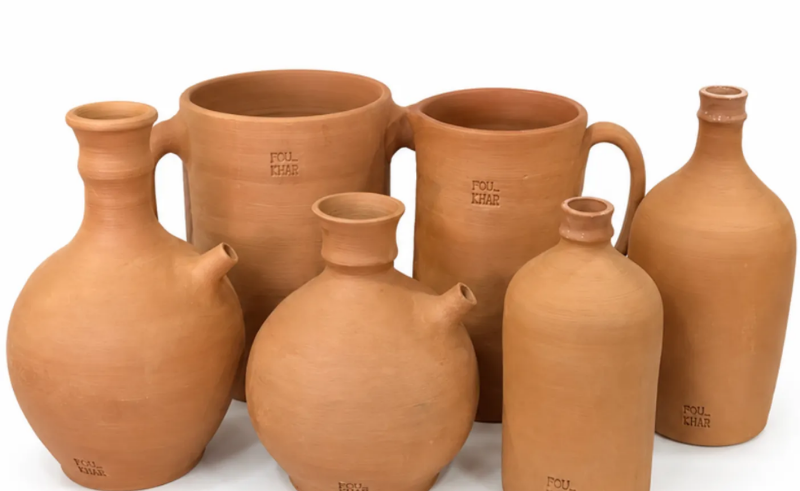
Impact Award, Arab Bank Switzerland
In the Lebanese village of Beit Chabeb, pottery was once a major local craft, with more than 200 potters working in the village. Today, 22-year-old Christopher Ghoussoub is its last active potter.
His project, ‘Foukhar Beit Chabeb’, uses handmade terracotta to keep that knowledge in circulation. Foukhar Studio produces traditional vessels for wine and oil alongside contemporary objects, while also developing educational programmes and a workshop where pottery skills can be taught to a new generation.
Studio Salima Naji, ‘Tiznit Heritage Interpretation Centre’
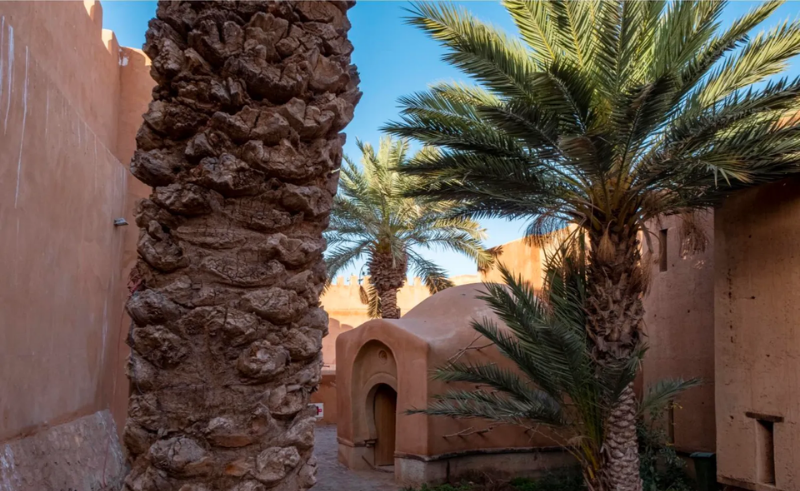
Grand Prix
Developed between 2013 and 2024, Salima Naji’s ‘Tiznit Heritage Interpretation Centre’ is constructed entirely from rammed earth. The project incorporates vernacular forms, including shrines and fragments built on site by master craftsmen.
The centre reflects Naji’s wider interest in keeping local construction knowledge relevant through contemporary architecture. “These techniques, rooted in local knowledge and materials, proved both relevant and necessary,” she says.
Sahel Alhiyari
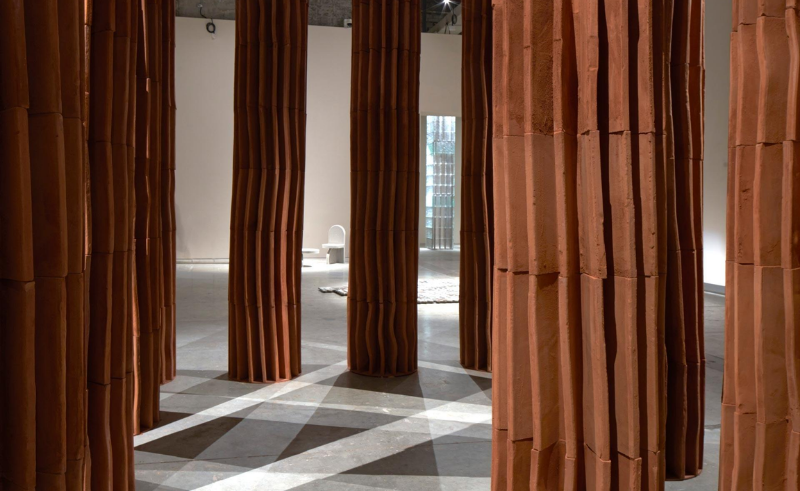
Jury Prize
Jordanian architect Sahel Alhiyari works with the materials, construction methods and histories of each site. His B. Kanaan Residence in Amman uses hand-chiselled barrel stone with gypsum detailing, while his ‘Eleven’ installation explores extruded terracotta through contemporary fabrication.
For Alhiyari, these projects form part of a continuous practice rather than isolated works. “I can’t really single out any one project, because I see all of them as part of one continuous work, unfolding in segments,” he says.