





Egyptian Illustrator Dina Zaitoun Has Never Drawn Inside the Lines
Dina Zaitoun uses illustration to challenge society's expectations of women - and refuses to be quiet about it.
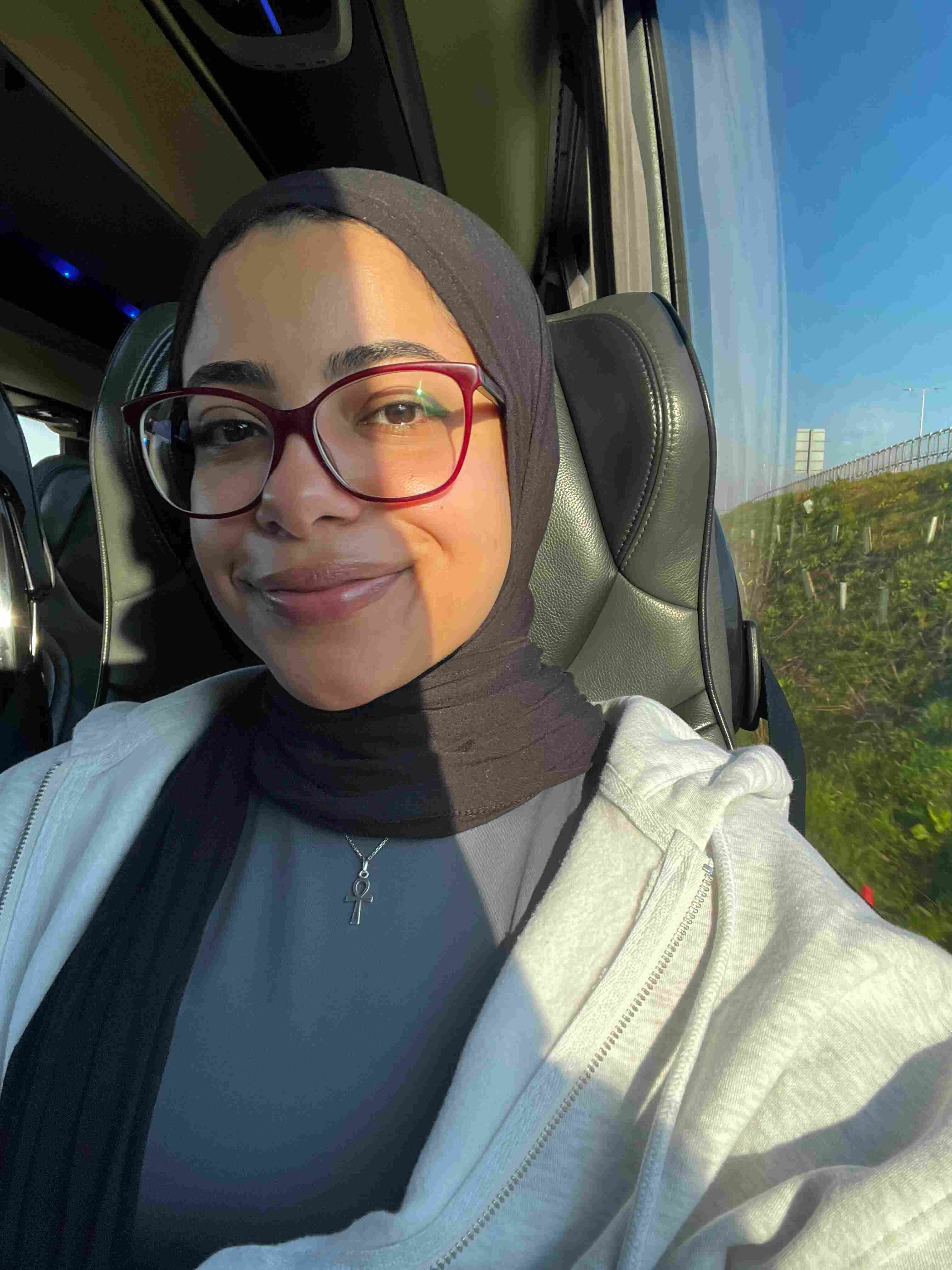
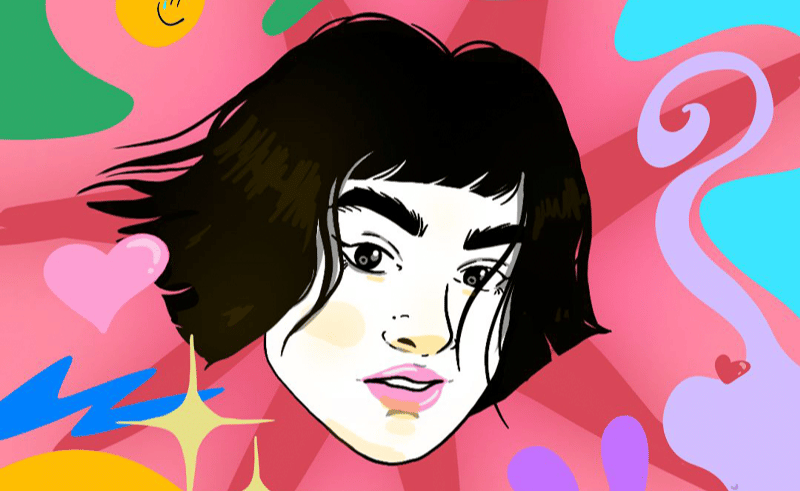
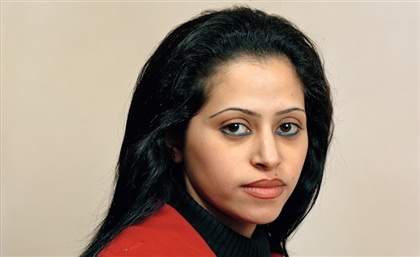
Egyptian illustrator Dina Zaitoun does not shy away from confrontation; she embraces it. Through her platform Artopathic, her illustrations are immediately recognisable: bold, bright colours, figures that are deliberately imperfect, and a refusal to airbrush the realities of womanhood into something more palatable. She draws bodies that feel lived-in and emotionally charged, capturing the kind of moments - in public spaces, online, in the news - that many women recognise before they can even name them.
Her work moves between the personal and the political. She questions how women are expected to look, behave, and exist, taking aim at the structures of judgement and authority that govern female visibility, particularly within Arab society. Rather than offering idealised representations, Zaitoun leans into complexity - her figures carry weight, tension, and a kind of defiant presence that lingers after the scroll.
Working primarily through social media, she is also acutely aware of how her work is consumed. Her pieces are built to stop you mid-scroll, while still carrying a message that extends well beyond the first glance.
In this interview with CairoScene, Zaitoun speaks about her relationship with her artwork and the complexities and frustrations surrounding the role of women, particularly in an Arab-centric society.
CairoScene: Your work engages quite directly with issues like motherhood, harassment, and gendered double standards. Was there a particular moment or experience that pushed you from creating art into using it as a form of advocacy?
Dina Zaitoun: It all mostly started – like the advocacy part of it – when the Fairmont incident took place. During that time, a momentum of sorts for feminism developed, particularly through social media and people speaking up. I felt encouraged, and people were notably interacting with my posts, and it just kind of snowballed from there. If you’re asking about a specific moment where it all started, that would be it.-2557b287-7542-493e-90e4-d02a434d8d35.png) CS: I was looking at your artwork, and I came across multiple pieces that I really liked and found intriguing. I had gone back as far as 2022. There was a particular one – a recent one – that caught my eye: your 'Gadet' artwork. In this one, there’s a clear tension around femininity and expectations surrounding it. How did that work come together?
CS: I was looking at your artwork, and I came across multiple pieces that I really liked and found intriguing. I had gone back as far as 2022. There was a particular one – a recent one – that caught my eye: your 'Gadet' artwork. In this one, there’s a clear tension around femininity and expectations surrounding it. How did that work come together?
DZ: I wanted to get out of this bubble or expectation of what it means to be feminine. I took it and made it my own. The intention was to create and present something that was almost the opposite of the ‘male gaze’ and how it perceives femininity. I was inspired by the latest incident that took place on the bus – the one where the girl was attacked based on the fact that she had piercings and was dressed a certain way. I wanted to challenge society’s expectations and highlight that we don’t have to conform to them.
You can see that in this particular piece through her colourful eyebrows, for example, where their presentation can almost drive away people who struggle to accept others deemed different based on a certain characteristic that may seem drastic to most.
As for the term ‘gadet,’ it wasn’t just an attempt to incorporate modern slang – it was an embodiment of the general situation within a social, political, and economic context. But it was more so an attempt to invoke simply what it meant – I was fed up, and within it all, it felt as if the world was falling apart.
CS: Your use of the ‘male gaze’ is definitely interesting within this context. Do you mean it in a way that refers to how your work is intended to go against the pre-set expectations around femininity?
DZ: Exactly. The stereotype of what is expected of a woman, or what the beauty standard looks like. Even when you open TikTok, you can see women actively bleaching their eyebrows as a way to drive men away, for example. So, this piece was my way of similarly revolting against those pre-set expectations and refusing to conform to them or their usual beauty standards.
CS: I am quite curious about the feedback that you got on that specific piece – is that something you can share?
DZ: The majority actually received it quite well and were happy with the use of colours and thought it to be a beautiful piece of artwork. I didn’t expect this specific artwork to go viral at any point – I was doing it mainly for myself. I tend to produce a lot of artwork in relation to an active social or public issue or occurrence. But with this specific piece, I was doing it for myself. I enjoyed creating it so much, and I think that showed in how people interpreted it – they seemed to absolutely love it.-90167e53-602b-4998-8205-f6093bf02f27.png) CS: There's real pushback in your work against the idea that women need to fit a certain image. Where does that come from, and how does it shape the way you draw female characters?
CS: There's real pushback in your work against the idea that women need to fit a certain image. Where does that come from, and how does it shape the way you draw female characters?
DZ: I love to shatter the expectations women are supposed to meet - whether that's body shape, so-called imperfections, or beauty standards. You see Eurocentric features everywhere, so I try to incorporate Arabic and regional ones as much as I can. Stretch marks, pimples, body hair - these all find their way into my work. I want to go beyond this Victorian image of a prim, proper, perfect woman.
I try to always be confrontational, and to amplify whatever feeling I'm portraying. Some pieces embody defeat - like the one with the phrase "we're drowning in a sea of patriarchal violence." Others are the complete opposite, conveying defiance and a refusal to be silenced. But across all of it, I want to evoke something real - frustration, exhaustion, confusion, disgust. Whether it's the doctor dismissing his patient's pain, or the old man berating a woman over how she was sitting, I want that emotional truth to come through in the faces I draw.-ce4fdd33-725a-4e93-834b-36a6f6be60ff.png) CS: When you’re working on something that touches on difficult or sensitive experiences, what matters most to you in how you show it, and how do you go about navigating it?
CS: When you’re working on something that touches on difficult or sensitive experiences, what matters most to you in how you show it, and how do you go about navigating it?
DZ: I think of myself as a ‘daughter of the internet,’ where I find myself relatively attuned to what is and isn’t appropriate to do, share, or incorporate into my work or onto my platform. I walk a very fine line because if I always took the easy way out and was overly cautious, I wouldn’t be able to provoke any form of conversation. I think a big part of the success of art – especially political or social justice work – is that it has to evoke a feeling. So, I do walk a fine line by asking myself what would make someone feel or think. But at the same time, I try my best not to cross into being insensitive or becoming someone who exploits a cause.
And if I do cross it, I take a step back. For example, I once did a piece touching on the mass rape occurring in Sudan, and a lot of Sudanese women reached out and expressed how hurtful and triggering it was to them – so I simply deleted the piece off my socials and apologised to them. It’s very important to be open to feedback, especially when you’re not the victim or someone directly impacted by the issue at hand.
CS: When you were talking about your work provoking conversations – do you produce your art with that intention at the forefront of your mind? Or is it secondary to the message you’re trying to deliver and spotlight?
DZ: The most important thing to me is to be true to myself. I am a naturally confrontational individual, so for me to simply expressing my views is enough to be seen as provoking – especially when it’s from a feminist perspective. It tends to be enough to provoke any other party involved, whether it be an individual or a society as a whole. It’s almost a symptom of me expressing my opinions and beliefs, particularly through a feminist lens. I don’t water anything down. If I intend to address something, I will address it completely and truthfully.
I have been posting my work on social media for a while now, so I have grown accustomed to addressing certain things with a particular exactness. Consequently, this results in a reaction of some sort. There’s always one.-e013e309-ac1c-4e8b-8ce8-f5c15645f0f2.png) CS: Do you ever feel a tension between speaking honestly about women’s experiences and navigating cultural sensitivities? How do you balance that?
CS: Do you ever feel a tension between speaking honestly about women’s experiences and navigating cultural sensitivities? How do you balance that?
DZ: I try to balance it out, but not fully. This comes back to the fact that I know my perspective will often warrant some form of attack – purely because of how straightforward and outspoken I am when it comes to misogyny or sexism.
But in reality, I think I have almost stopped prioritising balance altogether. I have been on the receiving end of a lot of criticism and blatant attacks over the years to even consider the concept of ‘balance.’ I would have to completely water down any message I try to deliver in order to achieve that balance and avoid criticism. I have accepted the inevitability of these reactions – there’s nothing to be done about them.
CS: Was it ever discouraging? Did you ever reach a point where you reconsidered your work or advocacy because of the criticism?
DZ: I was on the receiving end of rather extreme targeted bullying. There were AI-generated videos of me at one point, for example – videos used to intimidate me. But this didn’t discourage me from producing my work. What it did do was create a newfound sense of caution when it comes to social media.
I now try my best to stay as private as possible and treat my privacy with more sensitivity – especially on Twitter (now X). I try to address issues without giving away personal information because I’ve seen how obsessive some people can be – strangers who could enact genuine harm with just a few pieces of personal information.
It didn’t change my message or deter me, but it did change how I navigate social media as an artist.-30cc84cb-9ec3-45a1-b30a-5e1c8b14df99.png) CS: Have there been moments where a piece was misunderstood or read differently than you intended?
CS: Have there been moments where a piece was misunderstood or read differently than you intended?
DZ: I have a lot of artwork where, two or three years ago, I would have never anticipated the kind of backlash it would receive. There was a piece I did addressing absent fathers. The amount of criticism and backlash – specifically on Twitter – was unbelievable.
The piece shows a child crying and asking, “Where’s dad?” and a small speech bubble responds, “He’s at work.” Then there’s a time lapse of 20 years, with the now-grown child and his father saying, “I am here. Love me, respect me, and do as I say,” to which the grown child questions who the man is. I cannot even begin to describe the level of attacks this artwork received. There are many pieces where I expect some backlash, but what I ended up receiving was often far more extreme than anticipated.
CS: What conversations around women's lives in Arab societies do you feel are still being avoided?
DZ: Unprivileged women. There is a sense of deliberate forgetfulness when it comes to their layered, concurrent struggles. There is often an intersection with poverty, race, and religion. You cannot address one issue - such as violence against women - in a vacuum without addressing the many factors that contribute to it.