






The Anti-Algorithm Groovemaker: Inside DÜK’s Cult Music
From Japanese vocals to Nigerian rhythms, the Montreal-based Lebanese producer makes music that feels like a secret you already know.

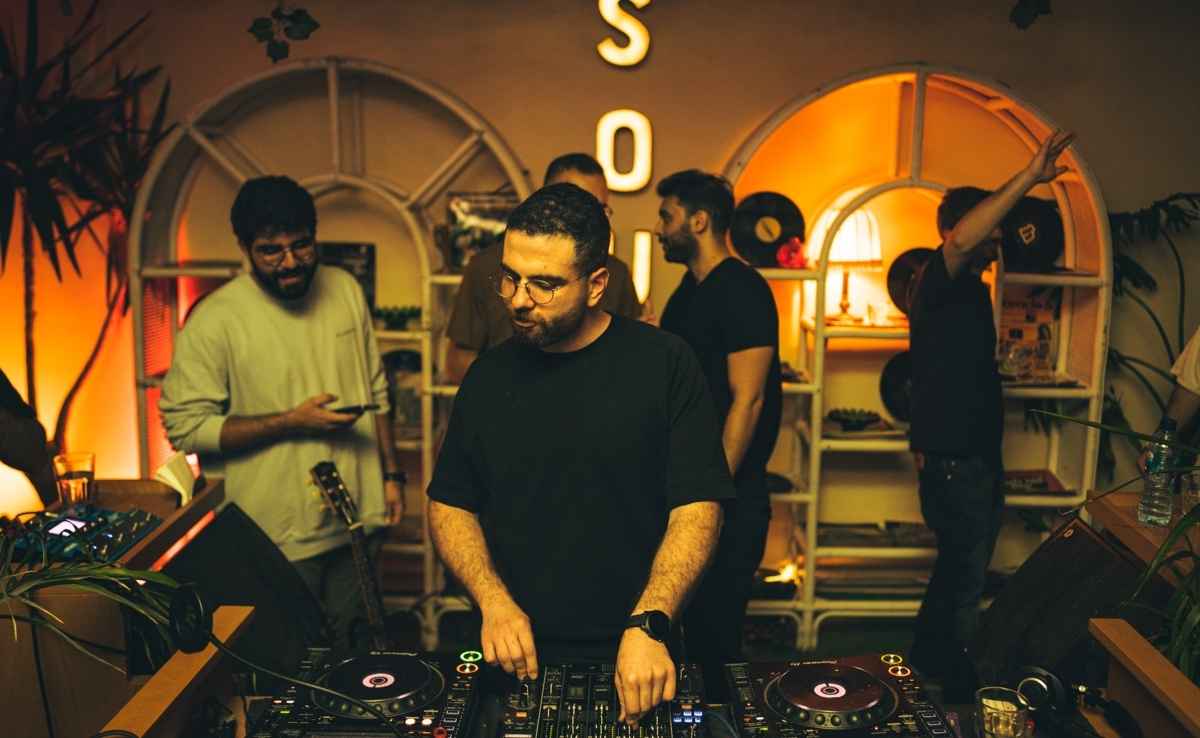
You never forget your first DÜK track. It pins a moment to your memory – where you were, who you were with.
I’ve been hooked since I first heard ‘Jagal’ – not just by the track, but by the question it leaves behind: who made this? It has that rare stamp where you don’t simply like it; you start hunting for the mind behind it.
So, I did. I dug, and I landed on ‘Haku – Mono No Aware (DÜK Funky Mix)’, with catchy – almost addictive – Japanese vocals. That’s when it clicked: DÜK isn’t just making club records; he’s mapping taste across borders, a Lebanese musical explorer with a passport in his ears, crate-digging from Japan to Italy to Nigeria.
31 year old Tarek Barbir is the man behind DÜK, and he spoke exclusively to SceneNoise about his music and the sound that keeps pulling people back.
“I refuse to make filler,” he tells SceneNoise. Every track has to mean something to me.” It’s the line that explains almost everything: the gaps, the mystique, the loyalty from listeners across the Levant.
Ask DÜK why he doesn’t post more, brand harder or “activate” his audience, and he doesn’t show reluctance. He just shrugs at the premise.
“I’ve been told a hundred times I need to be more active online, but that side doesn’t excite me. I’d rather get a real comment on SoundCloud than chase an Instagram comment. If someone really listened – that matters.”
Based in Montreal, Canada, Tarek is building a global audience that craves more, but for the artist – also an avid chess player – he has to do this music grind on his own terms.
“Going full-time can mean living gig-to-gig for a while,” he says. “And honestly, the minute it becomes deadlines and pressure, I worry the love gets diluted. I like being obsessed on my own terms.”
-16bfbb17-74ae-4e27-af4a-46adf3f4f864.jpg)
No wonder DÜK plays chess: his music moves like an unconventional game – it sets up familiar patterns just to sidestep them, baiting expectation, breaking rhythm at the right moment. The word – obsessed – is the key. DÜK isn’t chasing output; he’s a grandmaster chasing the moment his music becomes a place you can live inside, trapping you forever.
DÜK’s tracks are described as hypnotic – minimal frameworks, repeating patterns, but there’s a grin in it. A slyness. A coded flirtation that feels culturally specific, even when the references travel to different places.
“A lot of ‘Arabic in music’ ends up either too serious or too expected,” he says. “And that isn’t our personality. When you add humour and character – even sexiness – it stops being a track and becomes a whole world.”
He’s also careful not to let any single identity become a cage. He’ll switch languages and pivot textures to avoid being turned into a predictable product.
“I don’t want to be typecast. If I overdo one palette, it gets boring – for listeners, and for me. I can switch it up, but it still sounds like me, and it doesn’t repeat the same trick.”
That’s why people speak about him like a secret. His sound is instantly recognisable: tight, mysterious and strangely warm. Each track unfolds like a short film – tension, release – and then the hook: you’re in. Behind the humour is immense discipline. DÜK describes his workflow as swinging between lightning and torture.
“Sometimes it’s immediate – I hear something, and I know exactly what it needs to become, and I’ll do it in a day. Other times it’s fifteen versions until one clicks,” he says. “I’m picky. I’ll scrap a whole direction if it stops feeling right ten minutes later.”
That pickiness makes sense when you remember he’s a guitarist first – specifically a jazz guitarist – trained to think in phrasing and dynamics, not just drops and transitions.
“I’m a jazz guitarist first,” he says. “Even when it’s electronic, I’m thinking like a musician, not like someone assembling parts. I’m extreme with anything I commit to. If I’m in, I’m in,” he says. “I don’t release until it’s fully cooked, and I can live with it.”
From Montreal, DÜK has his creative quiet. Away from the region’s nightlife circuitry, he builds his own internal standards while keeping the Middle East as the emotional target.
“I want the Middle East to stay the focus,” he says, “because people there catch the nuances and the Easter eggs.”
DÜK’s taste doesn’t travel as aesthetic tourism. He’s not collecting flags; he’s collecting whole systems and musical blueprints – the rules behind why certain music feels the way it feels. Japan, for him, is about structure: chord progressions, precision and cleanliness.
“Japan is insane for structure. Not just technique – something beyond it,” he says.
Nigeria is where he’s turning next: not as a trend, but as a deep rhythmic resource. He hints his next chapter may even step away from straight electronic tempos: slower, with more room for basslines that breathe, and a modern twist on older musical languages.
If the first myth about DÜK is that he’s “inactive”, the truth is more interesting: he’s active in a different dimension. He’s building music as a world, not a post.
That takes time, and a refusal to be rushed.
-54a1b560-74c1-4bcd-ae6f-99a5ca63e729.jpg)
DÜK’s musical talents have not gone unnoticed. SceneNoise spoke to Lara Kays, one of Beirut’s foremost musical authorities. Along the way, she has managed Lebanese DJ and producer Rolbac, nurtured emerging talent and delivered landmark productions, including X by Adriatique (Lebanon), Afterlife Beirut (Lebanon) and others.
“I was blown away the first time I heard DÜK, when he opened with a three-minute live guitar solo at Soul Kitchen, one of Beirut’s premier clubs, and then even more by how he can play hours-long sets entirely from his own catalogue of produced – often unreleased – tracks.”
DÜK is a musician at heart, Kays continued. “He plays multiple instruments and records most of them himself for his productions – something super rare among DJs and producers – and his sound feels both distinct and universally resonant; anyone listening to DÜK can immediately sense there’s something exceptional there.”
Perhaps the greatest compliment one can pay to DÜK’s music is that once you hear it, you’ll never stop listening to it.
- Previous Article SceneNoise x Amsterdam Dance Event Present CROSSFADE: Egypt
- Next Article Up to 15% of Newborns in Egypt Are Born to Child Mothers