


Tour Company Brings Visitors Back to a Village Jordan Emptied
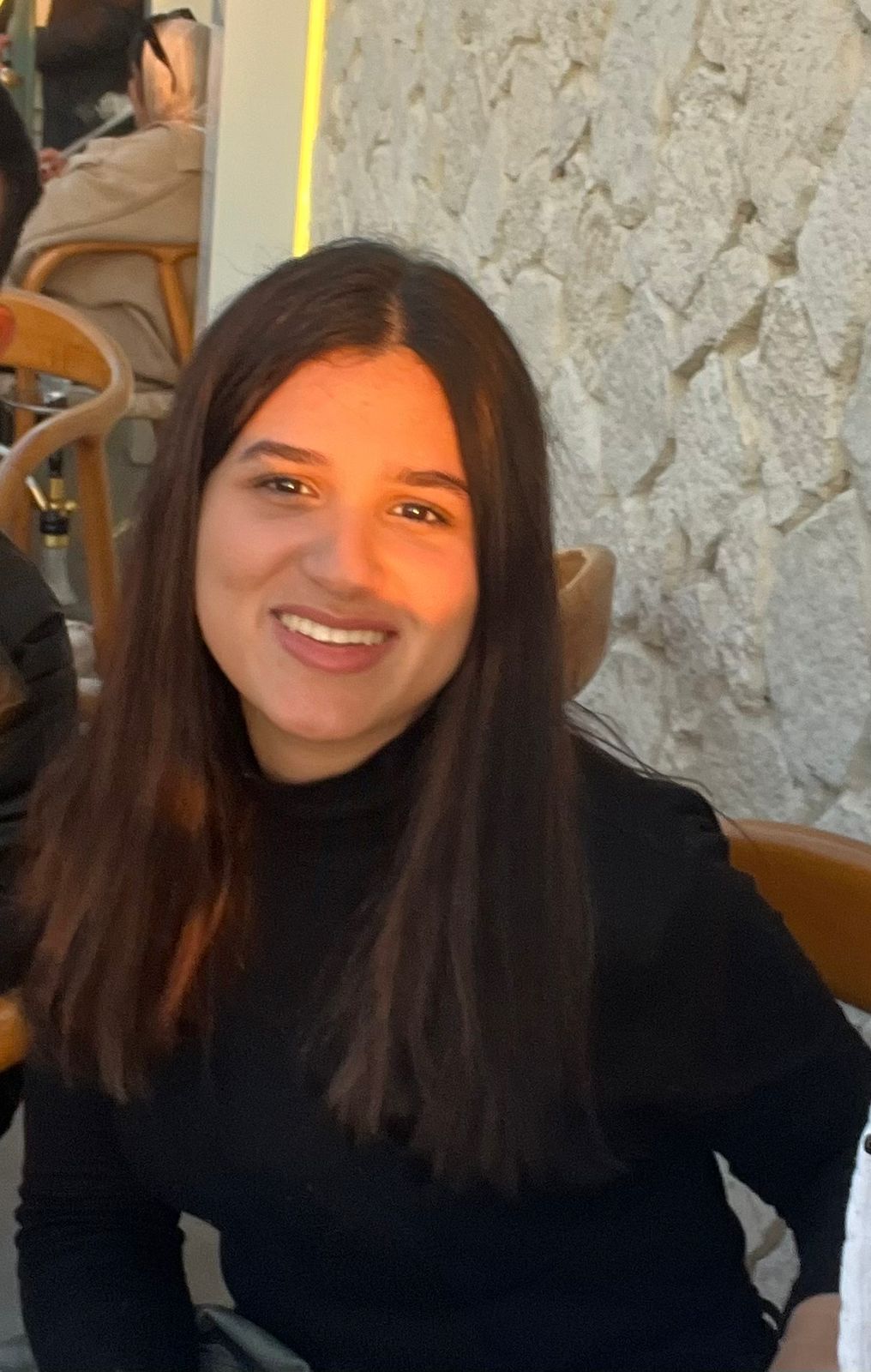
Muna Haddad's Baraka Destinations builds village enterprises across rural Jordan and keeps 73 per cent of what visitors spend inside them, starting with a man who never left his roof.
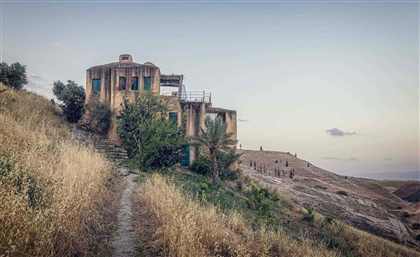
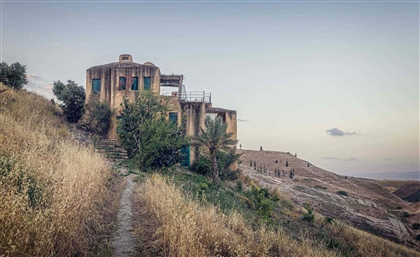
Ahmad grew up in Harafoqa. The day his family was told to leave, he pitched a tent on his roof. Then the village got renamed.
The Ottoman village, they called it. A label that ironed out a hundred years of his community calling it something else, knowing it by its own name, belonging to it in a way that no document could approximate.
Between the late 1970s and mid-1980s, Jordan's Department of Antiquities relocated the village's 1,500 inhabitants to excavate the Greco-Roman ruins of ancient Gadara beneath their feet.
The Ottoman-era village they left behind was later recognised as historically significant in its own right. The people, by then, were already gone.
By the time Muna Haddad met him, he had absorbed the erasure so completely he no longer thought his own story was worth sharing with a stranger. She listened to him for a long time.
"It is Harafoqa. Because that is what you called it for a hundred years, and that matters," she said.
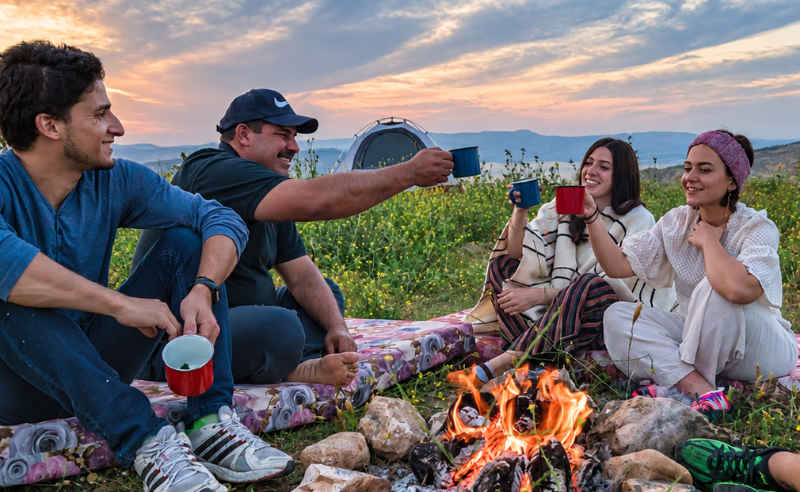
Travellers on a Baraka Destinations tour now sit with Ahmad and hear about a place and what was taken from it.
Haddad is the founder of BARAKA, a sustainable tourism consultancy, and Baraka Destinations, which operates community-owned stays and experiences across some of Jordan's least visited geography. She also founded the Jordan Trail Association, the NGO behind a 650-kilometre hiking trail running the length of the country.
In February 2026, she received the inaugural Champions of Change Award from the Middle East and North Africa's 50 Best Restaurants.
Most recently, Baraka Destinations launched its Amman City Tour, a four-hour walk through downtown and Jabal Amman that runs every Friday and Saturday at 3pm. It was built on a year of research and interviews with historians, anthropologists, architects, long-standing merchants, former prime ministers and members of the city's ethnic communities, asking the question the whole operation rests on: who gets to tell the story of a place?
Away from the work, she calls herself a finder of stories.
"I'm equally drawn to a shepherd in the desert who has mastered stillness as I am to a young artist processing collective trauma through her work. What connects them, for me, is that they're both deeply awake to life. That's what I'm always looking for. People who observe, question, endure, or quietly resist."
Her parents had a theory about Sundays. Every Sunday, folding chairs into the boot of a Toyota Corolla, driving to wherever the road offered something worth stopping for. Hills, fields, the edge of a village they would never return to.
"When you slow down in a place that seems completely ordinary, you start finding things," she says. "A yellow flower that only blooms for three weeks of the year. A host who offers you tea with lemon leaves in it. I can still taste that cup."
She left for America to study marketing and communications and spent a meaningful stretch of her time there being asked to account for herself. Arab women, she found, were expected to slot into a legibility that she did not fit, and when she did not fit it, the responsibility for explaining was handed to her. The experience sent her to Edward Said, to the architecture of who gets to narrate a people, and why.
When she found her way into tourism, moving through Jordan with journalists and tour operators, showing people what she had spent a childhood learning to see, she was holding the microphone.
"Instead of defending myself against other people's projections, I was the one saying: this is who we are, this is what this place means, this is our story. That shift, from object of the narrative to author of it, felt like the most powerful thing I had ever experienced."
The consultancy world offered one version of that answer, and she watched its logic fail in the same way, everywhere she went.
"The jobs were never real," she says. "They were a photograph of jobs." Aid language, she came to understand, ran the same power logic in warmer clothing. The economics were as broken as the politics of it. "Agency was handed away again just with better intentions attached."
Baraka Destinations works differently, co-creating enterprises with communities. Beekeeping, hiking, foraging walks, cooking classes led by local women, shepherding mornings in Pella where guests make cheese before breakfast, stone masonry workshops in Umm Qais where people leave with something they carved from Roman basalt.
BARAKA markets these, supports operations and helps partners reach a market they could not afford to access independently. Over time, the partners decide: stay on new terms, or leave as a fully independent business with no ties whatsoever.
Seventy-three per cent of tourism income stays within the communities. More than 150 families across rural Jordan are involved.
"One of the biggest misperceptions about power is that it has to be transferred, that someone has to give it to you. But that's not how it works. You already have it. The work is helping people recognise what's already theirs."
Language, for her, is where power hides most comfortably. The word 'empowerment' bothers her because it implies she holds something she is choosing to dispense. 'Preserving a community' bothers her because it assumes culture should be fixed in place for someone else's pleasure.
"Sometimes what's really being preserved is an aesthetic that visitors find charming. The Bedouin tent, the traditional dress, the open fire. And if the person living that life wants a house with a TV, they should have a house with a TV," she says.
The more corrosive problem, she says, is what happens when communities internalise the way outsiders see them.
"People who had been told often enough that they were the recipients of help started to see themselves that way. The victimhood became internalised. And that, to me, is the most insidious damage outsiders cause."
Umm Qais is where she decided to stop diagnosing the problem and show what the alternative looked like. It sits 380 metres above the Yarmouk valley, on the ruins of Gadara, with the Sea of Galilee silver on the horizon and the Golan Heights beyond it. Older residents remember driving through to Syria to shop. There is Roman basalt underfoot and a beekeeper named Yousef who has spent forty years reading his land.
Haddad wrote a masterplan for the area. It was never implemented. She came back and built it herself. Beit Al Baraka, the guesthouse that anchors the Umm Qais operation, was designed by Ammar Khammash, one of Jordan's most celebrated architects.
Yousef comes up whenever she describes what the work actually produces. Guests suit up, move through the hives with him, learn the seasonal logic of honey production from someone who has never learned it anywhere other than here. Nine of his guests have since become urban beekeepers.
"It leaves a much deeper impact," she says. "The experience shifts people's behaviour."
On authenticity, she has a kind of patient exhaustion. "The more you chase it, the further away it gets. You cannot manufacture it. And the moment you try, you've already lost it."
She has watched serious money go into building the right furniture, the right story, the right ambient warmth, and watched travellers come home talking about the cup of tea a stranger handed them on the street.
"That cup of tea will outlast every carefully curated experience they paid for." Baraka Destinations tries to create conditions for that cup of tea by getting out of the way.
She learned something about her own position early on that she found uncomfortable. Running community workshops, she stayed quiet, believing this was the respectful choice. An adviser told her she had it exactly wrong.
"The power I already held was structural. I had organised the room, set the agenda, chosen who sat there. Pretending to be just an observer didn't neutralise that. It made it worse, because I was shaping everything while appearing not to." To be equal, she had to show up as equal, occupy her seat, be transparent about what she held.
Three times in eight years, every booking was cancelled overnight. COVID was the most sustained of them, and each time they rebuilt from nothing. When she talks about the hardest thing, though, she goes somewhere else.
"How do you celebrate local culture while it's being erased right next door? How do you talk about preserving traditional recipes, local wheat, hyperlocal food systems, when there is a famine being engineered across the border? How do you invite people to come experience the beauty of this region while that is happening?"
Gaza is the furthest extreme of what she has spent her career working against: the systematic severing of a people from their land, and from their right to tell their own story. The work feels more urgent and more insufficient at the same time. What keeps her going is watching partners move from uncertainty into ownership, from waiting for permission into negotiating for what they are worth.
There is a question she has not resolved: whether the model can hold its shape when money moves faster than trust can be built, when luxury markets want the philosophy without the patience it requires. "Can the philosophy travel without getting diluted?" She sits with this genuinely, without a rehearsed answer.
The sustainable tourism industry talks fluently about community benefit and local ownership. Delivery is rarer. Haddad has spent twenty years in the specific and unglamorous: fixing the kitchen of the woman who makes jam before they can source from her, training the dry cleaner, upgrading the water filtration, sitting with a guide who has spent his whole life in a village and helping him understand that the village is worth the telling.
Ahmad already knew his village had a name. What Haddad gave him was not information he lacked, it was a room in which saying it out loud became possible. He knew it all along. She just stayed until he believed it too.
- Previous Article Macklemore Announces Mini Euro Tour to Raise Funds for Palestine
- Next Article Private Sector Accounts for 63% of Egypt’s Total Investments