





This Red Carpet in Luxor Is Actually Just a Sea of Sun‑Dried Tomatoes
From the fertile fields along the Nile, farmers—many women—harvest, salt, and lay out thousands of tomatoes to dry under the winter sun.

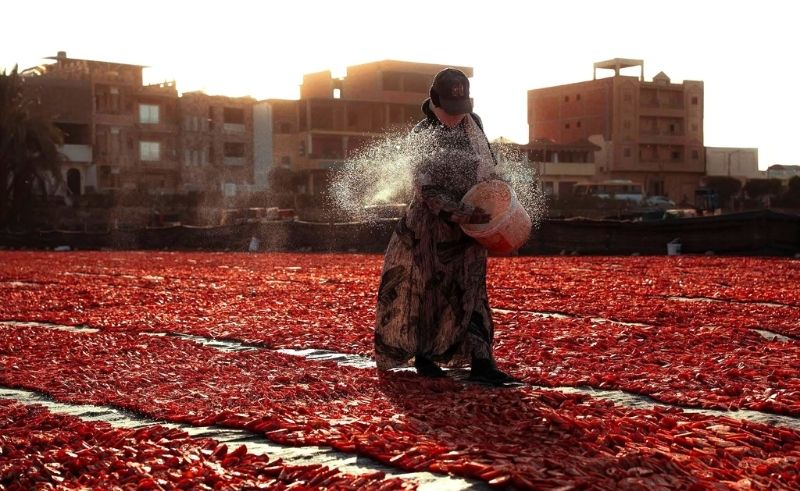
Under Luxor’s gentle winter sun, just beyond the ancient temples, in the fertile Nile Valley fields, stretches of deep crimson line the earth like a living red carpet. This vivid spectacle marks the heart of Egypt’s sun‑dried tomato phenomenon, a centuries‑old craft that has become one of the country’s most prized export industries. You can almost feel the warmth of the sun and the faint scent of salt in the air, as farmers—many of them women—harvest firm tomatoes from surrounding farmlands and transform them under the wide, cloudless sky. The process is simple in theory, but deeply rooted in local tradition and the unique climate: from January through May, when the winter sun is at its most consistent and humidity is low, thousands of tomatoes are hand‑cut, lightly salted, and laid out on long drying beds. Over the course of several days, the sun slowly removes moisture, intensifying flavour and turning plump fruit into chewy, richly coloured slices prized in kitchens around the world. For a traveller, visiting these fields is unlike any ordinary farm tour. You can stroll along the drying beds, watch skilled hands at work, and even feel the warmth of sun‑kissed tomatoes beneath your fingertips. The sheer scale of the operation—most of the country’s dried tomatoes come from this region—is staggering, and it gives a tangible sense of how tradition, climate, and craft come together to create Luxor’s famous “red gold.”
- Previous Article Mo Salah’s Record-Breaking Liverpool Legacy in Numbers
- Next Article The Ancestral Resilience of Omar El Farouk’s Fayoum Home