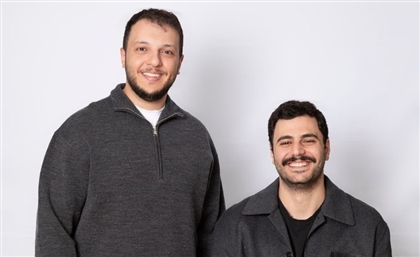






Emirati Perfumer Assem Al Qassim Bottles Hospitality in Anfas
Anfas Collection, has spent thirteen years translating Arabian hospitality into scent, reaching forty three countries and earning top five niche rankings across three continents.
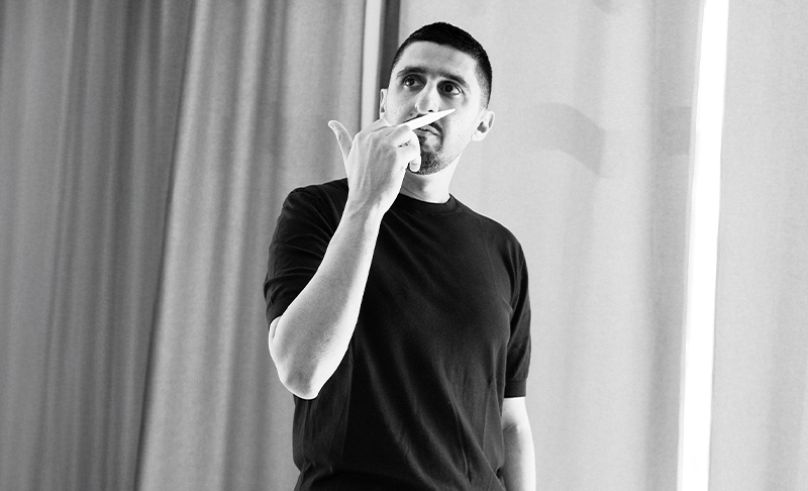
As an Arab, scents like oud, musk, rose, amber and sandalwood drift off your wrists, climb the walls of your sitting room, linger in the corridors of malls long after the crowds have left. Mixing oils before mixing had a name. Before it was layering. It was your mother dropping rose into a burner, your father splashing oud over his kandura, and you, watching, doing the same. Assem Al Qassim, founder of the Emirati perfume house Anfas Collection, spent thirteen years turning that private instinct into something the world could wear.
Assem Al Qassim is an architect, a singer and poet and most recently a perfumer. "Through architecture I could make things beautiful for the eye," he says. "Through music I could sing beautiful things for the ear. Through fragrance I could make something beautiful for the nose. I am trying to deliver something beautiful, engaging all of the senses. One day, I might open a restaurant." For years, these selves lived alongside each other, then a visitor walked into his office in Dubai, finished his paperwork, left, and came back with a question "What perfume are you wearing?"
Assem showed him. An old bottle long discontinued, a few sprays from another, half a tola of musk, around thirty pumps of a third fragrance. He had shaken them together in a blend he wore only for himself. The visitor turned out to be a perfumer. He invited Assem to his lab in Sharjah, placed raw materials in front of him – lavender, vanilla, wood, amber – and asked him to choose. Assem smelled and pointed. When the session ended, the man looked at him. "You selected ninety per cent of the finest materials. Think about doing this for real." Assem was also getting engaged at the time. He made his first bottle for his fiancée. Fourteen years later, he still has it.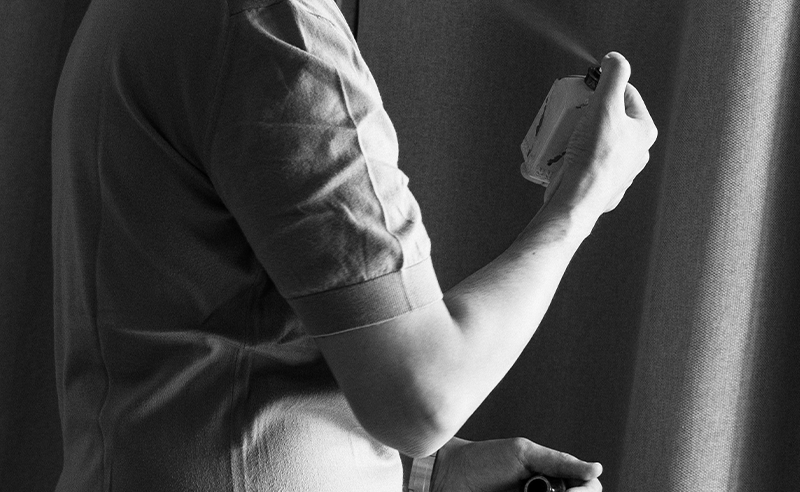 Anfas grew from that bottle. The word means breaths. For Assem, it also means the instinct to welcome, the reflex to serve coffee, the habit of opening your home before someone asks. "We are Arabs," he says. "We breathe hospitality."
He took his natural instinct and tuned it with studies, understanding the chemistry and formulas behind it all by earning his diploma. "Fragrances are a way to express your feelings through a scent. Sometimes you shouldn't follow a proper formula. The good thing is, I didn't go through perfumery in an academic way directly. I used our cultural heritage – the way we mix fragrances without overthinking it and infused that with the chemistry."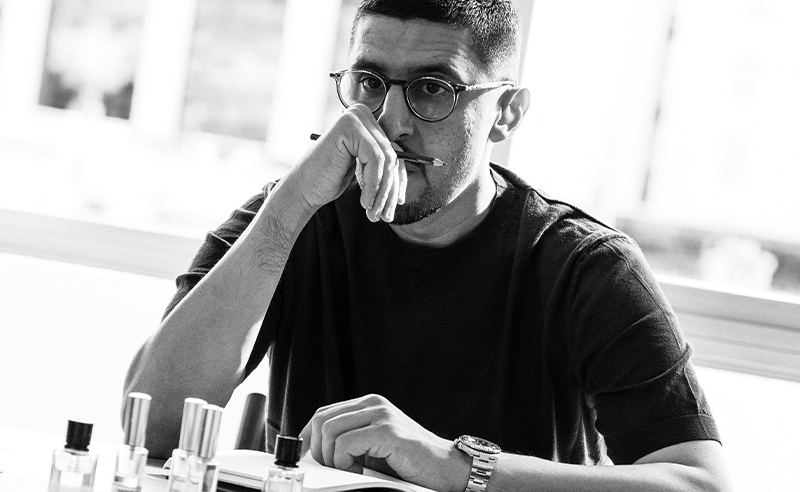 The first collection he built, Essence of Arabia, is a nomadic journey to understand Arabian culture through the rituals of being welcomed. The bottles are transparent glass inviting people in. "You need to open up," he says. The first fragrance Salam opens the road. The first greeting, the word that means peace and hello in the same breath. Inside: mandarin, orange blossom, tonka, vanilla, ambroxan. "Confidence blended with shyness," he says. "Everything goes in peace."
Rahaba follows – the openness you feel when someone says ahlan wa sahlan, when the door is pulled wide before you knock. Samaha is the generosity of forgiveness, the space you are given to be yourself. Sa'adah is good news, the kind that lights a face. Watan is your homeland, the smell of the street you grew up on. And Shaghaf closes the collection: passionate love, the fire. The collection closes with Mahaba arriving as affection, the warmth that settles after the first welcome or as Asem puts it: “the starting touch of love where I drive you through Italy to the Amalfi Coast.”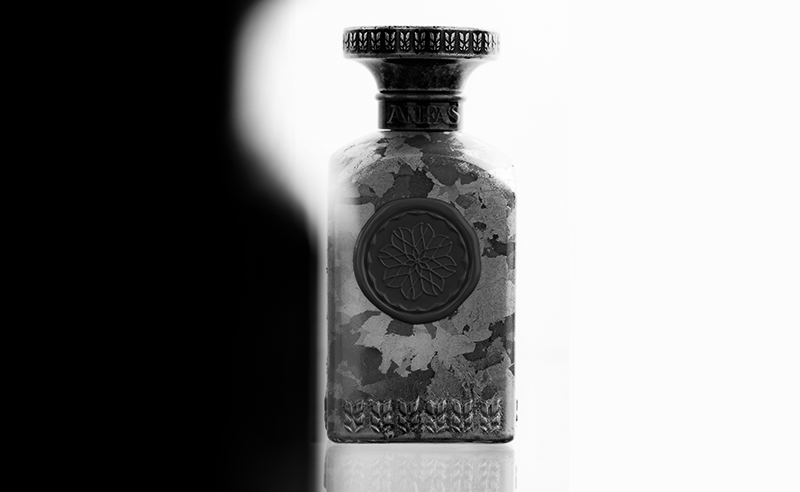 All the names are chosen for simplicity while remaining Arab. "French houses call their fragrances French names, and French is not the first language in the world. We thought about everything. We used a melody to make our names softer for you to understand our culture."
The second collection, Fosool, means seasons. Here the bottles are hand-painted, brushed with twenty four karat gold. "The gold is the person you admire," he explains. One bottle in this collection – Asem calls it Ishq, is covered completely in gold. "Running in my veins," he says. To capture that feeling, he started with raspberry and strawberry, for their colour. "Everyone who thinks of red will understand." Saffron, vanilla, ambroxan. Something gummy, warm, moving under the skin. Other perfumes in Fosool include Shaouq (longing), Mada (extent or horizon), Jannah (the garden, paradise), Aya (a sign or miracle), Ghala (preciousness), Haneen (nostalgia), Ishq Extrait (intense love), Dhai (perhaps a variation of dha'i – luminous). Each bottle hand-painted, each sketch drawn first by Asem himself, then sent to artists in Italy and Spain.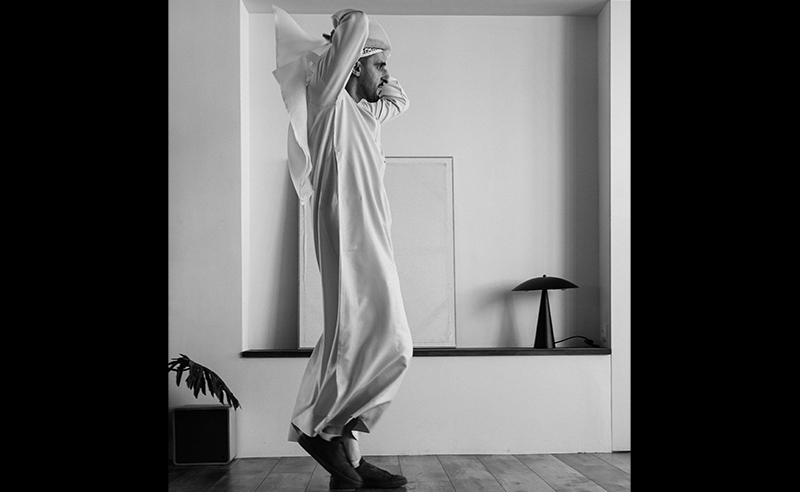 He brings the same attention to his spaces. In Al Shindagha, where Dubai’s story began, the flagship store sits beside the house of the first female perfumer in the emirate. "This is where everything started," he says. "The roots." He collaborated with his friend Abdullah Mulla, an architect who knows when to say stop while helping him flesh out his vision. They kept the original wooden ceiling and the old paint. They brought sand from Asem’s childhood neighbourhood and spread it across the floor.
The store has a coffee bar made of glass, and beneath the glass, more sand. The sofas are shaped like rugs – a memory of sitting in his grandfather’s shop as a child, watching men trade. "People will say they are drinking coffee on sand," he says. The store has its own perfume, available nowhere else. It took him seven years to finish. He calls it The Scent of Dubai, built in three movements: the beginning of the bay, the heart of the city’s growth, and the future.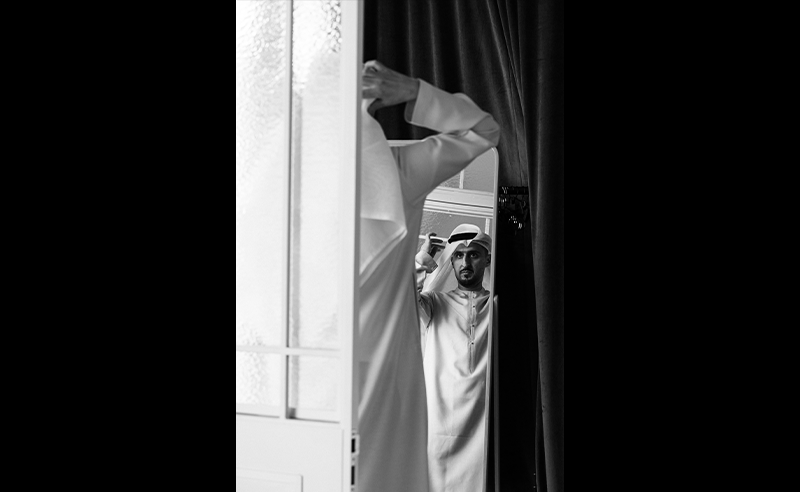 He still thinks like an architect. "Architecture is steering philosophies through an object. Fragrance is the same. You transfer a story through raw materials." He does not plan to leave either discipline. But one of them holds more of him now. "Architecture is a marriage with a client. Fragrance is mine."
Forty‑three countries later, with top five rankings in places far from the Gulf, he refuses to shout. The perfumes arrive the way a guest should, gently, with a smile, asking nothing but your attention. "Simplicity drives more attention," he says. Then he leans into something larger. Sheikh Mohamed Bin Zayed used to say, "We are Zayed's children, and I want you to represent Zayed in every place you're in to represent Sheikh Zayed well." Asem carries those words with him. "We as Emiratis, and Dubai’s people, we are very welcoming and we love people, and we have pride in our culture and country. I hope to represent Sheikh Zayed everywhere in the world. I want to show that we are there to bring happiness to everyone in the world."
- Previous Article Saudi Arabia Ranked Safest Amongst G20 Countries in 2025
- Next Article Lebanese Restaurant Starters is Feeding People, Animals & Futures
Related Articles

Trending This Week
-

-
-
 Jul 02, 2026
 -