



Vaults of Style: Downtown Cairo's Most Aesthetically Striking Banks
From EG Bank's split identity on Talaat Harb to Banque Misr's improbable clock tower, Downtown Cairo's financial district dressed its ambitions in stone; and meant every bit of it.

Downtown Cairo has no shortage of buildings worth stopping for, but its banks make an unusually loud case for themselves. They were built in the decades when Egypt's financial ambitions were still new enough to need announcing, and so they did what every confident institution does when it wants to be believed: they built temples. Art Deco, Beaux-Arts, stripped classicism—whatever the era's preferred language of trust happened to be, Downtown's banks spoke it fluently, mostly unbothered by the traffic, the construction pillars, and the century that's passed since.
No other building type in Downtown commits to the bit quite as hard; a bank has to perform solvency in stone, and that performance—rotundas, scrollwork, looping logos mounted like crowns—is one of the most honest records of the city's financial self-image across a century. Cairo rarely explains itself outright, but its bank facades, it turns out, are unusually willing to.
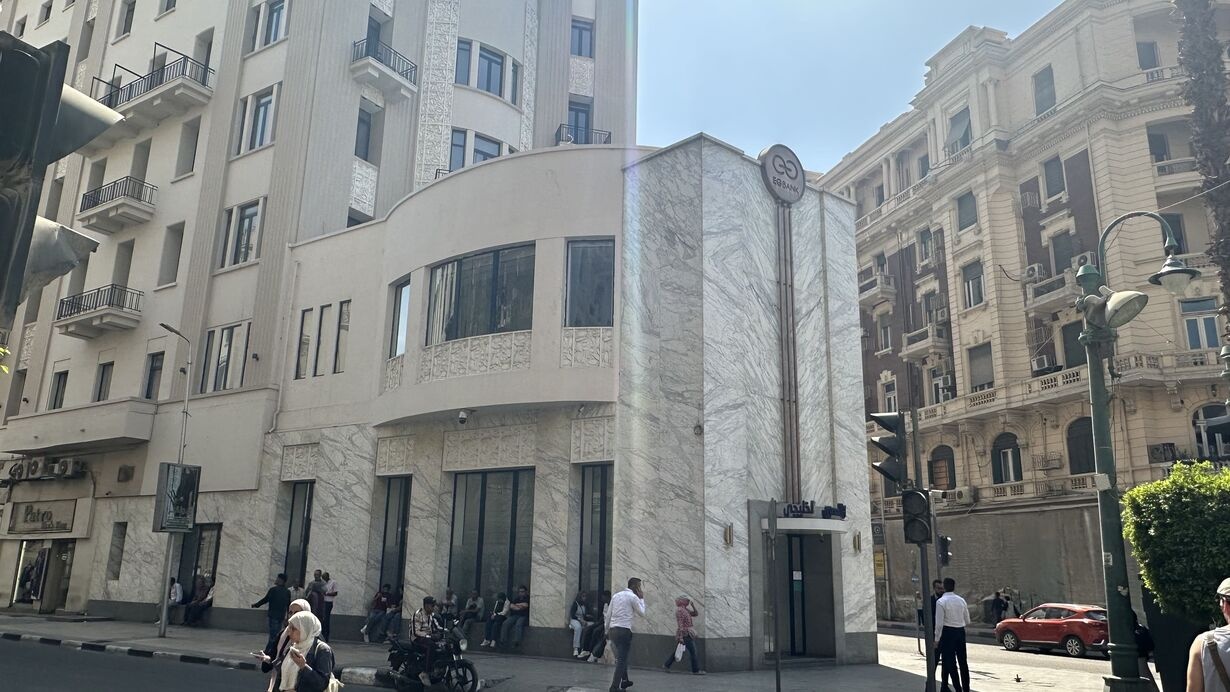
Which leads me to EG Bank, Talaat Harb Square, stubbornly inserting itself first on my list. The building’s appearance between old and new isn’t subtle; the curved cream rounded balcony and carved band follows a typical 1940s Art Deco style that emphasises street intersections, until you trace the exact line where that decades-old stucco gives way to polished stone on the ground-floor marble. And with EG Bank’s looping infinity logo mounted high on the corner, it feels like two centuries shaking hands and you’ve only had tea.
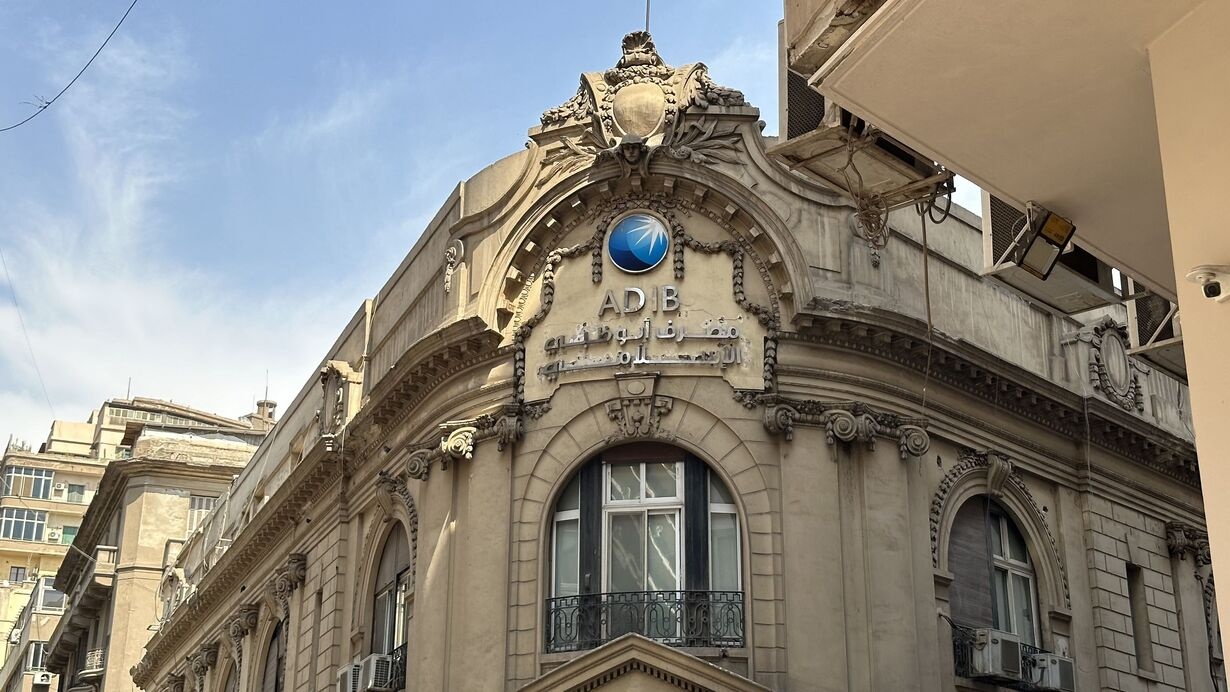
You pay your dues and cross to Kasr El Nile Street just so you could walk through Baehler Passage to reminisce on your youth in Paris. A few more steps and Abu Dhabi Islamic Bank, Al Borsa Al Gadida Street, suddenly makes its way into frame like Downtown’s unopened love letter. A full Beaux-Arts corner facade that Khedive Ismail’s architects were drunk on rises with scrollwork and shields and stone garlands that have been accumulating Cairo’s dust and dignity for over a century, and yet you can’t take your own snapshot of it.
The Cairo Stock Exchange, Al Sharifan Street, takes centre stage and demands to have a spot on the list. Although it's not strictly a bank, it borrows every gesture of one because trading floors have always needed to look as trustworthy as vaults, and so it lands. The Arabic inscription is set with the confidence of something that has never considered being ignored, and swelling upward from the roof is a vast rotunda borrowed straight from the great European exchanges and banking halls of the 19th century—the architectural language of money at its most self-assured.
When the National Bank of Egypt suddenly sprawls across Sherif Pasha Street, you’ll start to understand that you’ve made it to what was once a financial district armed with frock coats and watch chains, and that mid-20th century bureaucratic beige letting sheer mass make its argument. And perhaps the oldest and largest commercial bank in Egypt is allowed that restraint.
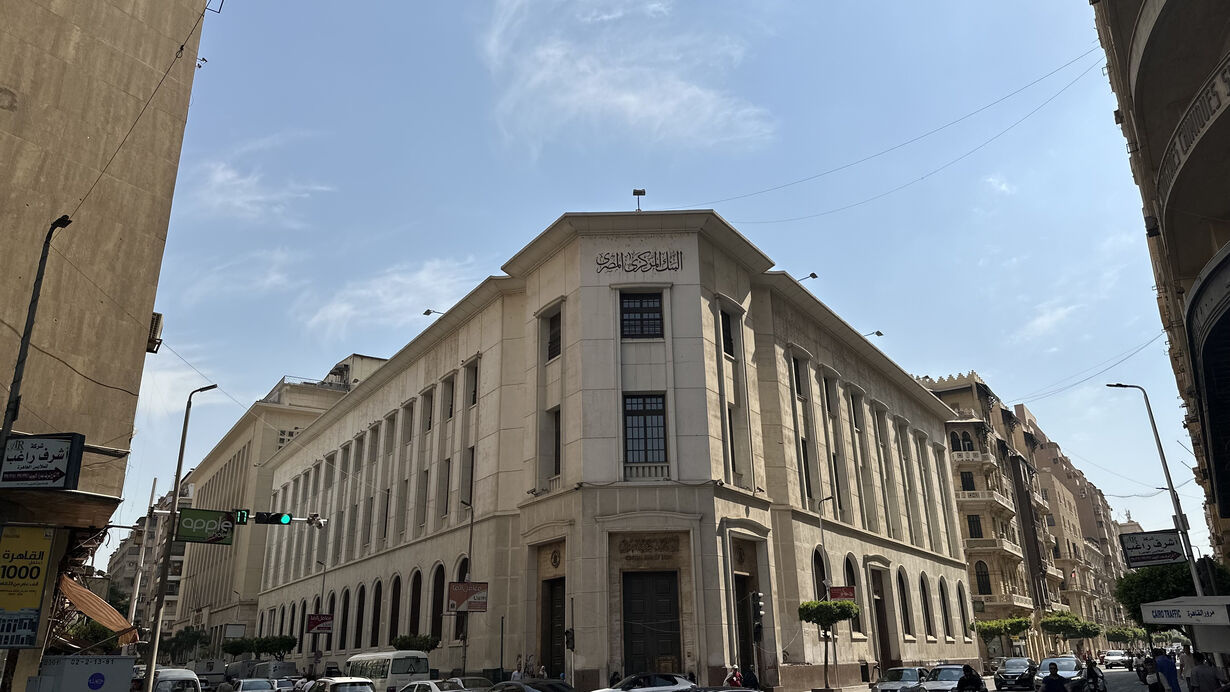
Twenty minutes into the stroll, you stop a few blocks down for sugarcane juice—a brief concession to the June heat before the next facade demands your attention—and you ponder how the Central Bank of Egypt, Sherif Pasha & Kasr Al Nile Street, occupies an entire street. Its limestone facade wraps around the corner in one unbroken, horizontal sweep that sits somewhere between stripped classism and Art Deco austerity. The building carries the ornamental instincts of an earlier era run through a modernist filter that said: less, but heavier.
 By now you think you're an expert in Cairo's temple-banks, until you realise you've almost missed Nasser Social Bank, Kasr Al Nile Street—just because of its unassuming doorway, and how, when the afternoon light hits its terracotta facade head-on, it glows almost hallucinatory. With CBE still fresh in your memory, you realise that the difference between them is like one between a decree and a performance.
You follow that instinct a little further and Mohamed Farid Street arrives almost like a thesis statement the whole walk has been building toward. Banque Misr is the most architecturally layered stop on this list; its cream stone classical framing at street level giving way to deep red brick above, Moorish arched windows, and wrought-iron balconies climbing to a roofline clock tower. It shouldn't work, and yet it absolutely does; the glass-and-steel tower looming behind it only makes the argument louder.
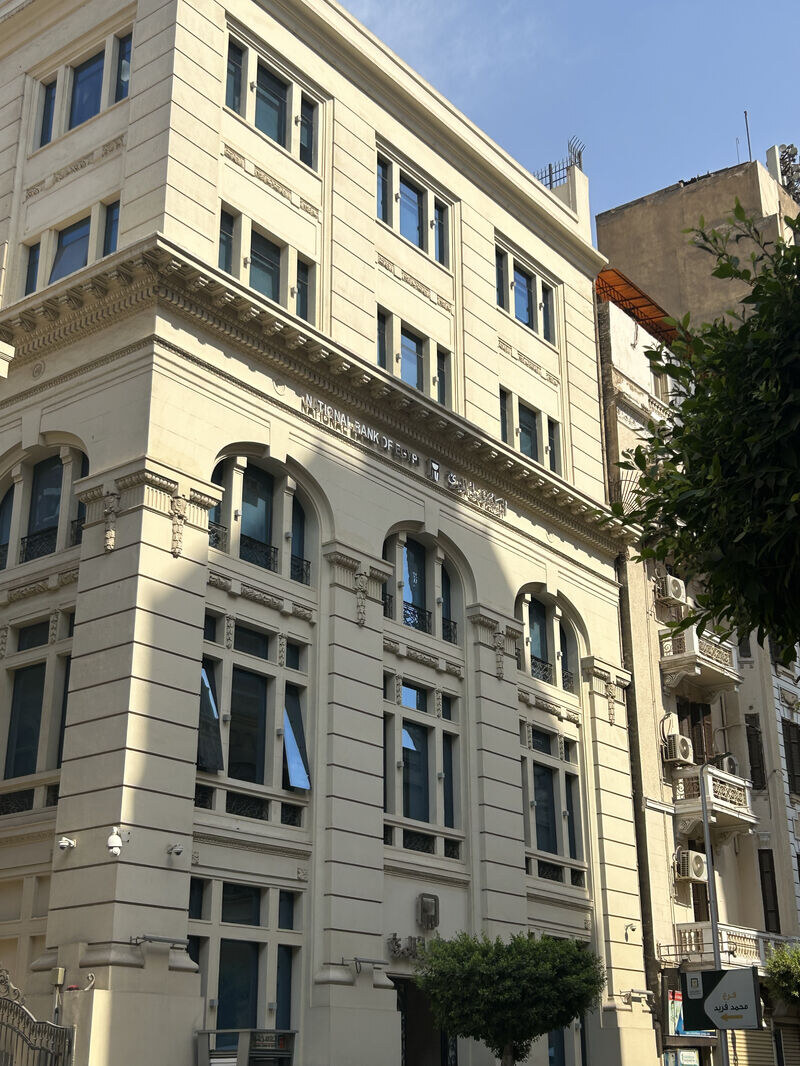
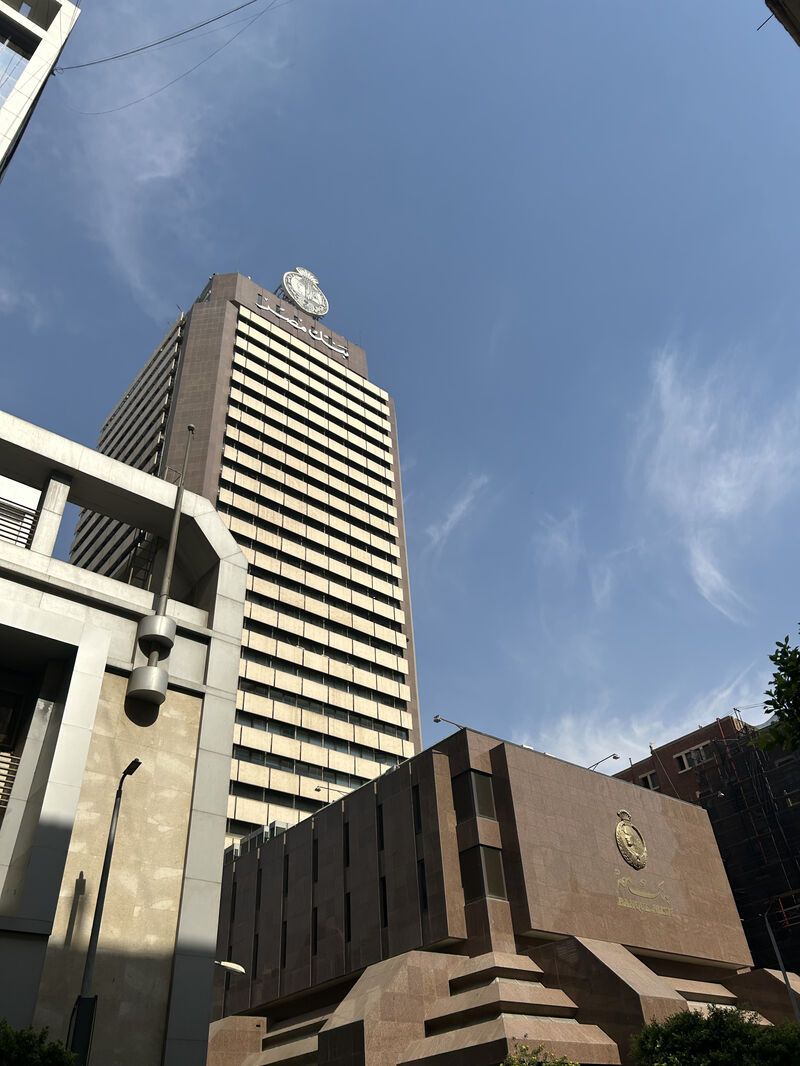 Next to it, yet another National Bank of Egypt branch offers the quiet counter-argument in limestone that’s symmetrical to a fault, with a grand arched entrance flanked by corbelled balconies.
Two buildings. One street. And between them, the full case for how this stretch of Downtown was a financial district in the fullest, most self-serious sense of the word. One that dressed its ambitions in stone and meant every bit of it.
- Previous Article SceneNoise x Amsterdam Dance Event Present CROSSFADE: Egypt
- Next Article Mobile Subscriptions in Egypt Reach 125.6 Million in Q1 2026
Related Articles

Trending This Week
-
-
-
 Sep 28, 2026
 -