



SHKOON’s New Album 'TRACES' Moves Between Dancefloors and Coastlines
The album transforms themes of migration, memory and revolution into a blend of Arabic soul and dance-inducing energy.
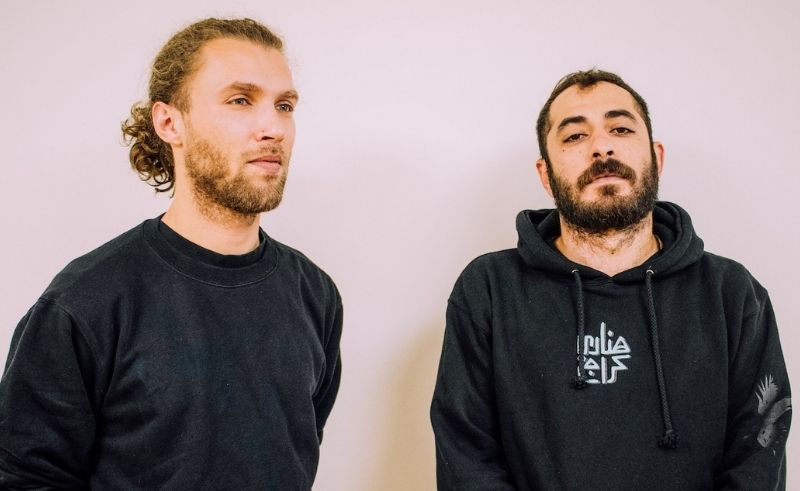
At their third sold-out concert in Cairo, I found myself in the middle of the venue, caught in a haze of cigarette smoke as people swayed and sang along. There was a meditative lull moving through the room, anchored by an electric bounce that made it impossible to stay still. Listening to Khayer’s voice, I kept imagining how fitting it would feel under open skies, somewhere in the desert, moving with the music rather than being held inside four walls.
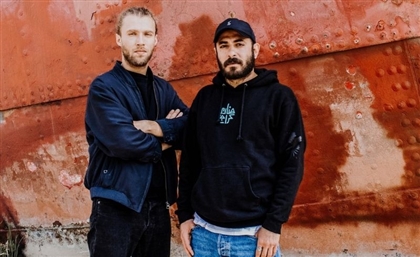
That feeling stayed with me as I listened to the German-Syrian duo’s debut album, TRACES. Continuing SHKOON’s blend of electronic textures and Arabic influences, the record moves through themes of memory, migration, and emotional inheritance. An undercurrent of longing for freedom runs through it, with electronic chords rising and falling in tension around Khayer’s melodies.
The album opens with 'Tired Way', a track shaped by the words of Syrian coast–based poet Hussein Hamza. The track carries the feeling of moving forward without fully knowing where the path leads, a sentiment tied to Khayer’s own history of living and studying on the Syrian coast before being imprisoned as a political activist.
'HANNEN' is built around a chant sung during the Syrian revolution, expressing a longing for freedom in one’s own home and calling out those in power. As Khayer’s voice cuts through, the beat gathers underneath it, turning protest into rhythm and making the body move with the call.
'Khala', meaning “aunt” in Arabic, points to a familiar figure in Arab culture of closeness and trust. Drawing from Iraqi musical traditions, the track leans into a call-and-response structure, where one voice is met by many. While watching SHKOON live, it made me think of the club floor as its own kind of call-and-response, bodies being led by the DJ, then answering back through movement.
With 'Winn Buya Winn', the album moves deeper into Iraqi references. “Winn” in Iraqi dialect carries the sound of pain, while the lyrics by Mohammed Jawad Al Amouri circle around the idea that pain can hold its own kind of beauty.
Across, TRACES traditional sounds and electronic production fold into one another, carrying these chants and stories into spaces where the body can move through longing and memory. Some albums can be played in clubs and in parks, and this one of them: after the night out seeing them live, I listened to the album in one sitting, watching sunset in a park cascading across Cairo’s facades, humming along. Where will you?
- Previous Article SceneNoise x Amsterdam Dance Event Present CROSSFADE: Egypt
- Next Article Nine MENA Designers Redefining Interiors Through Waste