





Egyptian AdTech 'Amzolute' Gets Acquired by US-Based InvenTel
Fresh off being acquired by US firm InvenTel, we speak to the founder of a startup that turns turning marketplace data into a competitive weapon.

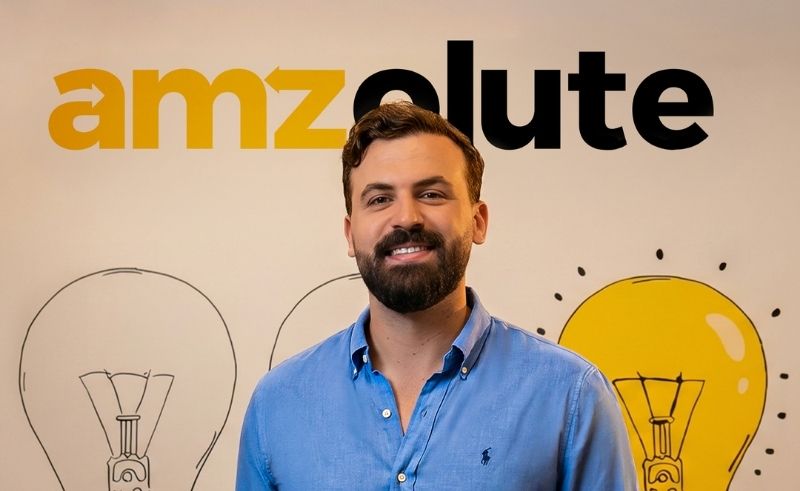
When Ahmed El Hefny co-founded Amzolute in May 2022, the Egyptian e-commerce landscape was at a turning point. Amazon had just arrived, bringing with it a surge of demand but leaving a gap in local marketplace expertise. Four years later, that foresight has paid off with the company’s April 2026 acquisition by US-based InvenTel.
El Hefny didn’t come from a traditional tech or e-commerce background. Before launching the company, he was working as an airline pilot, drawn to entrepreneurship by what he describes as the “glitz, glamour and freedom” he initially believed came with it. After completing an MBA, later recognising it wasn’t a prerequisite for building a business, he explored early startup ideas, including a last-minute travel booking app that ultimately didn’t take off.
It was during the early days of COVID-19, as his focus shifted towards e-commerce, that he came across a key insight: in more mature markets, brands rarely manage their Amazon presence independently, instead relying on specialised marketplace service providers to scale. It was around this time that Amazon launched in Egypt following its acquisition of Souq.com.
“It felt like a sign,” El Hefny tells StartupScene. “Instead of trying to sell products myself, I realised there was a bigger opportunity in helping other brands succeed on Amazon.”
Alongside his co-founder, who brought experience in Amazon’s US marketplace, Hefny launched Amzolute in Cairo, positioning it as a B2B service provider focused on marketplace growth and advertising optimization. Rather than stepping into an established category, the company found itself building one from the ground up.
“It wasn’t that anything was broken - it was that everything was new,” El Hefny explains. “Brands were entering Amazon with no shared playbook, and most were trying to apply old digital marketing logic to a completely different system.”
While demand was immediate, the underdeveloped Amazon ecosystem in Egypt meant that structured expertise around marketplace operations was limited. Amzolute’s early work quickly shifted from execution alone to education, helping brands understand not just how to advertise on Amazon, but how the platform itself actually worked.
That learning curve extended internally as well. The team immersed themselves in Amazon’s own Seller University materials, building knowledge from scratch and developing what would become some of the first dedicated Amazon specialists in the region. As Amazon Ads began rolling out locally, that gap between traditional performance marketing and marketplace-native advertising became even more visible.
“People tend to assume Amazon ads behave like Google or Meta, but they don’t,” El Hefny says. “It’s a completely closed ecosystem - with different intent, different logic, and a completely different way of thinking about demand.”
That distinction became a defining part of Amzolute’s positioning, ultimately helping it become the first Egyptian company to join Amazon’s Official Service Provider Network, and later the first Arab company recognised as a Verified Amazon Ads Partner.
As the company scaled, so did the complexity of the data it was managing. Marketplace advertising produces constant streams of behavioural signals, keyword performance, bid fluctuations, conversion patterns, and competitor movements, far beyond what manual systems can process effectively at scale.
“The reality is, no human team can keep up with that level of data in real time,” El Hefny says. “The moment you try to scale manually, you start falling behind the data itself.”
This is where AI became central to Amzolute’s operating model, not as a standalone product, but as the infrastructure powering decision-making across campaigns and clients.
“AI isn’t the product itself - it’s what holds the entire system together,” he explains. “Without it, scaling marketplace performance across hundreds of brands simply doesn’t work.”
In practice, this meant shifting away from periodic manual optimisation toward continuous, real-time adjustments - reducing wasted spend, improving bidding efficiency, and constantly refining performance based on live data signals.
Despite operating in a highly data-driven environment, Amzolute deliberately avoided a one-size-fits-all approach to growth. Instead, performance frameworks are tailored to each brand depending on its stage and objective.
“There’s no single definition of success in this space,” El Hefny says. “For one brand it’s aggressive scaling, for another its profitability. If you force one framework across all of them, you’re already solving the wrong problem.”
That flexibility has been key to the company’s expansion, which spanned more than 850 brands across over a dozen countries since it launched, including a move into the UAE in 2024. But despite that growth, the structure has remained intentionally lean, with a team of under 20 people.
For El Hefny, however, the defining factor behind Amzolute’s trajectory has never been scale or technology alone - it has been the people building it.
“Without a shred of doubt, the team is the reason Amzolute exists today,” he says. “We made a lot of mistakes building this company, but the one thing we got right from day one was the people.”
As Amzolute enters its next chapter following its acquisition by InvenTel, El Hefny is reflective about how the company defines growth more broadly. In an industry often driven by surface-level metrics, he is clear about what he believes actually matters.
“Revenue going up doesn’t mean growth if your margins are collapsing underneath it,” he says. “And followers don’t mean anything if they don’t translate into actual conversion.”
For him, the distinction between perception and performance is what separates momentum from sustainability. “Most founders optimise for what looks like growth,” he adds. “But real growth is usually slower, less visible, and often less exciting in the short term.”
- Previous Article Medrar Opens Call for Early-Career Artists in Cairo
- Next Article Egypt Allocates EGP 80B to Boost Startups Driving Production