






Travel Between Eras on These Historic Bridges Across MENA
Together, these crossings reveal infrastructure not as static architecture, but as an evolving record of how civilisations moved, traded, expanded, and survived.

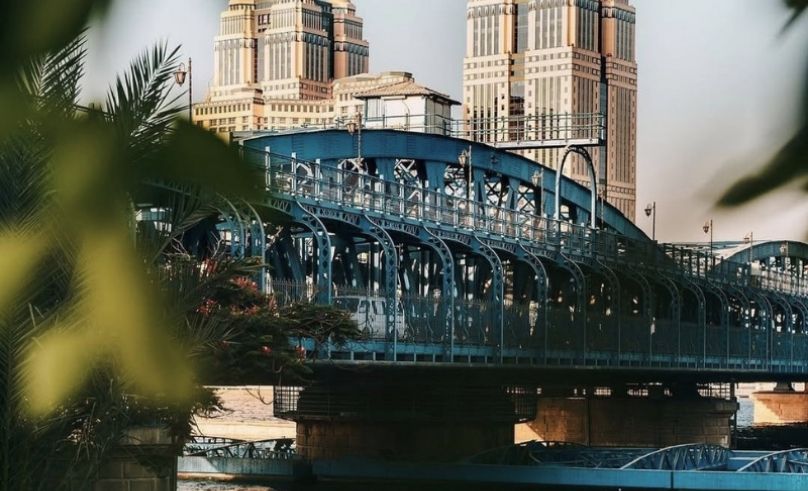
Across the Middle East and North Africa, bridges have rarely just been about getting from one side to another. They have acted, instead, as quiet markers of ambition, survival, and connection, constructed where geography demanded invention. Some were built by Roman engineers trying to bind distant provinces together through stone and symmetry. Others emerged from medieval dynasties navigating floodplains, caravan routes, and contested frontiers. Later came the age of iron, suspension cables, and industrial ambition, when colonial powers and modernising states attempted to redraw movement itself.
What makes these bridges remarkable is not simply the history compressed into them, but their sheer act of endurance. A train still rattles across steel trusses imagined during Egypt’s Khedival expansion. In Tunisia, a Roman arch continues to quietly carry passage nearly two thousand years after it was first laid into the landscape, while in Algeria, suspension cables stretch above a gorge that has shaped human settlement since antiquity.
Sidi M’Cid Bridge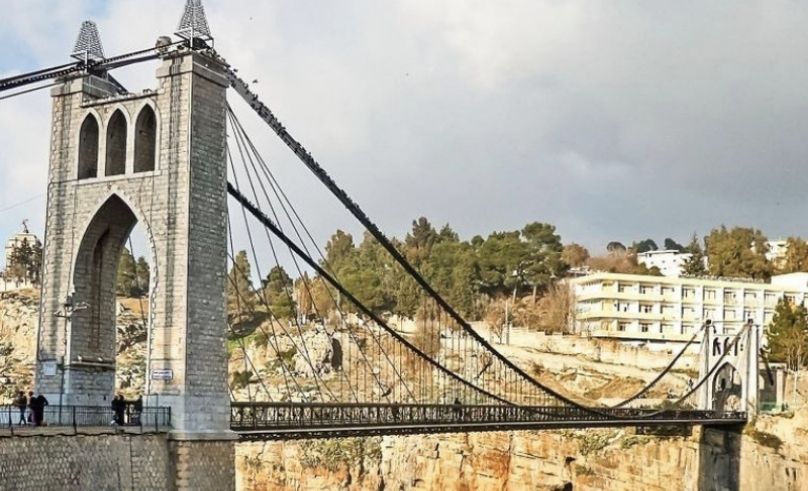 📍Constantine, Algeria
Completed in 1912 under French colonial rule and designed by engineer Ferdinand Arnodin, Sidi M'Cid Bridge is one of Constantine's most defining pieces of early modern engineering. Suspended 175 metres above the Rhumel Gorge—with a span of 164 metres—it was among the highest bridges in the world at the time of its opening, a record it held until 1929, and remains one of the most dramatic suspension bridges in North Africa.
Its design was considered cutting-edge for its era, using a finely calibrated system of steel cables to span a gorge that had already shaped human settlement since Roman times. In this way, the bridge does not overwrite history so much as thread itself through it, linking the Casbah to Sidi M'Cid hill while anchoring into cliffs that have carried centuries of urban life.
Roman Bridge of Thuburnica
📍Constantine, Algeria
Completed in 1912 under French colonial rule and designed by engineer Ferdinand Arnodin, Sidi M'Cid Bridge is one of Constantine's most defining pieces of early modern engineering. Suspended 175 metres above the Rhumel Gorge—with a span of 164 metres—it was among the highest bridges in the world at the time of its opening, a record it held until 1929, and remains one of the most dramatic suspension bridges in North Africa.
Its design was considered cutting-edge for its era, using a finely calibrated system of steel cables to span a gorge that had already shaped human settlement since Roman times. In this way, the bridge does not overwrite history so much as thread itself through it, linking the Casbah to Sidi M'Cid hill while anchoring into cliffs that have carried centuries of urban life.
Roman Bridge of Thuburnica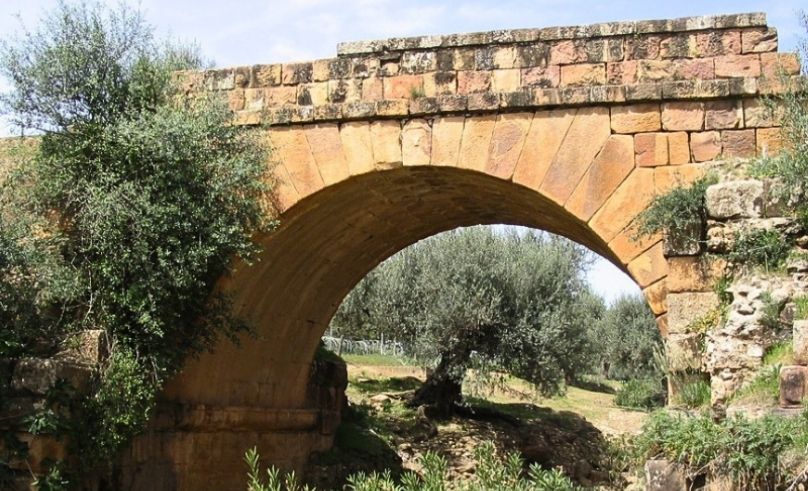 📍Jendouba Governorate, Tunisia
Near El Kalâa in northwestern Tunisia, the Roman Bridge of Thuburnica stands as a remarkably preserved example of 2nd–3rd century AD Roman engineering. Built in finely cut stone with a single elegant arch, it was designed as part of the wider infrastructure linking the ancient city of Thuburnica to surrounding agricultural lands and regional routes across Roman North Africa.
What makes the bridge especially striking is its continuity of use. Unlike many ancient crossings that survive only as ruins, Thuburnica's bridge still carries passage today, quietly maintaining a route that has functioned for nearly two millennia. Its enduring structure reflects the Roman approach to durability and proportion, where engineering was as much about longevity as it was about movement.
Qasr El Nil Bridge
📍Jendouba Governorate, Tunisia
Near El Kalâa in northwestern Tunisia, the Roman Bridge of Thuburnica stands as a remarkably preserved example of 2nd–3rd century AD Roman engineering. Built in finely cut stone with a single elegant arch, it was designed as part of the wider infrastructure linking the ancient city of Thuburnica to surrounding agricultural lands and regional routes across Roman North Africa.
What makes the bridge especially striking is its continuity of use. Unlike many ancient crossings that survive only as ruins, Thuburnica's bridge still carries passage today, quietly maintaining a route that has functioned for nearly two millennia. Its enduring structure reflects the Roman approach to durability and proportion, where engineering was as much about longevity as it was about movement.
Qasr El Nil Bridge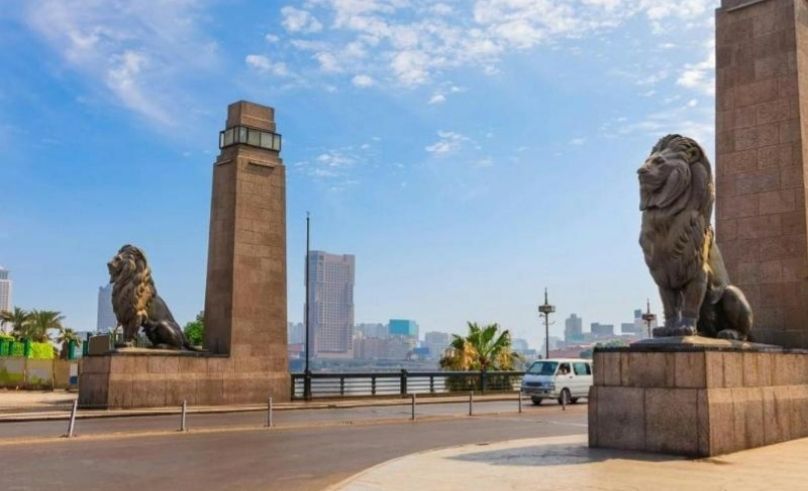 📍Cairo, Egypt
Built in 1931–1933 to replace an older crossing originally commissioned under Khedive Ismail and opened in 1872, Qasr El Nil Bridge stands as one of Cairo's great modern structures over the Nile. Designed in a European engineering style with sweeping metal arches and articulated joints, it was among the first swing bridges of its kind in the region, allowing river traffic to pass beneath during Cairo's late colonial and early modern expansion.
The bridge is famously guarded by four bronze lion statues—late 19th-century works by French sculptor Henri Alfred Jacquemart, commissioned in 1871 and placed at the bridge's entrances since its earlier incarnation. Today, it functions as more than infrastructure, framing the river like a public promenade where the city pauses between Zamalek and downtown, and where Cairo's layered eras remain visibly stitched together in iron and stone.
Oued Tensift Bridge
📍Cairo, Egypt
Built in 1931–1933 to replace an older crossing originally commissioned under Khedive Ismail and opened in 1872, Qasr El Nil Bridge stands as one of Cairo's great modern structures over the Nile. Designed in a European engineering style with sweeping metal arches and articulated joints, it was among the first swing bridges of its kind in the region, allowing river traffic to pass beneath during Cairo's late colonial and early modern expansion.
The bridge is famously guarded by four bronze lion statues—late 19th-century works by French sculptor Henri Alfred Jacquemart, commissioned in 1871 and placed at the bridge's entrances since its earlier incarnation. Today, it functions as more than infrastructure, framing the river like a public promenade where the city pauses between Zamalek and downtown, and where Cairo's layered eras remain visibly stitched together in iron and stone.
Oued Tensift Bridge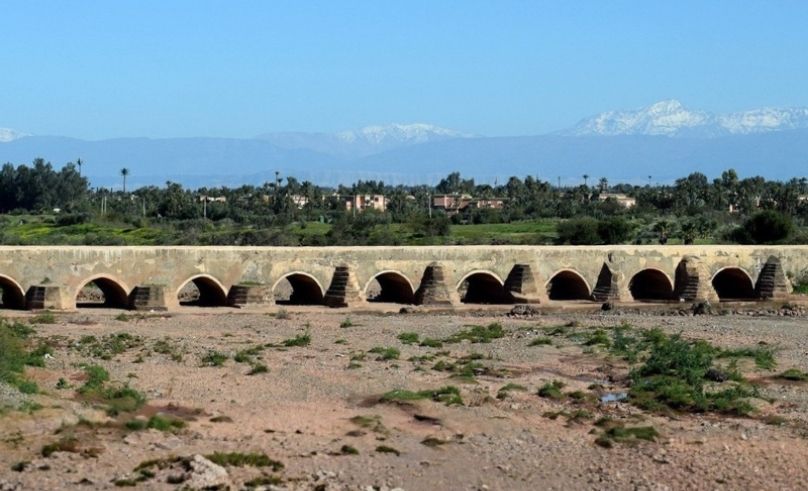 📍Marrakesh, Morocco
Originally commissioned during the Almoravid period by Emir Ali Ibn Yusuf (1106–1143), the Oued Tensift Bridge emerged as part of early efforts to stabilise movement across one of Morocco’s most flood-prone river systems. Its location on the Tensift River made it both essential and vulnerable, demanding a design that could survive seasonal surges and shifting water levels.
The bridge was later rebuilt and reinforced around 1170 under the Almohad ruler Abu Ya’qub Yusuf, evolving into a multi-arched stone structure engineered to disperse the force of floods rather than resist them head-on. Its repeated reconstruction across dynastic transitions reflects Marrakech’s long relationship with the river: a crossing point where architecture was shaped as much by water as by empire.
Ain Diwar Bridge
📍Marrakesh, Morocco
Originally commissioned during the Almoravid period by Emir Ali Ibn Yusuf (1106–1143), the Oued Tensift Bridge emerged as part of early efforts to stabilise movement across one of Morocco’s most flood-prone river systems. Its location on the Tensift River made it both essential and vulnerable, demanding a design that could survive seasonal surges and shifting water levels.
The bridge was later rebuilt and reinforced around 1170 under the Almohad ruler Abu Ya’qub Yusuf, evolving into a multi-arched stone structure engineered to disperse the force of floods rather than resist them head-on. Its repeated reconstruction across dynastic transitions reflects Marrakech’s long relationship with the river: a crossing point where architecture was shaped as much by water as by empire.
Ain Diwar Bridge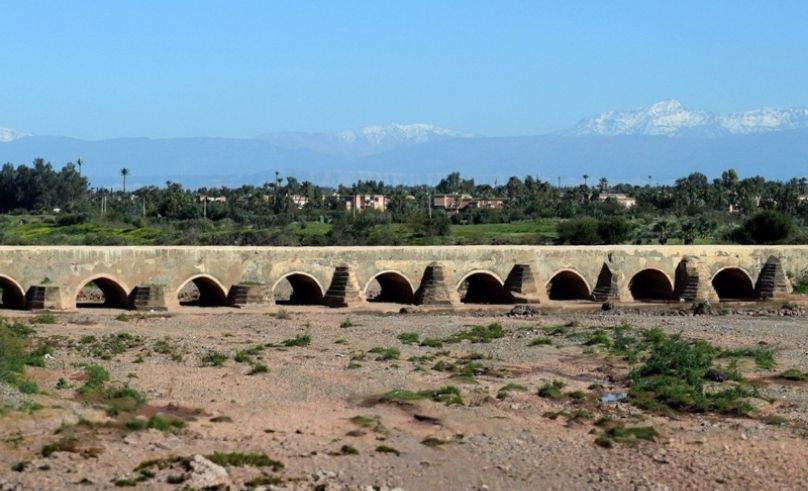 📍Cizre region, Syria
Set near the meeting point of Syria, Iraq, and Turkey, the Ain Diwar Bridge—also known as the Zangid Bridge—once crossed the Tigris River as part of a wider medieval network of movement shaped by trade routes and imperial frontiers. Built in finely worked masonry, its surviving arch fragments suggest a structure from the Zangid period, when northern Mesopotamia was stitched together through fortified crossings and river infrastructure that doubled as territorial markers.
Now in ruins, the bridge no longer functions as a passage but remains a trace of how geography once demanded engineering answers. What’s left is a stone arc suspended over absence, where the river has shifted course and the empires that built it have long dissolved, leaving the structure to hold only memory and terrain in the same frame.
Imbaba Railway Bridge
📍Cizre region, Syria
Set near the meeting point of Syria, Iraq, and Turkey, the Ain Diwar Bridge—also known as the Zangid Bridge—once crossed the Tigris River as part of a wider medieval network of movement shaped by trade routes and imperial frontiers. Built in finely worked masonry, its surviving arch fragments suggest a structure from the Zangid period, when northern Mesopotamia was stitched together through fortified crossings and river infrastructure that doubled as territorial markers.
Now in ruins, the bridge no longer functions as a passage but remains a trace of how geography once demanded engineering answers. What’s left is a stone arc suspended over absence, where the river has shifted course and the empires that built it have long dissolved, leaving the structure to hold only memory and terrain in the same frame.
Imbaba Railway Bridge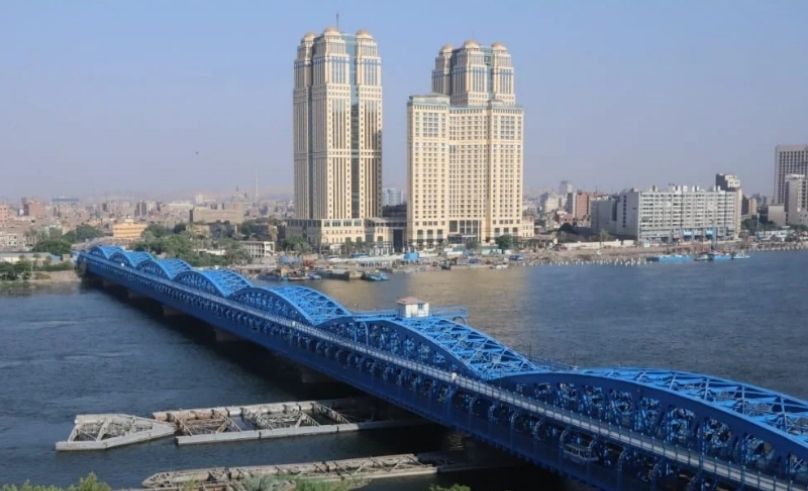 📍Cairo, Egypt
Constructed in the late 19th century as part of Egypt’s expanding railway network under Khedival modernization, the Imbaba Railway Bridge remains one of the oldest active rail crossings over the Nile. Built with industrial steel trusses and a utilitarian engineering logic typical of early railway infrastructure, it reflects a moment when Cairo was being physically reshaped to connect agricultural hinterlands with urban and port economies.
The bridge’s origins remain slightly elusive, with no universally agreed-upon original designer—a mystery that has fuelled long-standing rumours linking an early prototype of the structure to French engineer Gustave Eiffel. While historians continue to debate the extent of that connection, the bridge’s steel latticework and rhythmic truss system unmistakably echo the engineering language associated with Eiffel-era industrial Europe, drawing comparisons to Porto’s Ponte Maria Pia and even the Eiffel Tower itself.
The smaller original version was built in 1892 before being replaced by a more substantial structure between 1912 and 1924. Unlike ornamental civic bridges, its design prioritises function over spectacle, yet its repeated riveted segments and heavy structural rhythm have become an unintentional monument to industrial-era ambition. Still in use today, it continues to carry trains across the Nile, threading together Cairo’s dense urban fabric with the slower logic of 19th-century engineering.
📍Cairo, Egypt
Constructed in the late 19th century as part of Egypt’s expanding railway network under Khedival modernization, the Imbaba Railway Bridge remains one of the oldest active rail crossings over the Nile. Built with industrial steel trusses and a utilitarian engineering logic typical of early railway infrastructure, it reflects a moment when Cairo was being physically reshaped to connect agricultural hinterlands with urban and port economies.
The bridge’s origins remain slightly elusive, with no universally agreed-upon original designer—a mystery that has fuelled long-standing rumours linking an early prototype of the structure to French engineer Gustave Eiffel. While historians continue to debate the extent of that connection, the bridge’s steel latticework and rhythmic truss system unmistakably echo the engineering language associated with Eiffel-era industrial Europe, drawing comparisons to Porto’s Ponte Maria Pia and even the Eiffel Tower itself.
The smaller original version was built in 1892 before being replaced by a more substantial structure between 1912 and 1924. Unlike ornamental civic bridges, its design prioritises function over spectacle, yet its repeated riveted segments and heavy structural rhythm have become an unintentional monument to industrial-era ambition. Still in use today, it continues to carry trains across the Nile, threading together Cairo’s dense urban fabric with the slower logic of 19th-century engineering.
- Previous Article SceneNoise x Amsterdam Dance Event Present CROSSFADE: Egypt
- Next Article The Abandoned Architecture of Villa Badran by Gamal Bakry
Related Articles


Trending This Week
-
-

-
 Sep 10, 2026
 -
 Sep 10, 2026