





The Man Who Makes Champions: Squash Coach Omar Abdelaziz Explains How
At the 2026 World Championship, coach Omar Abdelaziz watched two of his players reach the men's semifinals - a first for the sport, and the product of a philosophy built one player at a time.

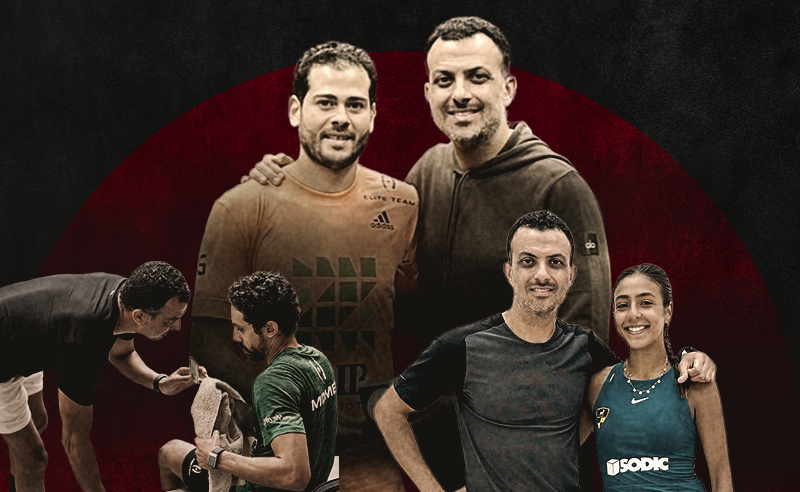
What does it actually take to build a top five world champion? For Omar Abdelaziz, the 43-year-old Egyptian squash coach behind two of the men's game's brightest names, the answer has surprisingly little to do with talent at all.
In May 2026, at the PSA Palm Hills World Squash Championship, Abdelaziz watched both Kareem Abdel Gawad and Youssef Ibrahim reach the men's semifinals in the same tournament - the first time a single coach has done that in the sport's history. It was the product of years spent training both players individually.
Abdelaziz's own path into coaching wasn't calculated. A professional player for ten years, he eased into it gradually rather than by design. "It was not my plan to be a coach from the beginning," he tells SceneSports. His earliest players, Mohamed Gawarhy and Nouran Gohar, marked the start of a career that would go on to produce some of Egypt's most decorated names in the sport - Gohar among them, a former world number one. Today, his roster includes Kareem and Youssef, both ranked in the world's top six, alongside Fayrouz Aboelkheir, currently world No. 7.
So what does it actually take to coach a champion? Abdelaziz breaks down
Discipline Is Belief in Disguise
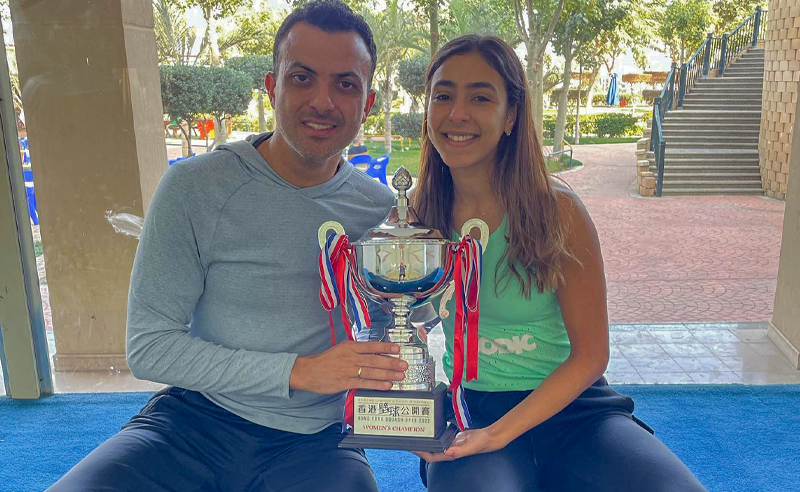
"We have people who are very talented in squash," Abdelaziz states. "But for me, it's all about discipline and belief." It's a distinction he returns to throughout our conversation, not as a platitude, but as something closer to a working theory of the sport. "Discipline is something that comes from someone who believes in where he's going to end up - they're deeply connected. It's someone who can see themselves standing on top of the hill."
It's a trait he insists is common to every top player he's coached, regardless of personality or background. "Every top player I've coached has one thing in common: they need to get better every single session. They believe they're the best, and that belief is what drives the discipline, not the other way around."
Losing Is the Real Curriculum
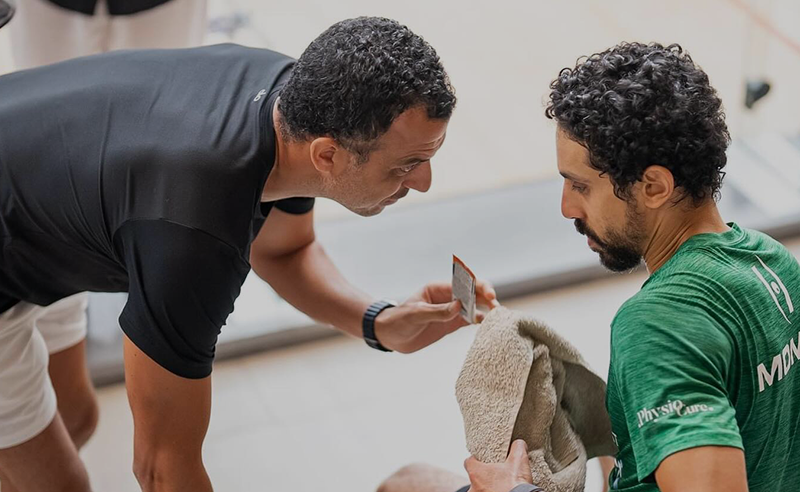
If belief is the foundation, Abdelaziz's second core principle is almost counterintuitive: winning, in his eyes, isn't actually where the growth happens. "Winning builds confidence, but losing doesn't - losing is more like putting money in your bank account," he explains. "You put something in that you learned from, even if you don't know yet what to do with it. You lose confidence, sure, but you shouldn't look down on yourself."
The work, he says, is in the granular detail. "I'm used to breaking the problem down into the smallest pieces: today I wasn't attacking enough, today my movement was off - you keep going until you find the one detail that actually helps the player." It's a mindset he holds up as central to how he evaluates a match at all. "There are 3-0 wins you learn nothing from. There are 3-2 losses you learn ten times more from."
The Best Players Aren't the Best - They're the Best at Adapting
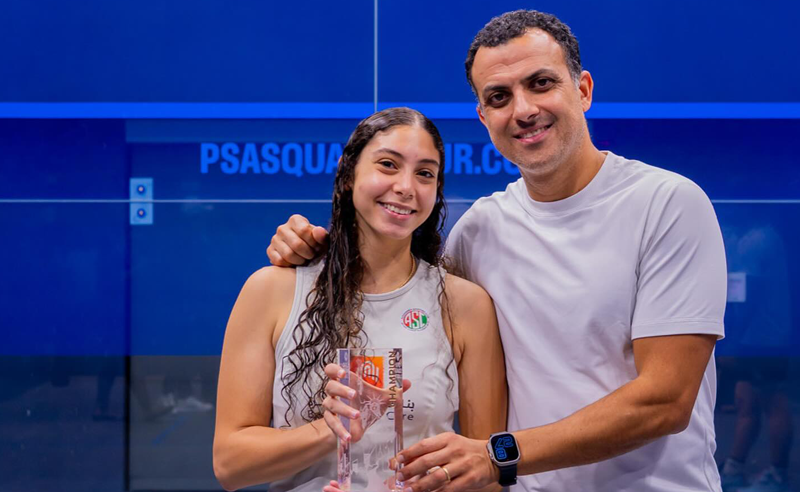
That same instinct, to look past the scoreline and into the mechanics of the moment, is, for Abdelaziz, what actually separates a world number one from the rest of the field. "Number one in the world is not the best player - number one in the world is the best fixer in every situation," he says. "Maybe someone else plays better than him on a given day, but he knows how to adapt."
On court, in the middle of a losing game, that philosophy becomes tactical instruction. "When a player is down 10-5 in a game, we don't talk about the whole scoreline. We make it smaller - just get one more point, don't look far ahead. It's already complicated enough that you're losing; you don't need to make it feel bigger than it is."
Knowing the Player Outranks the Coach
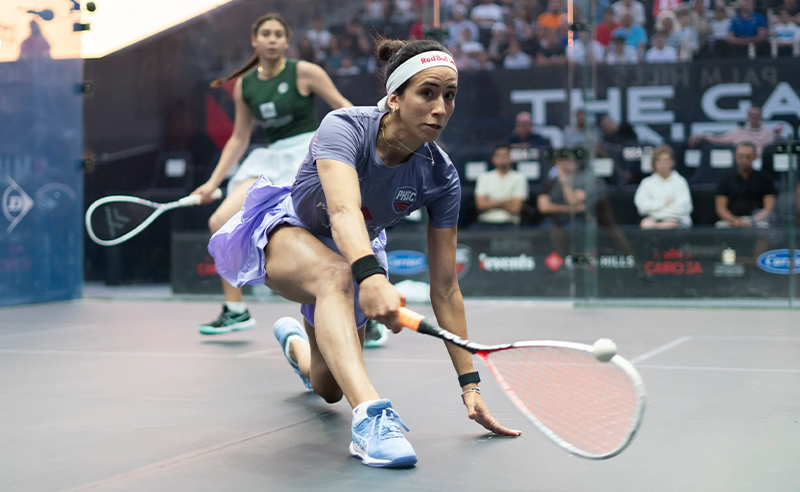
Perhaps the most striking part of Abdelaziz's philosophy is how little ego it seems to require. "You have to know the player is number one, not the coach. Then maybe, you become the best coach," he says. "You have to be flexible, firm, and confident all at once."
It's a lesson he's lived through directly, not just preached. Before Kareem, Youssef and Fayrouz, Abdelaziz spent eight years coaching Nouran Gohar, a stretch that took her to world number one, both in Egypt and globally. But careers change, and so do the people behind them. “You have to accept that one day you might be training someone else. I trained Nouran for eight years, and then her situation changed, she got married, she moved to America.” In her place, he took on Hania El Hammamy, a partnership that lasted three years and, by his own account, wasn't always smooth. “It didn't work out perfectly, we live too far apart, but I respect her, and I will be there when she needs me,” he goes on.
It's an ending most coaches might take personally. Abdelaziz treats it as proof of concept. He moved on to train another player who has since broken into the world's top ten. Today, the same philosophy has produced three players inside the top ten at once."
Coaching the Body, Not Just the Game
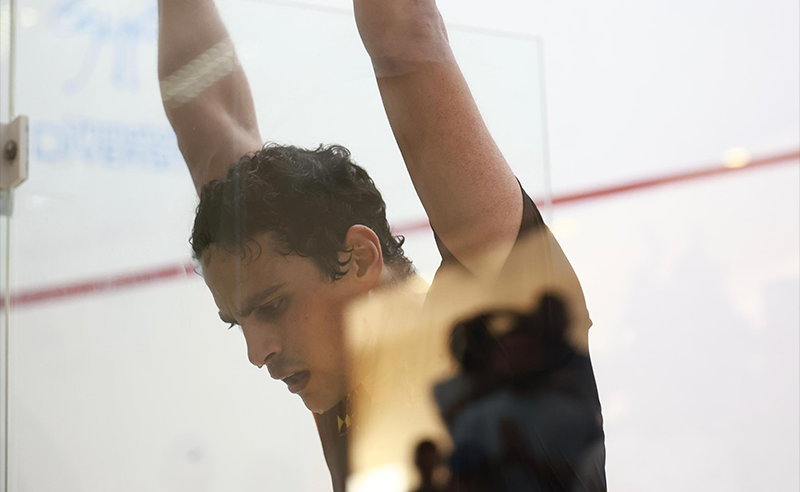
That same restraint is being tested right now with Youssef, who is recovering from shoulder surgery after a season that saw him crack the world's top five. "Youssef had a big surgery on his shoulder, and it was a very tough decision," Abdelaziz says. "He was in top form - World No. 5, one of the best players of the season. But we chose his body and his life over one more match. We wanted him to take care of himself."
The recovery, like everything else in Abdelaziz's method, is being handled in careful stages rather than rushed. "His rehab has started, and if everything goes well, it'll take about another month before he's back to full training, and even then, he won't go straight to tournaments. He'll play with me first, then friends, then conditional games, then normal practice matches, and only after that will we look at competition again."
That same patience was on full display at the tournament that started this whole conversation. Abdelaziz describes the day Kareem and Youssef both reached the semifinals, and the memory still visibly moves him. "This was the best day of my life - actually, the day before was the best day of my life," he says. "It was the first time a single coach had two players in the men's world championship semifinals at once."
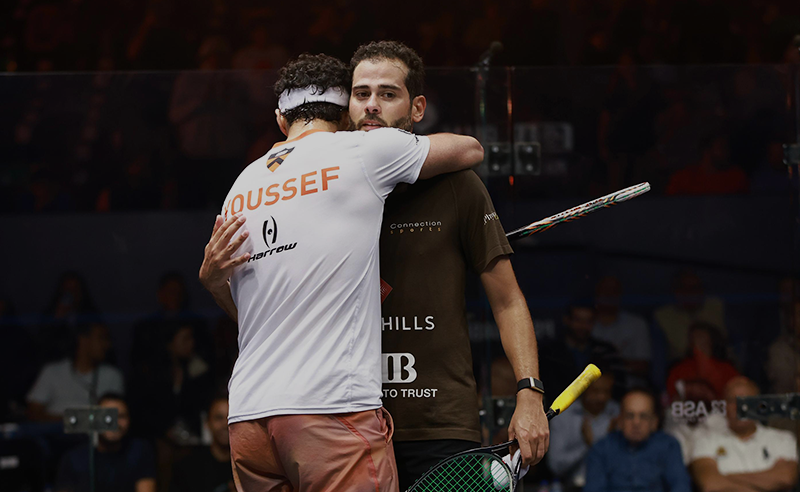
For Abdelaziz, though, the achievement wasn't really about the milestone itself, it was about what it meant to be present for both halves of it. "Today I have two of the best players in the world, and I was with Kareem the day he lost, then with Youssef celebrating the day after," he says. It's a line that, in many ways, captures his entire philosophy in miniature; a loss and a win, back to back, held with the same steadiness.
- Previous Article BRKZ Raises $31 Million to Expand AI Construction Procurement
Related Articles
Trending This Week
-
-
 Sep 10, 2026
 -
 Sep 10, 2026
 -