




Al Ahly Physiotherapist Wafaay Never Scored But Owned the Sideline
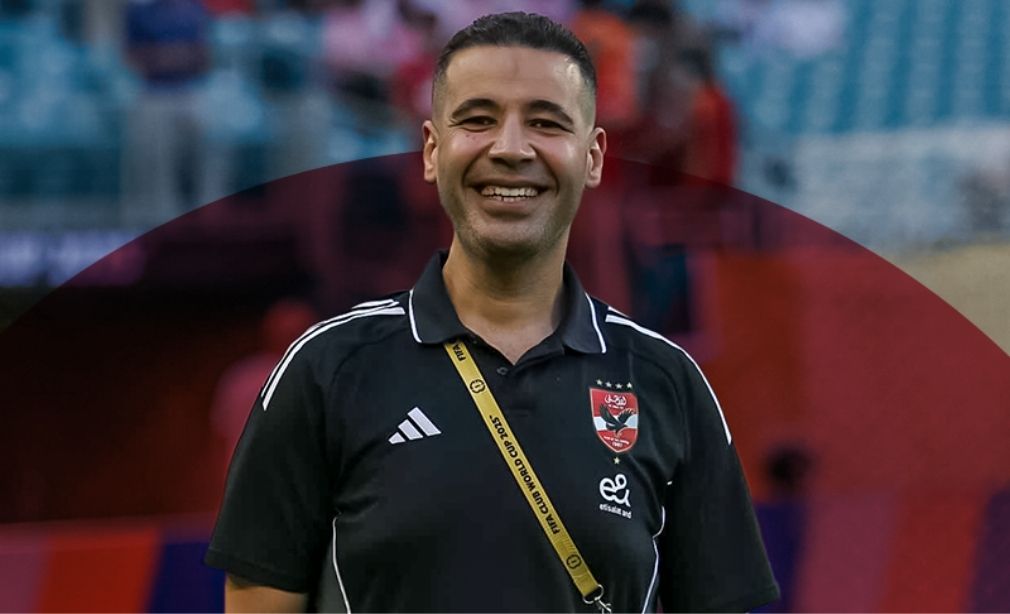
Before becoming Al Ahly's physio for seven years Mohamed Wafaay trained at Juventus and Bayern Munich then returned to Egypt to dignify a profession once seen as a black hole.
There comes a moment in almost every young boy’s life – somewhere between the first World Cup he stays up to watch and the first time his father lets him keep the television on past midnight – when he dreams, however briefly, of becoming a footballer. He sees the roar, the lifted shirt, the slow‑motion replay of his name. Then reality tugs at his sleeve. Some boys grow taller; others just grow slower. Some discover their talent is real but not enough. So the dream rotates on its own axis, migrating. Instead of standing in the centre circle, you find yourself on the sideline – still certain, still attached to the game, still cheering from the sidelines.
-8bbe41e5-f1ae-4aed-a95f-fb0460c10c52.jpg) Mohamed Wafaay loved football long before he understood what a physiotherapist actually did. Today, he carries the titles to prove he belongs there: seven years as Al Ahly's chief physiotherapist, completed training stints at Juventus and Bayern Munich, and holds an Advanced Manual Therapy Diploma from Sheffield. While his peers flew abroad on a mapped-out path, he stayed in Egypt with an obsession that sounded foolish at the time – to change what physiotherapy meant in a country where the profession was barely understood.
“I decided to make a career in this field in my country. I'm not just saying that. I wanted to dignify this job in Egypt and make a name for it, and myself here,” Wafaay says. Today he has treated everyone from Egypt's top squash player to your favourite footballer's hamstring to the aching lower back you have been ignoring for months.
But truthfully, Mohamed Wafaay never planned to become that man. When his dream of becoming a doctor – a dermatologist, specifically – shattered in high school, he found himself enrolled in a Politics and Economics degree. Then came a small bureaucratic miracle; an exam re-check gave him back half a mark pumping him out of Politics and into Physiotherapy. "I thought to myself, it's close enough to medicine," he says. The problem was that he had already missed a month of classes. "I suddenly had eight heavy subjects and didn't know anything but anything. I got straight zeros in the midterms."
Mohamed Wafaay loved football long before he understood what a physiotherapist actually did. Today, he carries the titles to prove he belongs there: seven years as Al Ahly's chief physiotherapist, completed training stints at Juventus and Bayern Munich, and holds an Advanced Manual Therapy Diploma from Sheffield. While his peers flew abroad on a mapped-out path, he stayed in Egypt with an obsession that sounded foolish at the time – to change what physiotherapy meant in a country where the profession was barely understood.
“I decided to make a career in this field in my country. I'm not just saying that. I wanted to dignify this job in Egypt and make a name for it, and myself here,” Wafaay says. Today he has treated everyone from Egypt's top squash player to your favourite footballer's hamstring to the aching lower back you have been ignoring for months.
But truthfully, Mohamed Wafaay never planned to become that man. When his dream of becoming a doctor – a dermatologist, specifically – shattered in high school, he found himself enrolled in a Politics and Economics degree. Then came a small bureaucratic miracle; an exam re-check gave him back half a mark pumping him out of Politics and into Physiotherapy. "I thought to myself, it's close enough to medicine," he says. The problem was that he had already missed a month of classes. "I suddenly had eight heavy subjects and didn't know anything but anything. I got straight zeros in the midterms."
-b5f46de4-5005-4dfe-8493-ae0ecd25301e.jpg) That was 2000. He struggled, like a player finding his position. But somewhere between the anatomy diagrams and the rehabilitation protocols, the game began to make sense. He graduated in 2005, unspectacularly, and started working for free. “I worked with the Dean of Ain Sham’s Physiotherapy Department, for only EGP 150 a month. Then with Dr. Khaled Eid – he was my spiritual father in medicine. He was the one who taught me about field injuries.”
The apprenticeship, informal and relentless, shaped the philosophy he carries into his work today: a refusal to treat physiotherapy as secondary to medicine, and a refusal to cut corners, even under pressure. It is a discipline that sits in the quiet aftermath of injury, where timelines are contested and optimism has to be negotiated carefully. Those early years had no glamour. The work was repetitive, the pay laughable, the respect non‑existent. But Wafaay had made a private decision.
“I decided that I had to change. I didn't want to be an ordinary person in this job. I wanted to love this field so it loves me back,” Wafaay tells SceneSports. “There was something between me and my mother. She’d ask me what physical therapists do. I told her one day you would find me El-Nadi El-Ahly Doctor; this job comes from this university.”
He opened his first small clinic in 2015, borrowing money because he refused to ask for cash from his father. Then a second clinic, then a third. He built a franchise model – 10 clinics at its peak, including two he still runs today in Maadi and New Cairo, which were his first two clinics kept as a totem of good fortune.
That was 2000. He struggled, like a player finding his position. But somewhere between the anatomy diagrams and the rehabilitation protocols, the game began to make sense. He graduated in 2005, unspectacularly, and started working for free. “I worked with the Dean of Ain Sham’s Physiotherapy Department, for only EGP 150 a month. Then with Dr. Khaled Eid – he was my spiritual father in medicine. He was the one who taught me about field injuries.”
The apprenticeship, informal and relentless, shaped the philosophy he carries into his work today: a refusal to treat physiotherapy as secondary to medicine, and a refusal to cut corners, even under pressure. It is a discipline that sits in the quiet aftermath of injury, where timelines are contested and optimism has to be negotiated carefully. Those early years had no glamour. The work was repetitive, the pay laughable, the respect non‑existent. But Wafaay had made a private decision.
“I decided that I had to change. I didn't want to be an ordinary person in this job. I wanted to love this field so it loves me back,” Wafaay tells SceneSports. “There was something between me and my mother. She’d ask me what physical therapists do. I told her one day you would find me El-Nadi El-Ahly Doctor; this job comes from this university.”
He opened his first small clinic in 2015, borrowing money because he refused to ask for cash from his father. Then a second clinic, then a third. He built a franchise model – 10 clinics at its peak, including two he still runs today in Maadi and New Cairo, which were his first two clinics kept as a totem of good fortune.
-ff4f23a2-ee15-4a70-83d2-26beb5bfb021.jpg) The call came from Al Ahly, first through captain Walid Soliman, who knew a man who knew a man. Then directly: would he consider being the club’s physiotherapist? He said no the first time. The salary would not even cover the rent on one of his clinics. “It was my dream, but I had responsibilities. I couldn’t just drop everything.” A year later, they offered him a part‑time role. He said yes.
From 2019 onwards, Wafaay moved between two worlds: the controlled environment of his clinics and the volatile, high-stakes ecosystem of elite football. “I was working three or four days in my clinics, and three or four days at the club,” he says. “But honestly, I was at the club almost every day.” The rhythm of his life shifted entirely. Training sessions, recovery protocols, travel, camps that stretched to more than 120 nights a year. His days extended well beyond twelve hours. His work required both clinical judgement and psychological management – of players, coaches, expectations. And yet, he describes those years with a kind of uncomplicated affection. “They were the best days of my life.”
The call came from Al Ahly, first through captain Walid Soliman, who knew a man who knew a man. Then directly: would he consider being the club’s physiotherapist? He said no the first time. The salary would not even cover the rent on one of his clinics. “It was my dream, but I had responsibilities. I couldn’t just drop everything.” A year later, they offered him a part‑time role. He said yes.
From 2019 onwards, Wafaay moved between two worlds: the controlled environment of his clinics and the volatile, high-stakes ecosystem of elite football. “I was working three or four days in my clinics, and three or four days at the club,” he says. “But honestly, I was at the club almost every day.” The rhythm of his life shifted entirely. Training sessions, recovery protocols, travel, camps that stretched to more than 120 nights a year. His days extended well beyond twelve hours. His work required both clinical judgement and psychological management – of players, coaches, expectations. And yet, he describes those years with a kind of uncomplicated affection. “They were the best days of my life.”
-e1f64f2b-f62c-4c47-acce-922a4a49b340.jpg) Champions League matches, domestic titles, the weight of a nation’s expectation pressing down on a hamstring or an ankle. “You don’t play unless you are 100 percent ready. If you play at 70, you tear something else. Then you’re out for months. Then everyone knows. Then you’ve lost the player and the trust of the fans. My decision is always medical.”
He travelled to Juventus, to Bayern Munich, studying their methods, watching how European clubs handled recovery. “The interesting thing was discovering we already did what they did. The same protocols, the same exercises. The difference wasn’t knowledge. It was time. They have more staff, more equipment, more space.” What Europe taught him, indirectly, was that Egypt had nothing to be ashamed of.
But the pressure inside Al Ahly was something no European club could replicate. Not because the medicine was different, but because the stakes carried a different texture. “When you treat a normal patient, you do one session a day. When you treat a footballer, you do two. Because his job is his body. And if he doesn’t play, the entire fan base is asking why.” He remembers the sleepless nights before big matches, the last‑minute fitness tests, the conversations with coaches who wanted their star player on the pitch and a physio who wanted him alive next season. “My medical judgment came first. That’s the rule at Al Ahly – they let you work and respect your judgement.”
Champions League matches, domestic titles, the weight of a nation’s expectation pressing down on a hamstring or an ankle. “You don’t play unless you are 100 percent ready. If you play at 70, you tear something else. Then you’re out for months. Then everyone knows. Then you’ve lost the player and the trust of the fans. My decision is always medical.”
He travelled to Juventus, to Bayern Munich, studying their methods, watching how European clubs handled recovery. “The interesting thing was discovering we already did what they did. The same protocols, the same exercises. The difference wasn’t knowledge. It was time. They have more staff, more equipment, more space.” What Europe taught him, indirectly, was that Egypt had nothing to be ashamed of.
But the pressure inside Al Ahly was something no European club could replicate. Not because the medicine was different, but because the stakes carried a different texture. “When you treat a normal patient, you do one session a day. When you treat a footballer, you do two. Because his job is his body. And if he doesn’t play, the entire fan base is asking why.” He remembers the sleepless nights before big matches, the last‑minute fitness tests, the conversations with coaches who wanted their star player on the pitch and a physio who wanted him alive next season. “My medical judgment came first. That’s the rule at Al Ahly – they let you work and respect your judgement.”
-b7fc7c61-dba0-4e1d-a07c-8aefcc71c03d.jpg) Then, after seven years, he walked away. “I felt I had given everything I could. I wanted to leave with a good mark without feeling like I shorthanded the team I love. It was one of the most difficult and heartbreaking decisions I have ever had to make in my life.” He left in 2025. Al Ahly released a statement thanking him for his years alongside the team. “That doesn’t happen often,” he says, quietly. “It meant the world.” Now he runs Physiocure, a network of more than 300 employees and eight clinics.
Then, after seven years, he walked away. “I felt I had given everything I could. I wanted to leave with a good mark without feeling like I shorthanded the team I love. It was one of the most difficult and heartbreaking decisions I have ever had to make in my life.” He left in 2025. Al Ahly released a statement thanking him for his years alongside the team. “That doesn’t happen often,” he says, quietly. “It meant the world.” Now he runs Physiocure, a network of more than 300 employees and eight clinics.
-fb84f236-41f7-45ba-a4f3-a13658aec9e5.jpg) When asked what he would tell a young Egyptian starting physiotherapy today, he doesn’t hesitate. “Learn anatomy like your life depends on it. Learn biomechanics. Learn psychology. The things that separate you from the next person are the things you study on your own, after the lecture ends.” And then he adds something softer: “Don’t do it for the money. Do it because you love putting people back together.”
He rarely agrees to interviews, and trust me, this interview took weeks of chasing. Not because he is busy, though he is, but because he refuses to trade the trust his players placed in him for likes or shares. "That's not what I stand for," he says. He watched seven years of injuries, recoveries, last‑minute fitness tests, and conversations that never left the treatment room. Those moments belong to the players and to the team. He will not break that ethics. He would rather stay quiet and keep the respect of the men who let him touch their careers than say something clever and lose himself in the process. He gets shy when younger physiotherapists approach him at conferences asking for photographs. "I'm just a doctor," he says. "I never did any of this for clout."
Mohamed Wafaay never scored a winning goal. He never lifted a shirt to a roaring crowd. But for seven years, every time an Al Ahly player walked off the pitch instead of being carried, every time a hamstring held through extra time, every time a fan cheered a name that would have been on the injury list without him – that was his roar.
“This job gave me more than I could have ever imagined, and I am beyond grateful.”
When asked what he would tell a young Egyptian starting physiotherapy today, he doesn’t hesitate. “Learn anatomy like your life depends on it. Learn biomechanics. Learn psychology. The things that separate you from the next person are the things you study on your own, after the lecture ends.” And then he adds something softer: “Don’t do it for the money. Do it because you love putting people back together.”
He rarely agrees to interviews, and trust me, this interview took weeks of chasing. Not because he is busy, though he is, but because he refuses to trade the trust his players placed in him for likes or shares. "That's not what I stand for," he says. He watched seven years of injuries, recoveries, last‑minute fitness tests, and conversations that never left the treatment room. Those moments belong to the players and to the team. He will not break that ethics. He would rather stay quiet and keep the respect of the men who let him touch their careers than say something clever and lose himself in the process. He gets shy when younger physiotherapists approach him at conferences asking for photographs. "I'm just a doctor," he says. "I never did any of this for clout."
Mohamed Wafaay never scored a winning goal. He never lifted a shirt to a roaring crowd. But for seven years, every time an Al Ahly player walked off the pitch instead of being carried, every time a hamstring held through extra time, every time a fan cheered a name that would have been on the injury list without him – that was his roar.
“This job gave me more than I could have ever imagined, and I am beyond grateful.”
- Previous Article SceneNoise x Amsterdam Dance Event Present CROSSFADE: Egypt
- Next Article Kahhal Looms & Shosha Kamal Weave Ramses II's Victories Into Rugs