





Bu Nasser Touffar On Resistance & The Shared Struggle of Arabs
The Lebanese rapper breaks down the philosophy behind his music and how it reflects the political climate in the region.

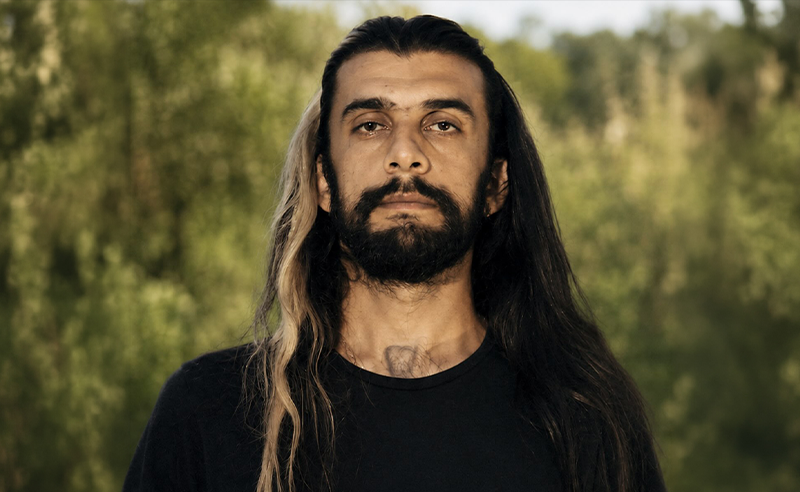
Hailing from Lebanon’s historically neglected Bekaa Valley, Bu Nasser Touffar remains one of the Arab underground’s most uncompromising voices. Ever since emerging as part of seminal hip-hop duo Touffar in the late 2000s, the rapper, novelist, and lyricist has steadfastly refused to sanitise his narrative for palatable mainstream consumption. Speaking at Oakenfest 2026, Touffar framed his work as an intentional counterweight to the political and cultural forces dividing collective struggles across the region.
At the core of Touffar’s ethos is a sharp critique of power structures that weaponise isolation. Authoritarian regimes throughout Lebanon, Syria, Egypt, and beyond maintain control by convincing populations that their grievances are distinct and localised. Touffar counters this by treating regional suffering as a singular, interconnected experience against systemic oppression and military occupation, using his music to forge a shared vernacular across manufactured borders.
This commitment to restoring humanity to political violence culminates in his track ‘The Others.’ Facing a media landscape where the genocide committed by Israel in Palestine routinely flattens Palestinian lives into transient statistics, Touffar re-anchors the narrative around individual names, faces, and stolen futures. It is an exercise in active memory against erasure, rooted in the clear-eyed conviction that while entire homes and lineages have been destroyed, the survivors vastly outnumber the fallen and will outlast the occupation.
Navigating both literature and rap, Touffar adapts his technique to the medium while keeping his core purpose fixed. Where prose offers boundless structural freedom, hip-hop enforces strict cadences, rhythms, and rhyme schemes. Yet both disciplines serve the same non-negotiable imperative: defending the oppressed. Crucially, he shuns preachy sloganeering, treating music as a multi-layered craft that listeners can continually revisit and unpack over time.
In a region steeped in dark, absurd brutality, Touffar redefines resistance not as abstract rhetoric, but as a daily practice of preserving ethics, humanity, and creative autonomy. His trajectory as an independent artist mirrors the endurance of millions holding onto their dignity against overwhelming odds, ensuring his work remains an unyielding testament to survival.
Watch the full interview below:
- Previous Article Downtown Cairo’s Windsor Hotel Is Finally Turning the Lights Back on
- Next Article Fina Launches $133 Million Fund to Finance Saudi SMEs