



Beirut’s Albergo Hotel Was Built Upside Down
Built from the rooftop down, this Beirut hotel continued evolving through years of disruption. Now, it invites guests to experience a different one of its 56 distinct rooms on every stay.
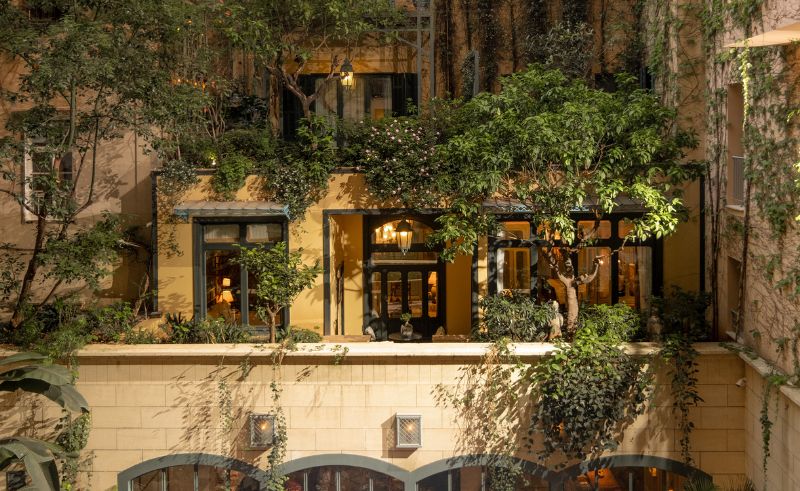
After Richard Nammour moved back to Beirut and took over Albergo in 2018, his team began by building the pool, followed by the Swim Club. Then they worked their way down and around to the lobby cafe and courtyard, the restaurant, and finally, the hotel rooms. This backwards construction process was both a design decision and a consequence of building through continuous conflict.
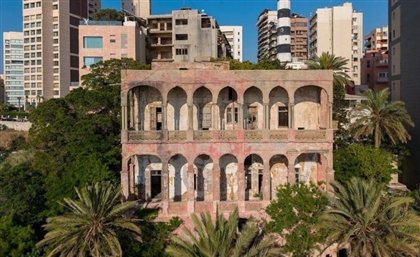
The 1930s mansion lives in the historically Christian Achrafieh district, on Rue Abdul Wahab El Inglizi. The confluence of traditional Arab and colonial European influences in the street name translates to the interior design, where Ottoman-style mosaic tiles meet vintage French terraces overlooking a Beirut skyline.
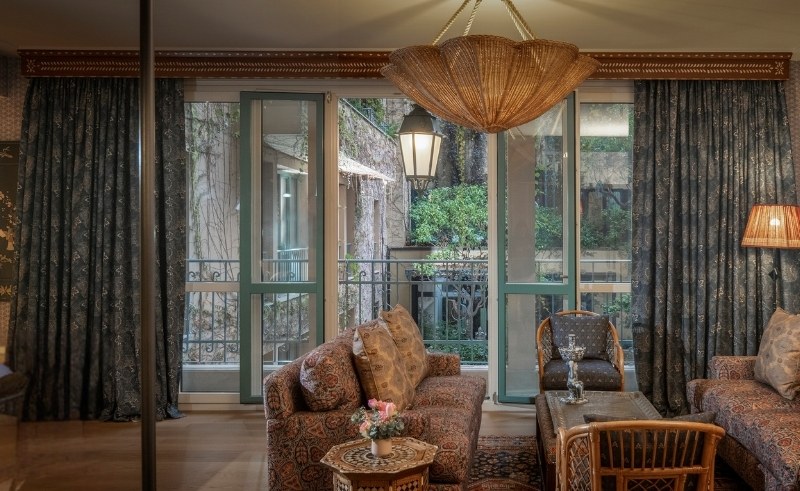
When Nammour arrived, Albergo had 33 distinct rooms and an Italian restaurant called Al Dente. The residential building originally opened as a hotel in 1998—eight years after the end of the Lebanese Civil War. It was iconic at the time, as it remains, but Nammour envisioned more common spaces for people to gather, corners to sit, and another two dozen rooms to choose from.
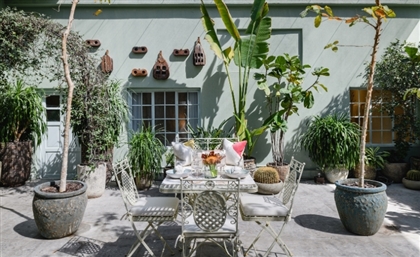
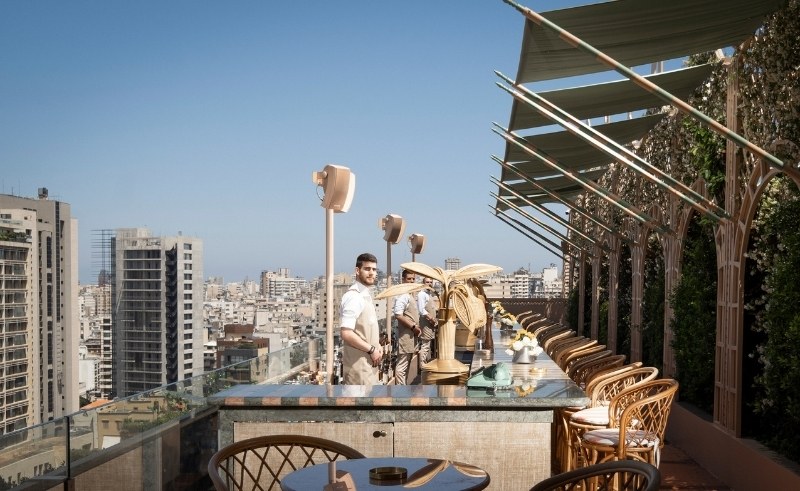
Now, after several years of renovation projects, you can lie down inside the 16-metre-long pool on lounge chairs that sit above the water’s surface, before moving to the Swim Club for an aperitivo at sunset. You can then make your way down the narrow staircase or opt for the vintage elevator to take you to the ninth-floor restaurant, where you can choose from a Mediterranean menu with an Italian flair. Post-dinner, coffee on the open-air terrace comes with a view of the city, or the lobby courtyard for a cosier ambience. “You can have coffee in 15 different places in the hotel,” Nammour said.
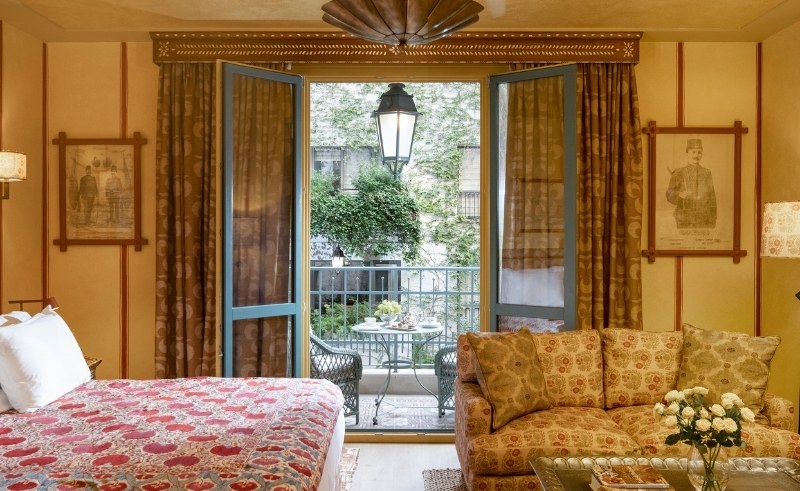
“We want to make you feel like you’ve travelled. And every time you come back, you can stay in a different one of the 56 rooms and experience the same place in a slightly different way.”
The expansion project was not supposed to take seven years. But soon after breaking ground on construction, Lebanon’s economy collapsed in 2019. A series of crises followed, including the 2019 October Revolution, the COVID-19 Pandemic, the Beirut port explosion in 2020, the Israel-Hezbollah War in 2024, and then the Israel-US War on Iran in 2026.
“We were one of the few hotels that didn’t close in 2019,” Nammour said. “We just closed for the first time when the most recent war started, but we took advantage of the empty hotel to do construction work that we weren't able to do over the last few years.”
In the midst of war, they fixed the kitchen and back-of-house areas that they could not have updated while the hotel was operational. Albergo reopened on the day of the ceasefire, April 16th, 2026, after being shut for over a month.
“The reason why we know how to do this now is because it's not our first war. During the last war, we regretted not doing these renovations,” Nammour said. “But these setbacks gave us the time to really dive into the nuts and bolts of every detail in the hotel, something that wouldn’t make sense anywhere else in the world, where time is money.”
Nammour laughed. “In Lebanon we have the time and luxury—if you can call it that—to go through iterations of each design: we can finish something, look at it, change our mind, then do it again,” he said. “We can finish the flooring in a room and paint the walls before ordering the fabric.”
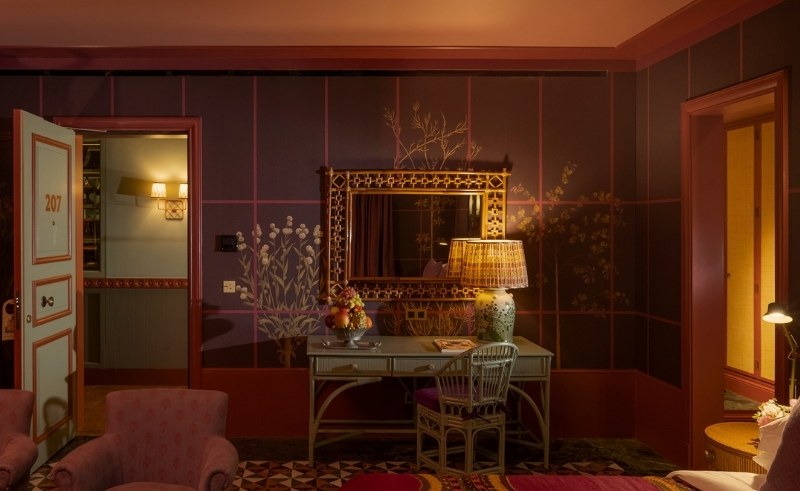
Maria Ousseimi is the Lebanese designer responsible for Albergo’s patterned wallpaper and colourful upholstery. “The risks Maria takes in her colour palettes are not easy,” Nammour said. As she put her mood boards together, he may not have been able to imagine how bright orange wallpaper with painted trees could compliment a teal balcony and striped headboard. “But it always worked out in the end.” And each room became its own person. Ousseimi designed everything from the new rooms that just opened in December 2025, to Albergo’s pool, restaurants, and cafes. The new rooms follow the old in their one-of-one design, but with modern additions like hidden minibars, high-tech but user-friendly light switches, and surround sound insulation.
“We wanted to make the new rooms feel familiar. You know where the light switches are, you know how things work. Nothing overly technological where you need a user manual to figure it out. And at the same time, elevate them in the finishes, the details—so there’s an ease of use in the technology, but still a strong sense of design,” Nammour said. “More and more, travel and design are going together. People want to go to places that you can really live in.”
When you go to book a room, you can choose from six categories, ranging from the 35 sqm Classic Room with a courtyard view to the 55 sqm Heritage Rooms that look out onto the street and the largest 100 sqm Presidential Suite. You can request a specific room when you book or even rank the rooms in order of preference.
“People come back and try to stay in a different room every time,” Nammour said.
The hotel is for guests from all over the world, but it is also a Lebanese institution. On a Thursday night, you’ll find French tourists sharing a bar with a friend group born and raised in the country. Lebanese guests come for a staycation, for dramatic proposals, or their wedding day.
“At Albergo, I want to make you feel like you're in Beirut—but which Beirut?” Nammour asked. “Everyone has their own.”
- Previous Article SceneNoise x Amsterdam Dance Event Present CROSSFADE: Egypt
- Next Article The Abandoned Architecture of Villa Badran by Gamal Bakry