





QME Solutions Wants to Kill the Paper Queue Ticket
This Egyptian startup is betting that queueing, booking, payments, and analytics should never have been four separate systems in the first place.
For this installment of NextGen, our series spotlighting emerging entrepreneurs across the region, we follow Qme, a B2B SaaS startup building the region's first AI-driven customer journey platform, integrating queueing, booking, payments, and analytics into a single system.
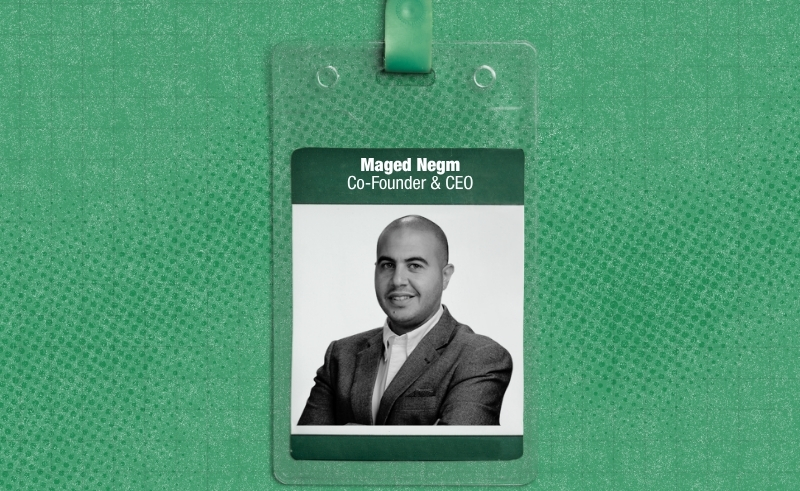
Founder and CEO Maged Negm keeps returning to one word: queueing. “It doesn't sound like a trendy topic anymore, but it's something everyone experiences every single day,” he shares. On average, Qme found that people in the region spend around six months of their lives standing in queues, a figure the Negm shares the UN has flagged as an indicator of pressure on citizens. Roughly a third of annual leave, Negm adds, goes toward errands like renewing documents and processing paperwork rather than rest.
“While this is a huge problem for consumers, organizations don't necessarily see it as their problem,” Negm explains. The team traced it to a harder number in their research: around 31% of bookings in Egypt end in no-shows, largely because more than 80% of the country still runs on outdated booking systems or phone bookings with no real commitment attached. Qme found a problem on both sides of the transaction, customers losing time and organizations losing revenue.
What six months of research surfaced wasn't just the size of the problem but how easily people recognized it. “Everyone is already aware of the problem because everyone experiences it,” he says. “The moment you mention waiting in line, everyone immediately remembers the frustration. You don't need to convince them that it's a real problem.”
Negm also caught on to another structural pattern, that most existing queue management companies built their business models around selling hardware which locks them into a small number of large organizations that can afford it. Qme counts almost 200,000 clinics in Egypt alone that could use a better customer journey but have been priced out, a gap Negm saw as the bigger opportunity.
Before writing any code, the team identified three recurring failures in existing queue management systems. Cost was the first, installing a traditional system in a single branch can run $5,000 to $7,000 in hardware alone. Inefficiency was the second, with most systems structurally unchanged since the 1950s, paper ticket, then wait. The third was the disconnect between booking and queueing systems, which Negm sums up in a scenario familiar to most: an appointment booked for 7:00pm, only to be told service is first come, first served. Sustainability was an additional concern, with an estimated 300 to 400 million paper queue tickets printed in Egypt each year.
Rather than patch these systems, Qme rebuilt the experience. “We often describe it as the end of queueing and booking as we know it,” Negm says. The platform runs one unified queue for walk-ins and appointment holders, with booking and queueing fully integrated.
Qme initially framed itself around an African market. That changed roughly a year in. “It's a global problem,” Negm says. “The sectors might differ from one country to another, but the underlying issue exists almost everywhere.” The team ranked sectors by average waiting time in Egypt, government at around 136 minutes, healthcare at around 115, banking at around 50.
The company entered banking first, then government, then healthcare, deliberately prioritizing bigger organizations over smaller businesses. “They're not signing contracts to support a startup, they're signing because they have a real problem they're willing to pay to solve," he explains.
After closing its seed round in 2025, Qme began validating international markets, including Saudi Arabia and Ethiopia. In Saudi Arabia, they found that healthcare ranks as the top priority sector, alongside an unexpected opportunity in the beauty and salon industry. Expansion through 2026 centres on the two, with continued focus on healthcare, government, and banking, and exploration of hospitality and food and beverage.
Funding, more than product, is the challenge Negm points to for the sector broadly. “Ever since the market downturn after 2023, raising capital has become much more difficult,” he says, describing a shift among investors toward protecting existing portfolio companies over funding new ones. He credits Qme's survival partly to a rule the company set from day one: no free trials.
The team remains small by design. Five members remain in technical roles, two in customer success, and three, including Negm, across sales and business development. The company runs a flat structure aimed at giving people ownership over their work rather than replicating corporate hierarchy.
Asked what success looks like five years out, Negm returns to something personal rather than a metric. He describes routinely delaying his own driver’s license renewal, and taking months to process his son’s birth certificate, not for lack of time but because he avoids the experience of standing in line. “That's why I started Qme,” he says. “Success, for me, is changing the way people access services. It shouldn't be this stressful.”
- Previous Article Chipotle is Bringing Its Burritos to Saudi Arabia With Riyadh Debut
- Next Article The Intricate Beauty of Ben Youssef Madrasa