



28 Artists Turn Watermelons Into Sculptures to Raise Money for Gaza
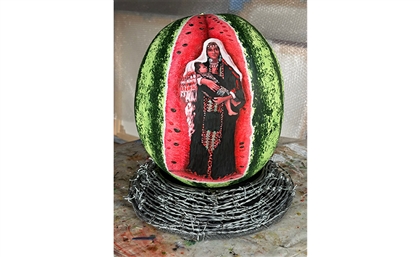
Artists from around the world reworked one fiberglass watermelon for the Bateekha Project. All 28 sculptures sold at Gallery 1957 in London, raising GBP 249,227 for Healing for Gaza.
The watermelon became a symbol of Palestine in 1980 when artists Sliman Mansour, Nabil Anani, and Issam Badr put on an exhibition in Ramallah. Their exhibition was shut down within hours by Israeli forces, as shows could not go ahead without military permission - especially as the colours of the Palestinian flag were suppressed after its ban.
Badr asked what would happen if he painted a flower in those colours. The officer said it would be confiscated, even if it were a watermelon. With the flag banned, the watermelon took its place.
Taking its name from the Arabic word for watermelon, the Bateekha Project tapped 28 artists from around the world, including Ghada Amer, Rana Begum, Gabby Samara and Peter Kennard, Malak Mattar, and Huda Lutfi, to use the same fiberglass watermelon and make it their own. The final products put on auction at Gallery 1957 in London, where 100% of the proceeds went directly to Healing for Gaza, an organisation providing trauma therapy and mental health support to Palestinian children and families.
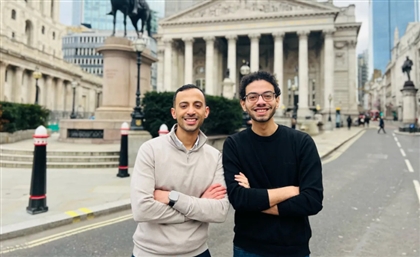
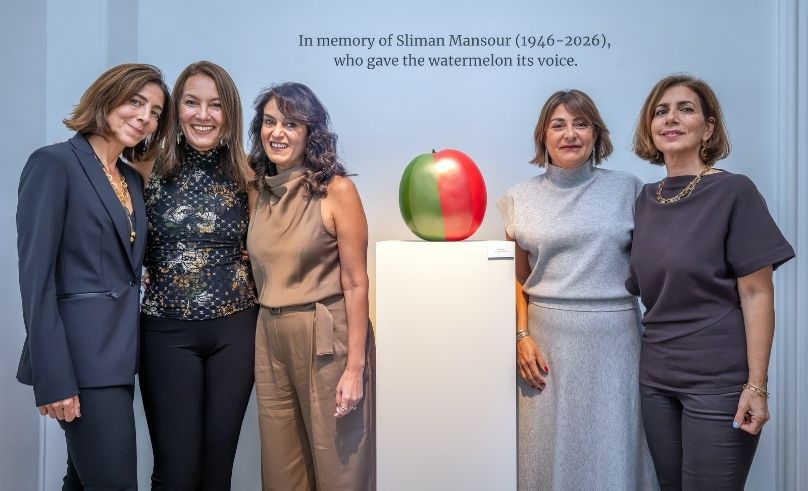
The idea for the Bateekha Project came from Egyptian artist Hedayat Taymour, who founded it alongside Ghada Sousou, Dima Fakhry, Taya Elzayadi, and Malak Fouad. Each sculpture started as a cast of a real watermelon from the streets of Cairo and was sent off to artists in cities like Dubai, Amman, Athens and Mexico City.
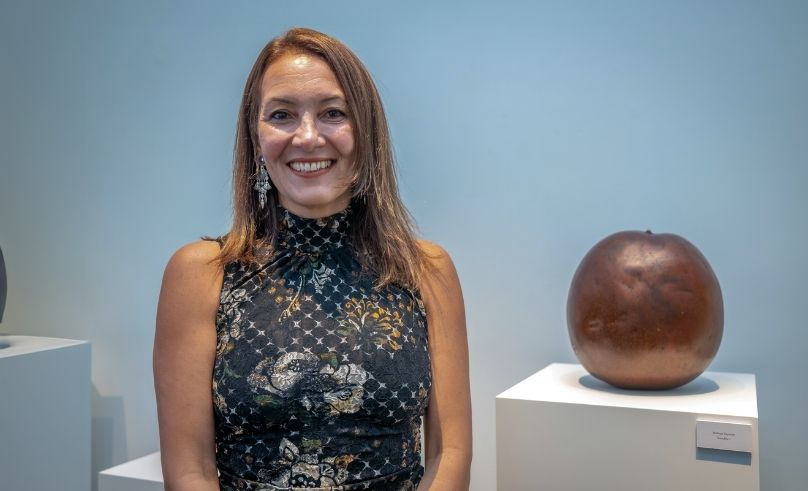 "I created the Bateekha Project as a way to use art and my own sculptural language to support children and families in Palestine," Taymour shares. “What made the project especially meaningful was inviting artists from around the world to engage with the original form and translate it into their own artistic languages, creating a collective expression of shared humanity and connection.”
For Fouad, it began with not knowing what else to do. "Feeling helpless watching events unfold over the last 3 years, I wanted a tangible and meaningful way to do my bit for my Palestinian brothers and sisters," she says. "It's a small drop in the ocean but it represents a start."
The works went on display from September 15th to 18th, with online bidding open from the 7th and a live auction on the final evening. All 28 sculptures sold, and between the lots and pledges the project raised GBP 249,227. Of that, GBP 177,277 came from the sculptures themselves, all 28 of which sold, and GBP 71,950 from pledges made alongside the auction. Fifteen of the 28 went for more than their estimates, and 95 people took part, bidding online and in the room.
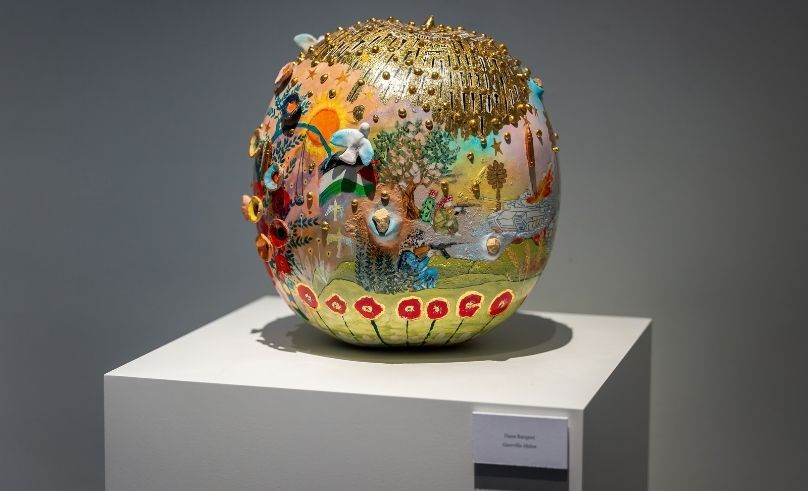
 Dana Barqawi's 'Guerrilla Melon' sold for GBP 18,000, the most expensive piece in the auction. Barqawi is an artist and urban planner based in Amman, trained in architecture and emergency architecture, and her work discusses colonial narratives, indigenous identity, womanhood and community.
Barqawi’s contribution takes a more pointed view of the fruit. For her, the watermelon is not simply a pretty stand-in for Palestine. It belongs to the wider fight against colonial rule and for Palestinian liberation. She's wary of treating a piece of fruit as a container for the struggle, which she thinks risks softening what decolonisation demands. So, her sculpture looks to the symbols Palestinians themselves have kept hold of.
Caroline Burraway's piece is direct in its imagery. Her sculpture is covered in depictions of genocide, some of them coming from video calls she had with a family in Gaza who lost a son. The sculpture was shortlisted for the Trinity Buoy Wharf Drawing Prize for the 2026 edition.
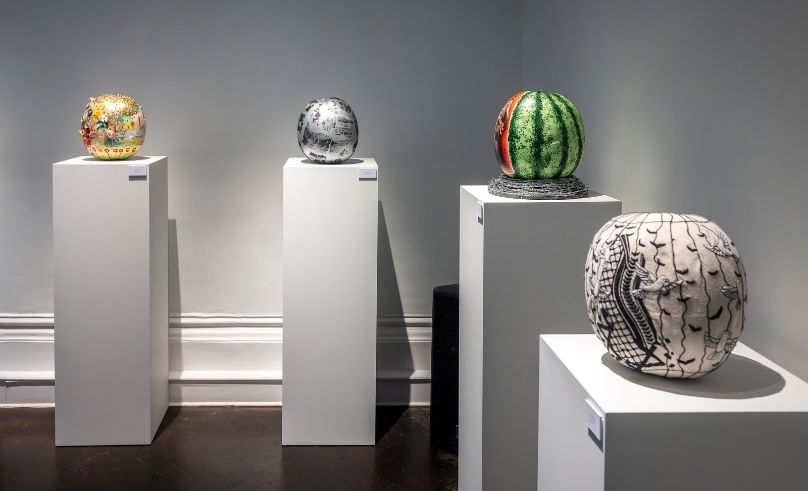 Elzayadi, who curated the collection, saw it as a way of honouring the culture behind the symbol. “Art is a meaningful way to honour and celebrate them. Curating this collection feels like the most purposeful work I have done,” she explains.
“It channels creativity into direct support for families who need it most, while ensuring that a culture whose art and spirit deserve to be seen and heard by the world is never forgotten.”
- Previous Article UAE’s du Becomes First Globally to Deploy Six-Carrier 5G Network