




Saudi Artist Filwa Nazer Turns Textiles Into Sculpture
In Five Women and The Housed Body, Filwa Nazer brings together textiles, sculpture and installation to examine identity, transformation and the relationship between the body and the spaces we inhabit.
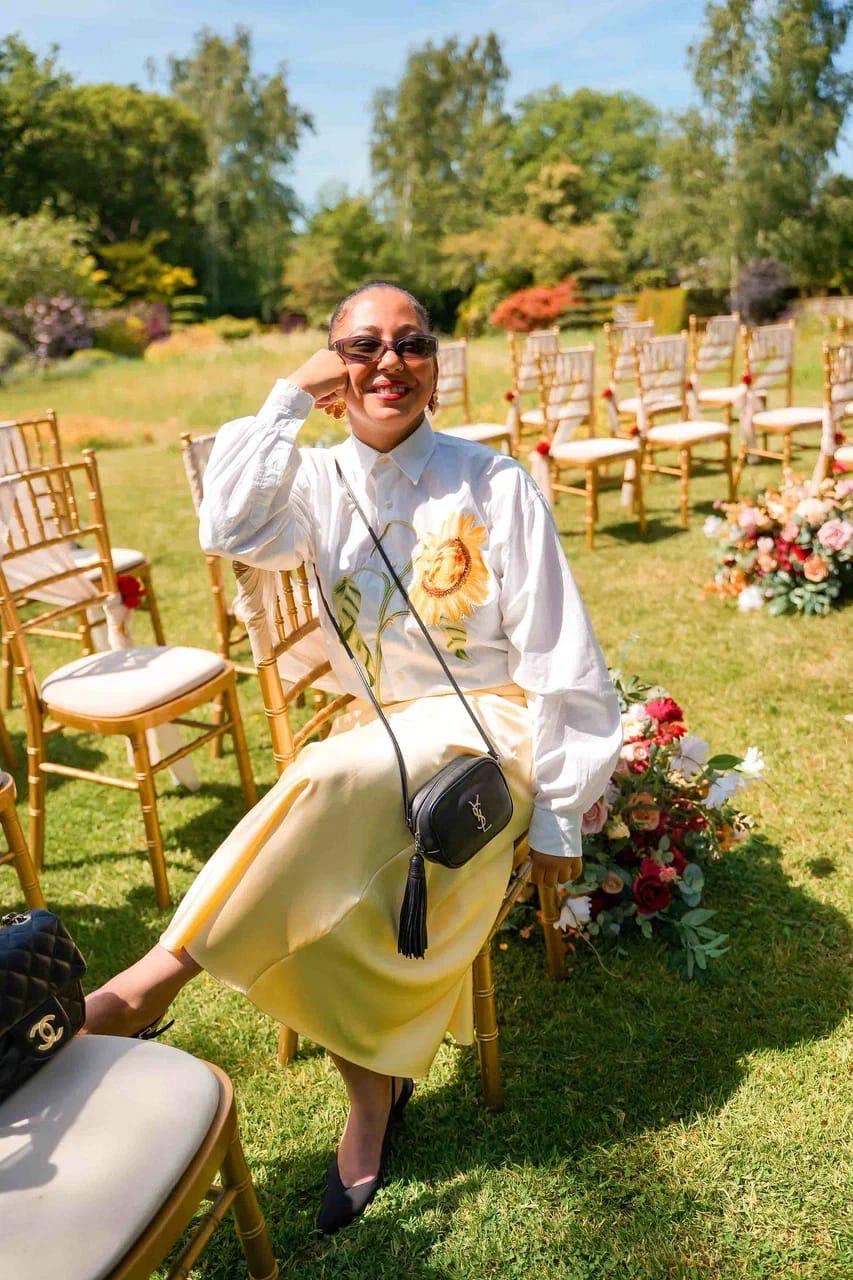
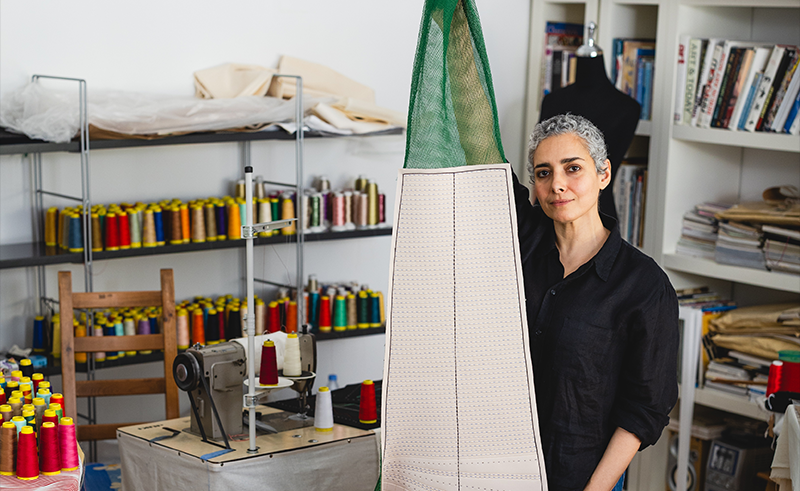
Born in Swansea, Wales, and raised in Saudi Arabia, Filwa Nazer has been drawn to art for as long as she can remember.
Growing up before formal art education existed in the Kingdom, she filled her childhood with drawing, painting and watching the world around her.
That curiosity carried her to Milan in the 1990s, where she studied at the Marangoni School of Fashion and Design, then trained under the renowned Italian designer Gianfranco Ferré.
Ferré had qualified as an architect before turning to fashion, a way of thinking about structure and space that would later run through Nazer’s own work.
At Ferré’s atelier she worked with archival garments and learned the craft of embroidery. Textiles moved to the centre of her practice, and fabric became her means of exploring memory and emotion.
Those years laid the foundations for the multidisciplinary practice she has today, one that moves easily between fashion, architecture and contemporary art.
Her work has shown internationally at Selma Feriani Gallery in London, the Asia Pacific Triennial in Brisbane, the State of Fashion Biennale in the Netherlands, Desert X AlUla in Saudi Arabia, the Middle East Institute in Washington DC, La Biennale de Lyon in France, the Diriyah Biennale in Saudi Arabia and Saudi Modern in Jeddah.
Her work is held in major public collections, among them the Guggenheim Abu Dhabi, the Saudi Ministry of Culture, the Al Mansouria Foundation, Jameel Arts Centre and the Greenbox Museum of Contemporary Art, along with private collections around the world.
Two exhibitions show that practice most fully. Five Women, from 2021, and The Housed Body, from 2025, both turn to emotion, memory, transition and the relationship between the body and the spaces it inhabits.
Across the two, she brings textiles, sculpture and installation together to examine how a woman’s relationship with her body is continually negotiated through personal experience, social expectation and physical change.
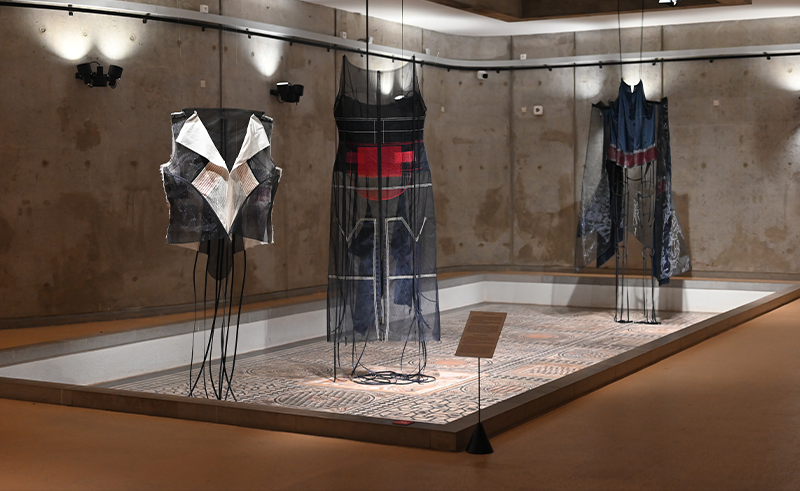
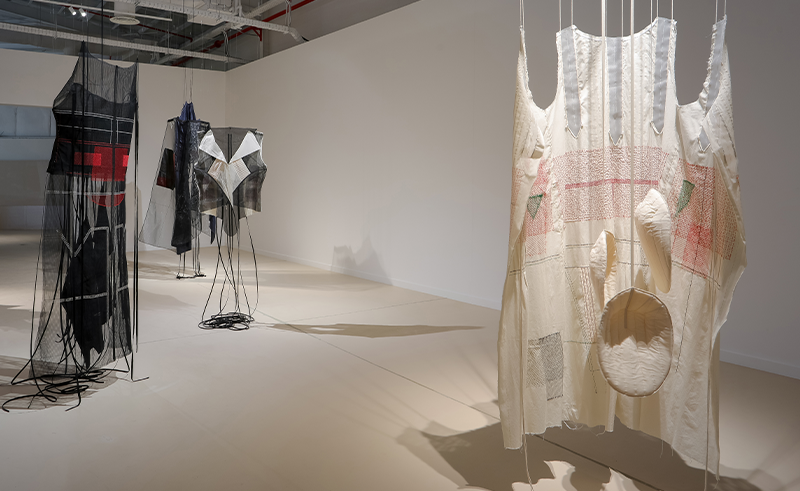
Five Women centres on the lives of five Saudi women from Nazer’s own generation. She interviewed each of them privately and anonymously, drawing out the pull between their inner emotional worlds and the physical and social settings they were moving through.
She asked every woman for a defining experience that had changed her relationship with her body, and for a piece of clothing tied to that memory.
The series speaks to a generation of Saudi women whose access to public space was historically narrower, making private rooms important places to be themselves. The stories they shared moved from pain and coming of age to beauty, self-expression and femininity, tracing how each of them navigated gendered expectations and social convention.
Rebuilding these garments in her installations, Nazer treats clothing as an extension of the body and as a structure that carries emotional and social weight, a sign of how the spaces we move through shape who we are.
As she puts it, the sculptures emerge through "a process of deconstruction and reconstruction," referring to the way we shed old layers to make sense of who we become. The work, she says, commemorates "those moments of tension and awkwardness” as we reconstruct old parts of ourselves.
 Four years on, Nazer returned to the same questions from a more personal angle. The Housed Body reads as an intimate account of her own transition through uncertainty, alienation and the ways the body moves through change.
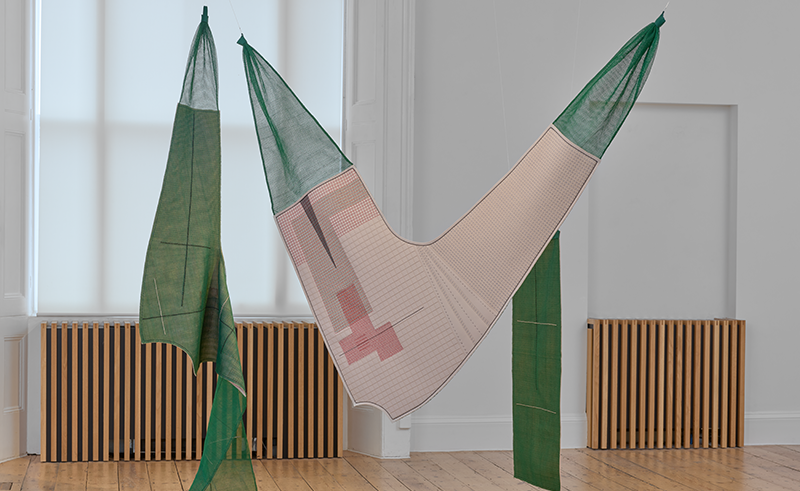
That comes across most clearly in Shifting Patterns, her installation within The Housed Body. Three suspended forms hang freely, twisting and turning as viewers move around them.
Their changing orientation echoes shifts in posture and movement, suggesting the constant process of finding one’s place.
The piece turns a private experience into a wider meditation on the changing female body, asking viewers to read clothing as a record of transformation.
"The pink fabric itself indicates a personal fragment," she says, "cut from a dress pattern that no longer fits me, it becomes a metaphor for change, tension, and emotional negotiation."
Each suspended form embodies a different emotional state. One stretches outward "like arms," conveying struggle and the feeling of being pulled in multiple directions.
Another bends toward the ground, suggesting surrender and release. The third, resembling a skirt, stands almost motionless. Its apparent composure masks an unresolved asymmetry, echoing both the original dress pattern and the body itself.
For Nazer, identity is never a finished thing. It is reshaped again and again by lived experience, much like the body itself.
"There is a tension between seeking perfection and accepting imperfection," she says.
"The unresolved asymmetry and visible structure embrace vulnerability and incompleteness."
Her materials are chosen with the same care. Drawing on garment construction and architecture, she layers textiles with industrial materials, from calico and hidden garment supports to polyethylene netting used on construction sites.
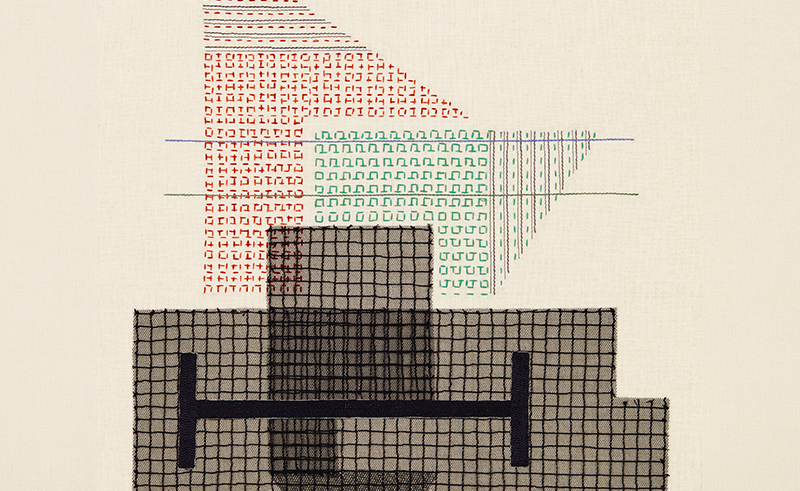
For Nazer, every material carries symbolic weight. "I assign symbolic value to these materials," she says.
You can see it again in Shifting Patterns, where green plastic netting borrows its everyday role of shielding and marking buildings that are still under construction.
Recontextualised within the work, it becomes a metaphor for the body and its surroundings alike, both still forming, both still in need of protection.
Taken together, the two exhibitions read as one sustained investigation into how a woman’s relationship with her body is settled and unsettled over and over.
Five Women lays the groundwork, while The Housed Body turns the same enquiry inward.
The move from a collective view to a personal one keeps the central question intact while pushing it further.
Garment construction, architectural materials and spatial thinking become Nazer’s visual language, where the inner self and the outer world begin to dissolve into one another.
- Previous Article Helm’s Egyptian Football Team Visits NASA Ahead of the Genuine Cup
- Next Article 180 Modern Heritage Landmarks Added to Riyadh Register
Related Articles

Trending This Week
-
-

-
 Jul 23, 2026
 -