



Maha Malluh's Photograms Capture Saudi Arabia in Transition
For nearly two decades the Riyadh artist has worked without a camera, turning found objects into photograms about Saudi memory, identity and change
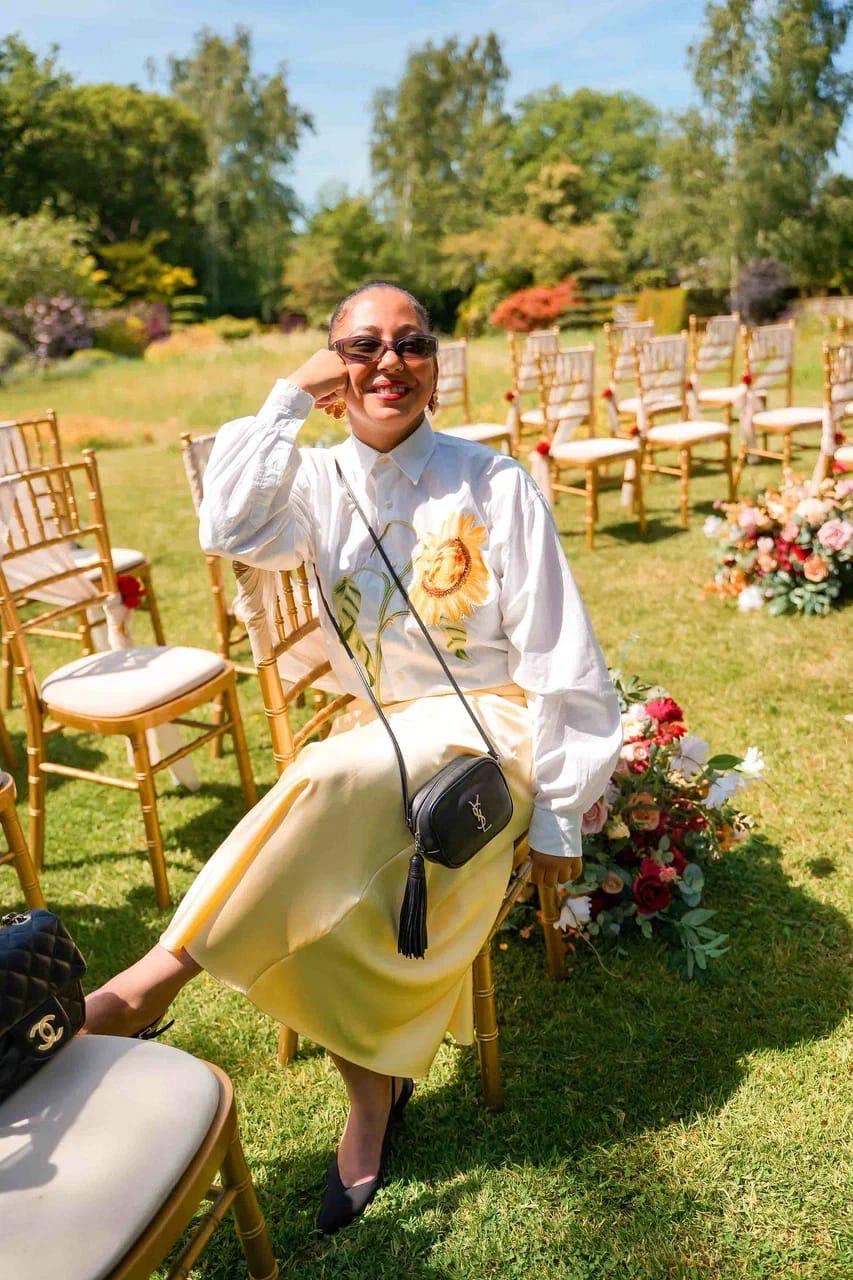
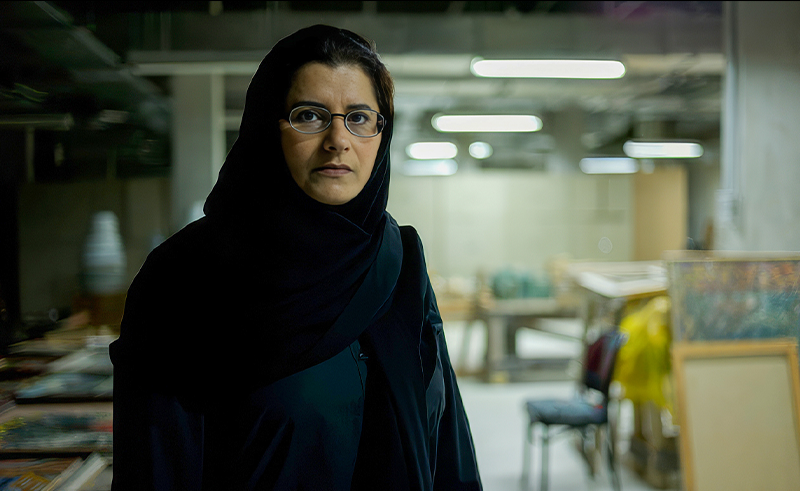
Few artists have explored the expressive possibilities of the photogram as persistently and poetically as Maha Malluh.
For nearly two decades, the Saudi artist has transformed this early photographic process into a contemporary language for examining memory and the profound social changes reshaping Saudi Arabia.
Based in Riyadh and working between London and Vienna, Malluh has been exhibiting since 1976, establishing herself as one of Saudi Arabia's most internationally acclaimed contemporary artists. She holds a BA in English Literature from King Saud University in Riyadh and later studied design and photography at De Anza College in California.
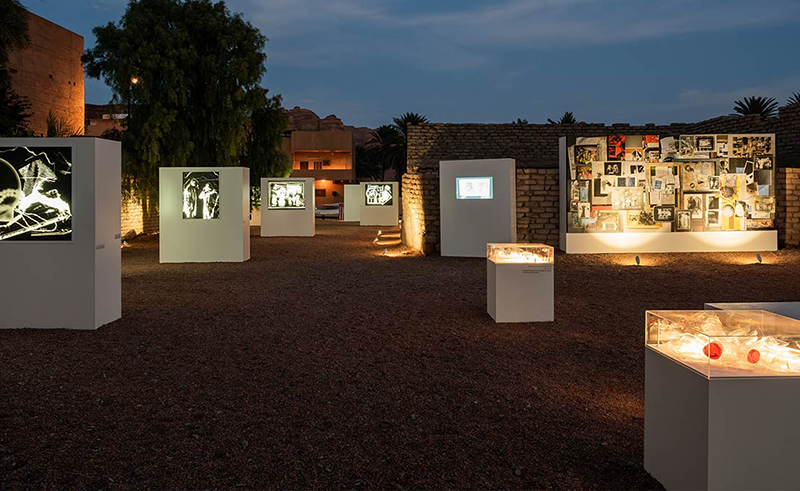
Over the course of her career, her work has evolved from photography into increasingly experimental mixed-media installations, shown at the 57th Venice Biennale, the British Museum's Hajj exhibition, Hauser & Wirth in London, the Saatchi Gallery and Art Basel Unlimited.
It has also earned places in major public collections including the British Museum, Tate Modern, the Centre Pompidou, the MAK in Vienna, SFMOMA, and both the Louvre Abu Dhabi and the Guggenheim Abu Dhabi. In 2025, she was awarded the National Cultural Award for Visual Arts as part of the fifth edition of the National Cultural Awards Initiative, held in Riyadh.
Her long-standing fascination with the photogram, pioneered in the 1830s by William Henry Fox Talbot and one of photography's earliest techniques, has become the throughline of her practice.
Unlike conventional photography, a photogram is created without a camera: objects are placed directly onto photosensitive paper and exposed to light, producing silhouettes and subtle tonal variations that capture both physical form and absence.
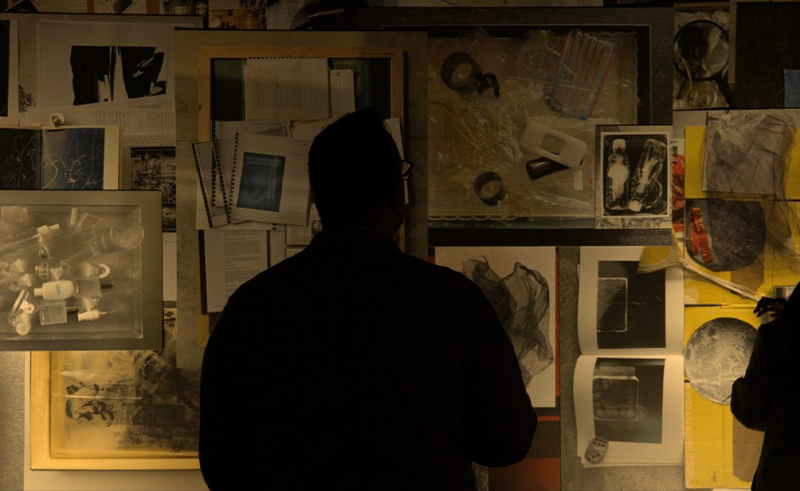
While working in the darkroom as a photographer, Malluh began gathering everyday household objects that carried intimate memories of family life and personal history.
"I chose to preserve these memories by placing the objects directly under the enlarger and creating photograms," she explains. "When I saw the results, I was deeply moved by their beauty and expressive power."
This discovery inspired Capturing Light, her first solo exhibition, held at Gallery O in Riyadh in 2007. The show introduced audiences to her distinctive approach to the photogram and marked a defining moment in her career.
"Through this experience, I discovered that the photogram had become a deeply engaging and personal medium for expressing my ideas," she says.
As Saudi Arabia undergoes rapid social and cultural transformation, Malluh's work consistently explores the tension between tradition and modernity, asking how a society preserves its cultural identity while embracing change.
This preoccupation runs through several of her photogram series. Capturing Light doubled as a statement on consumerism, using her own personal objects to speak to a generation swept up in the country's rapid embrace of consumer culture.
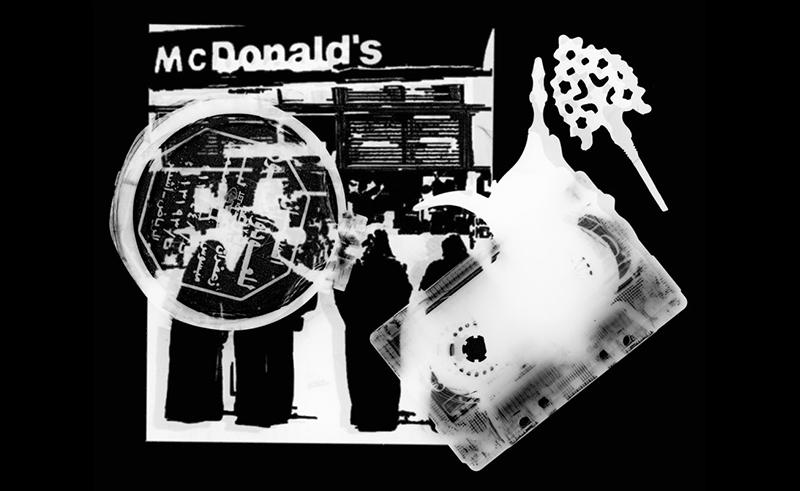
In Tradition and Modernity, Malluh arranged trinkets tied to Saudi heritage alongside markers of contemporary life to reflect on a society caught between the pull of tradition and the exposure that comes with globalisation.
Shemagh Mirage centred on the urban Saudi man, unravelling the discourse of patriarchal values alongside a changing world order shaped by globalisation, by setting the traditional shemagh headgear against objects with universal resonance.
"As you know, we are living through a period of rapid global change," she says. "In the Arab world, and particularly in Saudi Arabia, we are striving to preserve our cultural identity while embracing transformation. Maintaining that identity requires both knowledge and culture, including the arts."
Unlike traditional photography, the photogram gives the artist complete control over the composition. "It allows me to respond to these changes in a very personal way," she explains. "Because I compose and arrange each object myself, I can shape the image to communicate exactly the idea I want to express."
She increasingly experiments with found objects that function as cultural markers, ranging from enamelled serving dishes and cassette tapes of religious lectures to discarded oil barrels and traditional metal doors.
"I often wander through the city, exploring traditional markets and second-hand markets," she says. "I wonder what these discarded objects might reveal about us to future generations, and how they reflect the lives we live today."
Malluh paces herself through the process of selecting these materials, allowing meaning to emerge gradually.
"I collect objects that draw me in and bring them back to my studio, where they remain with me until a poetic relationship gradually develops," she explains. "Having fulfilled their original purpose, these objects begin to communicate with me in unexpected ways."
Working in the darkroom remains an essential part of her practice, a quiet, contemplative space for ideas to emerge organically.
"It offers a quiet, contemplative space where I can slow down, connect with the objects, and enjoy the act of making," she says. "This intimacy with the process helps me reflect on the relationship between memory, material culture, and the transformations taking place around us."
- Previous Article SceneNoise x Amsterdam Dance Event Present CROSSFADE: Egypt
- Next Article The Intricate Beauty of Ben Youssef Madrasa