





The Moment That Turned Squash Into Egypt's Sport
Thirty years after the first squash final at the Pyramids of Giza, we spoke to the players, historians, and witnesses who were there. This is what they told us.

Thirty years ago, a 22-year-old Egyptian wildcard stepped onto the biggest squash stage the sport had ever seen and was beaten in straight games. Forty-two minutes. Three games to none. And somehow, that defeat became the single most consequential result in the history of the sport in his country.
Ask any Egyptian squash player today where it all began, where the dominance that now defines the sport was first ignited, and they will tell you the same thing: it began with Ahmed Barada, in 1996, at the Giza Pyramids.
Which begs the question: how does defeat become the foundation of a sporting empire?
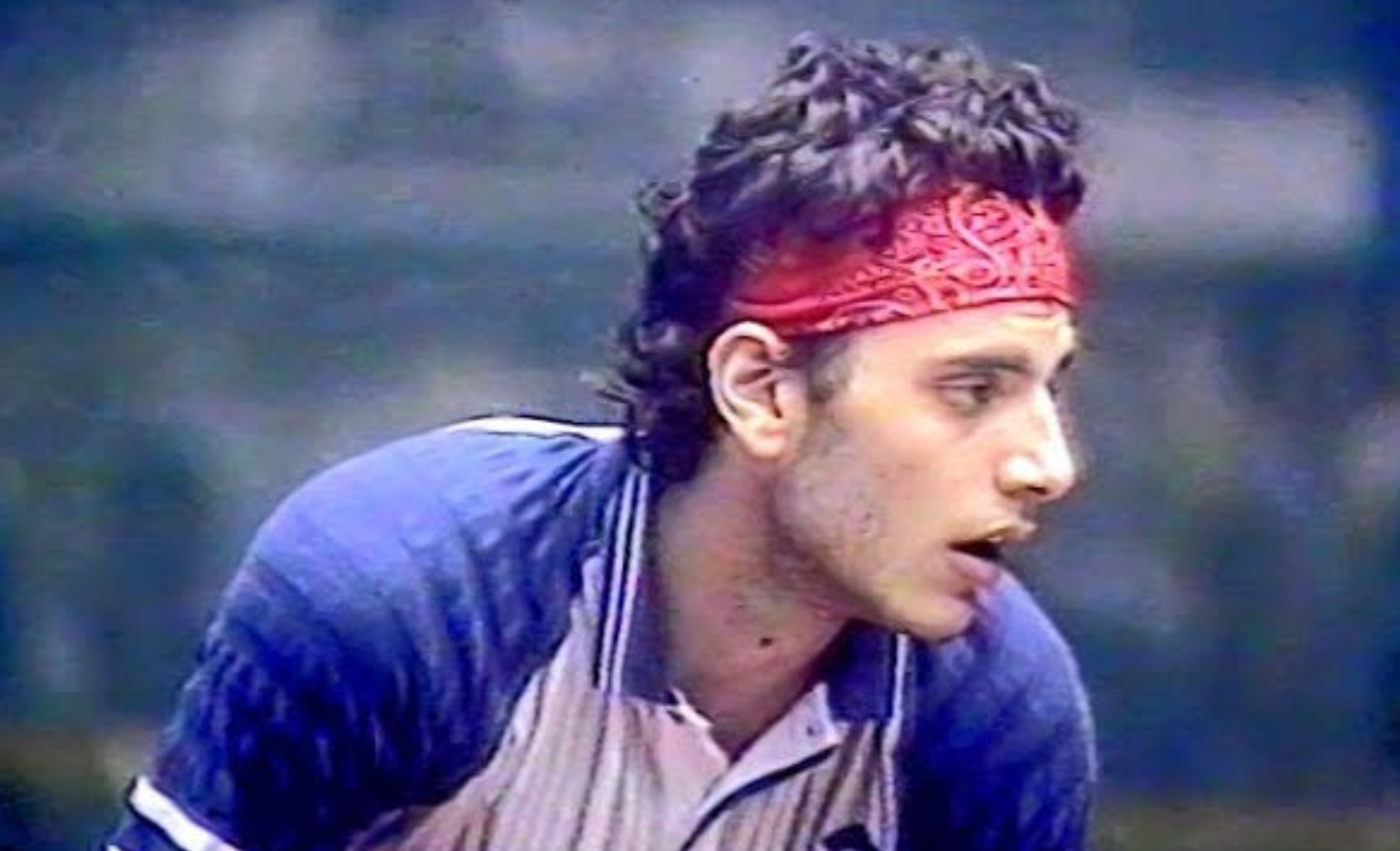
To understand the answer, the scoreline has to be set aside entirely. This was never a story about winning. What Barada did that week was rarer and more significant; he proved that an Egyptian could stand on the largest stage the sport had ever constructed, against one of the greatest players to ever hold a racket, and belong there.
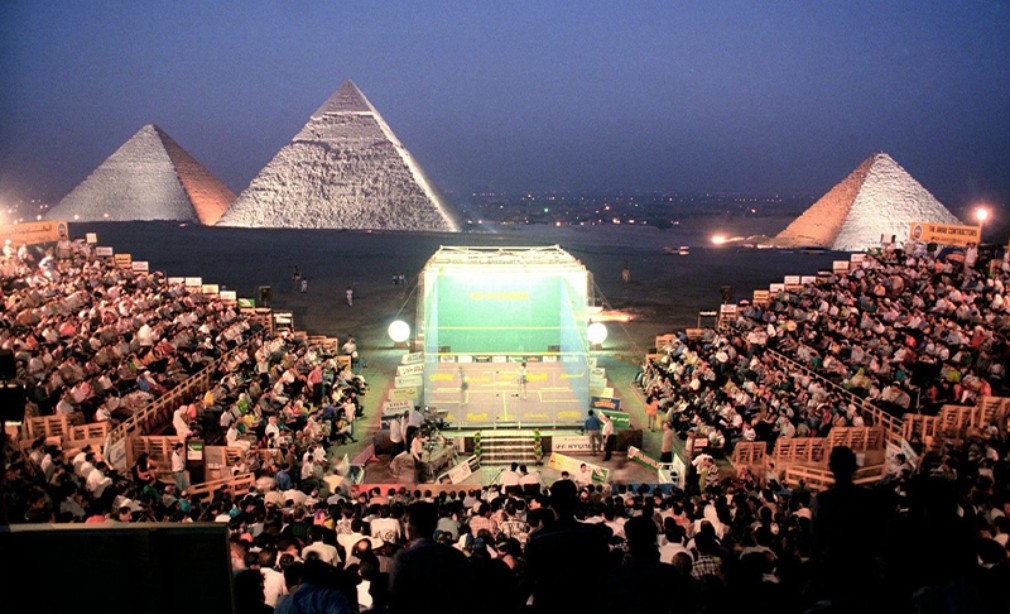
The stage itself was unlike anything squash had ever seen. In 1996, Al-Ahram - Egypt's oldest and most powerful newspaper - partnered with the Professional Squash Association (PSA) to place a glass court beside the Pyramids of Giza. The vision belonged to Ibrahim Hegazy, Al-Ahram's editor-in-chief, who believed that squash, a sport of extraordinary athleticism that the world had never quite learned to see, deserved a stage that would make it impossible to look away.
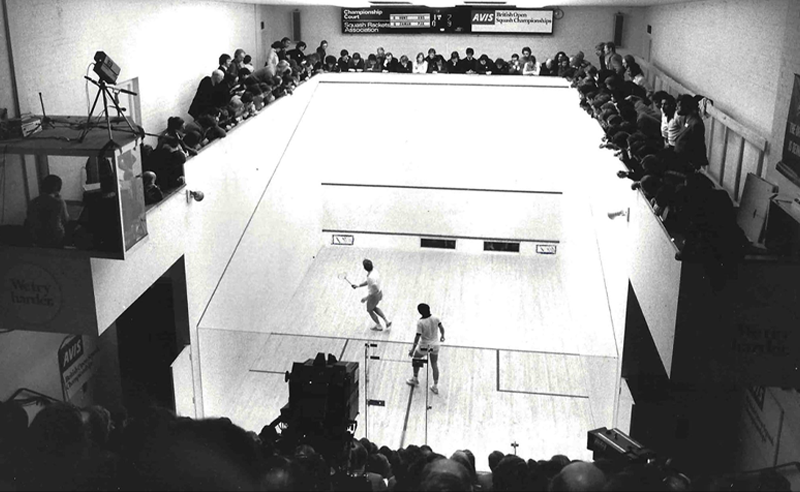
At the time, squash was a sport that existed largely in spite of itself; brilliant, gruelling, technically demanding, and almost entirely invisible to the world beyond its own community. Portable glass courts had begun appearing at landmark venues around the world, but the sport had not yet found its image. As James Zug, historian and author of Squash: A History of the Game, puts it simply: it was still "a hidden game."
In May 1996, the Al-Ahram International Open drew the best players in the world to Cairo. Among them was Jansher Khan, the Pakistani world No.1 who had dominated world squash for the better part of a decade, a figure of such sustained excellence that his name had become synonymous with the sport itself. For most of the 1990s, every major tournament effectively began with one assumption: Jansher Khan was the man to beat. And then there was Ahmed Barada, ranked 29th in the world, who entered as a wildcard.
"Of course, when I stepped into the first round, I never expected to make it to the final," Barada tells SceneSports. "But from the first match, I felt I could compete and that I had a chance to win. It wasn't just in my imagination."
In an era when the sport's elite rarely lost early in tournaments, Barada's run through the draw was almost unthinkable. He tore through a field that contained former world champion Rodney Eyles and former world No.4 Chris Walker, and in doing so, became the first wildcard in PSA Super Series history to reach a final. It remains one of the most improbable runs on the professional tour.
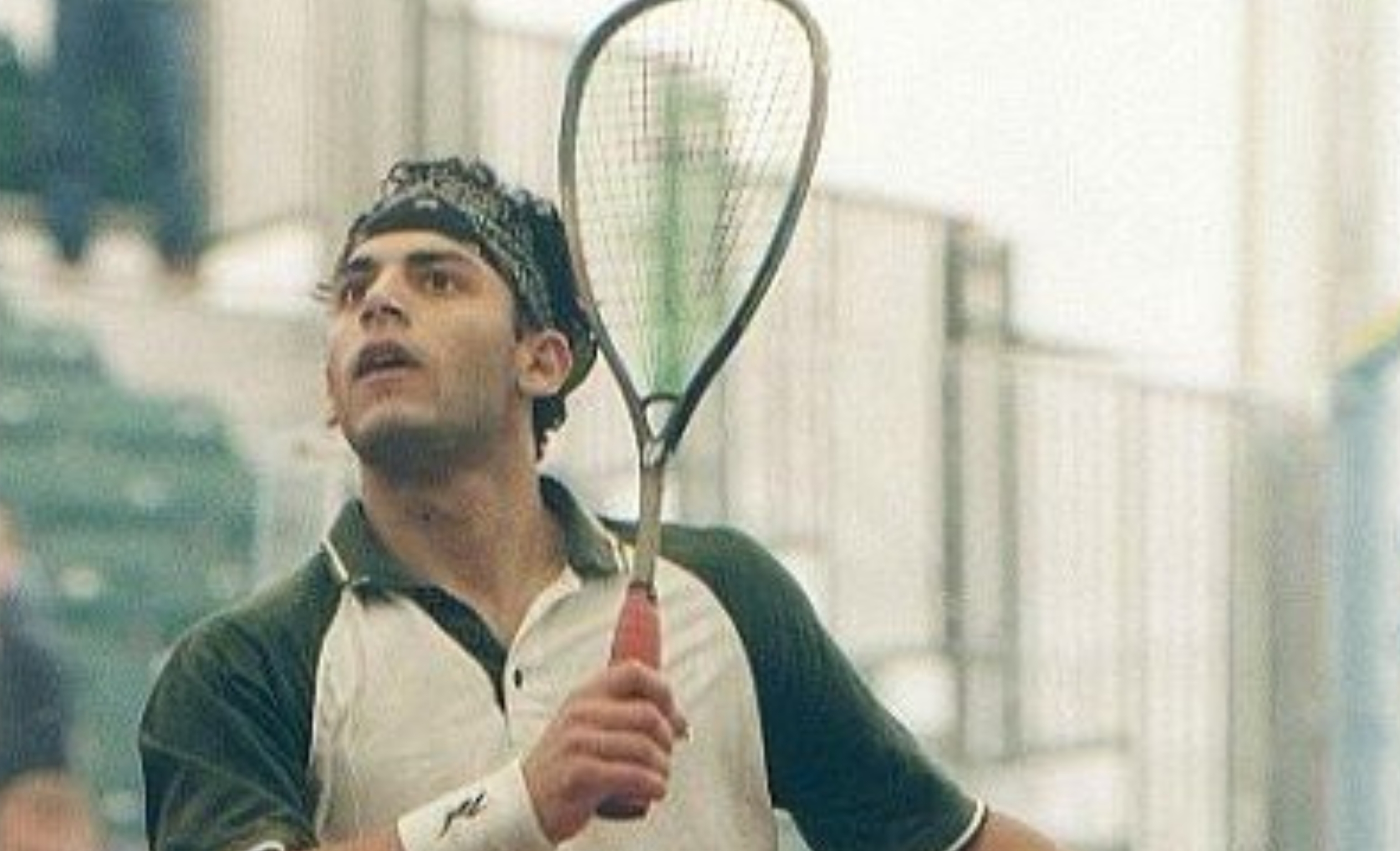
"Suddenly, all of Egypt was watching squash. Before that, no one paid attention," Barada says. "After the match, I could see it everywhere - in the streets, people were talking about squash."
Former President Hosni Mubarak, a squash enthusiast, was calling him every day. Thirty thousand people would gather outside the venue before a single ball had been struck. The roar inside the court was unlike anything the sport had produced before. Not the polite appreciation of its regulars, but something rawer, almost feral. “It felt like football," Barada says. "For the first time, the fans weren't squash fans. They were football fans who had come to watch squash.”
Part of what made that possible was the setting itself, and the decision to broadcast it live on Egyptian television. For the first time, a country that had never had squash on its screens simply turned on the television and found it there. The court, lit against the ancient stone of Giza, gave the sport a visual identity it had never possessed. "It took squash from the usual sports pages into the news pages in 1996," Andrew Shelley, founder and director of the World Squash Library, says.
Then came the moment everything that buildup had been pointing toward - the final itself.
Barada's opponent was Jansher Khan - and what happened next is the part of the story that tends to get smoothed over by 30 years of mythology. "Making the final brought a lot of pressure," Barada recalls. "I couldn't believe I'd made it there. The moment I allowed myself to think about reaching the final, I lost."
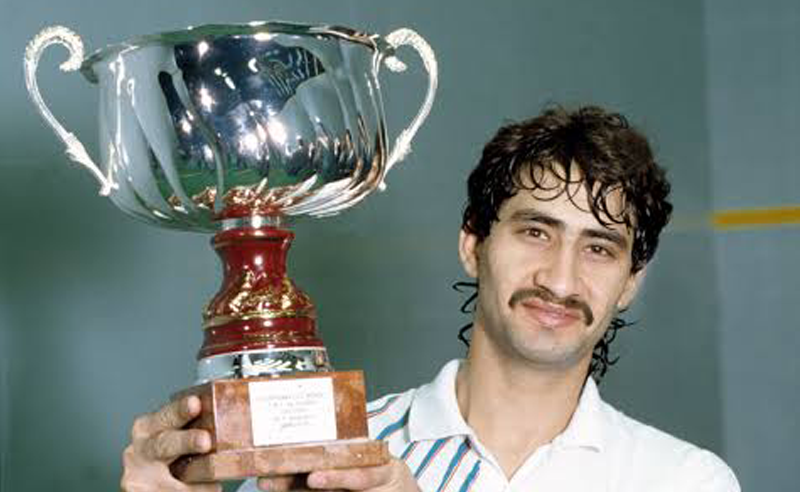
From the other side of the court, Khan felt the full weight of the occasion: the crowd willing the home player on, the desert night, the pyramids rising behind the glass. "Playing in Egypt for the first time, in front of the Pyramids, was something I was very proud of," Khan tells SceneSports. "Barada was already a huge star in Egypt, and the entire crowd wanted him to beat me. So, I was happy to have won the tournament.” Khan's trademark accuracy and relentless control eventually brought him victory, but the score was almost incidental. He knew, even then, that he was watching something begin. “After Barada, squash exploded in Egypt," Khan says. "To go from one player to seven in the world's top 10 is extraordinary. It changed the sport."
Had Barada won, the moment might have read as an aberration, a single brilliant night, easily filed away and forgotten. Instead, he lost, and an entire country fell in love with the sport regardless. For every junior picking up a racket the next morning, that was the only result that truly mattered. And for a generation of children watching on television across Egypt, that was enough.
-e27dced0-7b25-479c-a86d-4cb20fb80c02.jpg)
"Seeing an Egyptian compete with the world's best on such a stage made young players like me believe it was possible," says Amr Shabana, the four-time world champion who would go on to become the first Egyptian world No.1 in squash. "Without that moment, Egyptian squash would still have produced talent, but I don't think the growth or belief across an entire generation would have been the same. It helped spark the rise that eventually made Egypt the dominant force in world squash."
Nowhere is that shift more striking than in the women's game. "Before that tournament, there really wasn't any women's squash at all in Egypt," says Zug, who has studied the sport's rankings in detail. In January 1993, there was not a single Egyptian woman in the PSA world rankings. The men's game had a long and decorated history in the country. Champions like Amr Bey in the 1930s and Mahmoud El Karim in the 1940s had already won the British Open, but for women, the sport simply did not exist as a pathway. "That was one wonderful catalyst that came from that tournament," Zug says. "Girls started saying: I want to play as well."
Raneem El Weleily, former world No.1 and the first Egyptian woman to be ranked No.1 in any sport, was nine years old that week. "He motivated me to play and showed me that squash could make you famous in this way," she says. "Each one of us who reached squash was inspired by him, in one way or another. The sport may have existed without Ahmed Barada - but with far fewer of us, and at a much smaller scale."
Karim Abdelgawad, current world No.4, was watching too. So was Ali Farag, former world No.1. An entire generation across both the men's and women's game was watching, and deciding, at exactly the same moment, what they wanted to become. Within a few years, the country would go on to produce world No.1s across generations, control both professional tours, and build the deepest talent pipeline squash has ever seen.
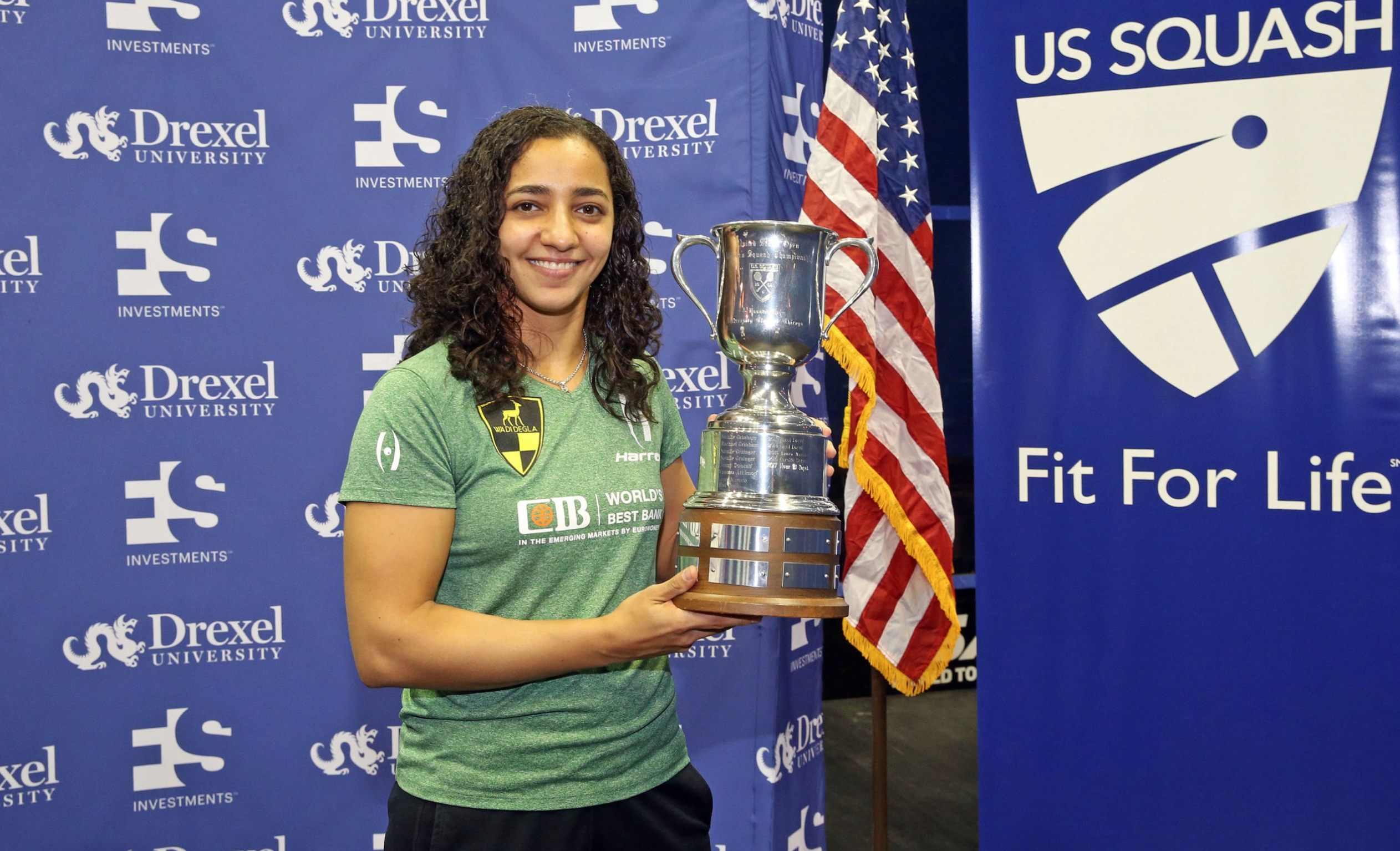
"Ahmed Barada is a huge part of the picture," El Weleily adds. "But there are a lot of people, a lot, a lot, a lot, that inspired - and by being professional, they teach you as a young player coming up how to act, how to look, how to train, how to lose, and not feel bad enough to go back and work harder."
The tournament's reach extended far beyond Egypt. Glass courts had appeared at landmark venues before; Grand Central Station hosted one as early as 1995. But Al-Ahram set a new standard for spectacle that the sport kept returning to in the decades that followed: Canary Wharf in London, the Burj Park in Dubai, Martin Place in Sydney. Shelley, who observed the tournament's influence ripple outward across the sport's global landscape, is unambiguous about its institutional legacy.
"Showcasing the host city by placing a squash court at an iconic location was very much part of the Olympic bids for squash," Shelley says. For the first time, squash would become an Olympic event in Los Angeles in 2028. "While our sport took three decades to make it onto the Olympic programme, you can be sure that IOC members during the period were exposed to it as a feature of all the bid presentations."
What has happened since is something nobody watching that 1996 final could have fully predicted. Khan, who dominated the sport before Egypt ever did, speaks about the shift now with something close to awe. “For the past seven years, Egypt has been at the top,” he says. “They've beaten everyone. They've surprised the world.” What once looked like an extraordinary generation became a production line of world champions.
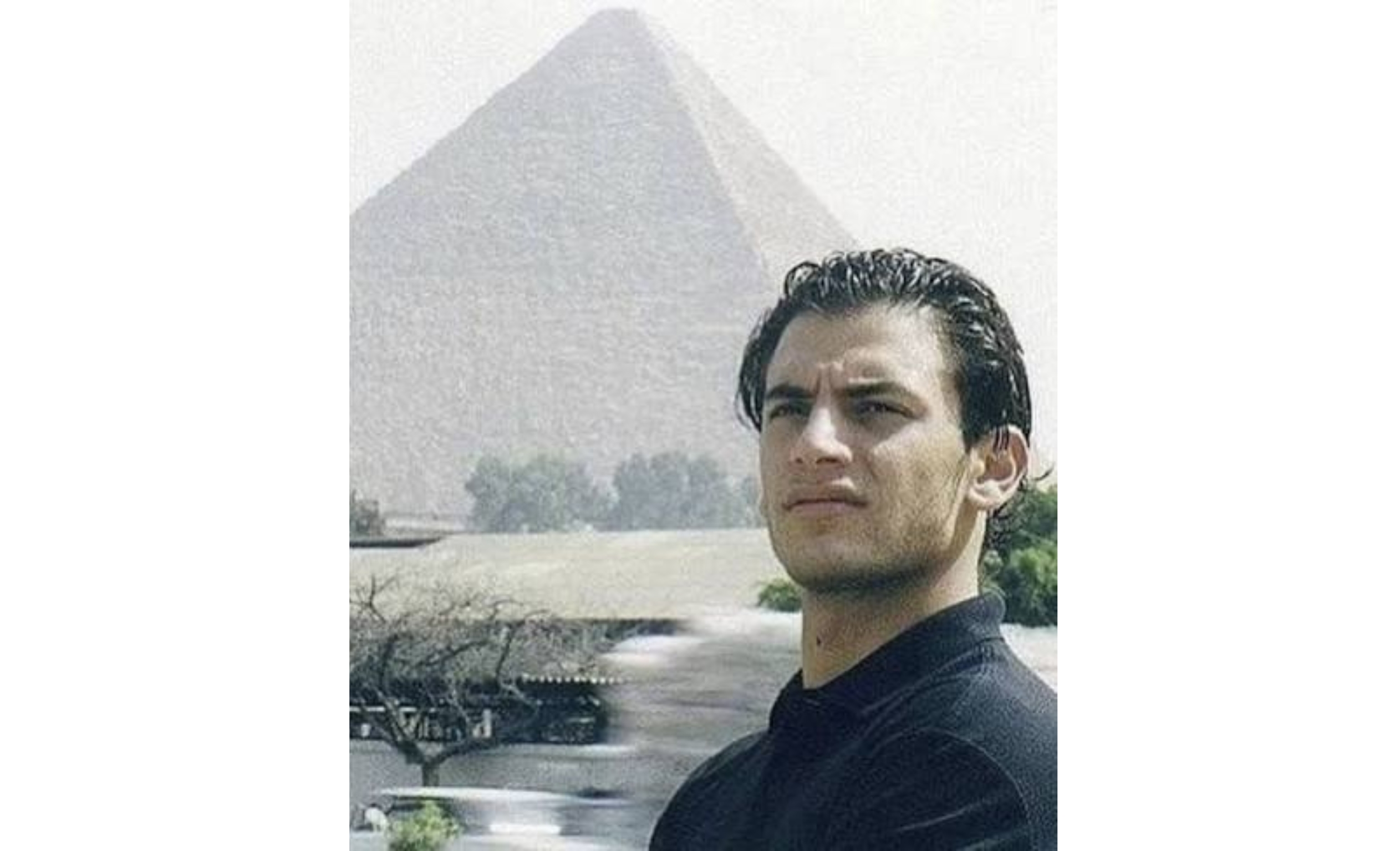
Ahmed Barada is 50 now. His playing career was cut short in 2000, and he retired the following year at just 24, before he could discover how far it might have taken him. He returned to win the Al-Ahram International Open in 1998, lifting the title at the Pyramids that had eluded him two years earlier. Yet when asked what he considers his greatest achievement in squash, he doesn't mention the trophy. "The most important thing I've done in my life in squash is that I made my kids love squash and play squash.”
That instinct to measure success by what comes after feels fitting for a player whose greatest contribution wasn't a title but a turning point. Asked whether there is a player today who reminds him of what he once represented, Barada names former world No.1 Ali Farag. But unlike 1996, when one Egyptian reaching a major final felt extraordinary, today's champions emerge from a system that produces them with remarkable regularity. What began with a single breakthrough has become the sport's defining dynasty.
Thirty years on, the glass court still travels the world. The Pyramids still stand. And Barada's breakthrough still echoes through the sport, helping shape Egypt's reign over world squash.
- Previous Article SceneNoise x Amsterdam Dance Event Present CROSSFADE: Egypt
- Next Article AD: MDLBEAST's 1001 Festival Announces Official Dates