




The Egypt That Appears At Kickoff
Egypt’s World Cup run is proof of a collective strength 92 years in the making. On the feeling that unites a country for 90 minutes, everyone who profits from it, and what happens when it drains.

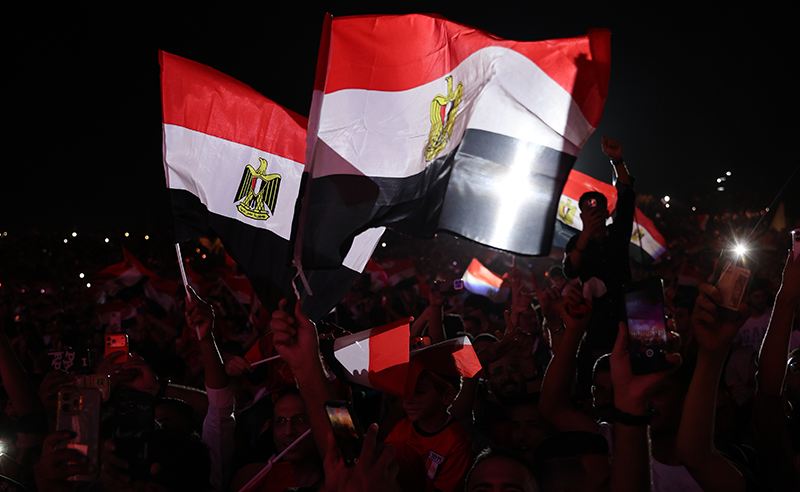
Gather enough people around the same thing at the same time, all locked into the same feeling, and something strange kicks in. There is a charge in the air. Holy, almost.
Egyptians know that feeling by what comes next. Cheers arriving from every cafe, from streets stuck in traffic jams, from every stretch of pavement where a television has magically appeared. You will remember where you were for the rest of your life.
When Salah chipped his penalty straight down the middle, cool as a man crossing an empty street, the country exhaled all at once.
A kick later Abdelmaguid sealed it and the exhale became a scream, after 120 minutes and a shootout spent running on a single nervous system. “Egypt! Look at what Egypt is doing!”
In one Cairo suburb, a crowd of men lifted a running motorcycle off the ground, the driver still on his seat, the engine still roaring, until man and machine rose above every raised hand like an offering to the gods.
Mankind has spent centuries trying to name this feeling. Ibn Khaldun called it asabiyya, a force of social cohesion holding a people together, strong enough to found a dynasty and strong enough to bring one down. The Sufis built it directly, circling in dhikr until something larger than any one person filled the room. In India, a meditation movement swore that enough people emptying their minds together could lower a city’s crime rate and called it the Maharishi Effect. A French sociologist made the largest claim of all: this compounded feeling is where religion was born. Collective effervescence, he called it.
For Egypt, it’s a Friday night.
Everyone who has stood inside it walks away certain they touched something real. They did.
Egypt’s first World Cup was 1934. Four qualifications across nine decades, zero trips past the group stage. The penalty that beat Australia settled a debt older than almost everyone watching it.
A society used to winning feels victory differently than one used to disappointment. Egypt has spent 92 years waiting for this victory, so the emotion pouring into it comes from people who weren’t even alive for most of the wait.
There are countries the world wakes each morning to remind of their place. We are one of them. For 90 minutes the order turns over. It transcends the price of bread. It transcends the visa line. It transcends every ranking table, every development index, every polite reminder of where history and economics have filed us. Good news seldom comes, so when it does, years of stored-up joy can explode at once. That explosion is exactly what everyone wants to own.
Everything else in modern life happens on its own clock now. We watch alone, on demand, at separate hours, each of us on a private timeline curated by a program that addresses us one at a time, but simultaneity has become the scarcest thing in media.
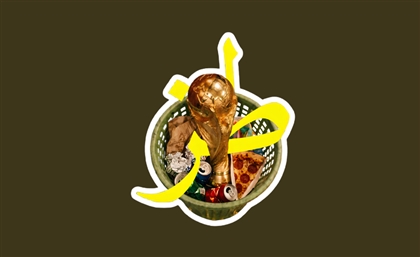
Elections still produce it. Holy days still produce it. Catastrophes produce it without trying. FIFA owns one of the last of them. The World Cup has become a machine that makes millions of people feel the same thing at the same second, on schedule, with a price tag attached. The trophy and the sponsors are just wrapping paper.
What FIFA sells is the 90 minutes the whole world still feels together, and it sells that feeling back to the same people who created it.
The state lines up for the same glow. The pyramids lit red after the win. The president sent his congratulations. Fan zones opened in the New Capital. Watch closely and you catch power doing something it rarely admits: borrowing. A government can build the fan zone, light up the monuments, but it cannot produce the feeling that fills them. The feeling obeys a penalty kick and ignores an order. Every logo stuck onto the celebration is a quiet confession that its own ceremonies have never once made people feel this.
This week it carried more than a scoreline. In Gaza, thousands watched Egypt win at screenings set against bombed buildings.
Coach Hossam Hassan walked onto the pitch in Dallas carrying the Palestinian flag. “They have my heart and soul,” he said.
Fans chanted Free Palestine in Queens, in Amman, in Baghdad, in the same hour, watching the same frame. The system built to move Coca-Cola across continents moved grief and solidarity at the same speed, and for one night those crowds became one people, a people no ministry counted and no broadcaster licensed. FIFA bans politics at its own tournament. You can own the stage, but you can’t own what happens on it.
Egypt knows this condition at street level. The stadium and the square share one address here. Anyone who lived through 2011 and 2012 knows what the terraces taught, and what it cost. Football and politics in Egypt have always been the same gathering, interrupted by a whistle.
So the feeling is real, it is ancient, it is rentable, and it can carry the weight of a people’s grief across an ocean in a single night. Hold all of that in your hand and then ask the question the celebration is designed to keep you from asking.
On Tuesday, Egypt will play Argentina. The models give Egypt a 9.3% chance. Beat them and the greatness amplifies, the pyramids go red again, and clips of Egyptians celebrating in ways no other country would think of go viral by morning. And then morning comes.
A country can feel like a superpower for 90 minutes and wake up Wednesday to the same bread price, the same visa line, the same war on the border. The scoreboard resets, and each person who was one cell in that single nervous system goes back to being one person, alone with a life the goal did not touch.
We are never more certain of our worth than in the 90 minutes we spend watching eleven men. That’s the part worth examining more closely than we give it credit for: the comedown. The moment the feeling drains and we stand there holding the shape of a power we just proved we have, and agree, collectively, to hand back.
We are strong. We proved it Saturday. We will prove it again Tuesday, win or lose, in the sheer size of what we feel together. The hysteria around it is worth a closer look precisely because it is evidence, filed under sport, of a strength we refuse to point anywhere else.
Where are the personal victories? Where is the collective one that outlasts breakfast? We know how to gather around a screen. We have not yet decided what to do with ourselves once it goes dark.
- Previous Article SceneNoise x Amsterdam Dance Event Present CROSSFADE: Egypt
- Next Article The Intricate Beauty of Ben Youssef Madrasa
Related Articles
Trending This Week
-
 Oct 06, 2026
 -
-
-