



Roger Waters on Legacy, Sacrifice & The Fight for Palestine
Rock legend Roger Waters of Pink Floyd reflects on two decades of standing for Palestine, risking his career for the sake of resistance.
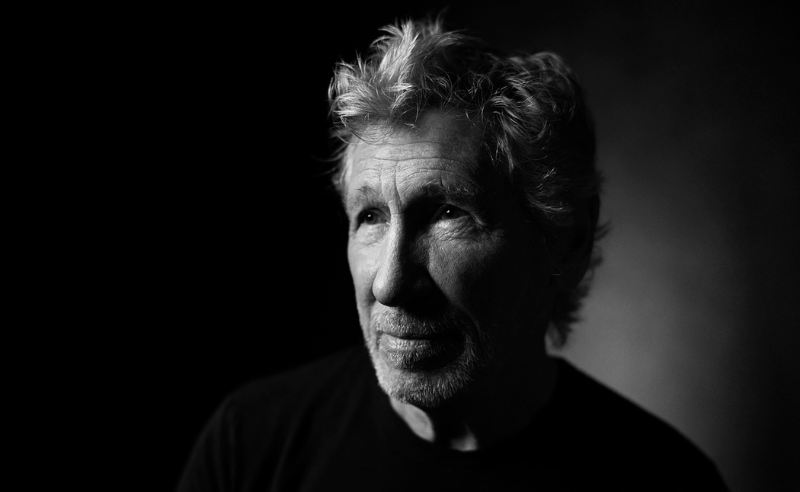
"The constant perseverance in resistance to the occupation of their homeland is a beautiful thing to witness. We stand shoulder to shoulder with our brothers and sisters in Palestine, and as long as we can draw breath, we will.” - Roger Waters
It’s a rare occurrence in mainstream music for an artist to speak openly about Palestine. Even artists who condemn Israel’s brutality against Palestinians are frequently forced to navigate a culture of enforced silence, knowing the costs all too well: canceled bookings, lost financial backing, and industry blacklisting. The apparatus designed to penalize solidarity has proven effective. Even amidst a global awakening following Israel's genocide in Gaza, speaking plainly still makes an artist a target. Artists like Kneecap, Massive Attack, and Bob Vylan have all felt the sting of this pushback, facing canceled shows, state detention, and smear campaigns simply for reporting what they see.
Yet long before October 2023, one figure willingly staked his legacy as a rock icon on his refusal to stay quiet. Roger Waters has been labeled an antisemite, a brute, and a pariah, and has faced financial and professional consequences for speaking out openly against Israeli aggression. While Waters began his advocacy for Palestinian late in his career, his music has never been severed from politics. From the anti-capitalist critique of ‘Animals' to the anti-war rage of 'The Wall' and 'The Final Cut', political friction has always been a well-worn medium of his. But no single cause has tested his career, or commanded his endurance, quite like the struggle for Palestinian liberation.
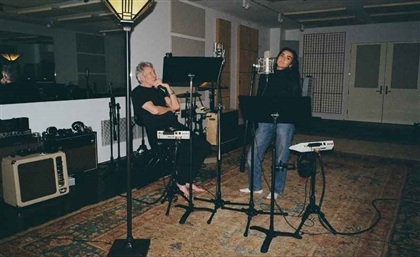
His most recent release with Mona Miari, ‘Comfortably Numb Re-Imagined’, is the latest chapter in that crusade. The track is a radical reframing of one of Pink Floyd's most iconic anthems, directly confronting global indifference toward Palestine. By subverting its original themes of numbness and conformity into an active, unyielding confrontation, Waters demonstrates that his music remains an open battleground for human rights. But this late-career act of creative defiance didn't happen in a vacuum; the political reckoning that led to it was forged nearly two decades earlier.
Waters’ active political turn began mid-tour in 2006. Initially booking a stadium show in Tel Aviv without much reflection, he was met with an influx of emails from fans across North Africa warning him that he was about to cross an international cultural picket line. This led to direct correspondence with BDS co-founder Omer Barghouti. Waters agreed to cancel the Tel Aviv gig and instead moved the performance to Neve Shalom - Wahat al-Salam (Oasis of Peace), an intentional binational agricultural village where Jewish and Palestinian citizens live side by side.
Yet, performing there exposed a deeper structural reality. Addressing the 60,000-person crowd at the end of the show to urge young Israelis to make peace with their neighbors, Waters watched the atmosphere instantly sour. "The portcullis came down," he recalls. "They went from 'Oh, we love Pink Floyd'... but the propaganda they had been living under came down. They were not interested in hearing any kind of message of peace."
But how does an artist who spent decades writing anti-war epics take until his sixties to recognize the reality in Palestine? This is a question Waters addresses directly.
He traces this blind spot to post-WWII Western media propaganda. Born in 1943, Waters was only five years old during the 1948 Nakba. "All we could see in the papers was this wonderful new state where they roll their sleeves up and wear shorts and khaki shirts and work together in kibbutzes... turning a desert land into a flourishing green farm," he explains. "I was five, you know. As we know, that was all bullshit propaganda. They were stealing the land. It breaks my heart that I came on board so late. I'm sorry I came on board so late."
His mother’s advice when he was 13 became his framework for undoing that early conditioning: Read, read, and read all contrary opinions. When you've done the heavy lifting, the next bit is easy: you simply do the right thing.
By 2009, any remaining ambiguity had evaporated. Driven through the West Bank by UNRWA field worker Allegra Pacheco, Waters saw the stark reality of military occupation firsthand: checkpoints, illegal settlements, and partitioned roads. Standing before the 26-foot-high concrete separation wall in Bethlehem, he took a spray-can and tagger's pen to write “We don’t need no thought control” directly onto the barrier, transforming Pink Floyd’s most famous anti-authoritarian lyric into an active artifact of Palestinian resistance.
Waters’ stance puts him in direct opposition to artists who treat Israel as a standard tour stop under the guise of apolitical "cultural exchange." Calling out figures like Nick Cave for defending Tel Aviv performances, Waters insists that art cannot serve as a cosmetic blanket over military occupation: “That slightly answers the Nick Cave school of thought: ‘Oh, we should all go to Israel and play music to them, sit around in coffee bars and chat about love and life.’ No, we shouldn't. You don't cross the picket line. Nick Cave, it's there for a reason. And the reason is these people, this state, are committing the act of genocide.”
For decades, the mainstream rock ecosystem has treated Palestine as a career hazard, enforcing an unspoken rule that solidarity stops where industry interests begin. Yet Waters’ private inbox reveals how his peers process this friction behind closed doors. On October 31, 2023, amidst fierce media attacks labeling Waters an antisemite, Eric Clapton reached out to check on his friend: "Hi Roge. Just checking in. You okay?" Waters replied from Brazil, writing plainly that the UK government was complicit in genocide and advocating for a single democratic state with equal civil rights for all. Clapton’s response exposed the somatic toll and deliberate erasure within Western media framing:
"When it all started, I was traumatized... trauma went to my gut and I became ill... Every platform here has the same agenda. So transparent... The message they're now putting out is that the Jewish community is feeling under threat, when in reality, half the people protesting against the genocide of the Palestinians are Jewish themselves. The media is really poison."
That rare exchange led to the two performing live together in New York shortly after, earning Clapton praise from Waters as part of a "small band of brothers." But Clapton remains an anomaly among rock's elder statesmen. Waters is unsparing toward peers who champion selective causes while ignoring Palestine, pointing directly to Elton John’s LGBTQ+ activism: “Elton has stood up for the gay community... bravely in my view... So it's not that he doesn't have it in him to stand up for a cause and open his mouth. He does. It's just he can't stand up against the Zionist, racist, genocidal state of Israel. Whether that's because they'll slap his wrist and it'll cost him a few million dollars like it has me... I don't know.”
That two-decade political evolution culminates in 'Comfortably Numb Re-Imagined’. The release reframes Pink Floyd’s landmark 1979 anthem from a narrative of personal, drug-induced isolation into an explicit indictment of global apathy toward Gaza. Rather than a nostalgia exercise or a conventional cover, the track was built as an epistolary dialogue with Palestinian singer-songwriter Mona Miari, replacing the soaring original guitar solos with orchestral weight, choral arrangements, and raw vocal witness.
The creative process unfolded as an organic exchange across distance and translation, mediated by Palestinian writer and poet Mohammed el-Kurd. Working closely with Waters and Miari, el-Kurd helped bridge the linguistic nuances, ensuring Miari's classical Arabic poetry resonated directly alongside Waters’ newly written English verses.
Listening to Miari’s haunting Arabic vocals, Waters drafted his verses as direct replies, scribbling notes in response to her recordings. "My first new words were: 'I hear your pain from New York City,'" Waters explains. "It's me scribbling my reply on a piece of paper to Mona Miari."
Miari’s lyrics root the composition in ancestral grief and steadfast endurance, singing lines that speak to displacement and historical continuity:
“إحنا جذور بتكسر حجر... من تحت الردم نرسم الطريق”
("We are roots breaking through rocks... From under the rubble, we birth our fate.")
Waters answers her call by abandoning abstract metaphor for sharp, uncompromising historical specificity:
"Time to draw a new line in the sand... go back to '48 before the settlers stole the land."
The core of the song rests on a single, intentional alteration of rock canon: flipping the famous refrain "I have become comfortably numb" into an active oath: "I will never become comfortably numb."
The song’s weight is fully realized through its accompanying visual work, created in collaboration with Gaza-based visual artists and film crews operating under direct military siege. The music video deliberately avoids polished rock-concert imagery. Instead, it pairs Miari’s haunting performance and Waters’ spoken-word delivery with stark, real-time footage of destruction, displacement, and community survival across Gaza and the occupied West Bank.
By utilizing footage captured by Palestinian cinematographers on the ground, the video transforms the song into a dynamic archival record. Interspersing archival stills of 1948 with present-day destruction in Gaza, the visual narrative connects the Nakba directly to the ongoing crisis, matching the urgency of the lyrics.
For Waters, altering one of progressive rock’s most sacred texts was a natural extension of his life’s work. Addressing ongoing friction with former Pink Floyd bandmates and accusations of overstepping his bounds, Waters remains unapologetic about his authorship and political prerogative: "All the ideas... my songs, my ideas, my politics, my truth, my love." Collaborating alongside Miari and Gazan filmmakers to transform the piece is not a revision of history, but a reclamation of the music's foundational anti-authoritarian spirit.
Having taken a clear stance on Palestinian liberation has come at a staggering personal and financial cost. Over two decades of uncompromising advocacy, Waters has watched the apparatus of corporate music attempt to systematically isolate him: canceled venue contracts across Western capitals, severed corporate sponsorship deals, dropped publishing partnerships, and aggressive smear campaigns labeling him an antisemite. Yet Waters dismisses the weaponization of the label outright:
"The idea that I'm against people because of their religion is patently absurd... The Israel apologists want to conflate someone who disapproves of their genocidal state with someone who doesn’t like jewish people, that’s nonsense."
When asked if the financial hits, lost tour revenues, or reputational damage ever made him reconsider his trajectory, his response is immediate, without a shred of equivocation: "Did I hesitate? No, I didn't hesitate, not for a single second."
That ethos places him at total odds with an industry structured entirely around risk management and self-preservation. For major labels and legacy acts, moral stance is treated as a line item; for Waters, it is an imperative.
To younger, independent artists navigating an era of algorithmic censorship and potential blacklisting for expressing solidarity with Palestine, Waters offers no comfortable platitudes or career-saving shortcuts:
“You face a tough decision, but one that you have to make unless you want to be: 'What did you do in the genocide, Grandpa? I might have got a few less clicks on Spotify over here... but they were murdering hundreds of thousands of babies.' No. You have to stand up for what's right. And if it hurts your career, it hurts your career.”