



Faravaz on Passports, Exile and the Absurdities of Refugeehood
Iranian singer Faravaz turns exile, bureaucracy and the instability of refugee life into a bitter joke on her Saffron EP.
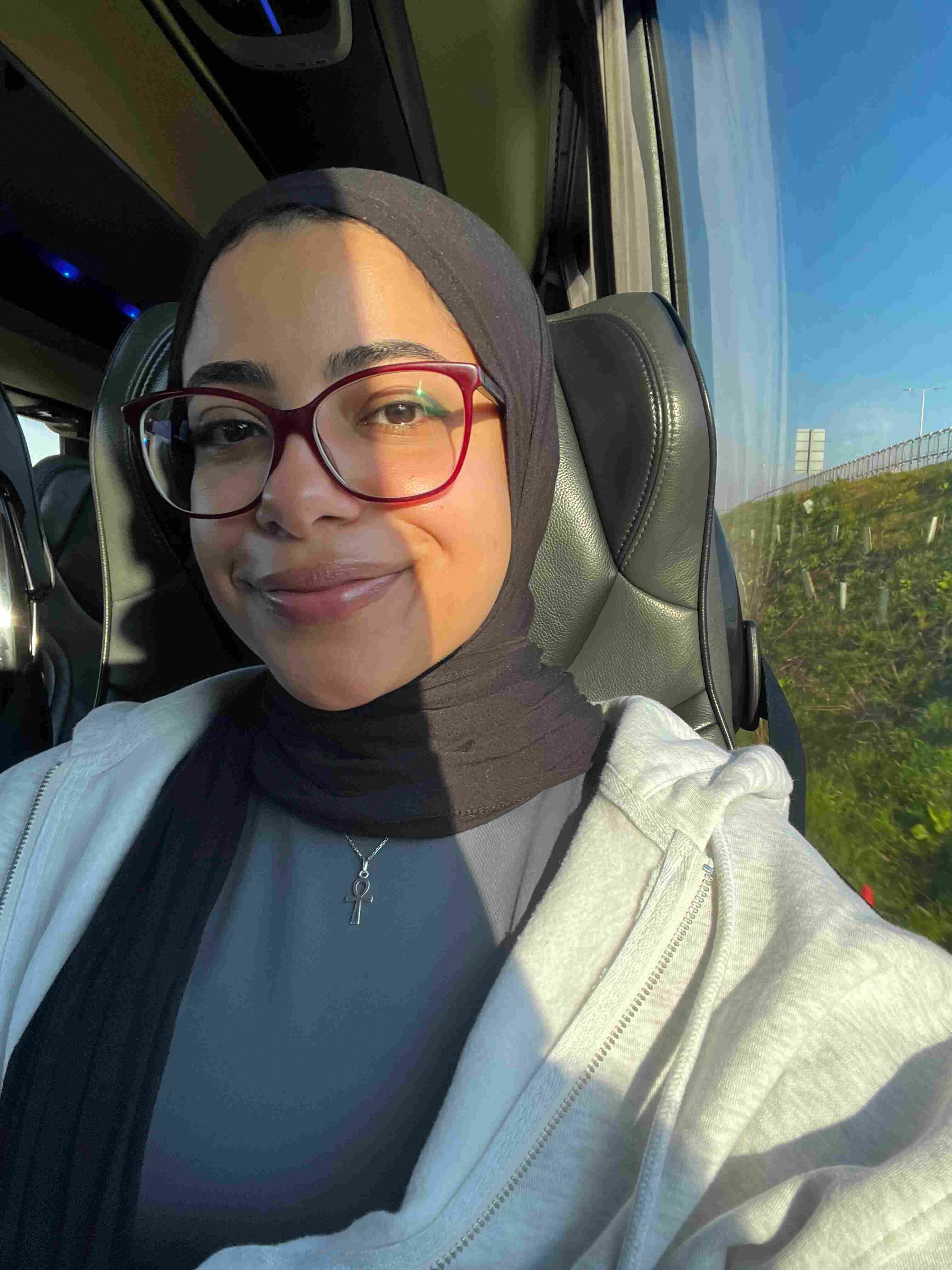
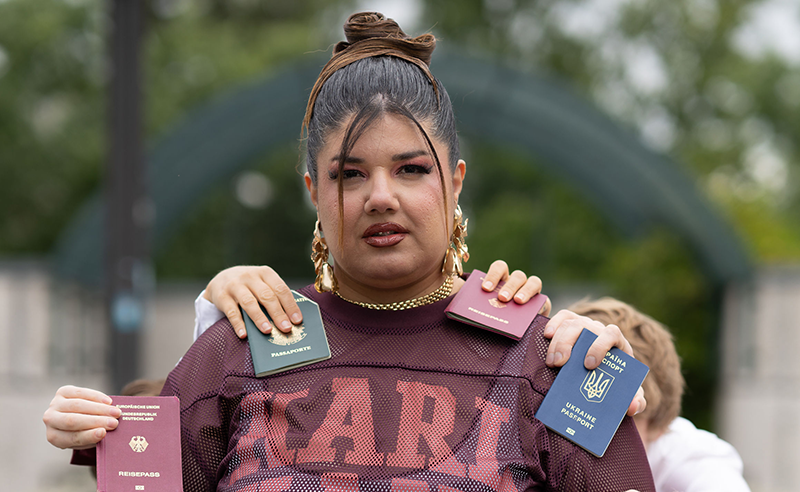
Iranian singer Faravaz never planned to leave Iran. A one-year prison sentence for producing and releasing her own music eventually left her living in Germany as a political refugee, far from the life and career she had imagined for herself.
Her June single "Passport", now part of the Saffron EP released on September 4, takes a darkly humorous look at refugee bureaucracy, from endless appointments to the feeling of being caught between two countries without fully belonging to either. The EP followed two further singles, "Saffron" and "Body Count", over the summer.
“I didn't want to settle in Germany,” Faravaz admits. “People usually assume that you're happy now that you're there. That you could finally sing.” But that assumption is often far from the truth. When she admits to feeling otherwise, she is often met with condescension and the automatic questioning of: “If you don't like Germany, then why did you come here?”
“Why did I come here? I wasn't privileged enough to decide where the f*ck I wanted to live. Why would I want to live in a country that's infamously known for its racism? I often joke that I would have been better off having served a year in prison than to experience all that I have experienced here,” she says.
For Faravaz, leaving Iran meant leaving behind a life and career she had spent years trying to build. Music had always been something she wanted to pursue, but doing so as a woman in Iran came with restrictions that extended far beyond what she could sing. The furthest women could go in the industry was as backup singers or performing at concerts attended exclusively by women, neither of which truly appealed to Faravaz.
“My goal was to be a singer in Iran, have a life and a career there. I wanted to be in my country. I wanted to live there. I wanted to be in my garden. I wanted to be with my friends. I wanted to sing in Farsi. I wanted to be in the environment where I was born,” she says. “But then the government completely changed my plan.”
Even getting access to music growing up was difficult. “You weren't even allowed to buy music, you wouldn't even know how to find it,” she recalls. Tapes and VHS recordings were smuggled into the country and sold on the streets, with men calling out to passersby. “You'd find men standing on the sides of random streets and going 'tape, tape, tape, VHS, VHS, VHS.'”
Her own attempts to pursue music came with their own challenges. Her father spent two years fighting her on learning the guitar, believing it was something meant exclusively for boys. After an incident that left him angry and worried that she was becoming rebellious, he broke her guitar.
Despite that, she persisted, continuing to pursue music in whatever ways she could. After doing backup vocals for a male singer, she began recording her own songs independently and putting them online, setting in motion a chain of events that would eventually lead to her arrest and exile. “It wasn't until I was around 18 years old that I started to get a lot of attention online. I think that was what really pushed me forward.”
Although she avoided political themes in her music and wore a hijab in her music videos, as required, Faravaz was arrested in 2016 for producing and releasing her own music. “It was considered erotic and provocative to men for a woman to sing and perform in the first place,” she says.
She was sentenced to a year in prison but remained free on bail after protesting the sentence. At the time, she didn't think it would stop her from returning to Iran. She had travelled to Berlin to perform a concert and planned to return home, believing the sentence was intended to scare her rather than actually put her behind bars. That changed when her lawyer warned her against going back.
“I got a call from my lawyer telling me: 'It's serious. If you return, you might go to prison.' I was forced to stay in Germany without wanting to. I have been here as a political refugee since 2018,” she says.
Exile didn't just change where Faravaz lived. It also changed the language she made music in. Before leaving Iran, she had spent three years singing in Farsi and had established herself as an indie artist. But after leaving, she began speaking more openly about her experiences as a woman in Iran, including the treatment she faced from the government and the expectations placed on her by the society around her. Her use of her own body in her work, often deliberately provocative when addressing political and social issues, also drew backlash from parts of the Iranian community. “There was a big wave of hate directed towards me,” she says.
Eventually, she stopped giving interviews in Farsi altogether. One reason was the backlash she received after speaking to BBC Persian about calls to boycott the Israeli entry at Eurovision. But beyond the hate, she had also grown tired of feeling like nothing she said would get through.
“It felt pointless. It felt like they'd never understand or get it,” she says.
Singing in English has since allowed her to reach people beyond the Iranian community, without feeling as though she has to answer to the same expectations. “It ended up resonating with so many people, not just Iranians. It was very gratifying being able to not be wholly dependent on just the Iranian community and music scene,” she says.
It has also given her more room to express herself. “I am so much freer because I know that within Iranian culture I would be judged for every single thing I would say or sing,” she says. For Faravaz, that freedom means being less preoccupied with how her words and music might be received by the people she grew up around.
But leaving Iran has not meant leaving it behind. Her family is still there, and everything happening back home continues to affect her, despite the distance.
“Even though I now sing in English and try to be more connected to the new world I'm living in, my head is still very much in Iran,” she says. “My body is here, yes, but my whole head and heart are there, in Iran.”
Building a life in Germany has brought its own difficulties. Faravaz describes struggling to find her place in a music scene that remains predominantly white, where being a refugee makes it even harder to break through. She has been able to continue making music, but that doesn't mean she feels at home.
“Home, for me, is somewhere which is safe,” she says. “In Iran, I never felt safe. And I don't feel safe here, either.”
That feeling extends beyond the music industry. Faravaz recalls being stopped at a German supermarket after accidentally leaving without paying for an item. Staff called the police, who searched her and took her details before leaving. The incident led to a court case, which was eventually dropped after two hearings were held without a Farsi interpreter. Faravaz says she was warned that repeated offences could put her residency at risk, reflecting the added uncertainty refugees can face when navigating Germany’s legal system.
“It's why I am extra careful, because we're very easily and openly labelled as criminals,” she says. “I have often felt as if I've not been treated as a human, here in Germany.”
Although she now sings in English, Faravaz still draws on the music she grew up with, bringing together Western, Arabic and Iranian influences. Rather than leaving one sound behind for another, she has been working towards a style that reflects the different parts of her identity.
“We were trying to make something out of my love for Western, Arabic and Iranian music that would showcase a sound that would essentially encapsulate me as an artist and individual,” she says.
For Faravaz, music has also become a way to address the issues that have shaped her life, particularly those that people might otherwise prefer not to engage with. Rather than approaching every subject head-on, she often uses humour, provocation and a beat to draw listeners in before they realise what a song is really about.
“We live in a world where people don't like to listen to serious matters and don't want to be involved in any political issues,” she says. “They sometimes forget how political our lives actually are.”
That approach is at the heart of Passport. The song takes the everyday frustrations of navigating life as a refugee through the seemingly ordinary act of travelling between countries and turns it into a reminder of how much freedom can depend on a document. For Faravaz, having the right to travel should be one of the most basic freedoms a person can have. Yet for refugees, the paperwork and permissions that determine where they can go can become another obstacle to building a life.
Much of the song comes directly from Faravaz's own experience. One line refers to getting ‘an appointment for an appointment for an appointment for next year,’ a process she says is all too familiar. “You need an appointment to be told that you need an appointment, quite literally.” When her travel document expired, she had to hire a lawyer to put pressure on the government, yet still waited a year just to get to the point of requesting a renewal.
“It's exhausting having to try and earn rights to basic human existence,” she says.
Another lyric, ‘When you're a little bit illegal, / The edge is slippy,’ draws on her experience with the supermarket incident and the warning that followed. “The littlest of things could potentially ruin my life,” she says.
The song also pokes fun at the advice she regularly receives about marrying someone for citizenship. “The moment you get into any trouble with your visa or with your passport, marriage is the first line of defense or solution that people offer you,” she says. “I find it so funny that I need a White person to prove that I'm good enough to be a citizen.”
After the song came out, she received messages from people who had gone down that very route. For Faravaz, it was another reminder that the issues she was singing about extended beyond her own circumstances.
“It's very much a universal issue that we're experiencing. I wanted to highlight it, poke fun at it and joke about it. And even though I do, it's not silly. It's a bitter joke,” she says.
In her song, Faravaz describes being ‘stuck in the middle between Berlin and Tehran,’ wanting nothing more than what she calls ‘normal.’ The line captures the contradiction she continues to live with: unable to return to the place she considers home, yet still trying to find her footing somewhere else.
The song may make light of the paperwork, appointments and absurdities along the way, but the frustration behind it is real. For Faravaz, being caught between two countries isn't just a lyric. It's the life she never planned to live.
- Previous Article Inside the Desert Observatory Designed to Keep AlUla Dark
- Next Article Celebrity Fashion Designer Ismail Heiza Styles His Signatures
Related Articles
Trending This Week
-
-
 Oct 15, 2026
-
-