





Dana Salah Makes Room for Every Version of Herself on 'Bent Bladna'
Marking her debut album, the record sees the Palestinian-Jordanian artist blending together Palestinian dabke, R&B, Jamaican riddims and contemporary pop.

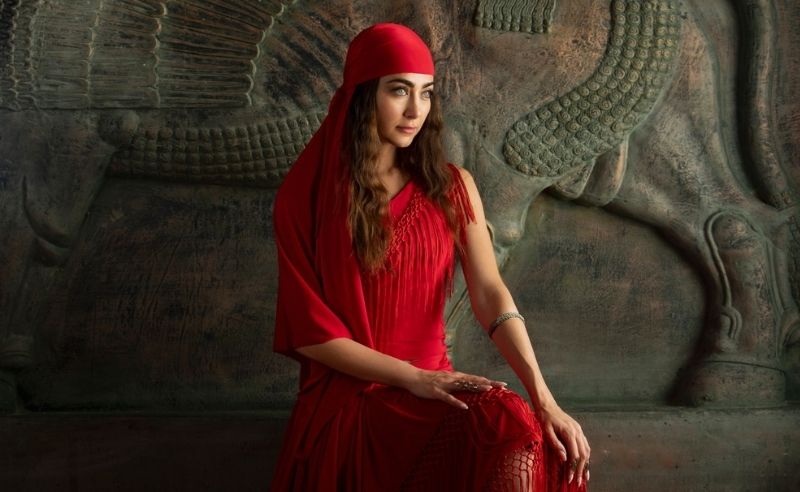
Following months of teasing and road-testing unreleased tracks, Palestinian-Jordanian singer-songwriter Dana Salah has finally released her debut album Bent Bladna, an assured introduction to an Arab artist who has long been building her own pop vocabulary in the diaspora.
Meaning ‘Daughter of the Homeland’, Bent Bladna grapples with the question of home when growing up between places, languages and cultures. Rather than trying to reconcile those identities into a single whole, Dana embraces their contradictions, tracing a way home through the spaces in between.
That approach forms the foundation of what Dana calls her ‘Falahi Pop’ sound, a melting pot of musical traditions she inherited and the pop language she has developed around them. Sonically, the album moves freely between Arabic and English, drawing on various influences from Palestinian dabke and golden-era Arab music to R&B, Jamaican riddims and contemporary pop.
Much of Bent Bladna is anchored in personal memory and cultural inheritance. On ‘Tah Dalili’, recordings of Dana’s grandmother turn family history into a living archive, while ‘Dori Dorak’ and ‘Wedding Riddim’ explore the ways music can preserve memories of home. The latter brings Palestinian dabke into dialogue with Jamaican riddim culture, creating a cross-cultural exchange that feels instinctive rather than ornamental.
‘Asl W Oud’ is more of an introspective-leaning song that draws from the golden era of Arabic music, while ‘Donia Wardieh’ reflects on the loss of innocence and the corrupted modern world to be inherited by the next generation. On ‘Ansak’, Dana explores heartbreak through contemporary pop sensibilities, which further highlights the album’s fluidity between personal and universal themes.
The album also traces Dana’s own artistic evolution. Once known as King Deco, a name revisited on ‘Samurai’, she now folds that earlier identity into a larger artistic vocabulary rather than leaving it behind. It is a fitting reflection of an album concerned with the idea that becoming someone new does not necessarily mean abandoning who you were.
That idea comes into sharper focus in the visual for ‘Majnooneh’, directed by Palestinian-Australian artist Sarah Bahbah. The video introduces four characters representing different facets of Dana, alongside flashbacks to her younger self and her eventual decision to leave behind an expected path and move to New York to pursue music.
The title itself reclaims ‘majnooneh’, Arabic for ‘crazy’, transforming a word once used to dismiss Dana’s ambitions into an assertion of creative freedom. It mirrors the album’s wider refusal to accept the binaries imposed on Arab women: traditional or modern, Arab or Western, strong or soft.
“I often felt like I had to choose between identities. ‘Bent Bladna’ is my way of rejecting that idea.” Dana Salah tells SceneNoise.
In that sense, with Bent Bladna, the Palestinian-Jordanian artist is less interested in defining where she belongs than in expanding the space she can belong to. Its songs move between generations, geographies and musical traditions, turning inheritance into something malleable rather than fixed.
- Previous Article Caviar, Comté & A Very Serious Cheeseburger Land On the North Coast
- Next Article The Intricate Beauty of Ben Youssef Madrasa
Related Articles

Trending This Week
-
 Oct 06, 2026
 -

-
-