



What Egypt’s Digital Confessions Taught Me About Addiction Recovery
“TikTok began as a distraction. Then people told me my struggle was theirs too- and I couldn’t walk away from that.” - Addiction content creator Mahmoud Samir.
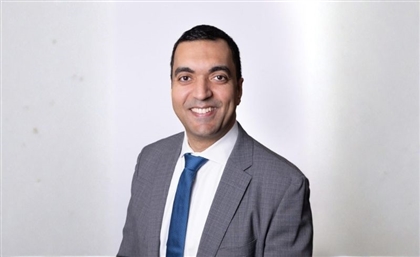
In the first months of sobriety, I didn’t know what to do with my time. Everything felt too loud - cafés, friends, even silence. So I scrolled. TikTok became background noise, a way to fill the space my old habits had left behind. One night, somewhere between a cooking video and a random skit, I landed on a man discussing relapse and starting over. No filters, no drama - just him, sitting on his bed, speaking plainly about the mess of getting clean. It was content creator Mahmoud Samir, in his late 20s. His voice was steady, his eyes tired but unashamed. I didn’t know him, but his words hit like recognition- like hearing a secret I’d been keeping from myself. For the first time, addiction didn’t sound like shame. It sounded like the truth.
The more I watched, the more I realised Samir wasn’t just telling his story- he was building something larger. His videos, messy and unpolished like so many others I’d started seeing, were part of a quiet revolution happening online. Young Egyptians were finding new spaces to speak openly about addiction, anxiety, and recovery - away from the polished tone of self-help influencers, but with an honesty that felt both jarring and human. Samir’s feed, in particular, felt like a diary cracked open for everyone to read. He spoke about surviving three suicide attempts, living with undiagnosed ADHD, and the slow, uneven work of staying sober.
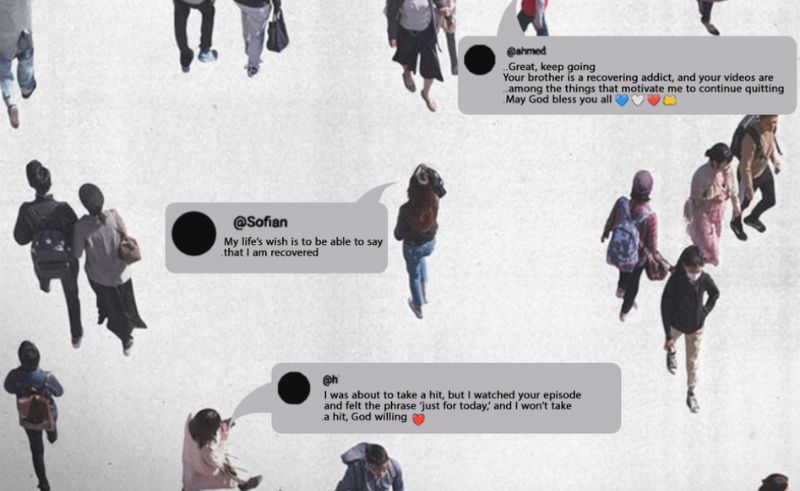
In the comments, people wrote things I had never heard anyone say out loud in Egypt: I thought I was the only one. You made me feel seen. His page had become a digital lifeline for thousands who might never set foot in a therapist’s office or a support group. “I found that I could truly occupy myself with TikTok,” Mahmoud Samir told me. “And when I started to receive positive feedback and found people relating, I felt compelled to continue. It felt like my responsibility.”
For as long as I could remember, addiction and mental illness had been treated like private, shameful issues- things to bury, not heal. The word ‘ayb’ (عيب) hung over everything. In Egypt, like much of the Arab world, suffering was something families managed behind closed doors. Addiction wasn’t seen as an illness, but as a moral weakness, a stain that could damage an entire household. Getting help wasn’t considered brave; it was a scandal.
“Families wait until someone is severely ill before they may seek mental health professionals,” Dr. Kate Ellis, Associate Professor of Psychology and Graduate Programs Director at American University in Cairo, and Consultant Clinical Psychologist and Co-Clinic Director at Maadi Psychology Center in Orabi, tells CairoScene. “Early intervention is far easier, but the stigma delays care.” I saw that play out all around me. One guy, eight months sober, said his parents still told relatives he was “volunteering at a community centre” when he was actually going to group meetings. Another person said, “Until I tried to run in front of a car, my mom pretended there wasn’t a problem.”
In that kind of silence, social media starts to feel less like a distraction and more like survival. Online, you can speak without being seen. You can confess without bringing shame to your family name. “People are able to use these apps and online interventions anonymously... This really helps in cases where individuals will not access therapy and perhaps have family members that are not supportive,” Dr. Ellis explains. For many, that anonymity is the first step toward honesty.
One male, 29, five years into recovery, reflected, “Watching someone go through what you go through makes it easier to stick to sobriety - it’s like being in a secret community.” These online spaces don’t replace therapy or formal recovery programs, but they fill the gaps between them, the late-night loneliness, the quiet doubts, the moments when the urge hits and you just need to know someone else survived it too.
One person, female aged 23, who’d been sober for over a year, told me, “I went to therapy and then I went to a group and then repeated. Outside those sessions, I felt like I had no one to turn to.” For people like us, social media became that someone - a 24/7 companion, always awake, always there to remind you you’re not alone at 3 AM.
Efforts to raise awareness have begun to emerge, but real change is happening from the bottom up. People like Samir are reshaping what recovery looks like in Egypt. It’s no longer about redemption or perfection; it’s about honesty, about surviving one day at a time.
Still, being visible comes with a cost. Samir recalled a friend who backed out of a podcast because of family pressure. “They were concerned that he would be perceived negatively,” he said. “They didn’t want him to expose private family matters.” That tension - between truth and ‘ayb’ - never really goes away. Even for those of us in recovery, silence still lingers in the background, waiting for its chance to return. And yet, something is shifting. “I feel like I’m not alone,” one viewer shared. “Most people pretend to understand. Watching these stories come out shows that other people struggle every day too.”
Dr. Ellis added that online communities alone aren’t enough. “We need public health ministries, schools, NGOs, and community organisations all working together to spread the message that this is normal, that it’s common.” She’s right. But even without that kind of systemic support, something real is happening.
The conversation about addiction in Egypt is no longer whispered behind closed doors; it’s happening in comment sections, on livestreams, in DMs. It’s led by the generation that once hid their pain, and who now refuse to. For me, and for so many others, these digital confessions have taught us something simple but radical: telling the truth is its own kind of recovery.
- Previous Article Halfpipes Under Siege: The Skateboarding Scene in Gaza & the West Bank
- Next Article Delrady Drops Funky House Single ‘Closer To Me’
Related Articles

Trending This Week
-
 Apr 17, 2026
 -

-
 Apr 13, 2026
 -