




How Water Towers Became Architectural Landmarks Across the Gulf
Across the GCC, water towers represent rare cases where infrastructure becomes architecture, fusing modernist design and urban symbolism to create landmarks that shape skylines and cultural memory.
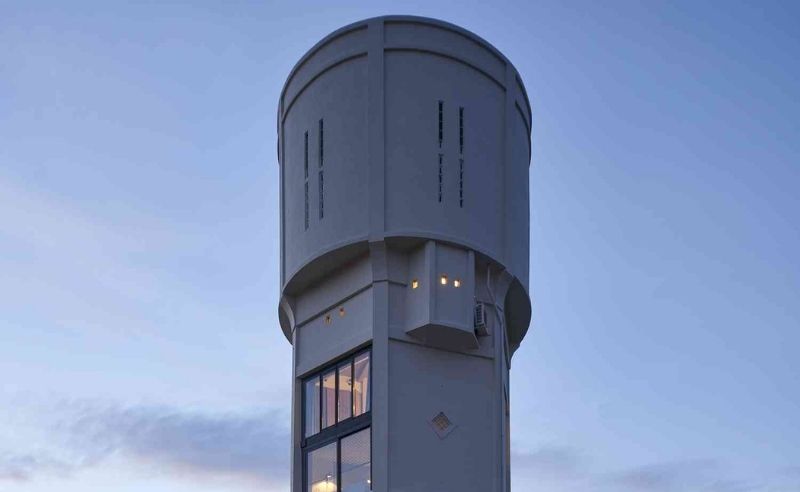
Throughout the Gulf region, water towers represent special cases where infrastructure becomes engaging architecture. These towers push beyond their practical purpose, using different forms and public programming to create visual landmarks and destinations.
Rather than treating water storage as an invisible utility, governments snatched an opportunity to signal ambition and modernity, marking their emerging architectural identity. Spherical forms, inverted cones, and futuristic silhouettes turned practical structures into symbols, shaping how cities present themselves.
Together, these towers reveal how functional engineering can become urban character...
Burj al‑Khazzan — Saudi Arabia
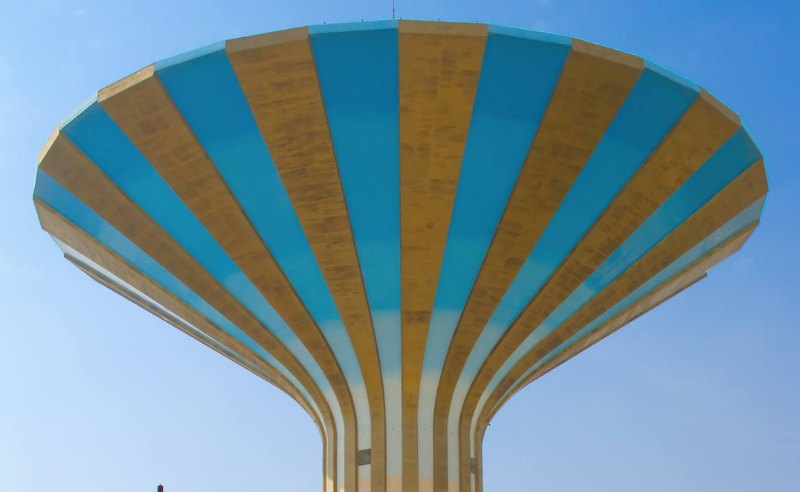
This tower, designed by Swedish architect Sune Lindstrom, is an early example of transforming infrastructure into a city landmark. Upon its completion in 1971, it was the tallest structure in Saudi Arabia standing at 61 metres. Its mushroom-shaped structure featuring an inverted cone top reflects iconic modernist silhouettes, solidifying its place as one of the memorable water towers of the region.
Al-Khobar — Saudi Arabia
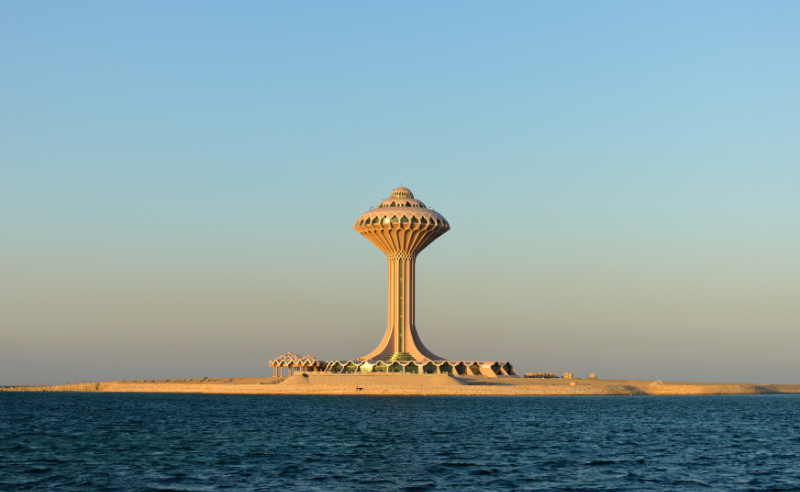
Originally a 90 meter water storage tower on an island off the Khobar’s corniche, this tower was designed using modernist and utilitarian architecture — standard of late 20th century Gulf infrastructure. The cylindrical concrete tower features simple geometric forms emphasising efficiency over ornamentation.
Currently, Al Khobar Water Tower is undergoing redevelopment employing fluid, wave-like futurist architecture. With plans to open green spaces, restaurants, and other leisure facilities, the tower transforms from functional infrastructure into a civic landmark.
Kuwait Towers — Kuwait
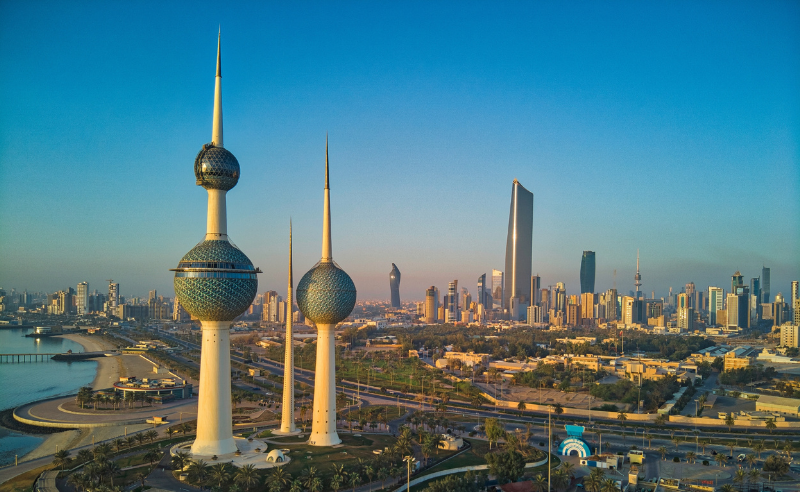
Featuring three towers with spherical water tanks, the Kuwait Towers use modernist-futuristic design to blend utility with sculptural elegance. Designed by Swedish architect Malene Bjørn, its spherical forms, clad in blue, green, and grey tiles, make them a defining element of the city’s skyline and a symbol of Kuwait's modernisation. Representing the key integration of civic identity with tourism, the towers fuse functional storage with a revolving restaurant and rotating observation deck.
Buraidah Water Tower — Saudi Arabia
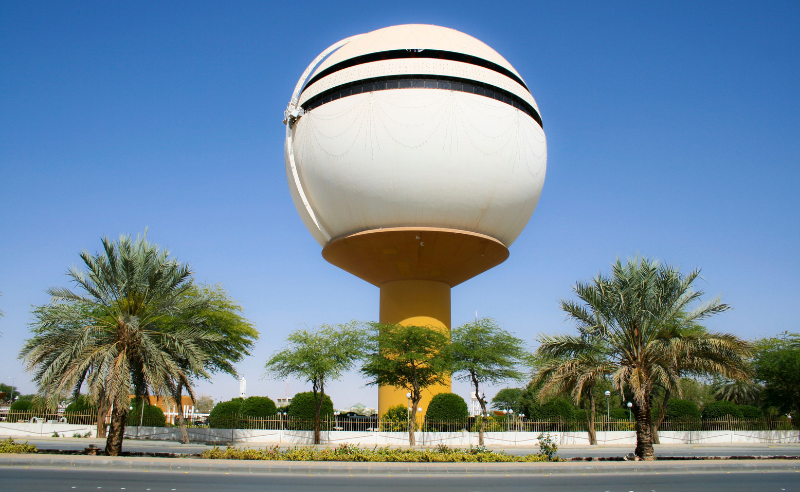
Rising above the city of Buraidah, the water tower doubles as a regional landmark. Completed in the late 20th century, it reaches 66 meters and features a cylindrical form with a public restaurant encircling the water tank. Its design balances utilitarian purpose with subtle modernist touches, ensuring its position as one of the city’s most distinctive buildings.
Burj Al Kharj — Saudi Arabia
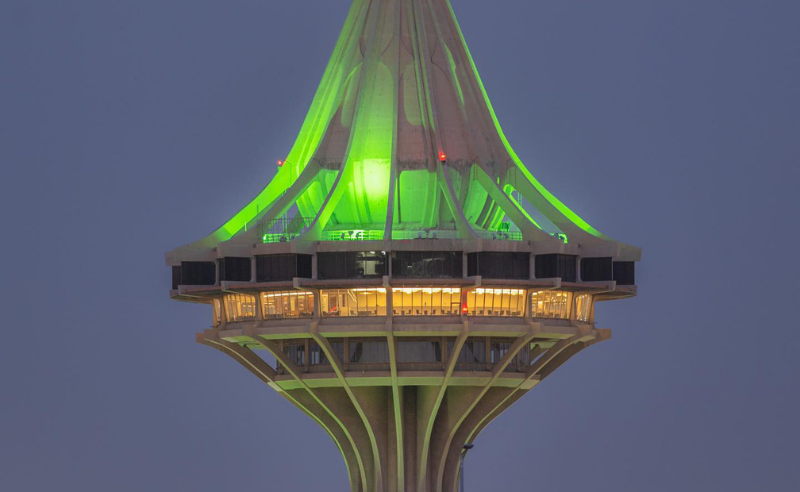
Dominating the skyline of Al Kharj, this tower is the pinnacle of utility, public engagement, and civic identity. This 105 meter tower features a revolving restaurant, auditorium, exhibition hall, and landscaped park. Its cylindrical form and modernist design reflect 20th century Gulf architecture alongside multiuse infrastructure. The towers' clean lines, geometric shapes, and integration of public spaces reflect an approach to design that treats infrastructure as both utilitarian and as a civic landmark.
Mushroom Towers — Kuwait
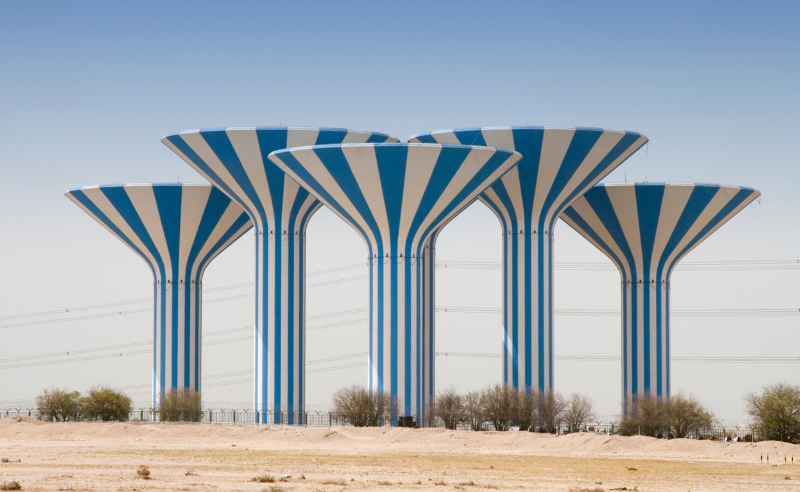
Including a distinctive network of 31 total water towers, the Mushroom Towers combine functional engineering with visually striking silhouettes. Each tower features a slender cylindrical shaft topped by a flaring, mushroom shaped tank, creating a recognisable profile. While primarily functional, their repeated form and unmistakable blue strips transform standard, necessary infrastructure into an architectural statement, illustrating whose systematic design can contribute to the development of urban identity and aesthetics.
Al Khazzan Park Tower — UAE
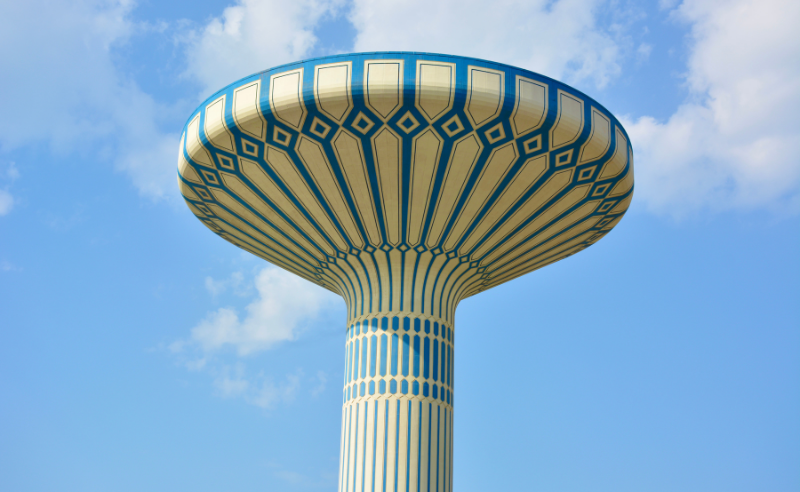
This water tower, the defining landmark of Al Khazzan Park, features a blue and white patterned tank standing about 40 meters high. Dubai Municipality rehabilitated the site as Al Khazzan Park, keeping the tower as a focal point while adding shaded lawns, a children’s play area, a small café-library and a ground-mounted photovoltaic array so the park operates as a zero-energy public space.
The project was framed as both an urban-greening and heritage-conservation effort, restoring an older community park from the 1970s–1980s era and preserving the tower as one of the neighbourhood’s most recognisable civic monuments.