




Egypt’s New Creative Renaissance Has Begun
One of the clearest signals of Egypt’s new creative renaissance is the shift in how young Egyptians work and imagine their futures.
History teaches us that nations often enter periods of profound cultural and creative evolution after moments of major social transformation. Egypt is no exception. After the national awakening of the late nineteenth century, a new cultural era emerged, one that gave rise to modern Egyptian cinema, literature, and music. It was propelled by a generation educated abroad on state scholarships, whose exposure to global ideas, paired with the raw talent emerging from Egypt’s towns and rural heartlands, helped ignite a renaissance that shaped our modern identity.
I believe we are witnessing a similar moment today. This moment is emerging at the intersection of generational change, expanded access to global education and technology, and a renewed institutional openness to culture as an economic force.
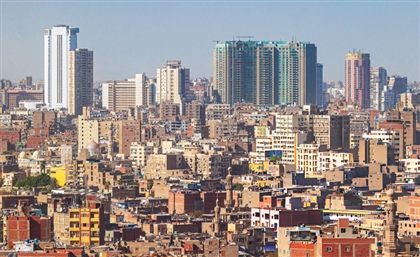
The social and political shifts of 2011–2013 awakened something deep in the Egyptian psyche. Over the past decade, a new energy has taken hold, visible in design, music, fashion, architecture, art, and entrepreneurship. Today, many families consider education an investment in their children’s future, while world-class universities are being brought to Egypt, raising the quality of education and creating a powerful two-way flow of knowledge, exposure, and ideas.
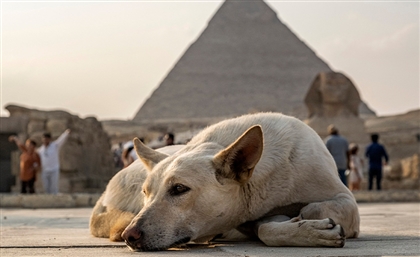
Such energy does not arise in a vacuum; it draws from a lineage far older than our modern history. Egyptians have always been creators. Our civilisation gave the world architecture, craftsmanship, mathematics, astronomy, and visual language that continue to shape global culture. The Pyramids remain the world’s most recognisable architectural form, and ancient Egyptian aesthetics still inspire global luxury, from Paris to Milan.
One of the clearest signals of Egypt’s new creative renaissance is the shift in how young Egyptians work and imagine their futures. Millennials and Gen Z are choosing startups over corporates, purpose over predictability, and creation over compliance. They want to build, not simply be employed. They seek companies with mission, impact, and cultural relevance.
This explains the rise of local brands, independent designers, alternative music, tech ventures, a vibrant culinary scene, and grassroots creativity. Technology has transformed this landscape: social media has levelled the playing field, and AI now enables talents outside Cairo’s creative and cultural circles to produce at global standards. Egyptian creativity is no longer constrained by geography or gatekeepers. It is amplified by technology and fuelled by ambition.
None of this is to suggest that Egypt’s creative landscape is without challenges. Economic pressures, regulatory complexities, and unequal access to financing continue to shape the reality in which many creatives work. A renaissance is never uniform, nor is it free of friction. But despite these constraints, something remarkable is happening: a cultural momentum that persists. The point is not that all obstacles have disappeared, but that a new creative energy is rising in spite of them, and slowly reshaping the environment around it.
A renewed focus on how heritage is managed has also played a decisive role in shaping this moment. Major national projects operating under the pioneering public-private partnership model, from the transformation of the Giza Plateau to the Grand Egyptian Museum, are redefining how Egyptians experience their cultural inheritance. Improved infrastructure, elevated visitor services, and modern storytelling are allowing younger generations to see heritage not as a relic, but as a living source of pride, identity, and imagination. This signals that heritage is no longer a closed or static domain, but a welcoming one. It opens a new psychological layer, where Egyptians engage with their heritage as something they can activate, reinterpret, and build upon, transforming it into a generator of contemporary culture.
This shift is not confined to heritage sites alone; it is spilling into the wider cultural landscape, reshaping how culture is produced, experienced, and shared. Concerts at the Pyramids have become global spectacles. The revival of iconic cultural brands, such as the Biennale d’Alexandrie, unlock dormant cultural equity and offer platforms for young generations to engage with Egypt’s legacy and the world in contemporary ways. Content creators are emerging in unprecedented numbers. Workshops and podcasts are flourishing, while visionary digital media platforms are giving emerging talents a voice to tell their stories to the world.
Today’s renaissance is visible across all sectors. We see it in Azza Fahmy’s elevation of Egyptian jewellery design; Alchemy’s designer-led spaces and products; Amir Fayo’s experiential retail concepts; GEM Official Store’s curated sourcing of the best of Egyptian craftsmanship; and Okhtein’s rise as a luxury brand. It is evident in cinema and music, from Hisham Nazih’s international scores to Mohamed Diab’s Hollywood success, and in advertising through Ali Ali’s ascent as a global commercial director. It extends to international contemporary artists such as Moataz Nasr and Wael Shawky; and to Gouna Film Festival and Cairo Design Week transforming entire districts into stages for local artists and designers to interact with the world; alongside socially-responsible real estate developers opening their spaces to host creative expression and cultural experiences. Together, these stories show that when a nation trusts its own talent, revival becomes unstoppable.
Globally, the creative economy is among the fastest-growing sectors, contributing over 3% of global GDP, generating more than $2 trillion in revenues and nearly 50 million jobs worldwide. In Egypt, it is no longer a side story but one of the nation’s most dynamic forces. Similar creative awakenings are unfolding across nations from South Korea to Saudi Arabia and the UAE, yet Egypt’s moment is distinctive in how deeply it draws from heritage while speaking in contemporary, global languages. This moment is not accidental; it is the result of political will, strategic investment, and a deeply rooted cultural identity that has always favoured creativity. What we are witnessing is more than a revival of creativity; it is a revival of confidence. And when Egyptians create, Egypt rises.
The future is ours. Let’s shape it.
Ahmed Shaboury
Founder & CEO
Torasna
Follow ups: A creative renaissance is when a nation with a strong heritage in the arts and creative fields starts to rediscover and reactivate this heritage, and build on it with modern tools, taking it to a new level. It is not limited to one form though, and happens across multiple sectors - that’s why I’m referencing different examples from various industries under the creative economy. One of the footprints of a renaissance is its breadth, not isolated fields.
As for earlier periods, the only comparable moment that comes to mind is the late nineteenth and early twentieth centuries. As many of us recall from history classes, Mohamed Ali initiated a policy of sending young Egyptians to study in Paris, a practice continued by his successors. This exposure to European thought, education, and institutions coincided with a growing sense of national consciousness. When Ahmed Orabi led the nationalist movement that led to the British occupation, this heightened awareness of identity and pride became fertile ground for cultural expression. Over the following decades, it culminated in a renaissance across literature, music, cinema, architecture, and the visual arts, shaping the foundations of Egypt’s modern cultural identity.