





Mixels is Pixelating Cultural Memory into Collectable Action Figures
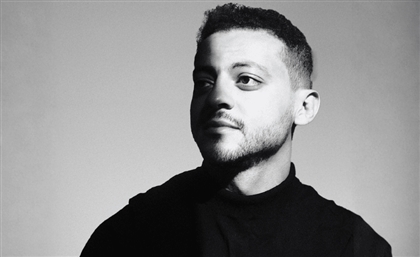
Marwan Abbas spent a decade perfecting pixel art. Now he's turning Egyptian and Arab icons into collectable action figures.


Walk into any toy shop in Cairo, and you will see the international familiar: shelves stocked with Winnie the Pooh stuffed animals, Marvel superhero figures, Disney princesses and Pixar characters. What you won’t find - at least until recently - is an action figure of Mohamed Mounir mid-performance; hand raised with a microphone, hair unmistakable. Or Shikabala, the beloved Zamalek football legend, immortalised in miniature. You won’t even find ‘Egypt’s fourth pyramid,’ Umm Kulthum.
This cultural gap is what Marwan Abbas, Cairo-based graphic designer and founder of Mixels, has set out to fill. And he’s doing so entirely in pixels.
“I was very frustrated because I saw no action figures for Arab or Egyptian celebrities in general,” Abbas says, “All we had were action figures we brought in from outside the country.”
The idea for Mixels began ten years ago, when, one night, Abbas stumbled across a pixel art project on Behance - an online platform where creative professionals from around the world can share their work. This moment, he says, was the “spark for everything.”
Rather than copying what he saw, he did it his own way. “I started making pixel art in my own style - the Egyptian style, the old style,” he says. Pixel art is nostalgic by default. Many have grown up playing games with pixelated landscapes and characters. To honour this art form’s origins, Abbas initially looked to Egypt’s past for inspiration.
Naturally, one of his first collectable icons was Umm Kulthum. 3D printed and designed by Abbas himself, even broken down into pixels, her form is instantly recognisable: classic black sunglasses, one white glove. On Mixel’s Instagram, she poses by the Nile, overlooking the flowing river with the Cairo tower in the background.-9b8f394f-9aa7-4047-b1d7-caba9271c073.png)
Not everyone has a visual signature strong enough to survive reduction, and Abbas’s approach demands a deep understanding of iconography - of what makes a person, a person. "I don't draw eyes or features on the face," Abbas explains, "It's always very minimal. I just play on the features that make this figure recognisable."
For Umm Kulthum, it’s the signature sunglasses. For Mohamed Mounir, it's the hand gesture he makes when he sings, combined with his distinctive hair. Not every celebrity translates, however. "Sometimes I have a character in mind, and I can't find what would make them recognisable to people," Abbas admits.
Collectors' items aren’t complete without their packaging. The first few items are actually numbered in production; if you get a box stating ‘01’, you have gotten the very first edition of the action figure. The character of each pixelated person extends onto their box. To Abbas, an artist and designer, this is essential to Mixels. "The design of the packaging is made in a proper way, it’s made to be very artistic," he says. It's a model borrowed from collector culture - the kind of deliberate scarcity that transforms an object into something treasured.
Mixels also extends beyond action figures. Recently, Abbas launched a clothing line carrying the same pixels onto hoodies and t-shirts, also full of nostalgic references. His younger sister, a skilled crochet artist with her own brand, collaborates on handmade items: crocheted hats and bandanas. To Abbas, the two art forms share similar qualities. "When you make crochet, it looks somehow like pixel art," Abbas says, "because it has the same skills - it's just little pieces that make a bigger piece."
When asked about expanding to international celebrities, he doesn't dismiss the idea, but he's firm on remaining regional. "I think first I’d like to start with Arab icons for sure," he says. "I love our culture, and I love Egyptian celebrities. So I think the first, at least 20 or 30 figures, will be a reflection of Arab celebrities."
And then there is the more personal dimension - the one that inspires all of it. Pixel art, for Abbas, is memory made physical. "I think pixel art reminds us all of when we were young. I think that's why I love pixel art, because it gives me back some of those memories."
It's a fitting medium for the project. Pixel art works by leaving things out - reducing a person to only what is essential, and only to what is recognised. What Abbas has done is apply this logic to Egyptian culture: keeping the memories of icons alive through a medium that, by its very nature, refuses to forget.
- Previous Article New Plan Eases Truck Congestion on Fujairah–Khorfakkan Road
Related Articles

Trending This Week
-
-

-
 Apr 13, 2026
 -