



Inside the NGO Leading Support for Displaced Palestinians in Egypt
INARA took CairoScene on a tour inside their three main centers, where they provide education, psychosocial support, and medical care to thousands of displaced Palestinian families in Egypt.

Founded in 2015 by former CNN correspondent Arwa Damon, after witnessing children suffer firsthand in war zones for over a decade, The International Network for Aid, Relief & Assistance (INARA) is the largest NGO serving Palestinians displaced in Egypt.
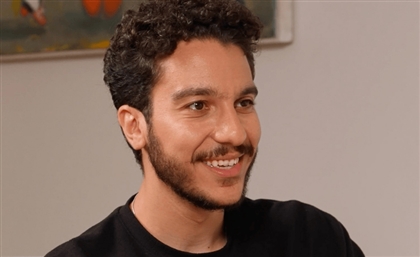
The organization provides medical, educational, and psychosocial support across three main centres in Cairo. The INARA team, led by Egypt Country Director Dr. Hazem Al-Haddad, took CairoScene on a tour of their facilities to see that work up close.
INARA operates in Egypt as well as Lebanon, Palestine, Afghanistan, Ukraine, Syria, and Turkey. In Egypt, INARA channels its resources toward the community of 100,000 Palestinians displaced from Gaza—a number INARA CEO Maiwand Rohani believes to be higher. So far, he estimates that they have served over 12,000 Gazan families in Cairo.
“Medical and mental health support work hand in hand to ensure families receive the holistic care that is at the core of our mission,” Rohani said. INARA’s areas of intervention in Egypt also include housing, cash assistance, and food distribution.
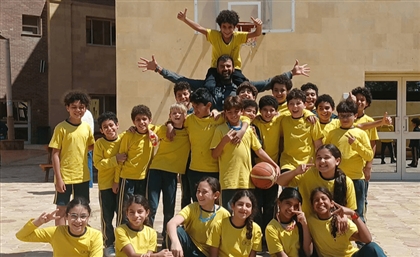
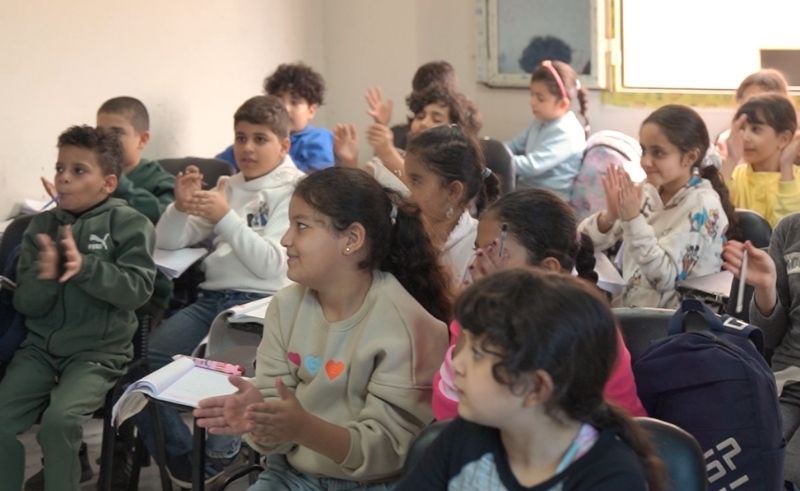
Our first stop on the tour of INARA’s facilities was the Education Center. Palestinian children who fled Gaza face major barriers to enrolling in Egyptian public schools, mainly due to their unofficial residency status in Egypt. INARA provides informal education programs to around 400 students, taught by Palestinian teachers using the official Palestinian curriculum.
At first glance, the facade appears like any other residential building, save for the excited screams of children escaping through open windows. Children between 1st and 4th grades run up and down the stairs to their classrooms, where their teachers patiently wait for class to begin. They stand between a clean whiteboard and rows of desks, some still covered in plastic. Like the children they teach, these women also fled Gaza, and like many families stranded in Cairo, many are caring for their children as single mothers.
In classrooms where subjects like English, math, and science are taught, wall decor is sparse. But one white wall is covered in sticky notes, each displaying the name of a Palestinian city with a short description underneath, its corners reinforced with scotch tape. “Rafah,” one note reads, “Located on the border between Palestine (Gaza Strip) and Egypt”—the same crossing point through which many of the students entered Egypt.
“The kids here have lost about two years of education, and the horrors of the war they witnessed have also affected their academic performance,” math teacher Iman Fawzi said. “But thank God, after six months we’ve seen a big difference in the students.”
A short drive away, children of all ages gathered for activities at the Mental Health and Psychosocial Support (MHPSS) Center. Some watched cartoons, while others sat with clinical psychologist Alaa Ahmed for a group therapy session. On this day, a group of young girls were drawing pictures of their lives before and after Gaza.
“I used to love picking olives from the olive tree,” one preteen girl said, describing a drawing she made with colored markers. “I was just as sad about it being destroyed as our house.”
Clinical psychologist and team leader Abdelhamid Moawad explained that at the MHPSS Center, a team of trained caseworkers and mental health professionals supports both children and teenagers. They provide individual and group therapy sessions, as well as activities like trips to the sea and even horseback riding lessons to help rebuild self-confidence.
“We are providing children with the tools to cope with their trauma from the war,” Moawad said, “and we are also working with their parents to develop a plan they can follow to support their children in the recovery process.”
The last stop was one of INARA’s medical centers, where a team of doctors cares for patients who arrived from Gaza with war-related injuries. There, we met INARA’s Egypt Country Director, Dr. Hazem Haddad, who was preparing for surgery. He was about to operate on a 15-year-old boy from Gaza whose leg was amputated in 2024 after his home was hit by an Israeli strike.
“He suffered injuries to both legs. One leg had to be amputated, and the other had a fractured femur that was fixed with a plate and screws. We provided him with a prosthetic leg, but because the injury was severe and complex—and because many patients coming from Gaza, especially children, suffer from malnutrition—the body’s healing process was very slow,” Dr. Hazem said. “So today, we’re going in to re-fix the fracture because it hasn’t healed properly, so that, God willing, he can recover and walk again.”
Dr. Haddad has worked as a trauma surgeon in Syria and Iraq and has served on two medical convoys to Gaza. But, he said, shaking his head, “This war is different.”
“We have provided over 7,000 medical services and more than 300 surgeries for wounded Palestinians here in Egypt,” Dr. Haddad added. According to INARA CEO Rohani, it costs an average of $7,000 to fully treat a child.
“We need significant funding to continue providing these services,” Dr. Haddad said. “Right now, we’re doing everything we can to meet those needs and cover as many areas as possible.”
Watch the video for the full story, and to learn more or donate to INARA’s mission, visit inara.org.
- Previous Article Petrogulf Records Highest Gas Output Since 1982