





In Sultan Alsaggaf’s Kitchen Ancient & Fantastical Worlds Come Alive
Meet the TikTok creator who uses food to bring history, fantasy, and forgotten recipes back to life.
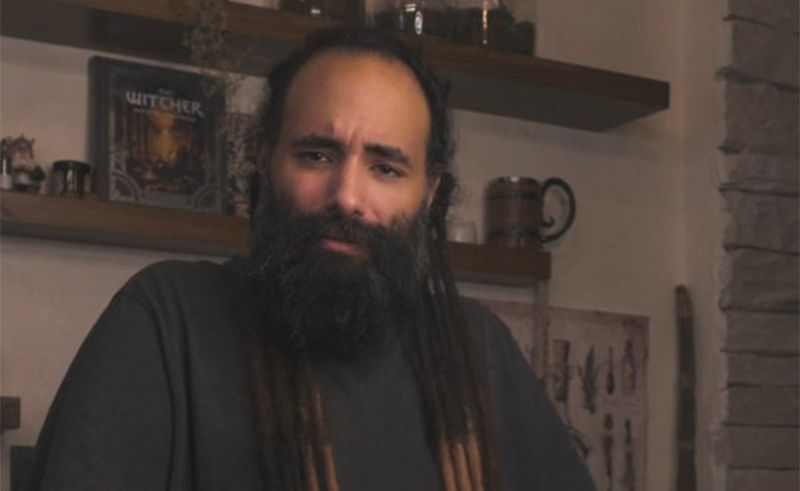
Have you ever wondered what the Butterbeer tasted like in Harry Potter? How about the Invisibility Potion in Minecraft? Or perhaps, what the world’s oldest known recipe would have been made from? In Sultan Alsaggaf’s kitchen, historical recipes don’t sit quietly in cookbooks or in museum archives. They boil, ferment, and smoke. Drawing inspiration from fantasy games and ancient cookbooks, the Saudi-based creator resurrects ancient recipes and brings to life potions seen in video games.
While famed for his food creations, Sultan - known as sultan_feasts on TikTok - describes himself first as a gamer: being “obsessed with the universes they presented and the realities they created”. The idea to create recipes from his games, therefore, came naturally. A few years ago, Alsaggaf bought a cookbook for The Witcher, one of his favourite video games. “I found it on sale somewhere online,” he recalls, “I was like, you know what? Maybe I could take immersion to the next level and actually recreate something from the game.” After posting some of these recipes on TikTok, he quickly realised there was a niche he could carve out among the many gamers in Saudi Arabia and the Middle East.
Alsaggaf’s breakthrough, however, was when he merged his fascination with fantastical worlds with his interest in historical ones. One video of him recreating a medieval recipe of French onion soup suddenly took off online, and within months, thousands of viewers had found his page. His videos of recipes from fantastical worlds or from the past offer a refuge from the typical fast-paced and trendy recipes usually shared on TikTok. The dishes he focuses on have withstood the test of time, and by reviving them, Alsaggaf immerses his viewers in worlds unseen and untasted.
“I do hope that people have a second thought whenever they see a dish that’s being served to them, and realise the rich history behind it, and the wars that have been fought for each spice that helped shape that dish," he says. To Alsaggaf, each ingredient is sacred: carrying with it histories of wars, conquest, trade, but also stories of love, nourishment, and tradition. He describes how spices like cardamom, a staple spice in Sweden today, were introduced to the country during medieval times through trade connections with the Middle East. The ingredients used then are the same ones we use today. They have crossed borders, been guarded, fought over, shared, and adapted by the hundreds of cultures they have encountered. In this way, Alsaggaf approaches history not as a collection of dates or historical figures, but as something alive today, embedded in our shared histories and unique cultural identities.
One of Alsaggaf’s most popular series comes from The Witcher, where viewers continue to ask for more recreations of the game’s iconic potions. To bring them to life, he says, its all about “approaching them creatively”. To do this, he puts himself in an alchemist’s shoes: combining fresh juice blends with dry ice to present in a theatrical way, as though the potion is made in a fantastical lab.
When it comes to his historical recreations, however, Alsaggaf is careful “not to alter any of the ingredients” so his viewers can truly taste a bit of the past. That commitment to authenticity often presents him with practical challenges. When recreating recipes from Skyrim, a game thought to be inspired by Scandinavian mythology, he was introduced to a range of European ingredients that, as he says, “I had never heard of in my entire life.” When sources in Riyadh fail, he turns to his brother, who lives in the Netherlands. “If I can’t find it here in Saudi or over in Amsterdam, I’m cooked,” he admits.
The most trying test of authenticity came from an Abbasid-era cookbook from Baghdad. Many of its recipes rely on murri, an ancient fermented Middle Eastern sauce that takes months to prepare. “That was a challenge that I have worked so hard to resolve,” Alsaggaf says. While he saw many online substitute the sauce with soy sauce, he remained determined to honour the cookbook’s authenticity and find a way to gain the ingredients and the knowledge needed to bring it to life. “I reached out to one of the restaurants here who are specialise in historical dishes. They were kind enough to allow me to sit with the chef and see how he recreates murri”. This process meant slowing down content production for the series, b ut Alsaggaf feels it's worth it. “There will be lots of historically accurate Abbasid food coming to my channel thanks to them”.
Immersing himself in historical cooking has also reshaped Alsaggaf’s own relationship with food. The shelves of his kitchen are lined with jars for potions and spices that are filled with the ingredients of ancient times and fantastical worlds. “I'm more conscious of what to drop in my pot every time I cook something. I think I am now more open to trying out new flavours and ideas whenever I cook something at home.” He dreams of eventually expanding his kitchen onto his roof, where he hopes to build an “actual wooden fire.” Although he admits this may have to wait until next winter. "You know, because the weather here is just…”
His future plans are inspired by the show he’s currently watching, 'Shōgun', set in Japan in the 1600s. He hopes to show viewers how to make early versions of sushi and the rice. “I’ll have to visit every region,” he says, though he is careful to pace himself. “I have to write every content on a schedule to make sure that I don’t just overwhelm myself with ideas”. By refusing to limit himself geographically or culturally, he hopes to push audiences beyond their comfort zone - encouraging them to see food not as fixed in a time or place, but as a living record of human connection, travel, and change.
Underlying his intense curiosity and drive to explore the culinary worlds of the past is Alsaggaf’s admiration for the role of travellers in shaping global food history. “Most of the stories I read in history,” he says, “come down to travellers,” whose movement between cultures allowed ingredients, techniques, and ideas to merge across borders. In many ways, Alsaggaf now occupies a similar role - using his videos to share flavours, techniques, and stories across borders.