



The Textile Shops in Souq El-Fustat Where Women Control Their Schedule
Craft meets care in Souq El-Fustat, where women are trained to produce crafts from workshops or the comfort of their own homes.
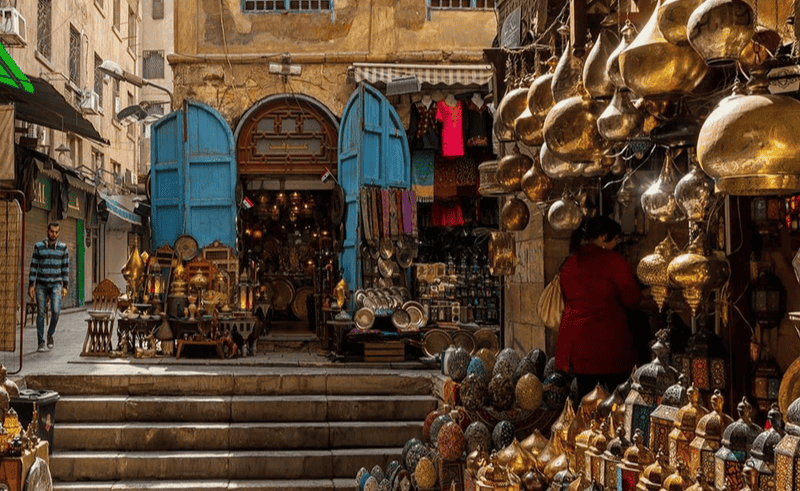
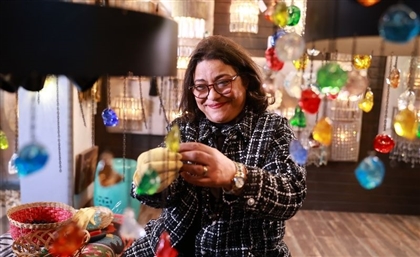
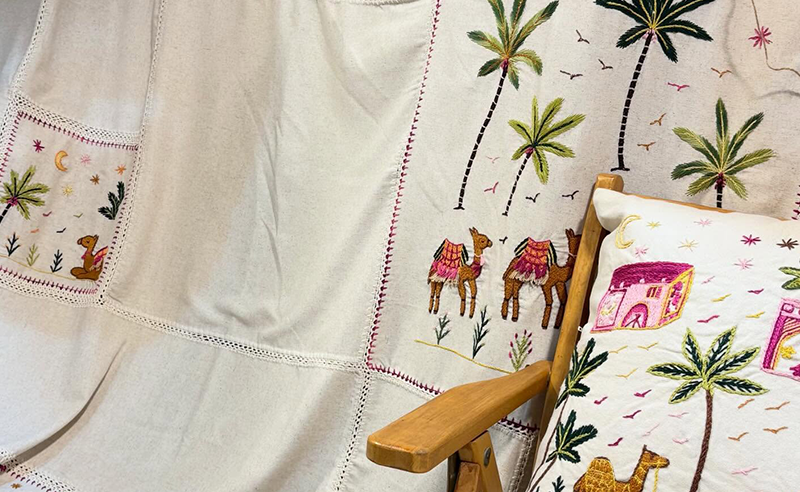
In the long, echoing corridors of Souq El-Fustat in Old Cairo, two small stalls sit quietly across from one another. Although run by different owners, they are linked by the same vibrant colour, careful craftsmanship, and warm, smiling saleswoman, Mervat Sayed. One side glows softly with embroidered lampshades and cushions stitched with scenes of rural Egyptian life - domed houses, palm trees, farmers surrounded by animals. Just opposite it, striking patterns and designs on batiked fabric spill across flowing dresses, curtains, and framed works of art in deep blues, reds, and greens. At first glance, they look like two beautiful but ordinary market stalls. Look a little deeper, however, and a different story begins to emerge.
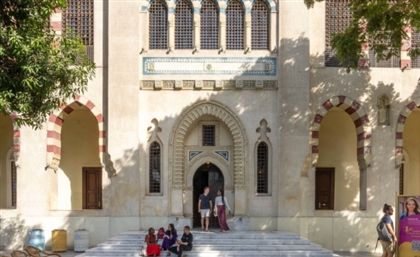
Since it was established in 2002, Souq El-Fustat has been the permanent home to a variety of Egyptian traditional crafts. Like its surroundings, the market showcases the diversity that exists among Egyptian heritage crafts; within its domed corridors, vendors and artisans continue to work on traditions that might otherwise disappear. From leathercraft and carved alabaster to intricate woodwork, the market has an array of handiwork from across all regions and periods of Egyptian history.
What sets these stalls apart from others in the market is the way they are made - and the people who make them. The two businesses, Kashmir Handmade and Egyptian Batik, operate independently of one another. Kashmir Handmade is owned by Aya Elgabry, and focuses mainly on embroidery and crochet. Motifs of Egyptian people, landscapes, buildings and animals are carefully stitched onto pillowcases, scarves, curtains, bags, and laptop sleeves.
Egyptian Batik, founded by designer Samar Hassanein, works primarily with batik - a wax-resist dyeing technique - producing long dresses, cover-ups, lampshades, and framed artworks. Their aesthetics are distinct, as are their art forms and processes. Yet they share an important and intentional business model centred on training women, offering flexible work, and acknowledging a space for life outside of work.
“I started working here after I got divorced," Sayed, who speaks through smiles and with an intense warmth, tells CairoScene. "I learned batik. Samar taught me - she taught me everything”. As a mother of four, the job offered her a steady stream of income to support herself before she had the chance to remarry. But batik is a physically demanding craft: melted wax produces smoke, and for Sayed, who has allergies and breathing issues, the work quickly became unsustainable.
Rather than letting her go, the business adapted to help her. Sayed was moved into sales at Souq El-Fustat, where she now works shifts that accommodate her family life - working either mornings, evenings, or partial days. “The work needs patience”, she admits, “I’m not very patient, but honestly, it’s easy.” With training, the craft work at Kashmir Handmade and Egyptian Batik is accessible, learnable, and, most importantly, compatible with home responsibilities.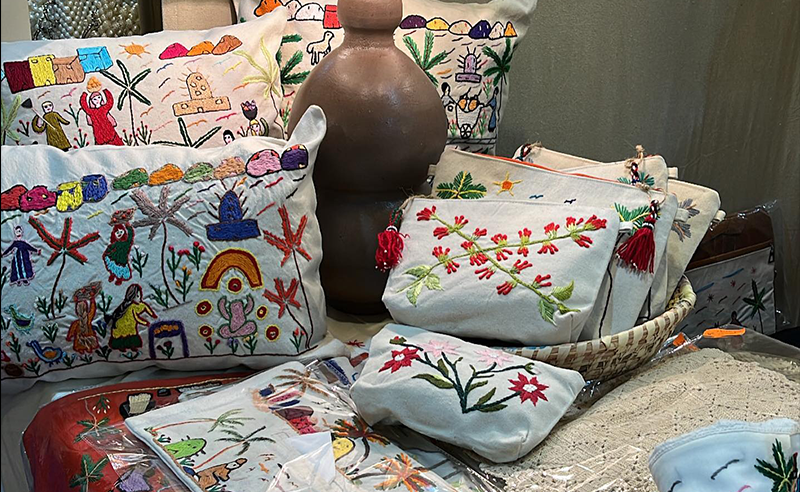
This flexibility is built into both businesses. Women are first provided training in a certain craft of their choosing - from embroidery to batik - then employed either in small workshops or, when possible, from home. The option of working from home is an integral part of the production model for Egyptian Batik and Kashmir Handmade, particularly for women with other responsibilities. For those who are caregivers, this option allows for paid work alongside childcare and domestic labour that would otherwise make formal employment inaccessible. The same applies to students, who can find time to work outside of regular hours alongside their studies. Crafts like embroidery and crocheting, particularly, can be easily translated from workshops to a home environment, with minimal equipment needed. The accessibility of this business model creates opportunity for income and valuable skill-building without requiring women to choose between employment and family life.
“Production isn’t fast like you imagine. One piece can take a week or ten days," Sayed explains. While the women work from existing designs - drawn centrally and then translated by hand onto embroidery, crochet, or batik - each piece forms slowly, in its own time. Motifs and themes rooted in Egyptian visual culture and history are placed onto 100% cotton fabrics, using techniques that rely on historical methods of production rather than the speed of creation. The methods taught in much of Souq El-Fustat remain largely unchanged from those used for generations. By prioritising durability over mass production, each item sold in Kashmir Handmade and Egyptian Batik has a story complete from beginning to end: from the initial sketch, to the hands of the woman making it, to the buyer seeking slow and intentional craftsmanship.
 “Like most things in Egypt, we don’t advertise - it’s all word of mouth," Sayed says. New workers are usually recruited through personal networks - friends, relatives, neighbours - a familiar pattern in Egypt’s labour landscape, reaching those who are known to need work.
For Sayed, and for many of the women involved, the value of this job is not only measured in income but in continuity: the ability to support a family, to continue education, to learn a skill, and to remain part of a working community without sacrificing other responsibilities. The stalls at Souq El-Fustat may appear small, but they carry with them Egypt's handicraft heritage and legacy while acknowledging contemporary restrictions. The production system used by Kashmir Handmade and Egyptian Batik resists the idea that work must come at the expense of life, or that craft is separate from care.
Their work can also be found in Three Corners in Zamalek and Kaf Fatma in Maadi.