


LAYN is 3D Printing Egypt's Buildings From Scratch
Zeyad Zein built LAYN's first printer three times before it worked, then spent a year reinventing the concrete mix. Now they print for Egypt's biggest developers.
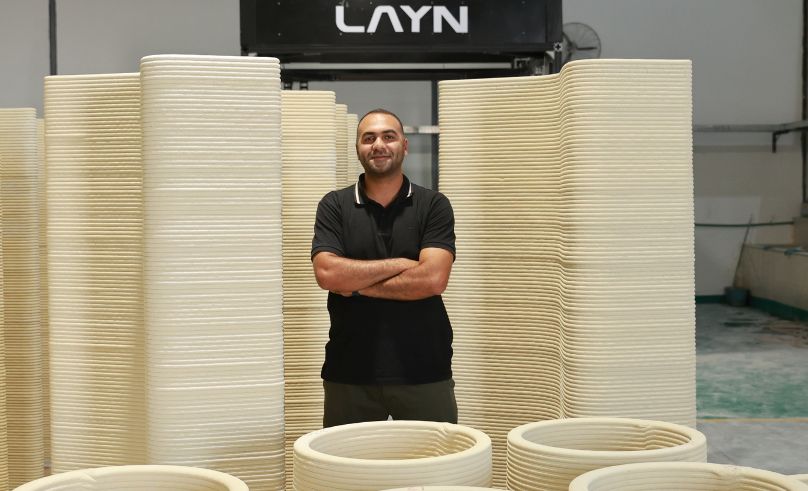
LAYN is the studio behind Egypt's first 3D concrete printing technology, built from scratch to help real estate developers construct anything ranging from planters and fences to full facades and low-rise buildings.
Construction had been co-founder Zeyad Zein's fascination since childhood, but he fixated on the idea of automating it. "The opportunity is so big, but it needs someone to move and take the step and start implementing different technologies," he says.
Zein and his co-founder, Mohamed El Hashemy, acted on that instinct, launching LAYN in 2025 following 18 months of research and development.
 He sees the timing and the location as connected. Construction and real estate together make up roughly a fifth of Egypt's GDP, and the country's developers were already used to building at scale.
What the market was missing, Zein shares, was a company that could bring the printing technology itself. LAYN works B2B with major developers including SODIC, Mountain View and Emaar rather than sell directly to individuals.
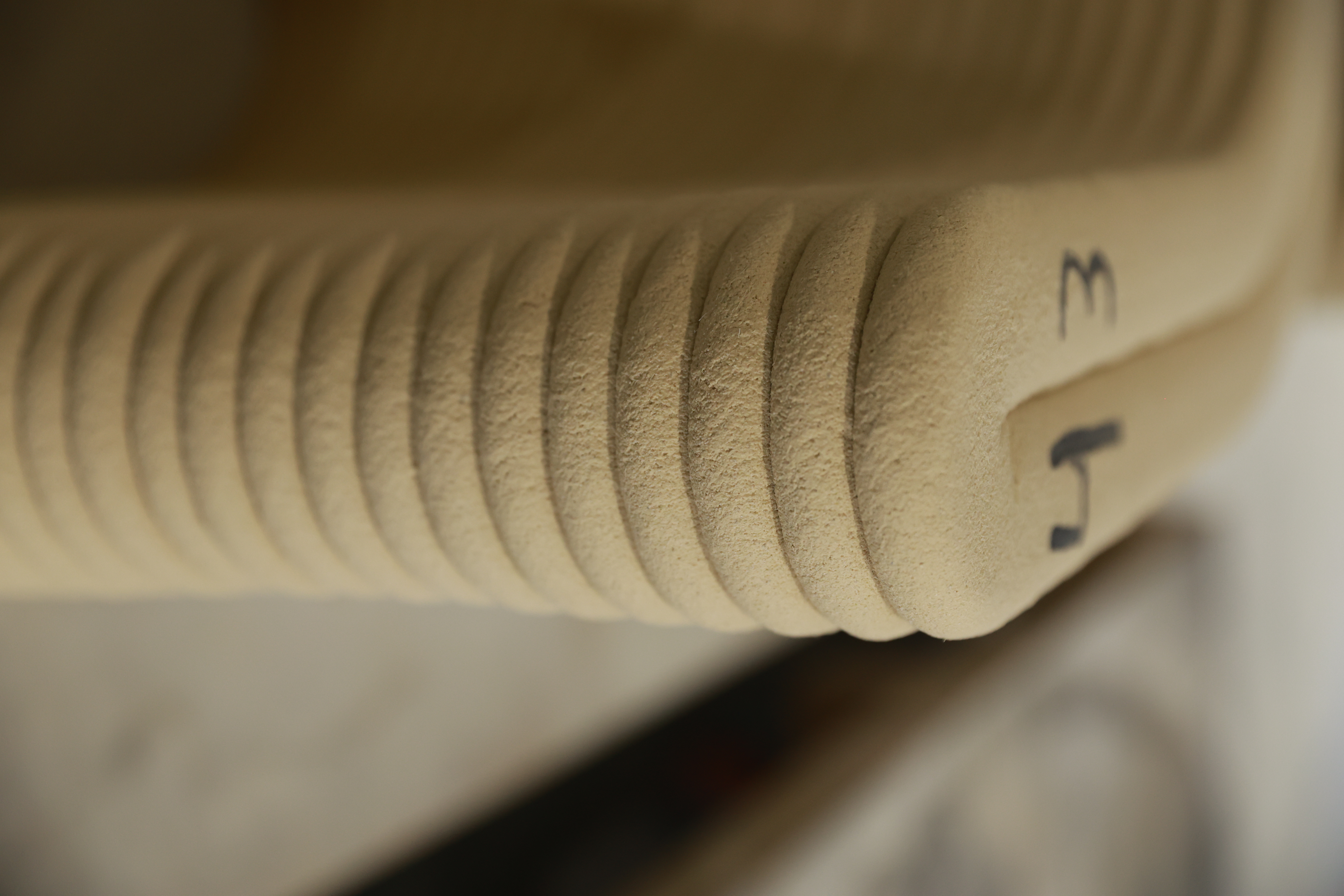
Five verticals make up their work. Urban Life covers hardscape products like pots, seating and signage. Walls builds fencing, a category Zein describes as an enormous market in Egypt on its own. Skins handles facades, Spaces takes on low-rise buildings, and Infra covers infrastructure work like manholes.
 "With the same printer and the same technology, same materials, you could do anything that you want," Zein says. "That's the interesting part."
Design freedom is what draws developers in most, according to Zein, since the technology removes most of the constraints that usually shape a brief.
"People get excited about the design freedom," he says. "You could do whatever you want with crazy patterns, crazy waves, crazy cantilevers, and the sky is your limit."
 Every project begins with a brief from a developer. LAYN's design team builds out a concept, which the client signs off on, often after being encouraged to push the design further than they first planned.
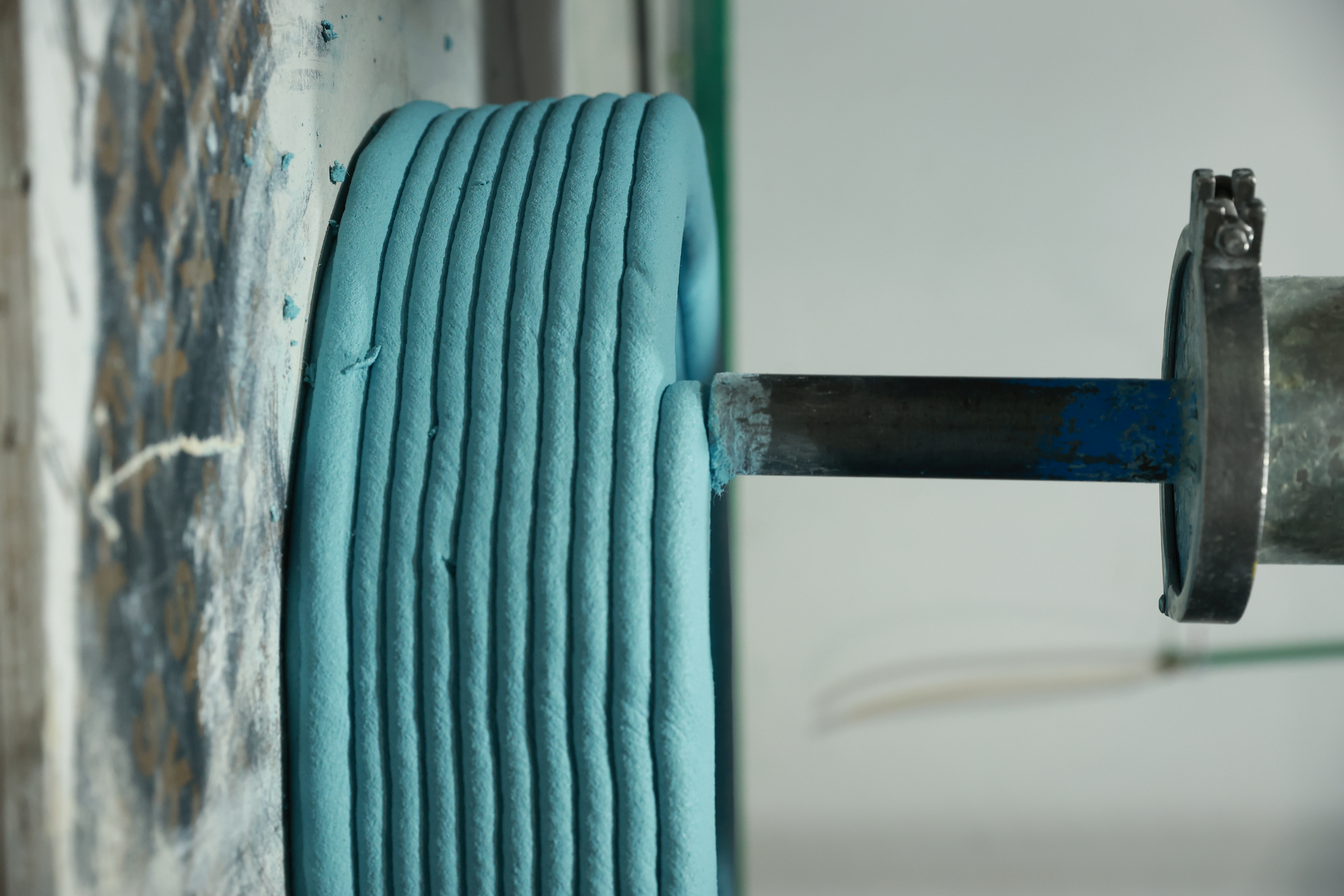
That approved concept is converted into G-code and sent to the printers on the factory floor, where five machines now run around the clock.
From there, the finished piece is installed on site. Zein shares that one of those projects became the world's first 3D printed shower wall, built for a client on the North Coast. "That's the motive that keeps us moving forward," Zein says.
 Three attempts went into building that first printer.
"We did it three times," Zein says. "The first time we failed, the second time we failed, and the third time, thank God, it worked out."
Materials took just as long to get right. After a year spent developing the printer itself, the team had to start over on the concrete mix, running hundreds of tons of experiments to get the formula to work.
"We did experiments, I think at the time it was more than 500 tons," Zein says.
A standard concrete mix uses three or four components. LAYN's process runs on up to 20.
"The typical concrete is one thing. 3D concrete printing is something else entirely," Zein says. "This is a complicated process."
 Other players in the market have their own points of differentiation, but the real difficulty sits in the process itself, not the branding around it.
It is also what makes mass customization possible. Most manufacturing forces a choice between scale and specificity, but LAYN's process allows for both at once.
"Every project has its own story because it's customized, and also mass produced," Zein says, adding that this is the part of the work that excites the entire team, not just him.
Building the technology entirely in-house matters to Zein. "I want people to know that we made this beautiful technology from scratch," he says.
Zein takes particular pride in the fact that the technology is Egyptian-made, and hopes its significance reaches beyond LAYN's developers and clients.
"I hope it's for the public, for everyone to know how hard we worked for this, and how it could change the way we build," he says.
That work has already found recognition beyond LAYN's client list. Forbes Middle East named Zein to its 30 Under 30 in 2025.

Coral reefs and sea walls are next on LAYN's list, moving their technology past buildings altogether.
"It's endless," Zein says. "We have the opportunity to try whatever we want. Anything."
- Previous Article Creative Industry Summit Lands in Diriyah From October 3rd to 5th
- Next Article The Only Egyptian on the Titanic Survived on Lifeboat No. 3