





Don Tanani’s Nakhl Collection Reimagines Egypt's Timeless Palm Chair
Eight designers transform a classic Egyptian chair into a platform for creative expression.
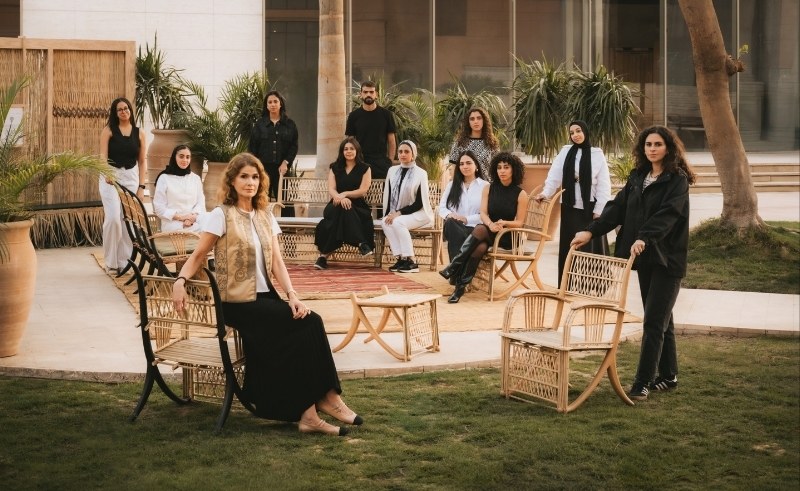
The woven palm chair is a familiar one. It can be found scattered across the Egyptian countryside, perched in front of someone’s home, or surrounding tables at local cafés and restaurants. It is an object whose familiarity has rendered it unremarkable; and it is an object Don Tanani, a Cairo-based design studio, seeks to honour with their collection, Nakhl.
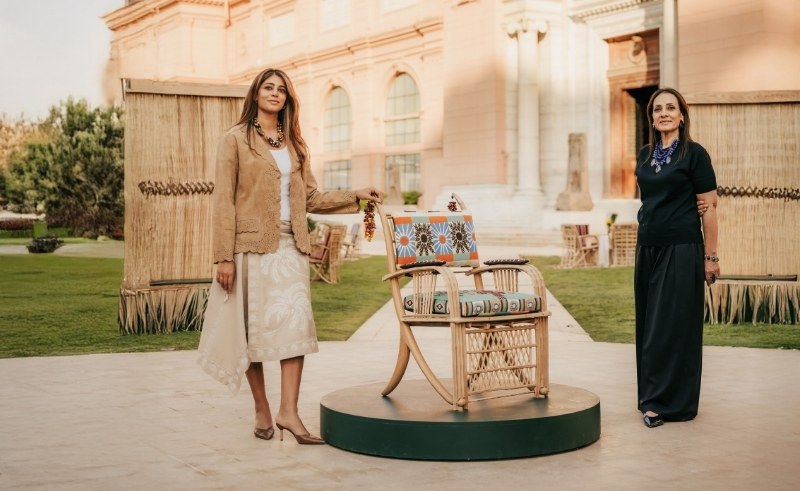
First launched during Art d’Egypt 2025, the collection is three years in the making, a time in which founders Alia and Tamara El Tanani deconstructed the chair to study where it came from, what it means, and where it could go. "The pieces we produce are full of life," Alia and Tamara tell SceneHome. "They are by no means static objects. They are timeless and should stand the test of time."
The palm chair is no exception to this. It is a chair that “stems out of our culture, out of our identity, out of our history,” explains Alia El Tanani. “Nobody really knows when they started, and yet they’re instantly recognisable as being our heritage. They’re related to ancient Egyptian ceremonial chairs, but in a very simple way.”
Long embedded in Egypt’s visual and material landscape, the palm chair is defined by its accessibility and simplicity. “It’s the most sustainable piece of design we have,” says El Tanani. Made from local material, it is extremely lightweight and durable - its form quietly perfected over generations of craftsmen. “It is democratically used all around Egypt,” explains El Tanani, “from the North to the South to the East to the West, you have villages, and they have palm trees - and they are all making this product.”
Rather than treat it as a relic of the past or overhaul its design, Don Tanani chose to approach the chair as a living form, one that has the potential to evolve without losing its heritage.
Don Tanani’s own interpretation of the palm chair reflects this respect for the original design. The classic woven palm chair remains largely unchanged, with the simple addition of sculptural oak lining its base and armrests. The result is organic, a natural extension of the classic chair.
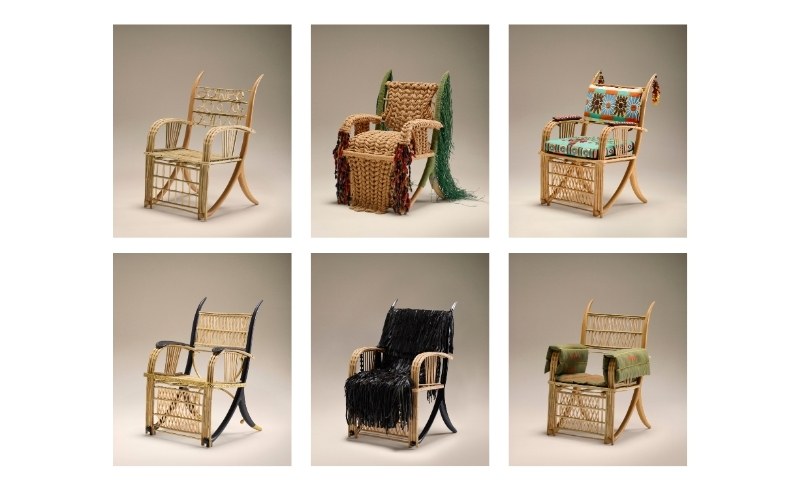
Nakhl, however, is not the result of a singular contributor. For the collection, Don Tanani invited a group of eight Egyptian designers, artists, and studios to reinterpret the palm chair through their own lenses, transforming the chair into a site of shared artistic experimentation and expression. These collaborative ‘groves’, as the studio calls them, allow artists the space to interpret their own culture and history for themselves, creating a cluster of distinct yet related voices. The chair has been “in our history forever. It’s used by a very wide range of Egyptians. Each and every chair is like a little puzzle; each farmer, each craftsperson has their own way of making it, and yet they all look similar,” says El Tanani.
One contributing designer, Buro Doqi, a Cairo-based architecture firm, designed a chair that draws on different elements of Egyptian life and craft. Drawing on agricultural symbolism, the classic palm chair is paired with oakwood and black armrests, inlaid with traditional mother-of-pearl flints and woven cushions.
Design Point, an interior design studio, took a more playful approach, creating a ‘cape’ of black leather strips that cover the classic woven back and seat.
Nagada, a handmade clothing store, added a simple handwoven cushion to the palm chair. Sewn with warm reds and simple tones, the cushion is made from natural materials that are inspired by the Egyptian countryside.
Nora Aly, an independent designer, changed the original structure of the chair rather than adding onto it. Woven in the palm on the chair’s back is Arabic calligraphy, embedded within the structure of the chair itself.
Rebel Cairo, a clothing brand, presented the Karima Chair. Designed by its founder, Dara Hassanein, the chair’s brightly coloured cushion made of kheyameya fabric is a vibrant nod to Egyptian folklore and craft.
Threads of Hope, an Egyptian social enterprise, imagines a maximalist chair with chunky, braided fabric and long, flowing tassels.
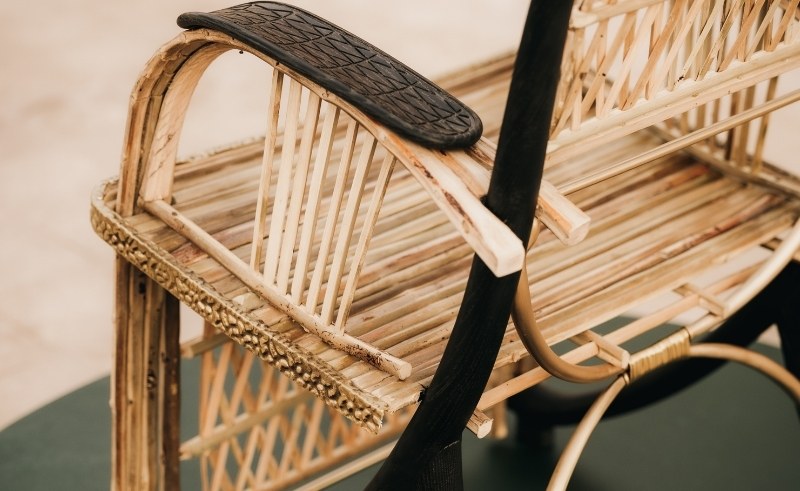
In another artist’s interpretation, Yasmine El Melegy maintains the original structure of the palm chair and incorporates a stainless-steel vine that weaves its way through the gaps of the chair, symbolising the tension between traditional agriculture and modern industry.
Finally, Farah Abdel Hamid’s ‘ERGO Chair’ - who’s known for her jewellery brand, F for Farah - swaps the woven palm backing for a brass sculpture whose shape is inspired by the touch of a seated person over time.
Each artist, designer, architect, or studio offers their own memories, experiences, and skills, which they lovingly transfer onto this historic chair. Each iteration of the Nakhl chair is a continuation of heritage and a conversation between old and new, traditional and contemporary. When the collection first launched in late 2025, El Tanani was stunned by people’s comments. “The reaction from the world has been so incredible - everyone loved it,” she says. Don Tanani’s collection is a way of inviting modern Egyptian artists to engage with the past in a way that is neither nostalgic nor disruptive. Instead, it is a way of looking at tradition with respect, attention, and creative interpretation.
- Previous Article 10 Organisations Providing Urgent Relief in Lebanon
- Next Article Three Injured After Debris Hits Habshan Gas Complex in Abu Dhabi