





ARCHITECT SPOTLIGHT: Giacomo Alessandro Loria's Alexandria
An architectural walk through interwar Alexandria, following Giacomo Alessandro Loria from Little Venice and the Cecil Hotel to Miramar and Fouad Street’s layered Italianate façades.

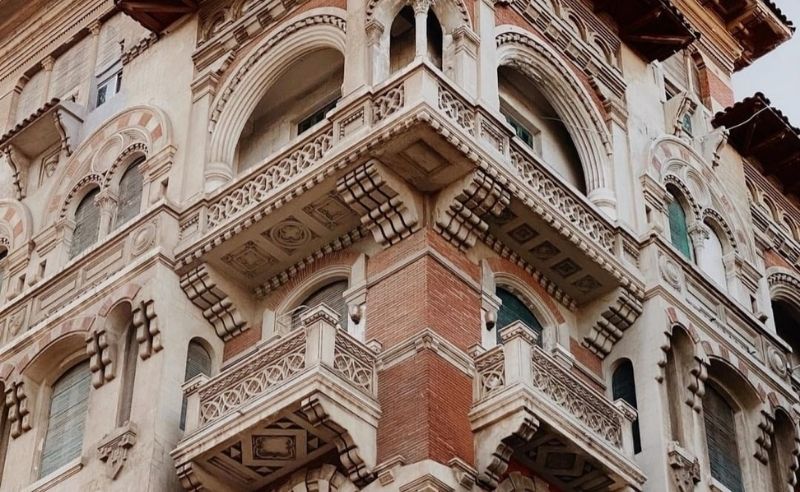
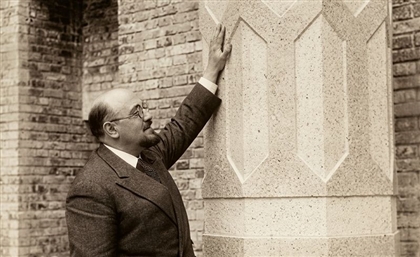
Giacomo Alessandro Loria belonged to the eminent generation of Italian architects who settled in Alexandria during the city’s cosmopolitan interwar age. Trained in Italy and active in Egypt from the 1910s and 1920s, Loria worked across commissions that ranged from banks and hotels to mixed-use apartment blocks. His vocabulary borrowed freely from Venetian Gothic, Romanesque and Italianate modes while absorbing local motifs — Moorish arches, patterned stone and lively cornices — producing façades that read as European referents adapted to Alexandria’s light, materials and multilingual urban life.
Loria’s work finds its home at the intersection of several currents then circulating in Egypt: European historicist revivals, an emergent modern civic architecture, and the local practice of hybridizing styles to serve an internationally mixed clientele. He was neither a doctrinaire modernist nor a mere pasticheur; instead his buildings translate Italianate formalism into streetscapes where climatic, social and commercial requirements demanded pragmatic adjustments. In Alexandria those adjustments of recessed balconies, robust ground-floor shopfronts, and arcaded loggias are as telling as his ornament.
Below, we have penned a list of Loria’s principal Alexandria works, arranged to foreground what each building is, when it appeared, how it reads architecturally, and why it matters now.
Little Venice Building, c. 1926–1928, Venetian Gothic with Moorish motifs
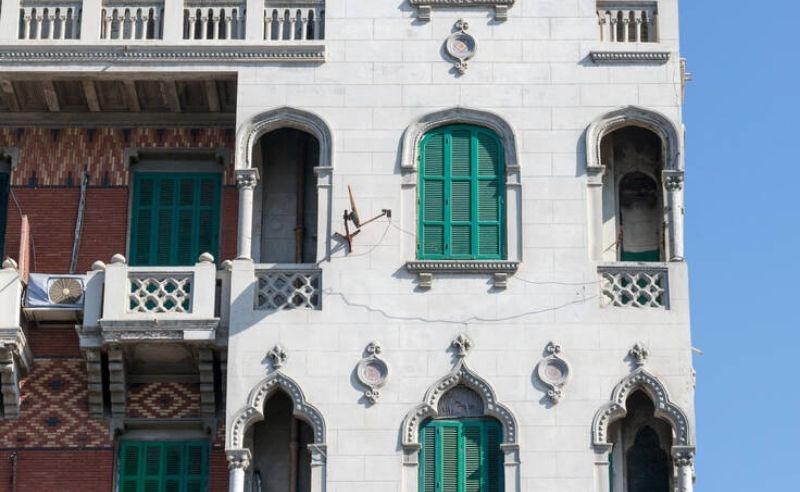
The Little Venice Building fronts the Eastern Harbour with a silhouette that reads theatrical. From a distance its pointed arches and layered bays suggest a palazzo borrowed from the Venetian lagoon; but up close, the façade admits a quieter logic composed of recessed balconies for shade, wide cornices to catch the breeze, and slender columns that control the rhythm of light and shadow across the masonry. Awarded a municipal prize for façades in 1929, the block is less an exercise in pastiche than a localized translation: Venetian forms reshaped for Alexandria’s climate and harbour life, where façades must hold up to salt, sun and constant movement.
Cecil Hotel, c. late 1920s, Italian Renaissance–inspired hotel architecture
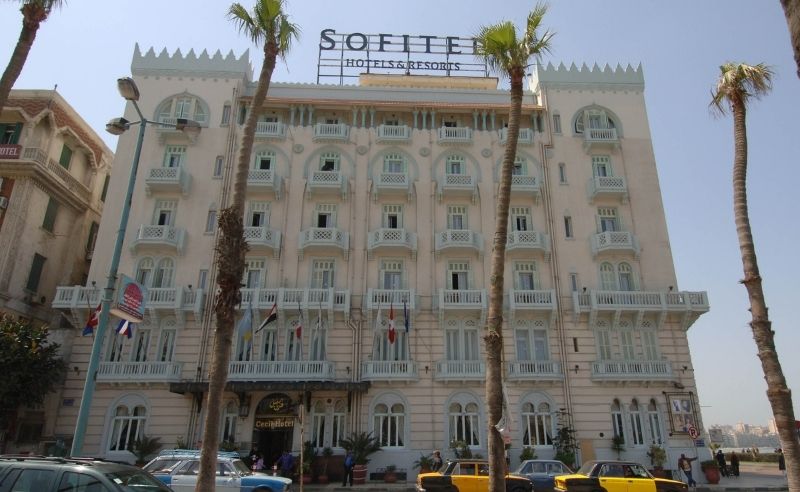
The Cecil began as a public stage. Lobbies and dining rooms arranged to support sociability, terraces orientated toward light and view, an interior sequence calibrated for occupancy and display. Classical proportions govern its elevations — pilastered bays, punctuated cornices, an economy of ornament that errs on dignity rather than display — but the project’s significance is social as much as formal. The hotel served as a node where expatriate and local circles intersected, and its spaces were designed to hold conversation, commerce and ceremony with equal facility. The architecture records that civic function as plainly as any inscription.
Adriana Pinto Building, early–mid 1920s, Romanesque Revival / Italianate residential block
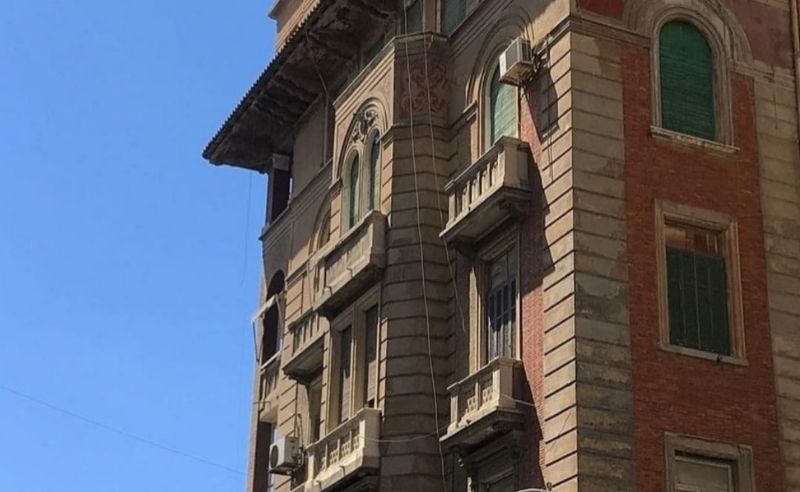
The Adriana Pinto Building belongs to the everyday urban anatomy of Alexandria: shops at street level, apartments above, façades articulated to suit both commerce and domesticity. Rounded arches and stringcourses give the elevation a subtle, measured cadence; recessed balconies and pronounced cornices create shadowed depth that moderates Alexandria’s light. It is a working solution to a dense street section, a kind of architectural answer to programmatic constraints, and, in that sense, one of Loria’s most telling contributions: formal refinement married to housing conventions that sustained the city’s mixed populations.
Campus/Campos Building, c. 1920s, Italianate — romantic and ornate
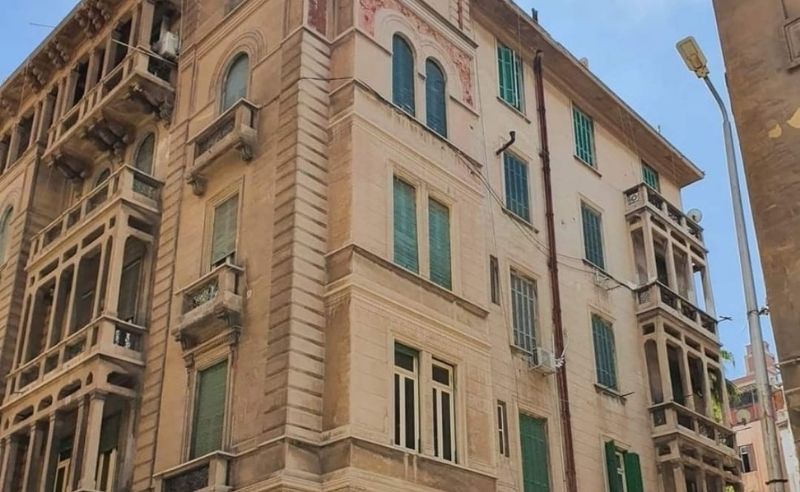
Located toward Fouad Street, the Campus (or Campos) Building is animated by a domestic scale pushed toward civic presence. Ornamented balconies, keystoned windows and layered cornices stage a verticality that reads as both elegant and inhabited. Records indicate Loria lived here in his earlier career, and the building therefore functions as an architectural manifesto and a personal investment: a mixed-use block that showcases the architect’s hand while serving the quotidian needs of households and small businesses. Its composition illustrates how Loria negotiated private life with public frontage across Alexandria’s narrow plots.
Miramar Building, c. 1926, Italianate / eclectic historicism
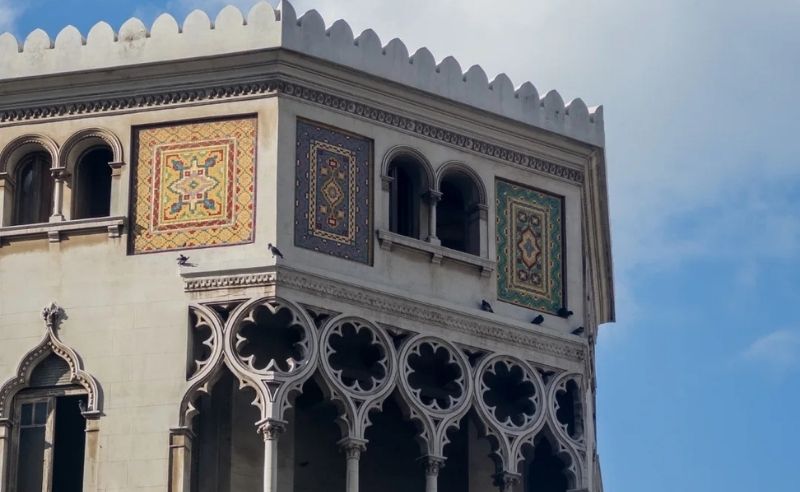
The Miramar’s profile acquired a cultural second life through literature and film, after which the building’s name entered broader civic memory. Architecturally it is straightforward: articulated window surrounds, classical cornices and a compositional fluency that accommodates retail on the ground floor and apartments above. The structure’s cultural afterlife — the way it was taken up in narrative and imagery — amplifies its presence beyond mere masonry; it becomes a setting within which social dramas play out, giving Loria’s façade an additional, literary dimension.
Fouad Street and surrounding Italianate façades, mainly 1920s, Varied Italianate, Romanesque and Venetian Gothic references
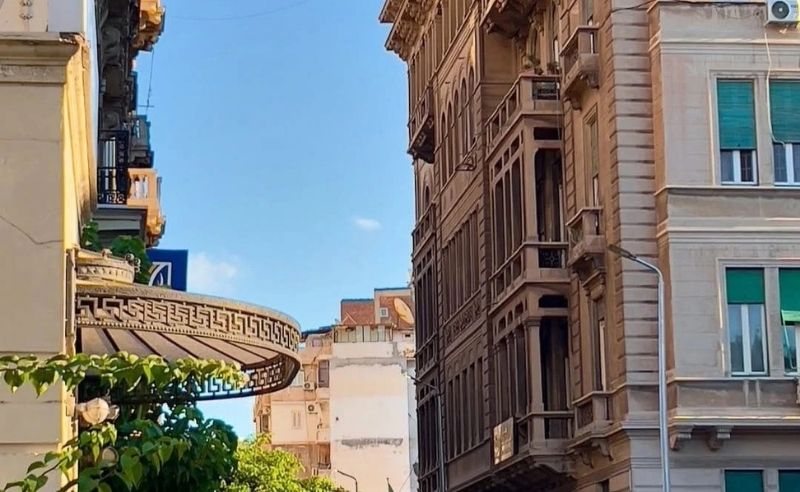
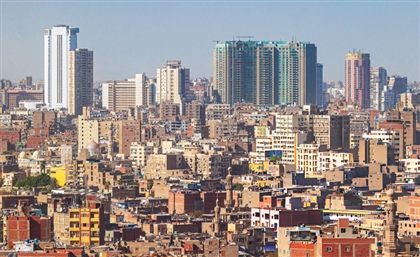
Taken together, the façades along Fouad Street, Ramleh and the harbour edge form Loria’s urban frame. Arcades, loggias, patterned stonework and corniced parapets are in constant recurrence; recessed verandas and deep-set windows respond to light and breeze. These stretches of mixed-use blocks, when taken together, are the context in which Loria’s larger commissions read differently. They make visible an architectural habit of Italianate formalism adapted to local materials, climatic necessity and a multilingual, mercantile society. The cumulative effect is less stylistic uniformity than a coherent approach to urban life, one that privileges proportion, durability and an aptness for public use.