






Study Proposes Hidden Spiral Ramp Inside the Great Pyramid
The model estimates a block placed every 4 to 6 minutes, indicating 14 to 21 years of building, or 20 to 27 years including quarrying and transport.

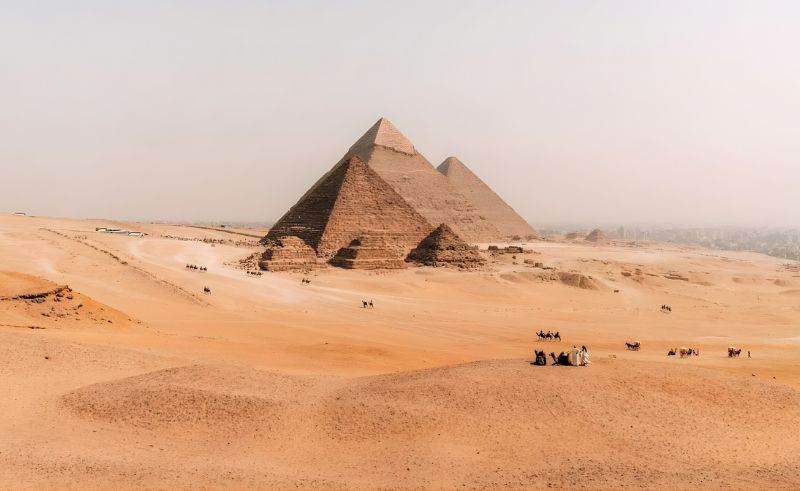
A recent study proposes that the Great Pyramid in Egypt was built using a hidden internal spiral incline rather than long external ramps, advancing a construction model centred on an “edge ramp” that rose along the pyramid’s edges and was gradually covered as each course was completed.
Authored by computer science researcher Vicente Luis Russel Ruig, the study argues that workers could have moved stone blocks upward via this internal slope without the logistical challenges of maintaining extensive external ramps.
The Great Pyramid’s base measures about 755 feet per side with a height of approximately 481 feet, and it is composed of roughly 2.3 million stone blocks, some weighing around 15 tons.
Simulations cited in the study suggest a placement rate of one block every 4 to 6 minutes. On this basis, the core construction could have been completed in 14 to 21 years.
When accounting for block extraction, transportation, and breaks, the overall timeline extends to between 20 and 27 years, aligning with established estimates for the reign of Pharaoh Khufu.
The study introduces a comprehensive computer model designed to simulate both the movement of stones and the structure’s stability during phased construction, within the technological limits of the Old Kingdom. The model factors in copper tools, sledges, ropes, levers, and transport via the Nile.
It reports that the pyramid could withstand the stresses of adding successive layers under these assumptions. The theory also provides a possible basis to interpret the voids detected inside the pyramid as areas linked to the internal ramp system, subject to further verification.
Crucially, the model sets out testable markers for fieldwork. It points archaeologists to signs such as patterned fills where ramps would have been enclosed or wear traces consistent with worker traffic along the proposed internal pathways.
The study frames these on-site indicators as a means to evaluate whether the internal edge ramp scenario is consistent with the surviving fabric of the monument.
Related Articles


Trending This Week
-
-

-
 Apr 09, 2026
 -
 Apr 13, 2026