





Egyptian Team Uncovers Mudbrick Monastery in Wadi El Natrun
Archaeologists uncovered a mudbrick monastery dating to the 4th–6th centuries in Wadi El Natrun, revealing early monastic design.

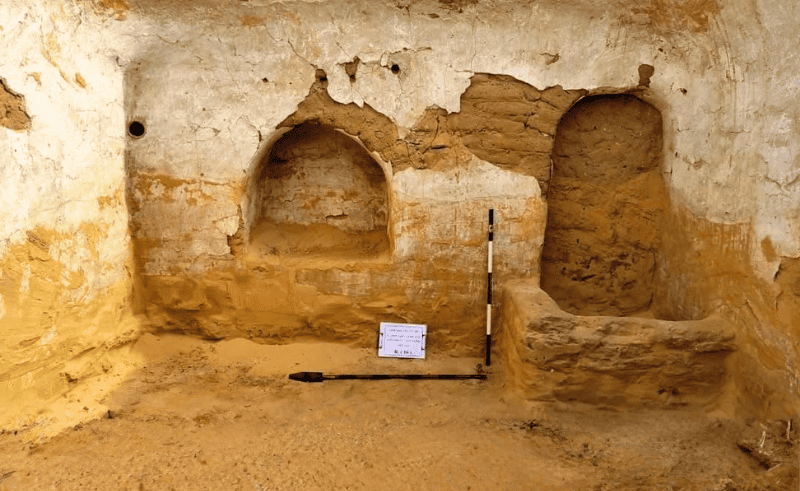
An Egyptian archaeological mission from the Supreme Council of Antiquities and Cairo University uncovered the remains of a mudbrick monastery dating between the 4th and 6th centuries in Wadi El Natrun, Beheira Governorate.
The structure, covering approximately 2,000 square metres, features external walls about one metre thick and internal walls ranging between 60 and 70 centimetres, with preserved heights reaching up to 2.20 metres.
The layout is organised around a central open courtyard, surrounded by architectural units that include smaller courtyards leading to monk cells of varying sizes and shapes.
A western service section contains kitchens, ovens and storage areas. Roofing systems were constructed using mudbrick vaults and domes, while interior walls were coated with white plaster and decorated with wall paintings depicting crosses, palm trees and geometric and vegetal motifs.
Several Coptic inscriptions were identified on site, recording the names of monks and religious supplications. These inscriptions contribute to dating the structure and documenting aspects of daily monastic life.
Excavations also revealed internal burial areas containing human remains believed to belong to monks, indicating a funerary function within the monastery.
The site forms part of a region historically associated with the early development of monasticism, with the discovery providing further evidence of architectural organisation during this period.
- Previous Article Qalyubiya is Getting 14 New Metro Stations Connected to Metro Line 1
- Next Article Umrah Exit Deadline Set for April 18th With Penalties