





18th Century City & Coptic Necropolis Unearthed in Qena
A joint Egyptian–French mission uncovered residential remains and Byzantine-era burials at Sheikh Al-Arab Hammam.

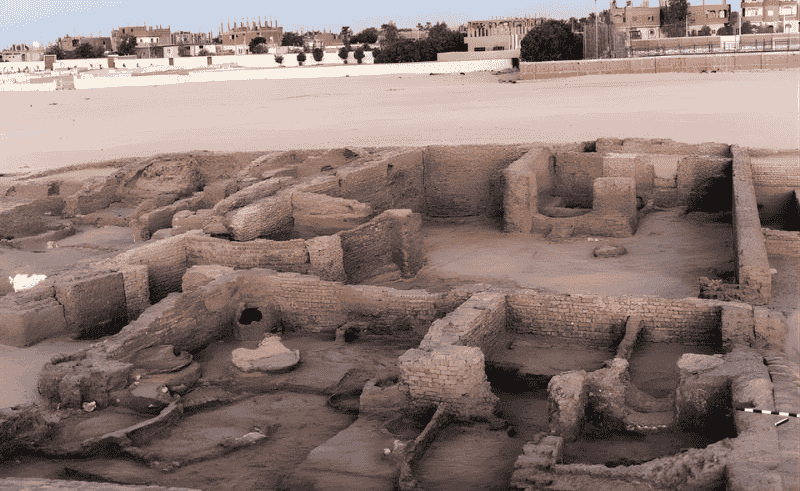
Archaeologists uncovered parts of an 18th-century mudbrick residential city and a Coptic necropolis from the Byzantine era at the Sheikh Al-Arab Hammam site in Al-Arki village, Qena Governorate, during a joint Egyptian–French mission.
The find adds a new dataset to an underexplored area of Upper Egypt and situates the site within a corridor that includes the archaeological areas of Dendera and Abydos.
Diaa Zahran, head of the Islamic, Coptic, and Jewish Antiquities Sector, said excavations have revealed six houses with associated service buildings and part of an industrial zone.
Architectural remains included homes topped with mudbrick domes and others roofed with palm trunks, with traces of white lime plaster recorded in several rooms.
Artefacts found across the settlement included bronze coins, pottery fragments, children’s toys, jewellery, and textile remains. Ahmed El-Shoky, head of the mission, stated that geophysical surveys guided the identification of a Coptic necropolis beneath the residential layers after a limestone coffin lid was found reused as paving at one of the city’s entrances.
The necropolis featured two burial types: simple interments directly in the ground and others framed by mudbrick structures.
Textile finds included linen wrappings and tunics woven in the Coptic style, decorated with geometric, floral, and animal motifs, as well as crosses and inscriptions.
A copper stamp used for decorating baked goods was also recovered. Minister of Tourism and Antiquities Sherif Fathy said the project aims to enhance understanding of the site and prepare it for inclusion on Egypt’s tourist map, noting its location between Dendera and Abydos.
Supreme Council of Antiquities Secretary-General Hisham El-Leithy said the site is significant given limited historical sources about the area.
Pierre Tallet, director of the French Institute of Oriental Archaeology, confirmed that bio-archaeological studies will examine the remains of around 23 individuals to assess diet, health, age, and sex, in light of evidence suggesting mummification practices.
- Previous Article Czech Centre Cairo Launches Street Animal Photography Workshop
- Next Article Wheelchair Assistance Training Completed at Grand Mosque