



Wafaa Samir's Photography Project Maps Egypt's Folk Mural Tradition
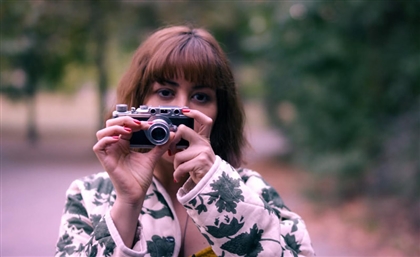
Photographer Wafaa Samir has spent nearly a decade documenting folk mural tradition, capturing the painted walls that turn barriers into stories across Egypt.
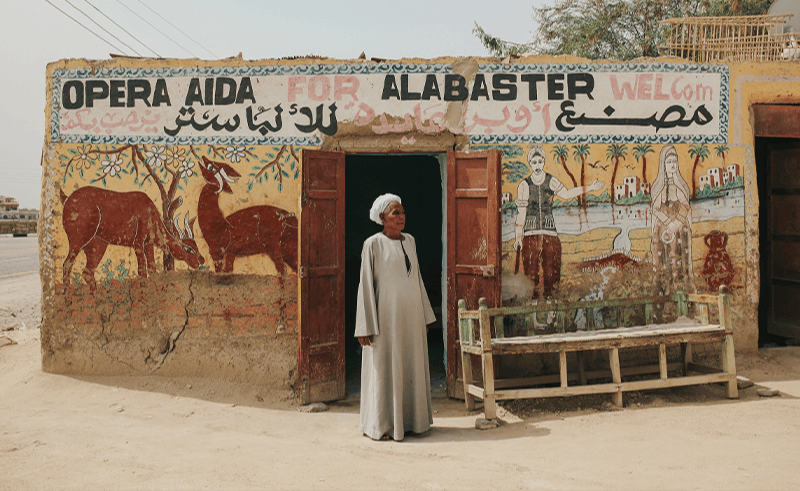
The first murals Egyptian photographer Wafaa Samir ever saw were on the interior walls of her grandfather’s home. Scenes from the Nile, trees, animals living along the water, rendered in colours she can still recall but cannot photograph. The murals exist now only in her memory. "It's fragile," Samir says. "The ones painted inside homes are private, rarely seen. The ones on exterior walls face the sun and weather. Either way, they don't last long."
This fragility - both material and cultural - drives 'Inherited', Samir's ongoing photography project documenting Egypt's folk mural tradition. Since 2016, she has travelled across the country, concentrating her efforts in Upper Egypt, where the practice remains most prevalent. The murals she photographs are painted on mud-brick houses and concrete buildings, their bright colours fading under the relentless sun and their subjects ranging from Hajj pilgrimages to horse races to scenes of daily life.
Samir trained as an architect but always gravitated toward photography while still in university, attending workshops and teaching herself through practice. "I'm always interested in the relationship between a place and how it affects us, how the interaction between the place and the people living in it works," she says. "Sometimes it appears very clearly, and sometimes it appears very subtly, almost in the background, depending on the subject I'm working on."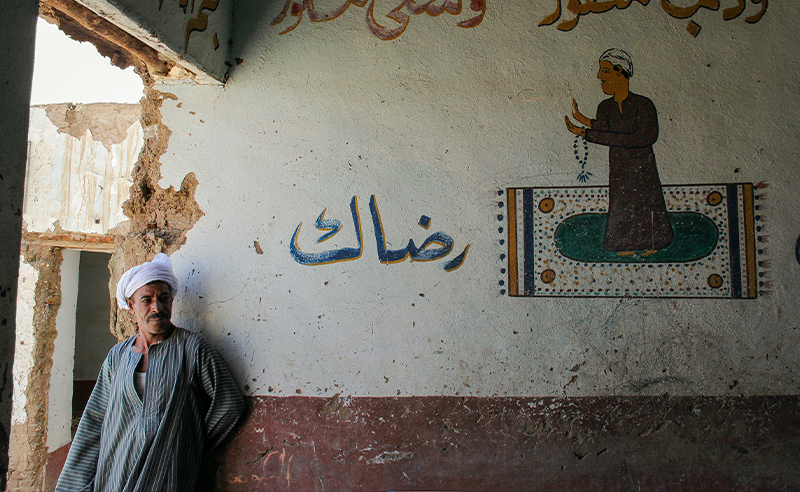 Samir’s practice alternates between documenting external urban spaces and exploring internal emotional landscapes, though for her, the two are never separate. "My whole practice tries to think about the world around us whether that's the built environment or the society around us and the world inside us and how these things are constantly affecting each other," she says. The folk murals exemplify this interplay perfectly. They are physical objects painted on walls, yet they encode deeply personal and communal meanings; religious achievement, family pride, cultural memory.
The murals most frequently documented are Hajj paintings, celebrations of a family member's pilgrimage to Makkah. These appear primarily on exterior walls and typically depict men who have completed the journey, their names inscribed alongside images of the Kaaba, the Prophet's Mosque in Madinah. "The murals you see outside homes are usually for men who performed Hajj," Samir notes. "If it includes a person, it will usually be a man. But inside the homes, women who complete the Hajj are honoured with murals painted in interior rooms. They don't paint them outside."
Beyond pilgrimage, the murals document other facets of life. Weddings are commemorated with paintings of brides and grooms inside newlywed couples' rooms. Horse races, a significant event in Upper Egypt, are depicted in vivid detail, specific horses identified by colour and position. "After a horse race, they go to the painter and ask them to paint this specific race, this specific horse,'" Samir says. Traditional competitions like stick fighting appear alongside scenes of musicians, dancers, and daily labour. When it comes to mural paintings, each region brings its own iconography. In Nubia, the Nile dominates; crocodiles, water plants, fish. In Luxor, Pharaonic motifs surface, influenced by the archaeological sites that define the landscape. "Every area has its own style, its own strong elements," Samir observes.
The painters themselves are artisans, often calligraphers by trade, who learned the craft from their fathers and grandfathers. "It's usually an inherited job within the family, passed down through generations," Samir says. “Some practice it as their primary livelihood. Others take commissions alongside other work.”
Their tools are handmade, brushes fashioned from palm fronds because the rough, dry walls require stiffer bristles. The paints, too, are often mixed from local materials. Samir recalls one painter's reverence for the palm tree. "He told me, 'The palm tree is very important to me because I take my tools from it and I eat from it,'" she says. "The palm tree is something very significant."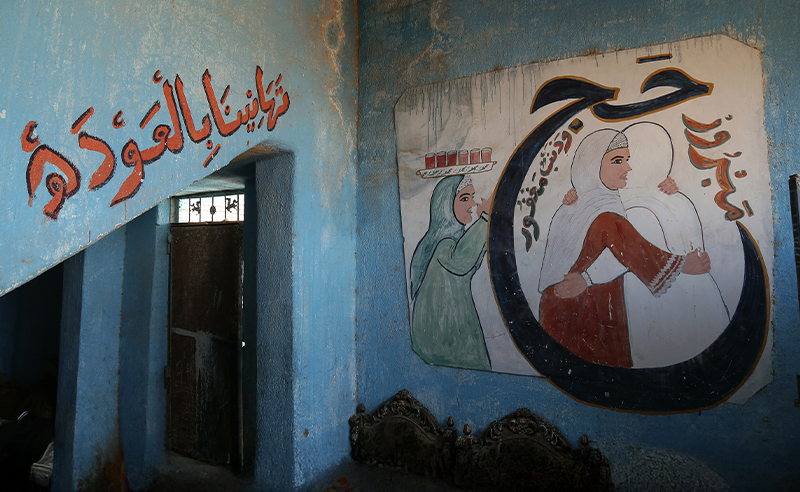 The murals are decoration but more importantly, they are acts of communication and documentation. "They share news with their community," Samir explains. "When someone goes on Hajj and comes back and paints a mural on their house, they're sharing news. They're proud of this, and they're documenting it. I might not know this person, but I'll pass them in the street and know that they performed Hajj."
This communicative function is central to why Samir chose walls as her focus. "The wall, in its essence, is something that separates two places, a barrier," she says. "When we practice painting on walls, we're turning the wall from a barrier into a form of communication between us and the people in our community. For me, the idea that they're truly transforming something that's supposed to prevent or block into a form of communication and self-expression and self-documentation."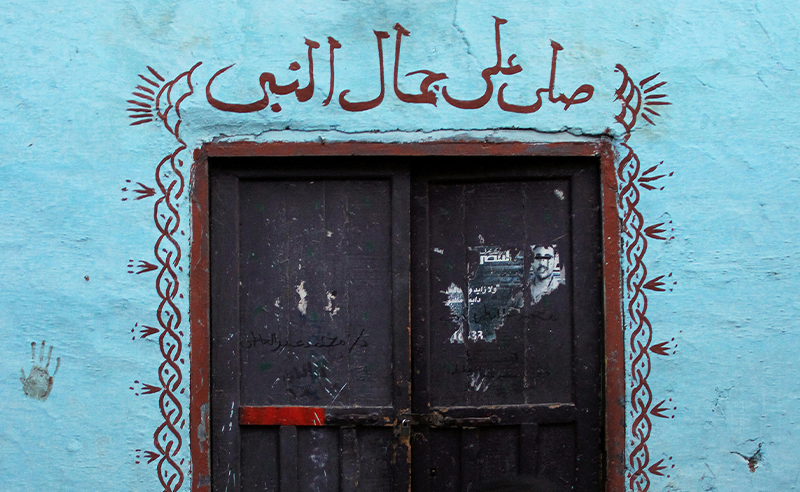 The scope of Inherited is vast, perhaps impossibly so. The murals exist throughout Egypt, unpredictable in their appearance. "I don't think there's any place that doesn't have this form of painting," Samir says. The project proceeds in fits and starts, whenever she can carve out time to travel and photograph. "I always feel like I'll still find something else."