






Six Cairo Museums You Probably Haven't Been to
Yes, we have the GEM, but have you been to the Agricultural Museum? Here are six museums in Cairo you probably haven’t been to.

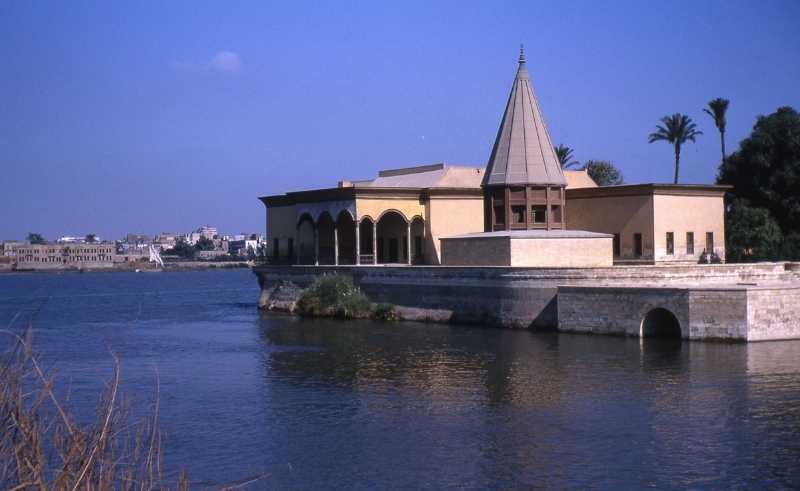
Original published on March 22nd, 2026
The Grand Egyptian Museum is no doubt incredible. Every day, tens of thousands of visitors flock to see what the new museum has in store. Its companions in excellence - the Egyptian Museum in Downtown Cairo and the National Museum of Egyptian Civilisation in Fustat - draw in steady crowds as they continue to tell the story of ancient Egypt.
Beyond these blockbusters, however, exists many more ways to look at our history. Tucked behind former palaces, government buildings, and overlooked corners of the city are museums that tell a quieter, alternative story of our history. These are the overlooked - but no less wonderful - museums of Cairo. From the history of cotton to the life of a butterfly, from courier pigeons to banking and colonialism, there is arguably nothing that cannot be found inside the walls of these treasure troves...
Agricultural Museum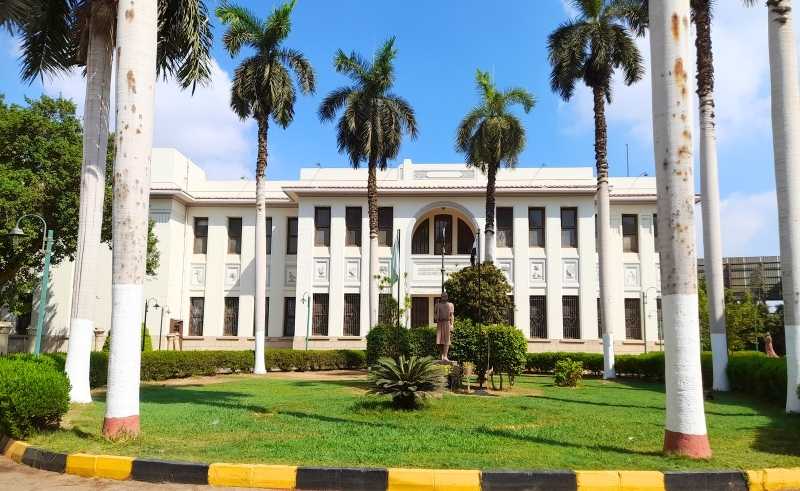 Once the palace for Princess Fatima, the daughter of Khedive Ismail, the museum’s grounds are extensive and architecturally grand. Made up of several separate museums - including the Museum of Ancient Egyptian Agriculture and the Museum of Plant Wealth - it is the second oldest agricultural museum ever to exist in the world, second only to Hungary's.
The first museum you encounter is dedicated to Princess Fatima. The architecture is impressive: grand staircases, towering windows, intricately carved wooden ceilings. The museum overflows with fine art. More paintings can be found here than in most of Cairo’s dedicated art museums. The former palace is divided into themed rooms, each charmingly and helpfully titled. You enter, naturally, through the Hall of Entrance. As you weave past Soviet-esque paintings of Egyptian agricultural life and sculptures of cows and donkeys, you pass through the Hall of Horses, the Hall of Great Artists, the Hall of Trees and the Hall of Arabesque. Each overflows with stunning works by artists ranging from well-known to never-heard-of-before.
The next museum you encounter, Egypt's Natural History Museum, is perhaps the compound’s most remarkable. You’re greeted by a wooden scale model of Egypt’s Delta and Nile that fills an entire room. Above it, a large sign in French celebrates Egypt’s “Production of wheat, maize, rice, beans and cotton.” Other maps lining the walls proudly chart the country’s production of lentils, sugar, and onions for the year 1983. Further along, you suddenly find yourself surrounded by a life-sized recreation of traditional life in an Egyptian farming village: women thatching baskets, men hand-blowing glass, life-sized camels parading past, women telling fortunes, men being tattooed. It is eerie and wonderful all at once.
As you approach a grand staircase, stained-glass windows blend ancient Egyptian motifs with contemporary farming scenes. Above Versailles-style ornate door frames, you find two simple brown labels announcing the room’s contents: 'SOIL' and 'NUTRITION'.
At the top of the stairs, you will suddenly find yourself staring straight into the open mouth of a hippopotamus. This floor is nothing but astounding. Halls of taxidermized animals line the walls up to the ceiling. On either side, the magic continues. In a room helpfully titled 'Economic Insect Collection', glass drawers display butterflies lovingly arranged by someone who must have been equally inspired by a love for science and art. Elaborate graphs and diagrams explain migration patterns, internal structures, and each insect’s contribution to Egyptian agriculture.
Next door, in the Plant Wealth Museum, the story of Egypt’s agriculture continues. Replicas of bread are displayed in a room simply titled 'Bread'. Graphs analysing the content of different cakes, miniature wooden windmills, preserved wheat in jars, and even the life cycle of an Egyptian watermelon are on display: documented by a series of photographs showing the tools for raising and harvesting them, the boats for their transportation, and the markets for their sale. Anyone interested in Egypt’s rich history with irrigated agriculture will be well rewarded by photographs of all the ways in which millennia of Egyptians have moved water from the Nile onto their fields.
Turn a corner and you will find yourself in Syria, time-travelling to 1958 during the era of the United Arab Republic (a brief historical moment when Egypt and Syria - at least on paper - were a single country). This building is small in comparison but nonetheless immense in what it has to offer: a glimpse into the culture, music, and food that brought the two nations together.
Across the way, the Museum of Ancient Egyptian Agriculture contains ancient relics: mummified fish, petrified bread dating back to the New Kingdom, clothing of ancient Egyptian children, and, of course, art depicting ancient scenes of farming, feasting and daily life. Your tour isn’t complete until you visit a stocked library that seems inspired by an Oxford college, a museum extolling a socialist-era pride in cotton production, and even a building filled with Chinese trinkets, photographs and VCR tapes.
Banque Misr Museum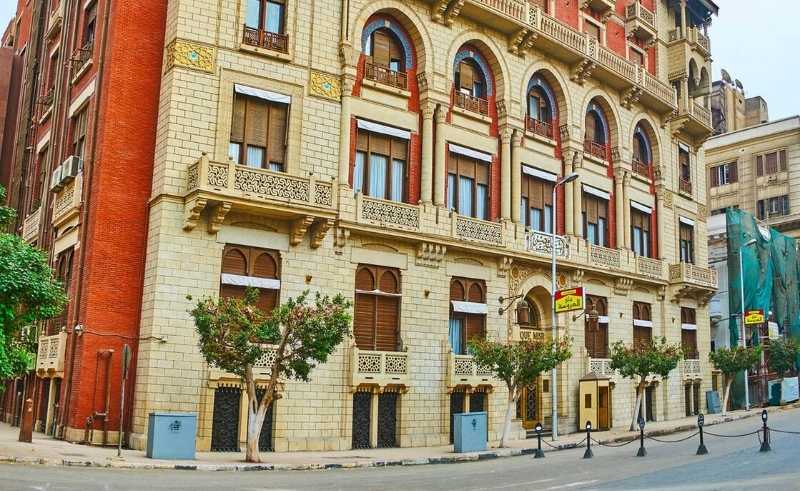 Discretely tucked into a corner of the beautiful Banque Misr Headquarters in Abdeen, the Banque Misr museum offers a glimpse into the history of the bank and its founder, Talaat Harb.
One of Egypt’s original entrepreneurs, Talaat Harb founded the bank in 1920. In a move redolent of Harb’s disdain for Egypt’s colonial overlords, he staffed it entirely with Egyptians, a feat in an era when the country’s financial system was dominated by foreign institutions. The museum stands as much a celebration of the man as it is to the institution he built.
A grand room displays how the bank spearheaded the creation of over 20 companies across the textile, insurance, and aviation industries. The building itself was constructed using Egyptian materials and Egyptian labour - except for the floors, which came from Belgium. The result is what is now an architectural landmark, blending European modernism with Islamic decorative elements: carved stonework, arches, and intricate mashrabiya.
Pictures, archived documents and interactive technology animates archival photographs of Sadat and Nasser, while a hidden key provides access to an old but sturdy safe, lovingly cared for and still operational a hundred years on. Along the way, you can stand inches away from a piece of the sacred Kiswah, which once covered the Kaaba, gifted to Talat Harb by Saudi King Abdulaziz in 1937.
Egyptian Geological Museum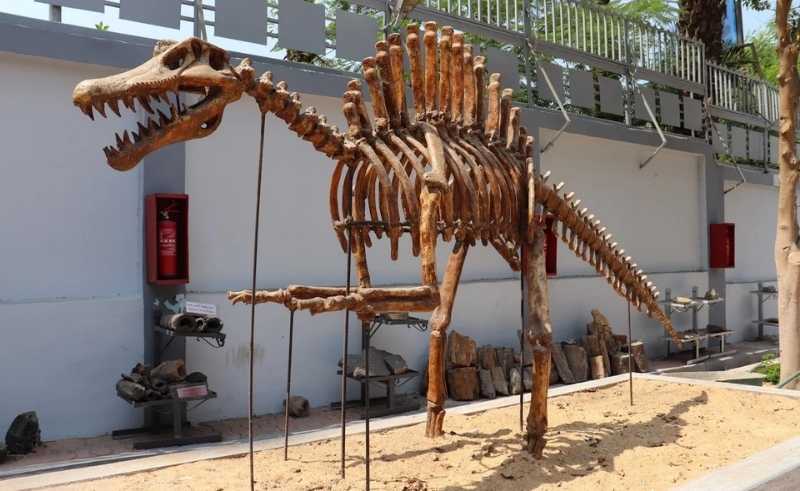 If you have ever found yourself wondering how the bones of dinosaurs and whales ended up deep in the Egyptian desert, or how the stunning gems - derived from some of the oldest rocks ever produced on Earth - ended up in the funerary art of the Pharaohs, or even how incredibly rare meteoric material from Mars ended up in Egypt, then the Egyptian Geological Museum is for you.
The answers to all these questions and more can be found at this seldom-visited gem in Cairo, conveniently located between Downtown and Maadi. Today, most visitors are Egyptian students on school trips, taking selfies with dinosaur skeletons. But the museum was originally developed in the late 1800s with much fanfare by Khedive Ismail, only to be relocated to its current location in the 1980s to make room for Cairo’s metro.
Long before the Pharaohs, Egypt remained absolutely central to global developments. Herds of dinosaurs roamed the plains, as did bands of prehistoric humans. At various times, the Mediterranean Sea and the Nile River covered vast swaths of the desert, resulting in massive dried-up river valleys (the origin of the Gilf Kebir), as well as kilometres-thick limestone deposits as far south as Qena, laid down by millions of years of sea creatures falling to the ocean floor and compacting over millions of years into rock layers.
As anyone who has driven to the Red Sea coast can attest, the hills you encounter just before reaching the sea have an eerie, otherworldly quality. These hills represent some of the oldest rocks ever found on earth: the Precambrian geological layer, thrust above ground by massive shifts in tectonic plates hundreds of millions of years ago. As part of this process, gems, which are only created under the intense heat and pressure near the Earth’s core, were forced to the surface, where they were found by our ancient ancestors and absorbed into their jewellery, funerary masks, canes and art.
Postal Museum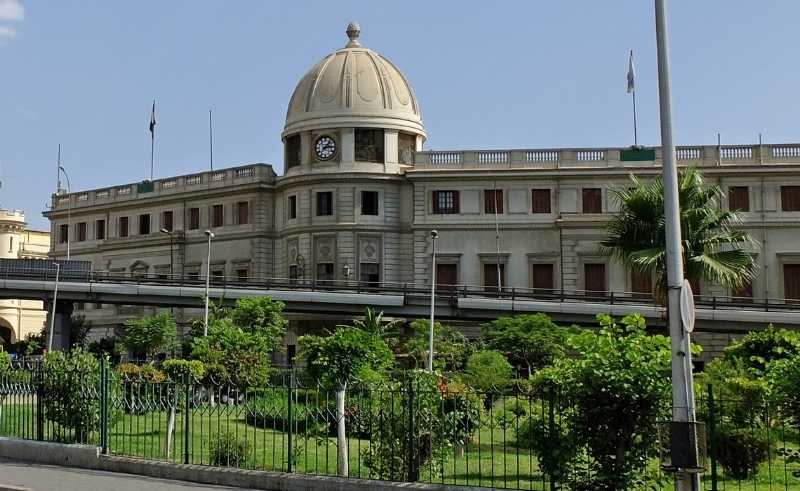 The Postal Museum is a must-see member of Cairo’s museum pantheon. Serenely located off of the bustling Attaba Square, the museum occupies the second floor of the city’s original historic Central Post Office. Upon entering, you are greeted by staff members in suits, who guide you along a plush red carpet toward a sweeping stairwell.
Founded in 1934, the museum was the brainchild of King Fouad and was later expanded by the Egyptian Post Authority into a comprehensive chronicle of the various forms of Egyptian communications. Inside, more than 1,200 objects, photographs, and archival documents trace the evolution of message delivery - from ancient river routes and carrier pigeons to modern state infrastructure.
Renovated in 2022, the museum retains a sense of grandeur: high ceilings, crown moulding, and draped curtains pay respect to the treasured objects within. Somehow, this setting for a survey of Egypt's postal history seems entirely appropriate; after all, the world’s first documented use of a courier service dates back to 2,000 BC, in Egypt.
Plaques in French, English, and Arabic guide you through rooms displaying historic post boxes, horse-drawn carriages, steamships, and even a taxidermized carrier pigeon. Cases of stamps from across centuries and continents sit in rows of wooden cases, carefully monitored for temperature and humidity - not unlike the mummies at the Civilisation Museum.
National Military Museum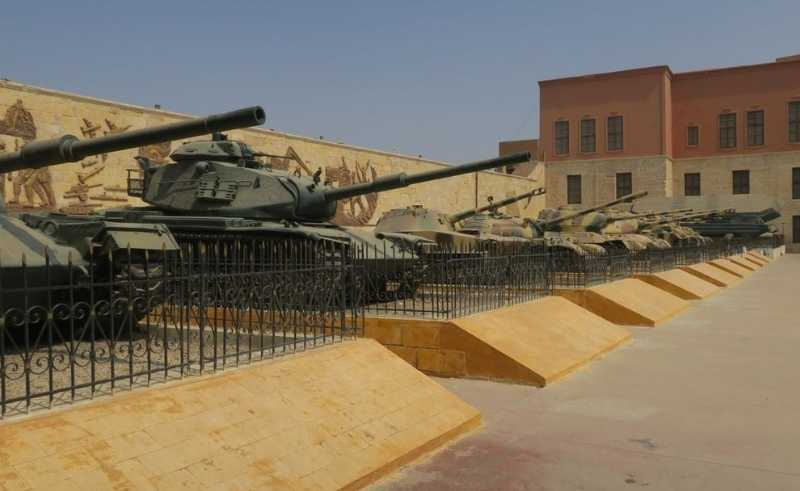 While the Cairo Citadel draws the crowds, the next-door military museum inside al-Haram Palace shows what it took to protect it.
Wooden floorboards creak beneath your feet as you move through the palace’s winding halls. Built under Ottoman rule, the museum recounts centuries of triumph, defeat, endurance, and sacrifice. A hidden switch on the side of a screen brought the display to life. Suddenly, you watch an ancient Egyptian battle - spears and chariots emerged from desert sands. Flip the switch again, and a centuries-later battle emerges across the same landscape.
Through shifting rulers and historical periods, Egypt’s borders have remained remarkably consistent. Even the Arabic name 'Misr' is a testament to that, derived from an ancient Semitic word meaning 'Borders' and 'Fortress'. Much has been lost - and much has been fought to preserve it. This museum tells the story of the people behind those battles, and their enduring pride in the land they defended.
Nilometer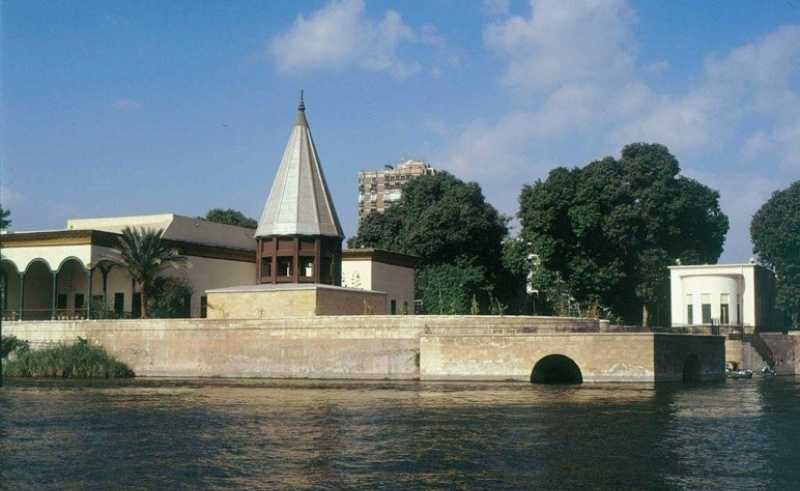 Have you ever wondered what gets the honour of being the oldest surviving Islamic monument in Cairo? In a city crowded with Islamic era riches, maybe it’s one of the soaring mosques along al-Muizz Street? Or the extraordinary aqueduct which brought water from the Nile to early Arab fortresses downtown?
Wrong on both counts. The distinction goes to the ancient Nilometer on the northern tip of Rhoda Island, established during the early years of the Islamic era, around 861 AD.
The concept of a Nilometer has been around since ancient times. Essentially a measuring stick plunging deep into the river channel, a Nilometer tracks the rising river flood. In the days before dams controlled the Nile, the height and width of the river varied massively; ancient calendars were measured by the start of the Nile’s annual flood, when this great river spread life-sustaining nutrients throughout the Nile Valley. A Nilometer enabled early Egyptians to track the onset of floods; useful as a way to predict inundations or droughts and to assess how much taxation rulers could extract from their citizens.
Now sealed off from the river’s flow, you can peer deep into the bowels of this extraordinary construction, admiring the stunning Islamic motifs carved into its shaft, plunging down into the depths of the earth. Lines along the column measure in cubits the depth of the inundation. Data collected from here was sacred: more precious than the results of wars or kingly births. Readings above or below the norm spelt disaster; healthy readings predicted a glorious agricultural season to come.
Rarely visited, the Nilometer provides a peaceful respite from the chaos of Cairo all around. It’s conveniently located next to the Umm Kulthum museum next door, a cultural combination entirely fitting in this kaleidoscopically diverse city.
Related Articles
Trending This Week
-
-
 Sep 10, 2026
 -
 Sep 10, 2026
 -