





Saudi Storyteller Lina Jamjoom & the Toys She Never Stopped Chasing
Lina Jamjoom is a designer, illustrator, curator, and storyteller reshaping childhood learning through art and curiosity in Jeddah, with a vision for a future children’s museum rooted in its history.
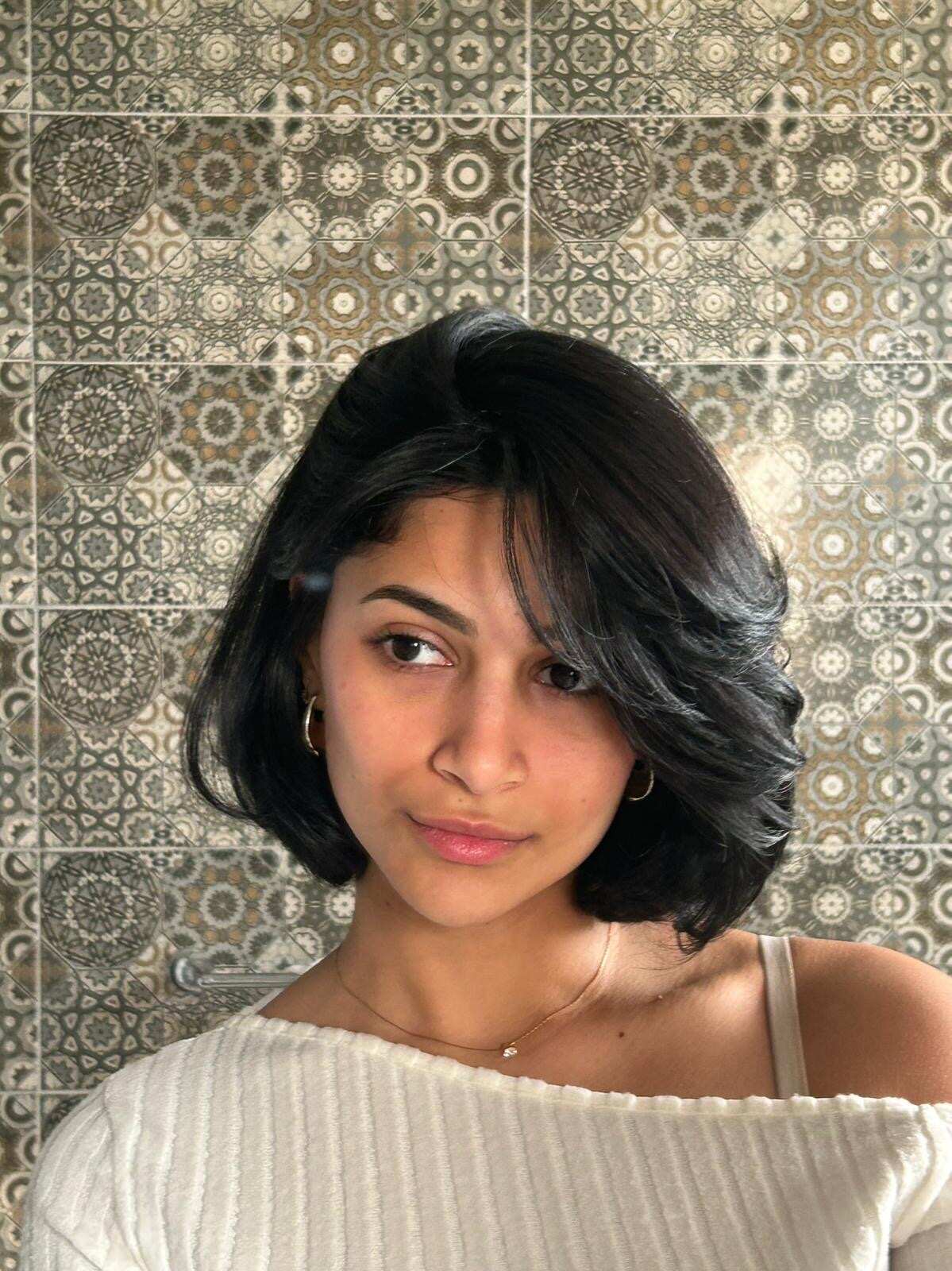
Lina Jamjoom sits cross-legged on the floor, spending hours organising the wooden food in her children’s play kitchen as though they were her own. These toys were an obsession that sat with her long before she had any children, one that actually stemmed from a childhood heartbreak she never quite got over. “My father surprised us with a new house one day,” Jamjoom says, laughing at the memory. “And as it turns out, he left all my toys behind. I have been on a mission to recollect them ever since."
That mission mirrors the curiosity Jamjoom has carried with her all her life, a curiosity that found its outlet in visual storytelling.
Growing up in the quiet corners of Jeddah, her mornings were filled with the aroma of coffee and the hush of nature coming out of the National Geographic channel her father always had on. These slow, deliberate moments are what taught her to notice the world: the way sunlight hits a leaf, the tiny details in a bird’s feather, the rhythm of life unfolding. That and weekend fishing trips to the sea would always spark inspiration for her evening sketches, ones that her mother has kept to this day. “I don’t have many of my childhood toys, but I have all my art,” she tells SceneNowSaudi.
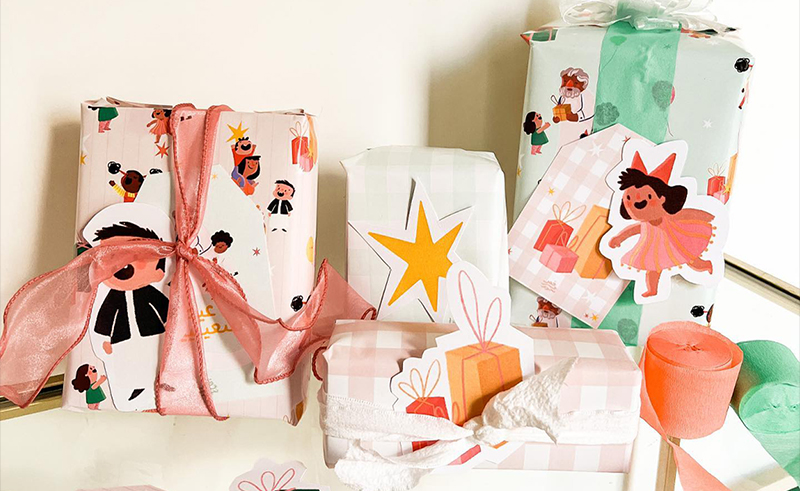
By the time she reached university, that eye for detail had only sharpened. In a photography class, she found herself drawn to the overlooked, small marvels drifting through everyday life. One project led her to document the jingle trucks—ornately decorated cargo lorries covered in hand-painted motifs—that wound through Pakistani-dense neighbourhoods, their bright colours capturing stories she had never seen before. “At first I didn’t even know they had a name,” she recalls. “I would see them, take pictures, and notice the little details. Each one has its own character, chosen by its driver; it tells you something about them.” It was here, amid dusty streets and bursts of colour, that she realised her fascination wasn’t just about objects, but the stories they carried, the layers of culture, memory, and craft waiting to be discovered.
A graphic designer by trade, she spent her days crafting visuals, framing ideas, and capturing beauty in the small details often missed. But when Jamjoom became a mother, something shifted. The world she had known—one of vibrant colours, obscure shapes, and endless possibilities—grew quieter. The spark she had nurtured since childhood dimmed beneath the weight of sleepless nights and new responsibilities.
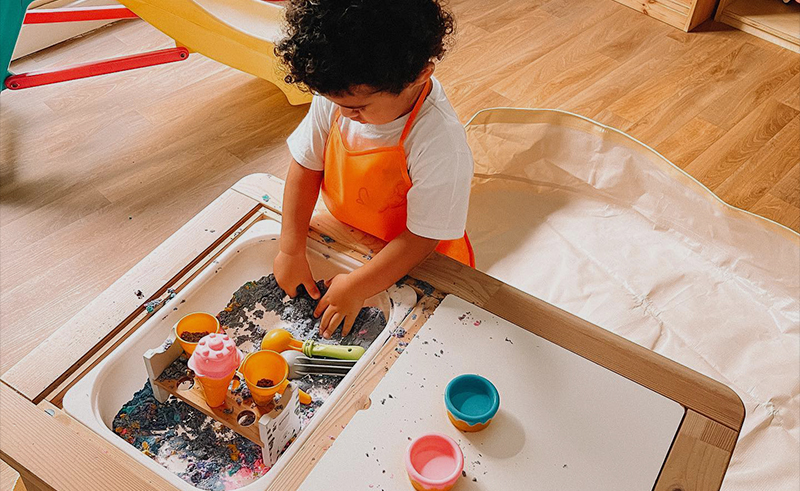
Yet motherhood also unearthed something she had long tucked away: a rekindled need to understand, create, and translate the world for her child. Slowly, the designer, photographer, author, and storyteller she had been all her life began to stitch themselves back together, this time with Bilal’s questions as her guiding thread. “I realised soon enough that motherhood doesn’t have to be defined in one specific way. I experiment until I find a way we can both enjoy it,” she says.
That experimentation took an unexpected turn the day Bilal became obsessed with caterpillars.
He had fallen in love with 'The Very Hungry Caterpillar' and, like any curious child, wanted to know everything about what came before and after the story. Jamjoom did what she always does when faced with a question she cannot confidently answer. She researched. She read. She prepared a small lesson about the life cycle of a butterfly and went to print out some illustrations to make it easier for him to understand.
Only to find out that her printer had run out of ink.
“I hadn’t drawn in six years,” she says. “But I had everything ready and I didn’t want to disappoint him. So, I sat down and drew it myself.”
What was meant to be a quick solution became something else entirely. The lines came easily. The joy came back even faster. For the first time since becoming a mother, Jamjoom felt the familiar pull of creating for the sake of it. Not for work. Not for obligation. Simply because she wanted to.
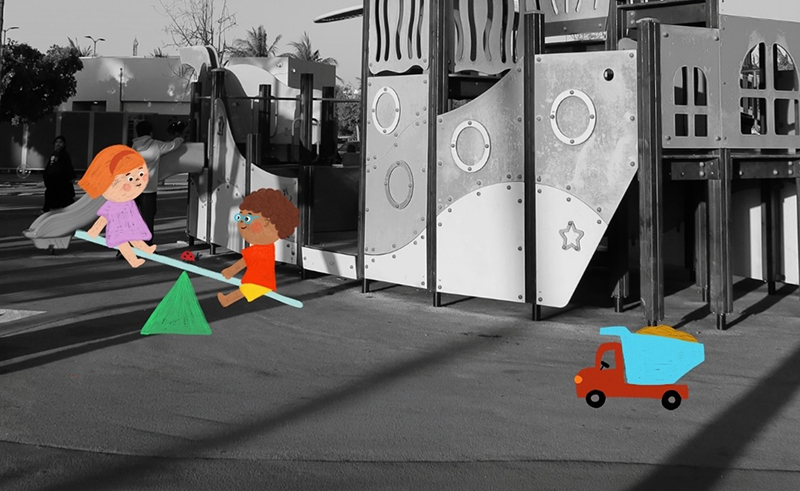
From that day on, Bilal’s questions became prompts. If he asked about sea creatures, she would illustrate them. If he wanted to know about space, she would turn the information into something visual. “My designer brain works like this,” she explains. “He asks a question and I immediately think, how can I make this easier for him to understand?” Their home slowly turned into an informal classroom where learning looked more like play. Before long, other parents began asking if their children could come over after school to join in on the fun.
“I never thought this kind of information would stick with a six-year-old,” she says. “But people kept asking me what I was doing at home.”
Part of the answer lies in Jamjoom’s eye. The same eye that notices the smallest details also refuses to settle for anything poorly made. It is why her playroom looks like a carefully curated gallery. She gravitates towards wooden toys made with non-toxic paint and glue, open-ended pieces that allow children to invent their own rules, and designs so thoughtful that they would not look out of place on her coffee table. “I want a toy that, even if I put it in my living room, would still look nice,” she says. Friends began to notice. Then brands did. One day, she got a call from Home Grown Market asking her to curate their new kids section. Jamjoom worked on curating the toys with the same care she gives her kids and home, creating themes so the customers wouldn’t get “decision paralysis” as they pick them out.
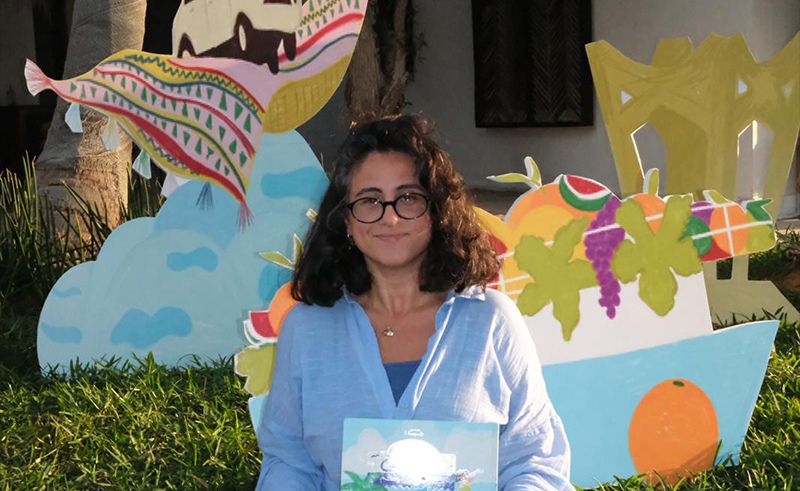
For Jamjoom, it has never been only about the object itself, but about the story it carries. That instinct for storytelling has followed her all around, and eventually shaped what would later become Jeddah Explorers, the illustrated book (turned tour-community) she spent two years creating simply to answer her son’s questions about the sculptures scattered across the city.
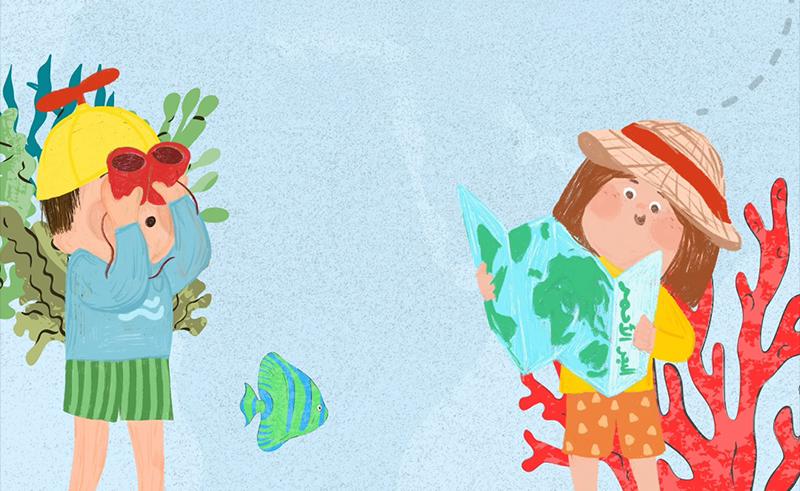
“I was just trying to explain things to Bilal,” she admits. “It was never meant to be a book for anyone else really.”
Today, Jamjoom stands somewhere between designer, illustrator, curator, and storyteller—roles that blur into one another as naturally as they did when she was a child sketching by the sea. She speaks quietly about what might come next. Outdoor “nature school” sessions for children, built around the collection of books, tools, and curiosities she has gathered over the years. Lessons that happen under trees, beside the sea, or on a patch of grass, where questions are welcome and answers are drawn, built, or discovered together. Looking further ahead, she imagines an expanded vision of this world, a full-fledged children’s museum in Jeddah dedicated to its art and history.
For Jamjoom, creativity was never lost. It was simply waiting for the right question to bring it back.
- Previous Article Egypt Plans Misr Life Insurance IPO This June
- Next Article Speedinvest Launches Flagship MENA Fund Backed by Mubadala & QIA
Related Articles
Trending This Week
-

-
 Sep 10, 2026
 -
 Sep 10, 2026
 -