





62-Million-Year-Old Fossil Site Discovered in Egypt's Eastern Desert
Researchers from Mansoura University documented hundreds of fossils and more than 20 fish species previously unknown to science.

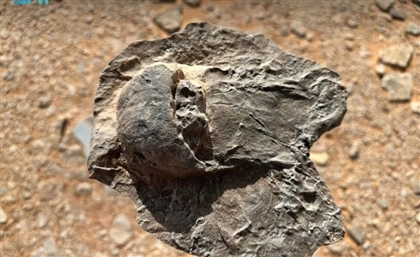
A research team led by Mansoura University has documented a 62.2-million-year-old fossil site in Egypt's Eastern Desert containing one of the most complete early Palaeocene marine fish communities ever discovered.
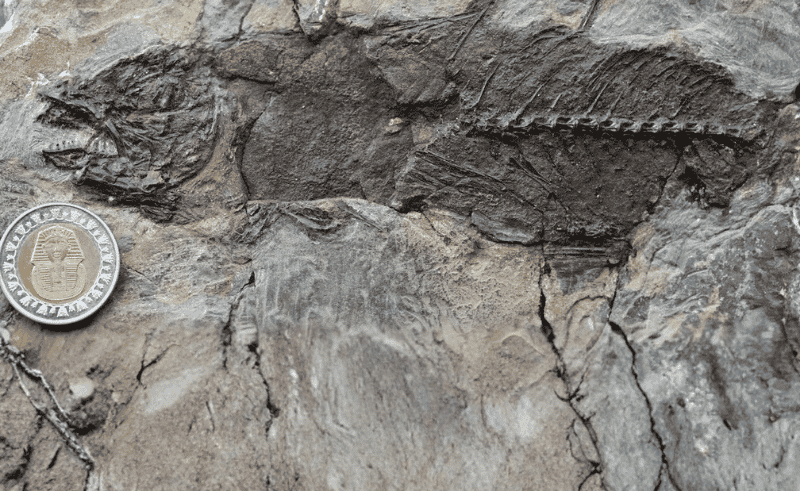
The findings were published in the journal 'Science Advances' under the title 'Rise of modern marine fishes captured in an early Palaeocene Lagerstätte' and include hundreds of exceptionally preserved fish fossils, alongside more than 20 species previously unknown to science.
According to the Mansoura University Vertebrate Palaeontology Centre, the site dates to less than four million years after the end-Cretaceous mass extinction event 66 million years ago, when approximately 75% of species disappeared. Researchers describe the deposit as a rare lagerstätte, a type of fossil site known for extraordinary preservation that allows scientists to reconstruct ancient ecosystems in exceptional detail.
The fossil assemblage is dominated by Percomorpha, one of the largest groups of bony fishes found in today's oceans, including tuna, mackerel, seahorses and ocean sunfish.
The study suggests that modern marine fish groups emerged and diversified more rapidly than previously believed. Researchers also propose that ancient tropical seas, including those that once covered parts of present-day Egypt, may have served as an early centre for the global expansion of these species.
The site also revealed a notable absence of many older predatory fish groups. According to the research team, this supports the theory that the mass extinction dramatically reshaped marine ecosystems and created ecological opportunities for modern fish lineages to flourish. Unlike many fossil sites from the same period that represent shallow coastal environments, the newly documented deposit reflects an open marine setting.
The geological layers also coincide with a period of rising global temperatures, providing scientists with new evidence of how marine ecosystems recovered following one of Earth's largest extinction events.
The project involved more than six years of fieldwork and laboratory analysis and included collaboration with the University of Michigan and Professor Robert B. Speijer of KU Leuven in Belgium.
The research received support from Mansoura University, Egypt's Science, Technology and Innovation Funding Authority, the University of Michigan and the National Geographic Society.
- Previous Article SceneNoise x Amsterdam Dance Event Present CROSSFADE: Egypt
- Next Article Oman Arab Bank Lists $400 Million Bond on London Exchange