



Saudi Breakout Star Hamss Bandar On Telling Women's Stories
On telling Saudi women's untold stories, picking up where her mother's career was cut short, and the family argument that led to her first audition.
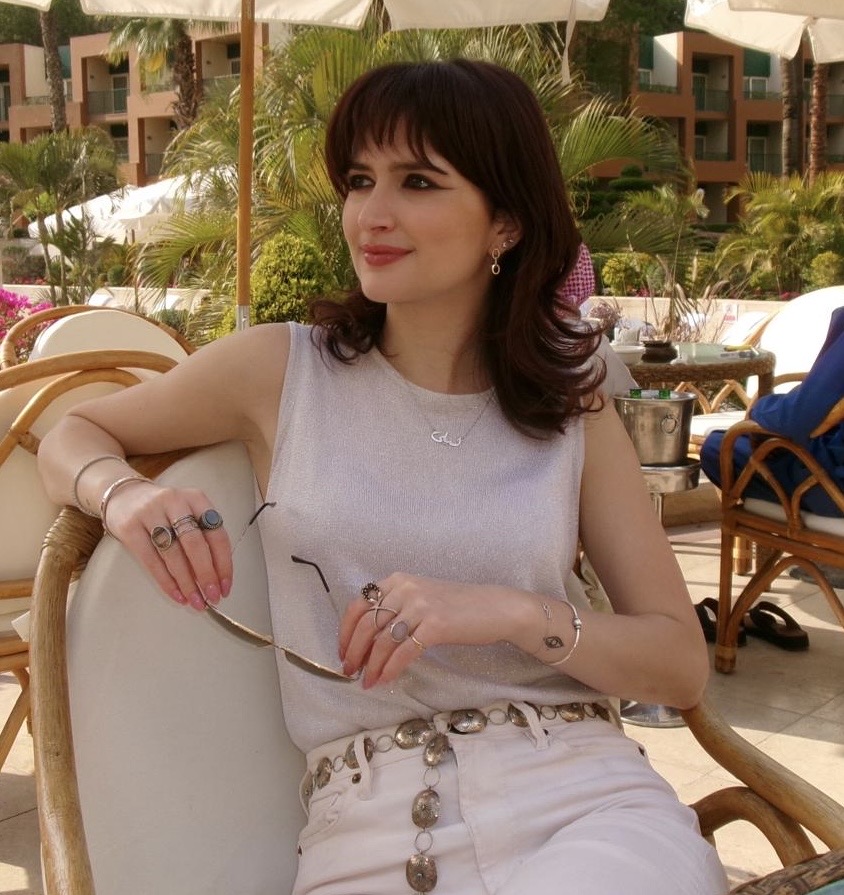
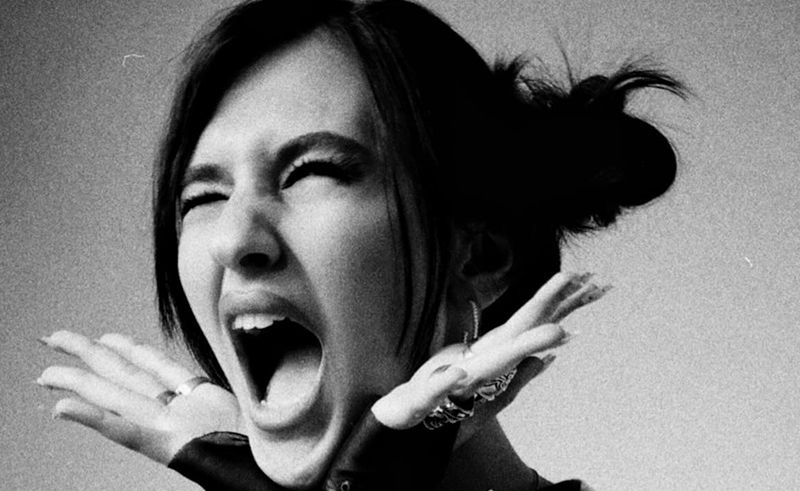
At 22 years old, Hamss Bandar has quickly risen to fame as one of Saudi’s most obsessed-over breakout stars. Based in Riyadh and born in the southern city of Al-Bahah, Bandar gained attention (and Instagram followers) for her role in the hit Saudi Netflix thriller From the Ashes (2024), based on the tragic 2002 fire at an all-girls’ school in Mecca. Since then, she has challenged herself across genres - in indie dramas like Laila (2022) and larger TV productions like Ommi (2025). Right now, she is trying her hand at comedy and live theater.
Bandar admits that she loved theater as a child - sometimes taking on two roles in one middle school play because she loved the stage that much - but she never thought it could become her career. Instead, Bandar found her niche in styling and fashion design as a way into the world of film - but behind the camera. So she was confused when the producer of the Netflix series she was working on, Bait Tahir, asked her to audition for an upcoming film. A fight with her parents led her to that accidental audition several years ago, and, well, the rest is history.
Bandar spoke with SceneNowSaudi about picking up where her mother, Najwa Ali, left off after the Saudi government closed public cinemas and theaters in the early 1980s, and cut her acting career short. Nearly 40 years on, Bandar is part of the generation reviving Saudi cinema, and she's using her roles to tell the stories of Saudi women - from the daughters of single mothers, to young wives, and teenagers navigating tragedy behind the never-before-seen walls of an all girls’ school.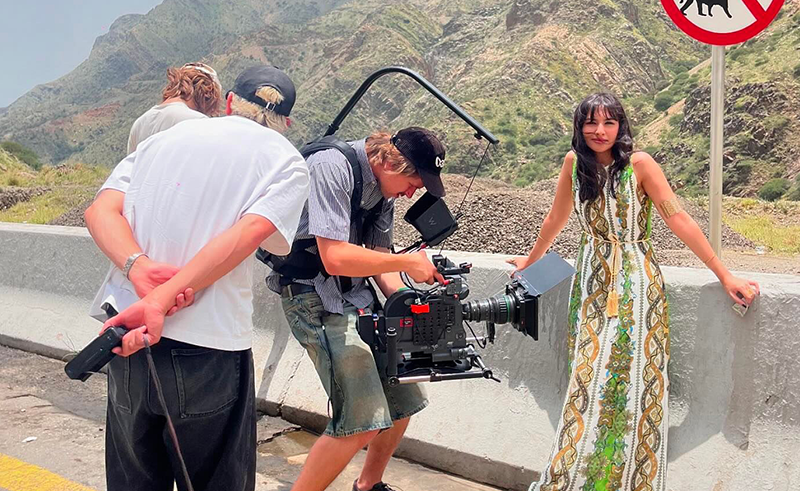
Q: Tell me about the series you're filming right now.
A: It's a comedy show called Sondos that has been going on since 2022, so this is the third season, and I'm a new character, so it was really fun to join when everybody knows everybody, even the crew and the director and the actors. I watched Obsession recently, so I relied on the character Nikki, recreated in a more comedic way to fit in the show.
Q: That must have been fun, being the new girl on set after they've all filmed together for past seasons. Was it easy to gel with the rest of the cast?
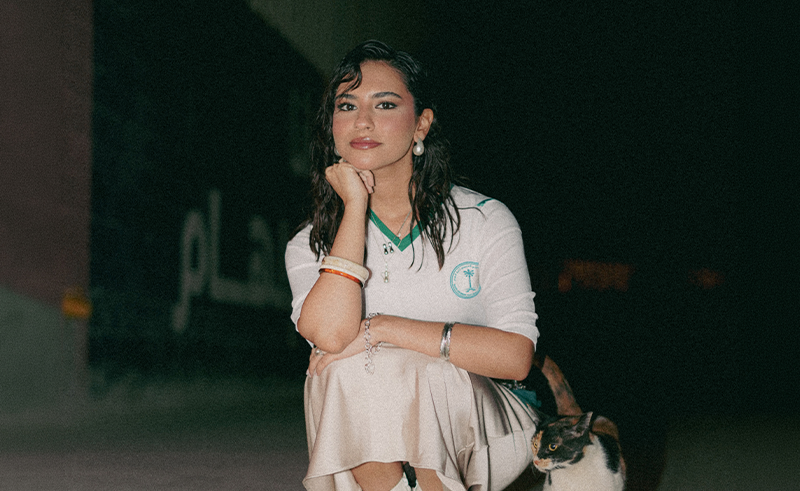
A: I was super nervous. Because they seemed like a family. When I first joined, my first day was very awkward, and then we clicked - by rescuing a kitten.
Q: Tell me about that.
A: All the actors went outside to rescue it and put it in the actor's room, and we fed it, and we were all looking for vets and people to foster it or adopt it. Actually, people on social media knew that I was the newcomer on the show because of the cat. I took a picture of the cat and posted it on my story, and everyone was like, “Oh my god, you're in Sondos 3?” I was like, “No! It's supposed to be a surprise!”
Q: Wow, the cat gave up your secret!
AN ACCIDENTAL AUDITION
Q: I'd love to go back to the beginning. Where did your path to becoming an actress start?
A: Ever since my childhood I've been into acting. I loved gathering all of my family and making up scenes, and I loved to be in theater at school. And then, when I graduated from high school, I had this passion for filmmaking and for fashion design. So I decided to study fashion design in college and then enter the field as a stylist or custom designer. And I did that. I used to train as a stylist assistant, and in one of my first big gigs, I was a stylist assistant in a Netflix series called Bait Taher.
Q: So during the filming of Bait Tahir, you were approached to audition when you were working as a stylist's assistant. Had you ever thought about acting professionally?
A: Never, because it's a new field here in Saudi, so I didn't think there would be many opportunities. I found my lane in fashion and the wardrobe department in the film industry, so I was like, okay, I found my place here. I sent in my information for the audition, but I wasn't planning to go. I had classes, and then I came back home, and I had this argument with my family. I was mad they didn't cook me lunch after I had classes all day. I was like, “No, I'm going out to eat.” I ordered an Uber, and I remembered that I had this audition. So I went to the audition, randomly.
Q: So a little fight with your parents led you to the audition.
A: Yes. I auditioned, and two weeks later, I got a callback for the main character in that film. I was like, is this really happening? And they were like, yeah, this is our first Netflix original film in Saudi, and you're gonna be the main character.
FROM THE ASHES: THE TURNING POINT
A: And then about a year later, in January 2024, From the Ashes was released, and it was a big hit in Saudi. My social media blew up and then everybody knew me. I remember being at the airport, and people recognized me, and I was like, “Oh, it's really happening."
Q: What was it like to go from debating a career in acting to being recognized wherever you went?
A: It still, to this day, feels very surreal. But my mama loves it. Everywhere I go with my mother, and she sees someone raising their phone to take a picture, she's says, “This is Hamss, come take a picture!” I'm like, “Mama, please!”
Q: She’s your number one fan! As she should be.
A: She used to act as well, because we had a big theater scene here in Saudi up until the early 80s, and then it was shut down for women. So I also feel like she's seeing herself in me. I'm trying to convince her to act, because she's really talented as well, and she says, “No, I have my job now, I can't.” I'm like, “You can do it, Mama, you can!”
Q: Do you feel like you're picking up where your mother Najla Ali Almasswary left off in her acting career, as the theater and film scene open back up for women in Saudi?
A: Yes, because even with the many people here in Saudi who are working in this industry, they didn't know that we had this scene before. It was shut down for almost 40 years, but we had it. My mom went to big theaters in Egypt, and big competitions. We had the scene already. We could have had better chances in making it, so we should make the most of it now.
TELLING SAUDI WOMEN'S STORIES
Q: A lot of your work - the indie film Laila, the series Ommi, and From the Ashes - share a through-line about women's experiences in Saudi society. Was that intentional? And what has the reaction been like in Saudi?
A: It wasn't intentional at first, but I noticed that every time I read a script relatable to Saudi women here and our experiences, I become attached to it. Especially because I grew up in a female household - I don't have brothers, I don't have uncles.
From the Ashes was the first time we saw the inside of a girl's school. And with Ommi, it was really focusing on motherhood - how a woman can be a single mother here in Saudi Arabia, and how she can take care of her family all by herself. In the show, we see how it affects each generation of women, and how they become independent, actually taking care of each other and taking care of a whole household.
Laila is a very anxious girl who gets married early. So we are seeing what’s inside her head the morning after the wedding night. We had the scene where she was fighting him and drowning him in the water, because she was so scared and she doesn't know what will happen, and she's very young. It's very untalked about, what will happen. You don't get to hear it, you have to go through it and experience it for yourself.
Q: That must have been powerful. Were you in the audience when it was released? Could you read people's expressions?
A: Yes. They were very confused. I noticed with men, they asked, “Is this really how women think?” I was like, “Really?”
But the whole theater just applauded, and it was very emotional to see that for the first time.
Q: It's interesting because the film doesn't directly address sex, but it’s the underlying theme. And for an entire theater of men and women to watch it and applaud together seems like a really significant moment for film in Saudi, especially since it's opened back up to women and public theaters over the past decade.
Are there any particular stories, personal to you, that you hope to tell as an actress in the coming years?
A: Actually, yes. We have different cultures in this one country, and I am originally from the South. The South is very…I don't know how to say it.
Q: More conservative?
A: Yes, it's more conservative. But this region is very much led by women. The farms are led by women. The only thing men do is drive around and sell the things that we grow, outside of the South.
Why don't we see those stories on screen? I actually wrote a short film script, and I had to ask my grandfather for permission, because it's very taboo to talk about Southern women and their experiences. But he was very eager. But when I started working on it, I didn't get much support. I have the locations, I have the actors, because I convinced my mother to act in it. I said to her: “This is our story to tell people.”
So this is what I'm aiming for in the future: to tell those stories that have been silenced, and to actually see Saudi outside of Jeddah and Riyadh, because these are big, major cities. But we still have these small cities, these small regions that are so rich in stories but are not being told.
- Previous Article SceneNoise x Amsterdam Dance Event Present CROSSFADE: Egypt
- Next Article The Intricate Beauty of Ben Youssef Madrasa