





Palestinian-American Young Habibti Amplifies Joy With Technicolor
Palestinian-American artist and architect Young Habibti applies the discipline of the grid and the energy of radical colour to design immersive, euphoric portraits and spaces.
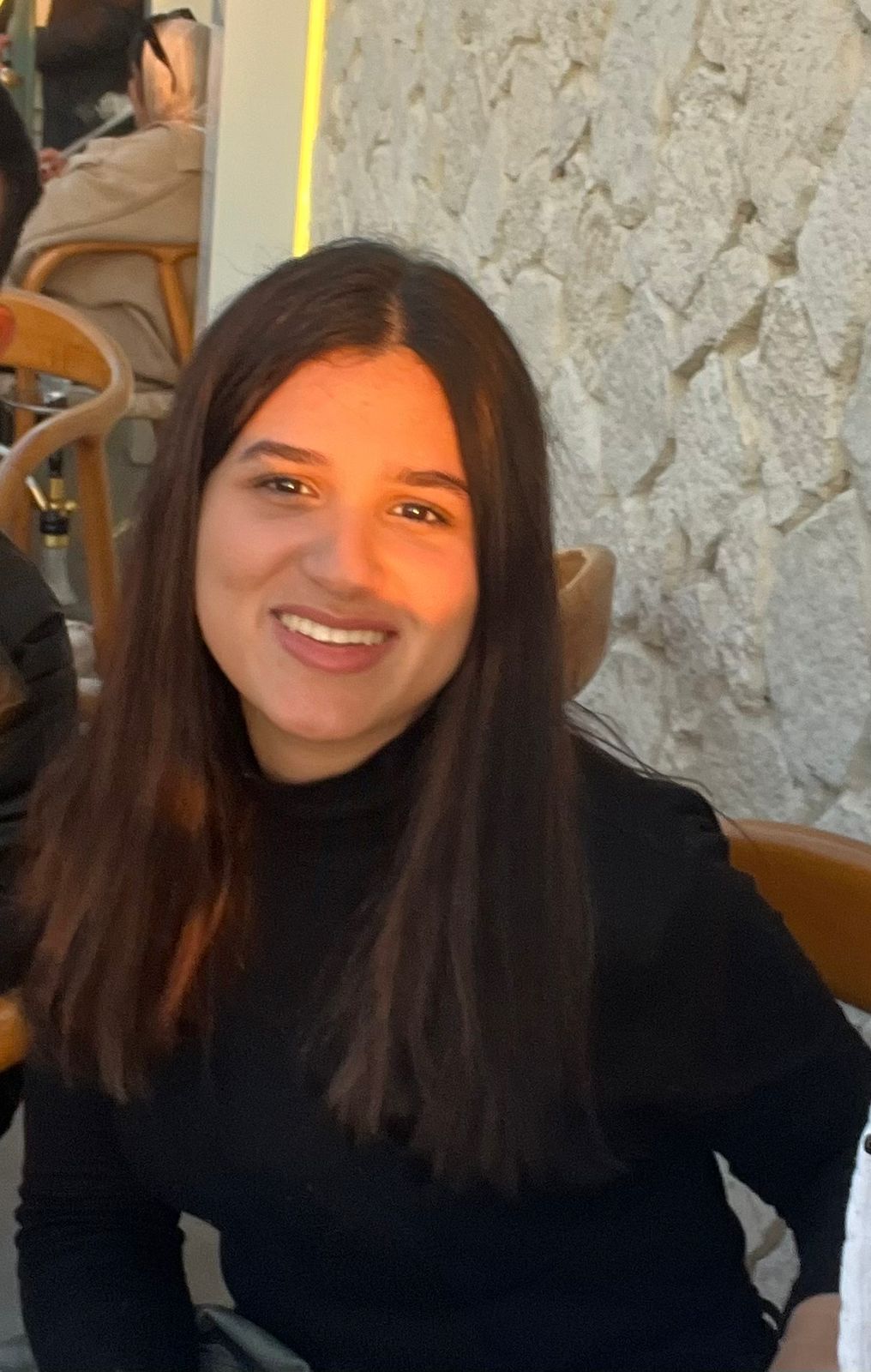
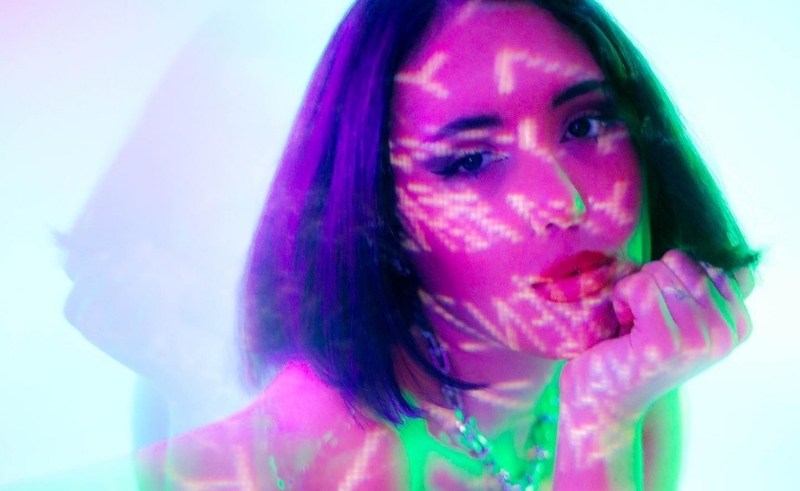
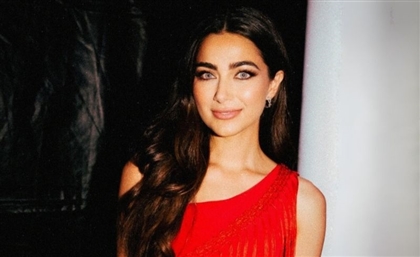
A photograph, according to the unfeeling logic of cameras, is a record of light. But before light hits a sensor, it passes through a person. And a person is a messy constellation of history, instinct, and the relentless, silent work of seeing. Dina AKA Young Habibti operates just before the click - a space crowded with the ghosts of her architecture degree, the bass-thrum of Houston’s underground, and a Palestinian-American childhood spent learning to read the subtext of every new skyline.
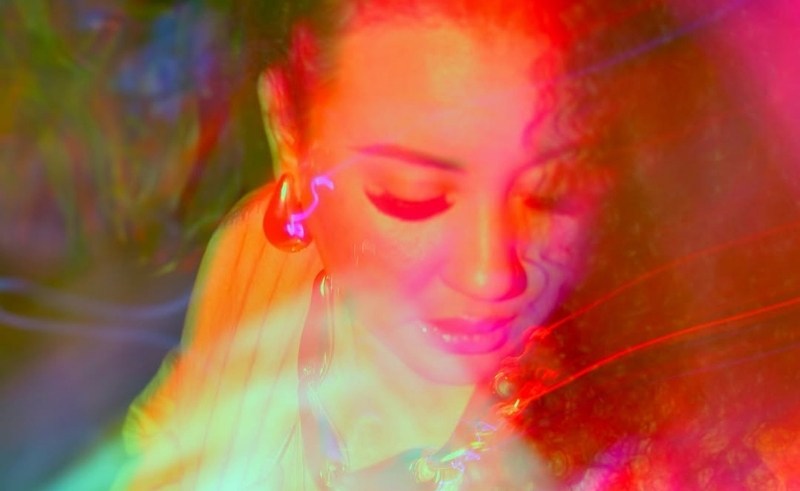 The persona, Young Habibti - a compound noun where each half bears the weight of a world - was minted in 2012. “She is the artist in me,” Dina explains, “a way to make sense of the many facets of the person I am.” The name itself is a manifesto in two parts: ‘Young’ for the raw, perpetual nerve of becoming, and ‘Habibti’- my beloved - a term of deep cultural intimacy pulled from her heritage. “It was an homage to my roots as both a Palestinian and an American,” she says. It also functions as a sacred directive. To name herself ‘my beloved’ is to transform every encounter into an act of devotion. "The name was born to celebrate youth expression in all its raw essence, and to celebrate loving oneself and love for the subjects expressing themselves. It has all been a love letter ever since."
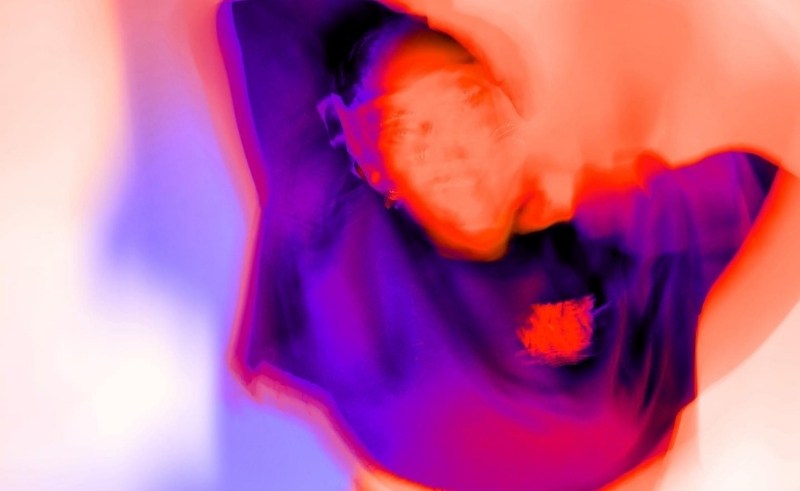 Her artistic DNA is spliced from two seemingly opposed strands. The first is architecture, her family’s legacy and her profession: a world of slow devotion, of plans that take years to become stone. It taught her the sacredness of the grid, the power of a line that holds.
This architectural consciousness manifests in the silent logic beneath the visual noise. "Even when an image looks dreamy or chaotic, there’s usually an underlying grid: balance, symmetry, tension, weight. Architecture schooled me in me in restraint," Dina says. "Sometimes the most powerful choice is what you don’t add, but what you let organically come to be." She designs an environment clear and strong enough that a subject’s own self-expression, whether it be fashion, or dance, can bloom within it.
Her artistic DNA is spliced from two seemingly opposed strands. The first is architecture, her family’s legacy and her profession: a world of slow devotion, of plans that take years to become stone. It taught her the sacredness of the grid, the power of a line that holds.
This architectural consciousness manifests in the silent logic beneath the visual noise. "Even when an image looks dreamy or chaotic, there’s usually an underlying grid: balance, symmetry, tension, weight. Architecture schooled me in me in restraint," Dina says. "Sometimes the most powerful choice is what you don’t add, but what you let organically come to be." She designs an environment clear and strong enough that a subject’s own self-expression, whether it be fashion, or dance, can bloom within it.
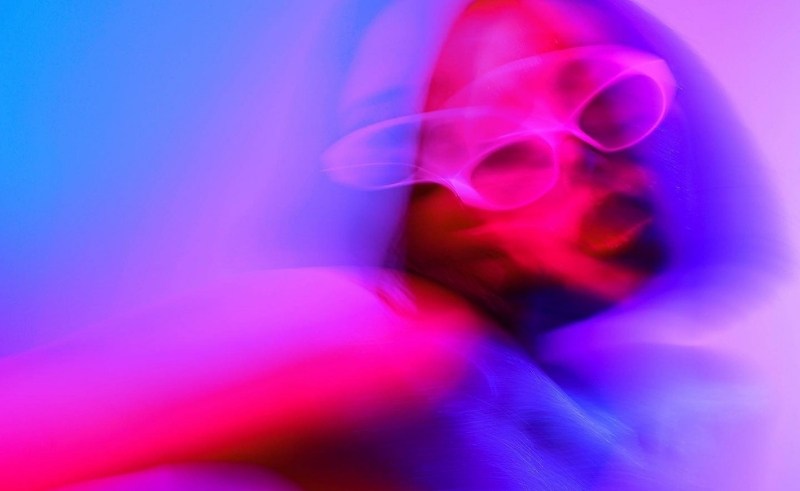 The artist was cast in the vibrant, sweaty chaos of Houston’s DIY music scene, where she learned to shoot in the flickering dark, capturing what she calls the magic and the light of performers in mid-flight. “It was an obsessive compulsion,” she admits. “A gift to bear witness to these people expressing themselves… I consider it a gift and opportunity.”
Her parallel pursuits are the twin engines of a single practice. "Architecture is slow devotion creating spaces to be lived in. Meanwhile, photography is instinct. It’s adrenaline. Capturing those spaces coming alive and inhabited with life."
The artist was cast in the vibrant, sweaty chaos of Houston’s DIY music scene, where she learned to shoot in the flickering dark, capturing what she calls the magic and the light of performers in mid-flight. “It was an obsessive compulsion,” she admits. “A gift to bear witness to these people expressing themselves… I consider it a gift and opportunity.”
Her parallel pursuits are the twin engines of a single practice. "Architecture is slow devotion creating spaces to be lived in. Meanwhile, photography is instinct. It’s adrenaline. Capturing those spaces coming alive and inhabited with life."
 When she moved to Dubai to work as a full-time architect, she found a visual landscape suffering from a kind of emotional anaemia. The prevailing aesthetic was a “monochromatic hyperrealism,” an endless scroll of muted teals and beiges. It wasn’t enough for her. So she began, quite deliberately, to perform visual defibrillation. She cranked the saturation in her edits to an extreme, creating a world where colour was declarative. “It felt suddenly alive, and dynamic and it spoke to something in my heart.” This was the birth of her “Technicolor” philosophy - a refusal of monotony and a belief in wonder, even in heavy times.
"Technicolor is a visual, even emotional truth to my world. It's the way I experience life: layered, heightened, often surreal, always full‑bodied. It's a reminder that even in heavy times, I still believe in wonder. I still believe in the magic of everything around us," Dina tells SceneNowUAE.
When she moved to Dubai to work as a full-time architect, she found a visual landscape suffering from a kind of emotional anaemia. The prevailing aesthetic was a “monochromatic hyperrealism,” an endless scroll of muted teals and beiges. It wasn’t enough for her. So she began, quite deliberately, to perform visual defibrillation. She cranked the saturation in her edits to an extreme, creating a world where colour was declarative. “It felt suddenly alive, and dynamic and it spoke to something in my heart.” This was the birth of her “Technicolor” philosophy - a refusal of monotony and a belief in wonder, even in heavy times.
"Technicolor is a visual, even emotional truth to my world. It's the way I experience life: layered, heightened, often surreal, always full‑bodied. It's a reminder that even in heavy times, I still believe in wonder. I still believe in the magic of everything around us," Dina tells SceneNowUAE.
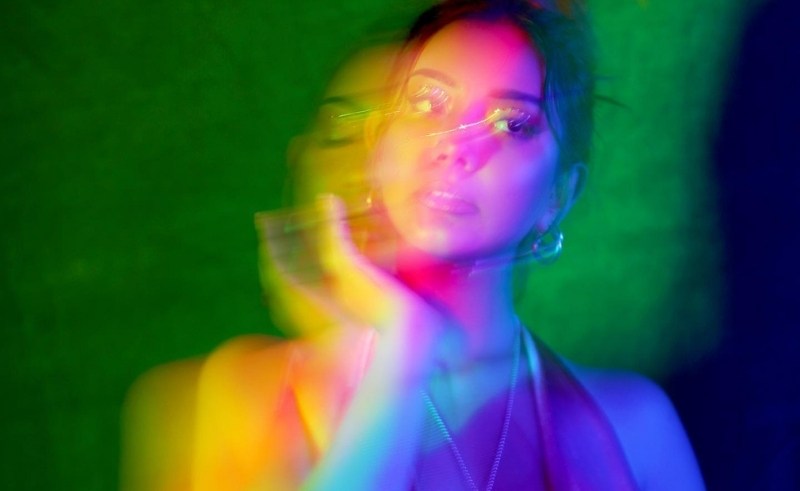 Before a shoot, she seeks to understand how they perceive themselves and want to be perceived to establish a a dialogue of synchronicity. She establishes a frame, a suggestion, and then waits for the moment the performance falls away. With intuition as her director, the click happens in the split-second of mutual recognition. The goal is an image that feels like a truth the subject hadn’t yet articulated. “Honesty is when someone looks at an image and feels: ‘That’s me… even if I’ve never seen myself like that before.’”
Colour is her dialogue’s vocabulary. She is currently undergoing a study of purple, a colour historically linked to rarity and sovereignty. For Dina, it becomes a democratic crown, a way to illuminate a subject’s inner complexity. “Colour brings life to Life in ways that one cannot even begin to describe,” she muses.
Before a shoot, she seeks to understand how they perceive themselves and want to be perceived to establish a a dialogue of synchronicity. She establishes a frame, a suggestion, and then waits for the moment the performance falls away. With intuition as her director, the click happens in the split-second of mutual recognition. The goal is an image that feels like a truth the subject hadn’t yet articulated. “Honesty is when someone looks at an image and feels: ‘That’s me… even if I’ve never seen myself like that before.’”
Colour is her dialogue’s vocabulary. She is currently undergoing a study of purple, a colour historically linked to rarity and sovereignty. For Dina, it becomes a democratic crown, a way to illuminate a subject’s inner complexity. “Colour brings life to Life in ways that one cannot even begin to describe,” she muses. 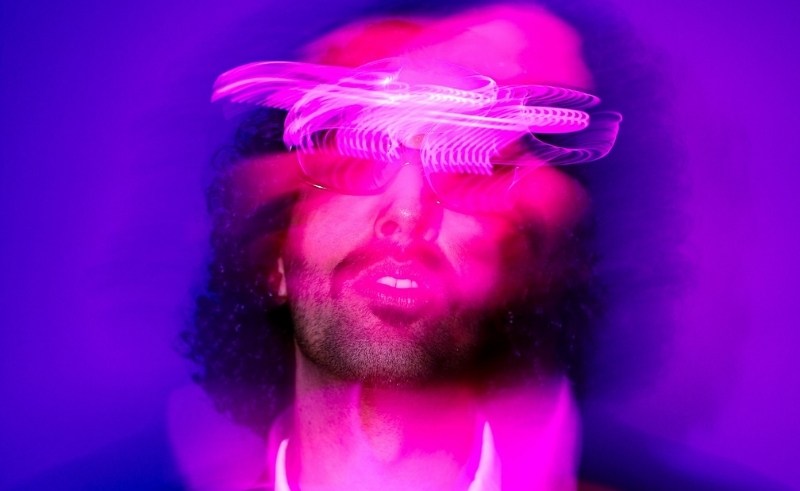 This translation carries a quiet, political weight. As a Palestinian‑American artist archiving joy and sovereign expression, her work is a conscious counter‑narrative. "Joy, permission to experience joy through celebration– in a world that feels so intent to limit us from it. It's a revolutionary act to love and let yourself love and feel the full spectrums of those emotions freely." Her frames become sanctuaries for a different set of possibilities. She feels a responsibility to represent something larger, which manifests as witnessing others’ human experience in the kindest and most accepting light.
Now, the practice is exceeding the rectangle of the photograph. She is painting, her canvases swirling with the abstract emotions she once directed through a lens. She is learning to weave carpets, wanting the art to be lived on and worn underfoot. And always, the architect dreams on the largest scale. She talks of euphoric spatial installations, immersive environments inspired by groups like Architects of Air. She wants to build a room that is a feeling, translating the emotions of a photograph into a three‑dimensional world you can step inside.
This translation carries a quiet, political weight. As a Palestinian‑American artist archiving joy and sovereign expression, her work is a conscious counter‑narrative. "Joy, permission to experience joy through celebration– in a world that feels so intent to limit us from it. It's a revolutionary act to love and let yourself love and feel the full spectrums of those emotions freely." Her frames become sanctuaries for a different set of possibilities. She feels a responsibility to represent something larger, which manifests as witnessing others’ human experience in the kindest and most accepting light.
Now, the practice is exceeding the rectangle of the photograph. She is painting, her canvases swirling with the abstract emotions she once directed through a lens. She is learning to weave carpets, wanting the art to be lived on and worn underfoot. And always, the architect dreams on the largest scale. She talks of euphoric spatial installations, immersive environments inspired by groups like Architects of Air. She wants to build a room that is a feeling, translating the emotions of a photograph into a three‑dimensional world you can step inside.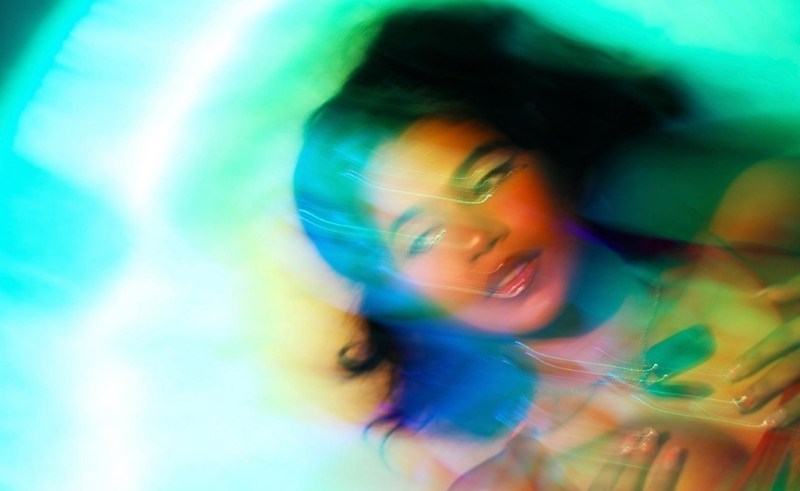 For Young Habibti, being multidisciplinary is non-negotiable. “I don’t want to be limited to one particular medium. It is a life-long pursuit of understanding the world, innerstanding our human nature.” This pursuit unfolds across simultaneous timelines, from the intimate scale of a portrait to the future dream of a whole liveable community. The through-line is a deep, abiding faith in the sacredness of feeling, and a masterful dedication to building structures - whether of steel, pixel, or pigment - capable of holding that feeling up to the light, dazzling and defiant, for all to see.