




WAHM: The French-Moroccan Duo Refusing to be Bordered by Identity
The DJ/producer duo, Hicham Belhamer and Walid Morsaly, behind WAHM, unpack how they are navigating Europe's dance scene.

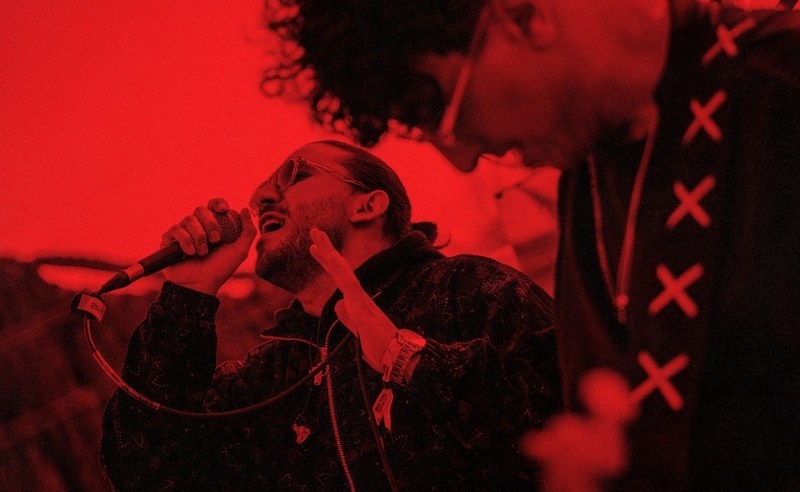
It’s no secret that Arab artists, particularly in electronic music, often face pressure to frame their identity as a point of entry in the global circuit. For French-Moroccan DJ/producer duo WAHM, that approach never made sense. Since their early beginnings, Hicham Belhamer and Walid Morsaly have taken a slower, more deliberate route, building their sound through consistency, discipline, and a clear sense of identity, long before their track ‘Feel My Fire’ found wider global recognition through German trio Keinmusik.
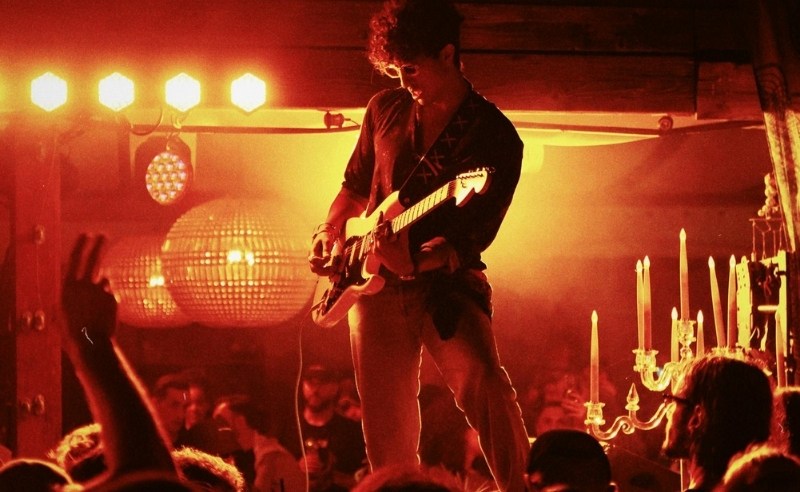
Initially, the pair’s first venture into the music scene was in 2019 as a rock metal band - a background that continues to shape how they think about sound. In that said scene, music wasn’t something politely played in the background, and the personality of an artist matters more than the techniques or grand spectacles.
Growing up between different cultures, Belhamer and Morsaly were acutely aware early on of how easily identity can be simplified or packaged. Rather than submitting to that, they chose to keep their background as an underlying influence, not a defining aesthetic. Their productions reflect that balance, drawing from different emotional registers without relying on obvious and overused cultural markers. Hypnotic and futuristic, they sit between melodic house, deep techno, and indie dance, imbued by intense buildups, driving basslines and vocal chops with influences that range from psychedelic rock to film scoring.
Their early years in Europe’s electronic scene came with the usual challenges. Visibility was limited, and the pace of output across the scene made it easy to be overlooked. But rather than chasing validation or attention, the pair focused on refining their work and developing a clear identity over time. That paid off in 2021, during the later stages of the COVID pandemic, securing them a record deal with Solomun’s dance label Diynamic that opened a lot more opportunities and paved the way for their global breakthrough.
Since then, WAHM have been gaining steady momentum across the global dance circuit, releasing their Rave Love EP and a string of singles, most recently I Gave You the Sky featuring JAW on Deep Root Records. The track has been circulating widely on dancefloors and appearing in sets by artists such as Echonomist and Carlita.
Between gigs, festival appearances, and studio sessions, we caught up with Hicham and Walid to unpack the origins of WAHM, how they navigated their way into the global circuit, and where they’re headed next.
SN: You both come from metal rock backgrounds. What made you decide to shift to electronic music?
WAHM: It happened naturally. We fell in love with the freedom of it, the architecture of sound, the hypnotic repetition, and the way a small element can completely change the atmosphere of a room. It felt limitless. Less gear to bring to gigs, which is always a nice bonus!
SN: Is there something you both have learned from that different musical genre that still defines your current approach to music now?
WAHM: It taught us the importance of identity. In rock and metal, people can forgive a wrong note before they forgive something that feels fake. We’ve kept that mindset. Technique matters, of course, but personality matters more. Also, In the world of rock, music is not something you play politely in the background. It’s physical, emotional and almost ritualistic. We still carry that into our electronic sound. Even when the groove is deep and elegant, we want it to move like a live organism and hit with real emotion.
SN: As French-Moroccan artists, how does your cultural background influence your musical identity, if at all?
WAHM: Being French-Moroccan means growing up between different energies, codes and different ways of expressing ourselves. That duality lives inside our music. There is often this pull between elegance and rawness, discipline and chaos. So It influences us in a way that is more emotional than literal. We’re not interested in reducing identity to decoration or using heritage like an accessory. So even when there isn’t an obvious cultural marker in the production, the emotional language is there.
SN: But being part of such a massive scene, such as the European electronic dance circuit, is something very challenging as much as it is inspiring to see. Have you guys ever felt pressured to represent your heritage in a certain way?
WAHM: We never wanted to show our Arab identities in a way that feels expected or reduced. Sometimes there’s a quiet pressure to make your roots obvious right away, like you need to ‘prove’ where you’re from through the way you look or sound. But that’s not really our thing. We want to represent ourselves in an honest way, not as a cliche. Our heritage is part of us, but it is not a costume, and it’s not a marketing label.
When we started, one of the main challenges was simply being heard beyond the noise. There was so much music coming out early on in our careers; sometimes this can make you feel invisible very quickly, especially if you measure yourself against everyone else’s momentum. What helped us was focusing less on chasing validation and more on sharpening our sonic identity through better music, discipline and a lot of patience.
That said, we feel that there is a broader movement happening, and it’s beautiful to watch. More artists from Arab and North African backgrounds are shaping electronic music in ways that feel nuanced, modern, and free from cliché. There is more visibility now.
SN: What is the story behind the name ‘WAHM’? Does it reflect anything about your sound?
WAHM: It is derived from an Arabic word, which translates to illusion, obsession, fantasy or a state where perception becomes blurred. We loved that immediately because it felt like music itself, especially the kind of music that we want to make. It’s like a beautiful idea you probably shouldn’t trust, but you follow anyway if that makes sense. It is also the contraction of both our respective names, Walid and Hicham!
SN: What are your main sources of musical inspiration? And how did you evolve your sound to what it is currently?
WAHM: Besides metal and rock, we find a lot of inspiration in reggae, 90’s hip-hop, psychedelic rock, and a lot of film scoring. Our sound evolved through a lot of subtraction. At first, like many producers, we wanted to show everything that we could do. Over time, we became more interested in what happens when you leave space in the production; when one bassline, or vocal phrase or synth texture says more than twenty layers fighting for attention. So we’ve moved toward something more mature, sensual and more precise. Less about proving something, and more about seducing.
SN: Can you walk us through your approach to production - do you build tracks with the live show in mind, or does the live version come later?
WAHM: When we build tracks, we think a lot about movement, tension, release, and emotional timing, not just whether something sounds good in the studio. We want our music to live in a room, to create a moment between people. So in that sense, performance is already part of the writing of a track.
That said, the live version often reveals a different truth. Sometimes a track tells you in the studio what it wants to be, and then the dancefloor tells you what it actually is. The club is very honest, sometimes brutal, and a little toxic - but ultimately, honest. So we always keep that in mind when working on something.
SN: Can you recall one of the most memorable moments since you started your career? Something that was like a turning point in your lives.
WAHM: One real turning point was in 2021, during the COVID period. We were struggling, questioning everything, and honestly, not sure where we were going professionally. Then we woke up to an email from Solomun’s Diynamic saying they wanted to sign us. It was surreal because Solomun is one of the artists who literally made us fall in love with this sound in the first place. That message didn’t just open doors; it gave us belief again. It was like, okay, we’re not crazy. This is real.
SN: Your track ‘Feel My Fire’ has been going viral recently and even got picked up by Keinmusik. Can you share with us the creative process behind the making of it, and what does it mean to you for it to get that recognition from such a globally-renowned trio, on a personal, cultural and professional level?
WAHM: ‘Feel My Fire’ came out of a beautiful, super natural collaboration with the French producer Mooglie. It actually happened during our very first session together, where everything just clicked. While Walid was jamming on guitar, Moogli and I started building the track around those riffs, and little by little, this chorus popped into my head. We started singing it together almost without thinking: “Feel my fiiire... feel my fiiiire...” Right away, we felt there was something special in that idea, something that pulls you into the trip. From there, we shaped it into a record with real emotional depth, the kind of track that stays with you after the drop.
Receiving recognition from Keinemusik meant a lot because they have built a world with real identity. So when artists like that connect with your work, it feels meaningful. Personally, it gives you confidence. Creatively, it reminds you to trust your instincts. Professionally, of course, it opens doors, but the deepest value is that it tells you the emotional language you’re speaking is being heard by people you respect.
SN: What conversations do you think are still missing when it comes to Arab and North African artists in the electronic music scene in the region and across the globe at large?
WAHM: Too often, Arab artists are discussed either through exoticism or through struggle, but not enough through artistry, experimentation and individuality. There is a missing conversation about complexity and freedom, the freedom to be subtle, abstract, dark, sensual, futuristic, and not constantly tied to the expectation of representation. Artists should not have to choose between authenticity and sophistication, or between heritage and modernity. And finally, of course, there should be more conversation about infrastructure: access, networks, and long-term support for emerging talents.
SN: What is the weirdest thing that happened at one of your gigs?
WAHM: In 2022, we played a festival in the middle of nowhere in Canada, left at 7 AM to catch a flight for another gig that night... and got lost in a deep forest with zero network. Just us, the car, and a group of deer judging our life choices, haha.
SN: What are your pre-performance rituals?
WAHM: We don’t prepare the same way. I (Hicham) need silence. I disappear for a moment and lock in. Walid needs the opposite; he wants to feel the room, breathe the atmosphere, let the night’s energy get into him so the connection with the crowd is immediate.
SN: What is your go-to closing track?
WAHM: We don’t really have one fixed closing track, because the right ending depends on the emotional truth of the night. Some nights need tenderness. Some need euphoria. Some need a little darkness with lipstick on it, haha. But if we had to pick one, it would be an unreleased remix we did for ‘L’odeur des joints’ by Hollydays - such a beauty to close with a perfect night.
 SN: Looking ahead, how do you envision the future of WAHM? And what is one festival or gig that is at the top of your bucket list right now?
We want WAHM to become bigger and deeper, not only through releases and gigs, but as a full emotional world. We want the project to grow in a way that feels clearly ours: in the sound, in the visuals, and in the energy behind it. More music, more special stages, and a stronger live show that makes people feel the WAHM world even more. We respect WhoMadeWho and Rufus de Sol for what they achieved in that way. The goal isn’t just to play, it’s to leave a mark. To create moments that feel beautiful, intense, and unforgettable. As for a bucket-list stage, there are a few, but playing Mayan Warrior at Burning Man in the right way, at the right moment, would be very high on that list. It has that rare mix of freedom, mystique, and emotional madness that feels very close to our universe.
- Previous Article Saudi Arabia’s Ithra Brings Arab Design to Milan Design Week 2026
- Next Article SceneNoise x XP Conversations: Kazdoura