






This 1930s Guesthouse Sits in One of Egypt's Last Untouched Cities
A stamp maker still works his stall. Markets hum. Minarets call. And in the middle of it all, lies Beit Felfel: a 1930s townhouse, brought back to life.

There is a stamp maker in Esna's old city who has been sitting in the same spot for as long as anyone can remember. He cuts seals for people who cannot read or write, a service that feels almost from another time, until you walk past his stall and realise it is perfectly, unhurriedly alive. He sits, day in and day out, just around the corner from Beit Felfel's front door. A 1930s townhouse-turned-guesthouse, Beit Felfel offers no itinerary, no interpretive layer, no gentle hand guiding you toward the picturesque. Instead, it places you in the middle of Esna's old city and leaves you to discover its essence all on your own.
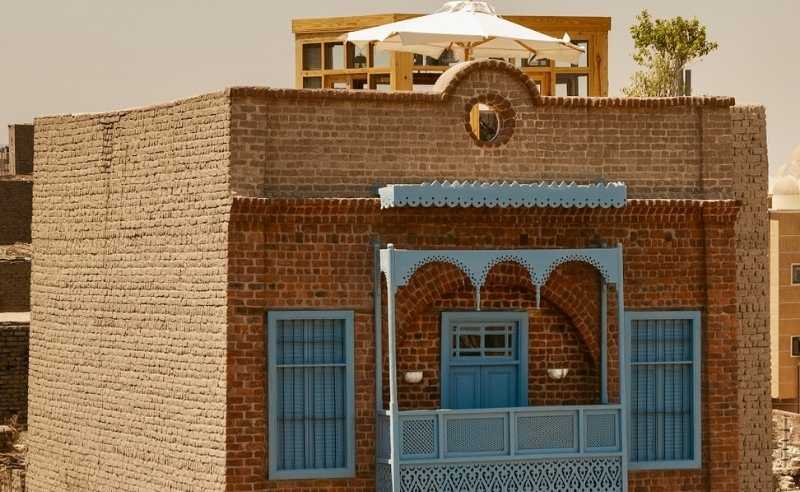
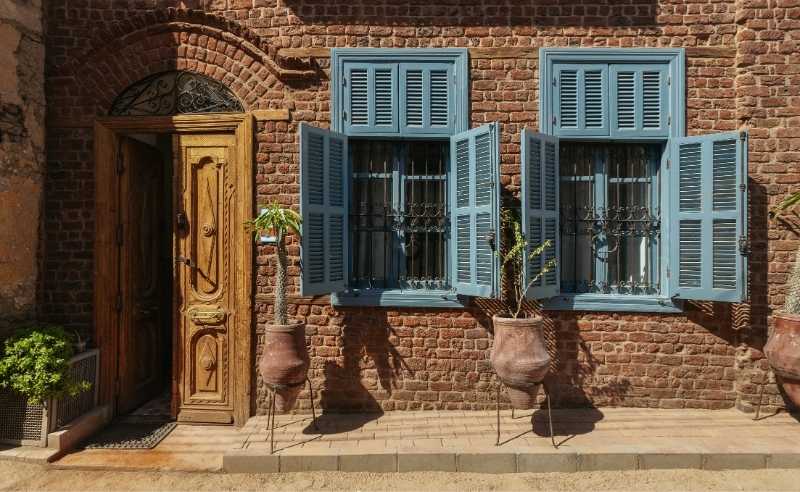
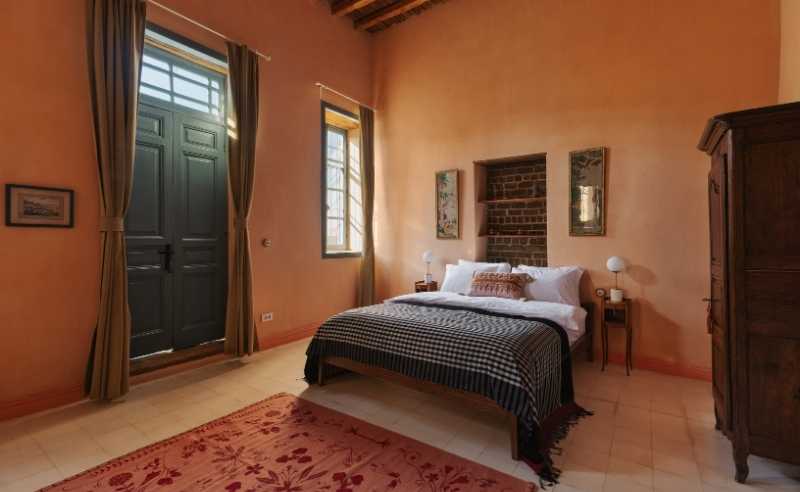
 The three-storey structure features elaborate wooden balconies with fretwork that is specific to this city, hand-painted walls and ceilings that carry the aesthetics of Upper Egypt and Nubia, and a brick floor laid in herringbone—a technique called defra—that you will not encounter in Cairo. For decades, the building sat empty, shuttered and forgotten, suffering the kind of abandonment that, across much of Egypt’s historic urban fabric, often precedes demolition. Cracks ran the full height of the structure, the first flight of stairs had collapsed and the utilities required complete replacement.
 What saved it was Takween Integrated Community Development, an Egyptian company that had spent years working in Esna. Takween's project in the city—a large-scale revitalisation of the historic centre that earned the UNWTO award for sustainable destinations in 2023 and the Aga Khan Award for Architecture in 2025—had already trained hundreds of local craftsmen in heritage conservation, restored the 18th-century caravanserai Wakalat Al-Geddawi, upgraded the Qisariyya market, and established Okra, a women's kitchen that has since become one of the most celebrated parts of visiting Esna. By the time they found Beit Felfel, they had a vision for what needed to be done. The harder task, as Kareem Ibrahim and Sherine Zaghow, Partners at Takween, explain it, was simply convincing the owners to let them do it. "Leasing a building and allowing restoration is an uncommon practice in Upper Egypt," they tell SceneTraveller.
Beit Felfel—the house of the Felfel family—was what the neighbourhood had always called it, even through the years it stood dark and shuttered. "It was a family home, and the neighbourhood knew it by the family's name," Zaghow says. "Even after it sat empty for years, that's still what everyone called it. When we took it over, we decided to keep the name. It felt right to honour it as part of the city's collective memory."
What saved it was Takween Integrated Community Development, an Egyptian company that had spent years working in Esna. Takween's project in the city—a large-scale revitalisation of the historic centre that earned the UNWTO award for sustainable destinations in 2023 and the Aga Khan Award for Architecture in 2025—had already trained hundreds of local craftsmen in heritage conservation, restored the 18th-century caravanserai Wakalat Al-Geddawi, upgraded the Qisariyya market, and established Okra, a women's kitchen that has since become one of the most celebrated parts of visiting Esna. By the time they found Beit Felfel, they had a vision for what needed to be done. The harder task, as Kareem Ibrahim and Sherine Zaghow, Partners at Takween, explain it, was simply convincing the owners to let them do it. "Leasing a building and allowing restoration is an uncommon practice in Upper Egypt," they tell SceneTraveller.
Beit Felfel—the house of the Felfel family—was what the neighbourhood had always called it, even through the years it stood dark and shuttered. "It was a family home, and the neighbourhood knew it by the family's name," Zaghow says. "Even after it sat empty for years, that's still what everyone called it. When we took it over, we decided to keep the name. It felt right to honour it as part of the city's collective memory."
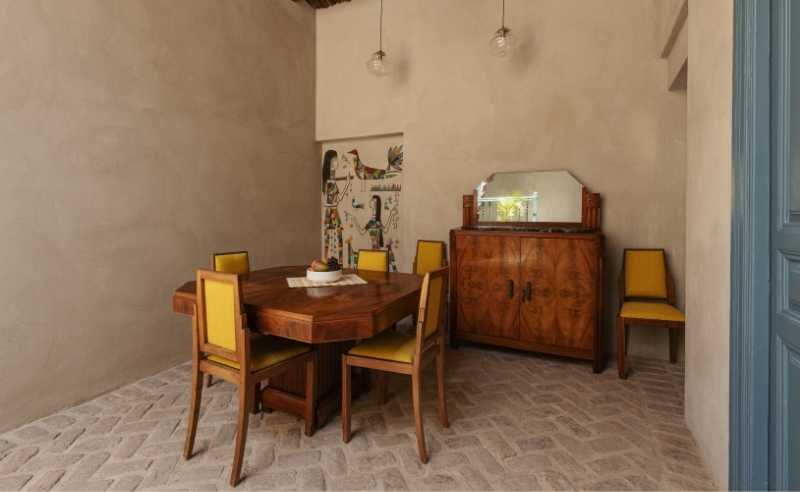
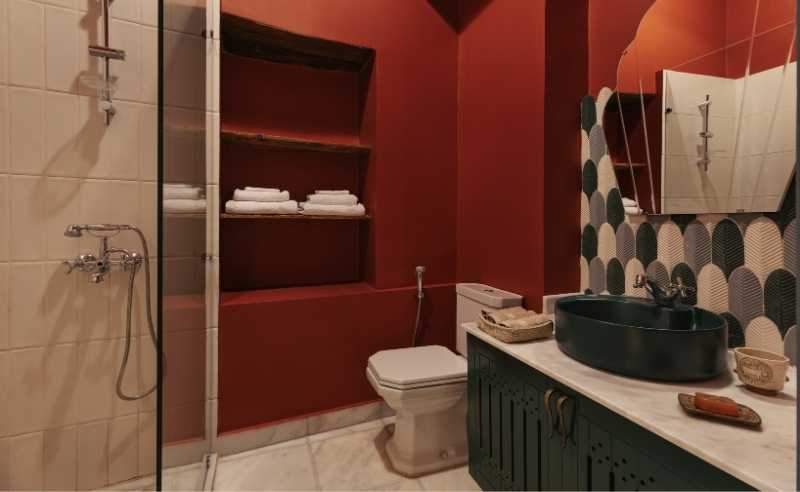
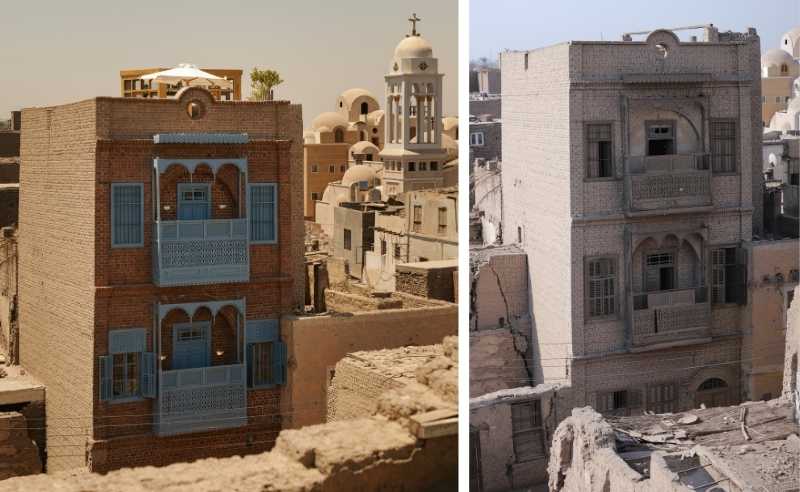 The restoration took painstaking attention to what was already there. The original hand-painted ornaments on the upper-floor walls and ceilings were restored rather than replicated. The traditional roofing technique—wooden joists and palm midribs—was maintained. The stairs, with their distinctive wood-and-brick construction, were rebuilt using the same method. Even the furniture was sourced with obsessive patience; some pieces were found in the house itself and restored; everything else was collected slowly, over about two years, from antique dealers and local artisans. When new items were required—carpets, bathroom tiles—they came from Egyptian suppliers. The plumbing fixtures and light switches were chosen to reflect the aesthetic of the early twentieth century. "The philosophy is simple," Ibrahim says. "Stay true to Esna, to the house, and to Egypt. But also make sure it's comfortable for the guests. It's not about making everything look perfect or fancy. It's about respecting the space while making it livable."
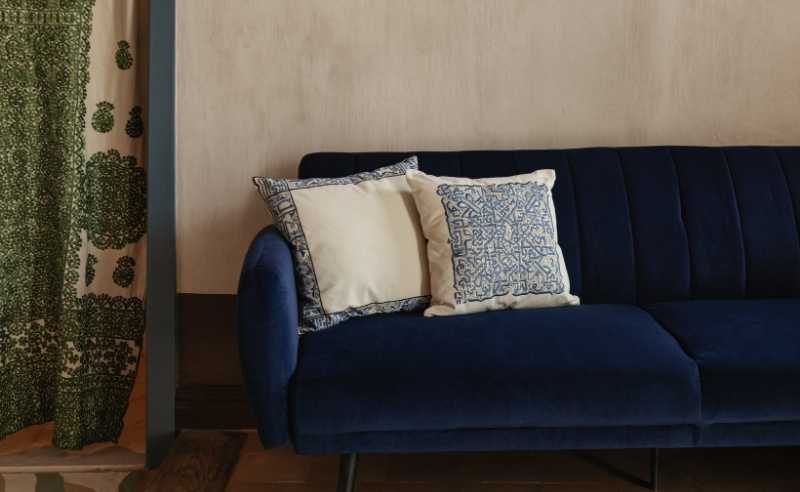
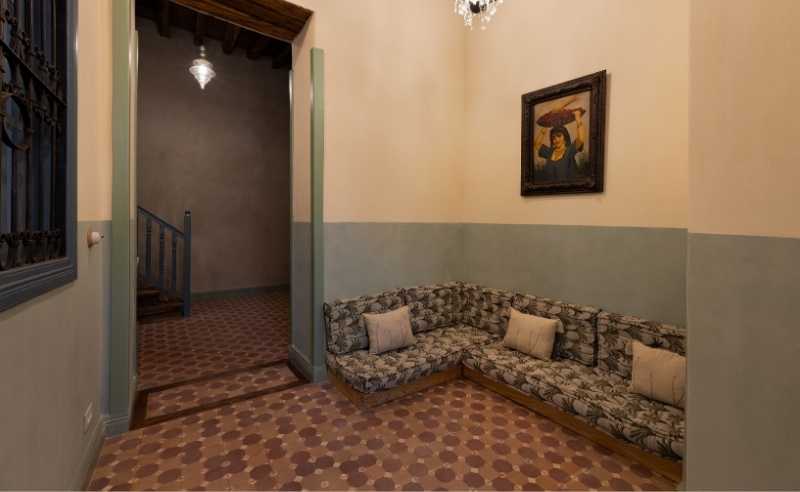
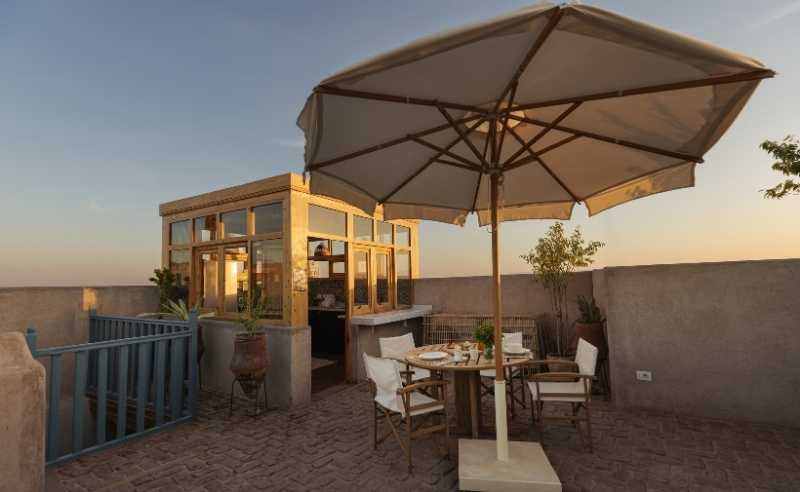
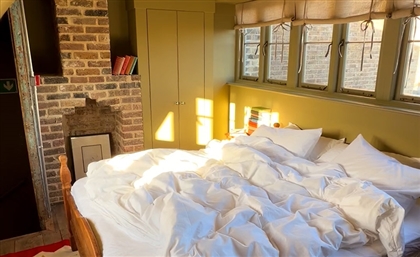
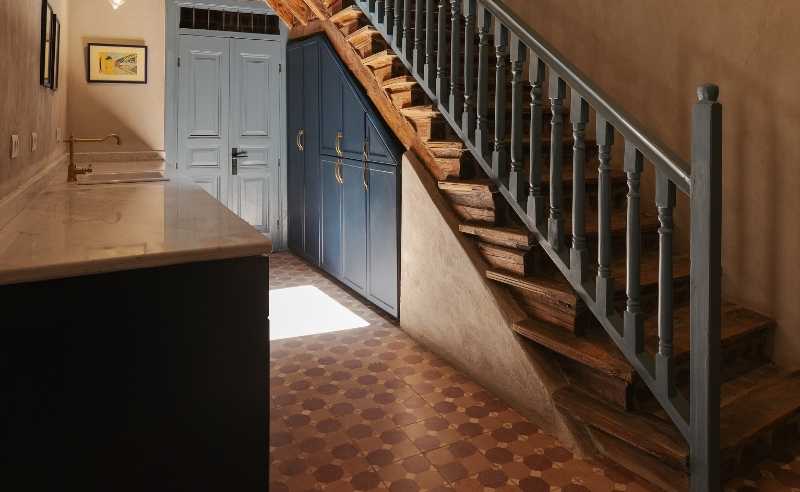 Beit Felfel operates as two suites—the Abib Suite and the Mesra Suite—each with a bedroom, bathroom, kitchen, and access to shared common areas including a living room, dining space, and a roof terrace looking out over the city.
 And the point of being here, it must be said, is not primarily the Temple of Khnum, though the temple is extraordinary. Esna's Ptolemaic-Roman pronaos, with its 24 columns and a ceiling restored over the past decade by an Egyptian-German conservation team—revealing astronomical imagery and hieroglyphic inscriptions blackened by two millennia of soot—is one of the most astonishing things in Upper Egypt, and it sits just a ten-minute walk from the front door of Beit Felfel. But the temple, as Zaghow puts it, is one small part of what comes to feel like a much larger experience. "Most people who come to the temple leave with a real connection to the city's authenticity and its people."
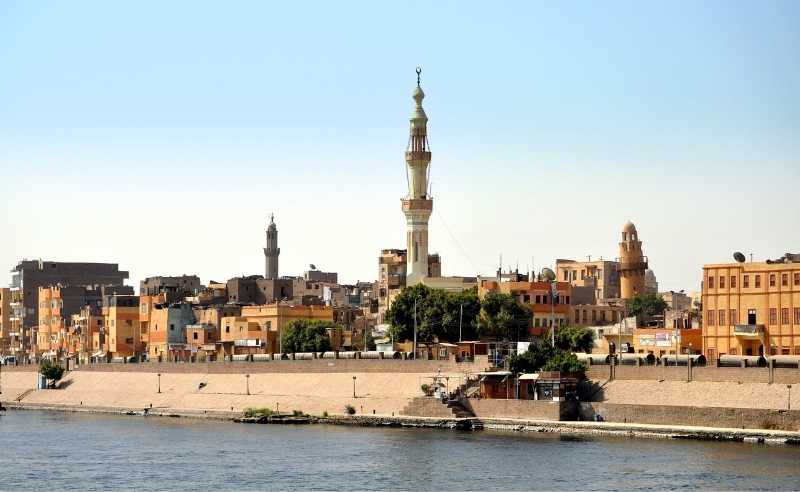
 Esna itself is a city that has, by its own peculiar fortune, been somewhat spared by tourism. The rerouting of Nile cruise traffic in the late twentieth century left it economically marginalised, and the neglect that followed preserved—accidentally—the traditional character of its streets. It has an old city that is walkable and legible and not yet organised around tourism. "There aren't many cities left in Upper Egypt that still maintain their traditional character and layout mostly unchanged,” Ibrahim explains. “And Esna is one of them."
 Beit Felfel is, in Zaghow's telling, a proof of concept presented to Esna's residents in the most tangible possible terms. "We actually hope other people mimic us," she says. "We want more of these historic houses to open to the public. But more than anything, we want to see the local community get on board—because when the people who actually live here start seeing the value in their own heritage, when they choose to preserve instead of demolish, when they open their own doors to travellers, that's when everything changes."
 Guests who stay at Beit Felfel can, through the tourism firm Pr-Ba, arrange to eat at Okra, the women's kitchen a short walk away—housed in a restored historic building, serving Esna food cooked by local women, and one of those places you find yourself talking about for weeks. They can visit KaRoot Workshop, where women make wooden artifacts that carry the city's fretwork tradition into contemporary objects. They can take a day trip to the Dibabiyya geological national park.
 "In the morning, you hear the neighbourhood waking up," Ibrahim says. "You walk out the door, and you're in the traditional covered market. You see people going about their day, you might stop to talk to shopkeepers or just sit and watch."
  Esna has not yet adjusted its stride to accommodate your presence, and that—in a travel landscape saturated with experiences carefully constructed to feel authentic—is, perhaps, the rarest thing of all.
Related Articles
Trending This Week
-

-
 Sep 10, 2026
 -
 Sep 10, 2026
 -