




The Highest Rooftop in Marrakech Comes With a Royal Backstory
Riad 72 is Michelin‑recognised, Italian‑run, and home to one of the highest rooftops in the Marrakech medina.
The door is easy to miss. Down a lane that narrows until it becomes a corridor becomes a suggestion, past a wall with the handpainted number, 72, and a small iron knocker, there is a door in Marrakech's Bab Doukkala quarter that gives nothing away. Just the city pressing in around it—a man on a motorbike grazing the wall as he passes, someone's laundry overhead, the faint argument of pigeons. You ring the bell and wait, and then the door opens and the city drops away.
Then someone takes your bag, someone else appears with mint tea poured from a height that would alarm any reasonable person, and a third person, probably Stefania, asks if you'd like to see your room now or sit for a moment in the courtyard. The correct answer is the courtyard.
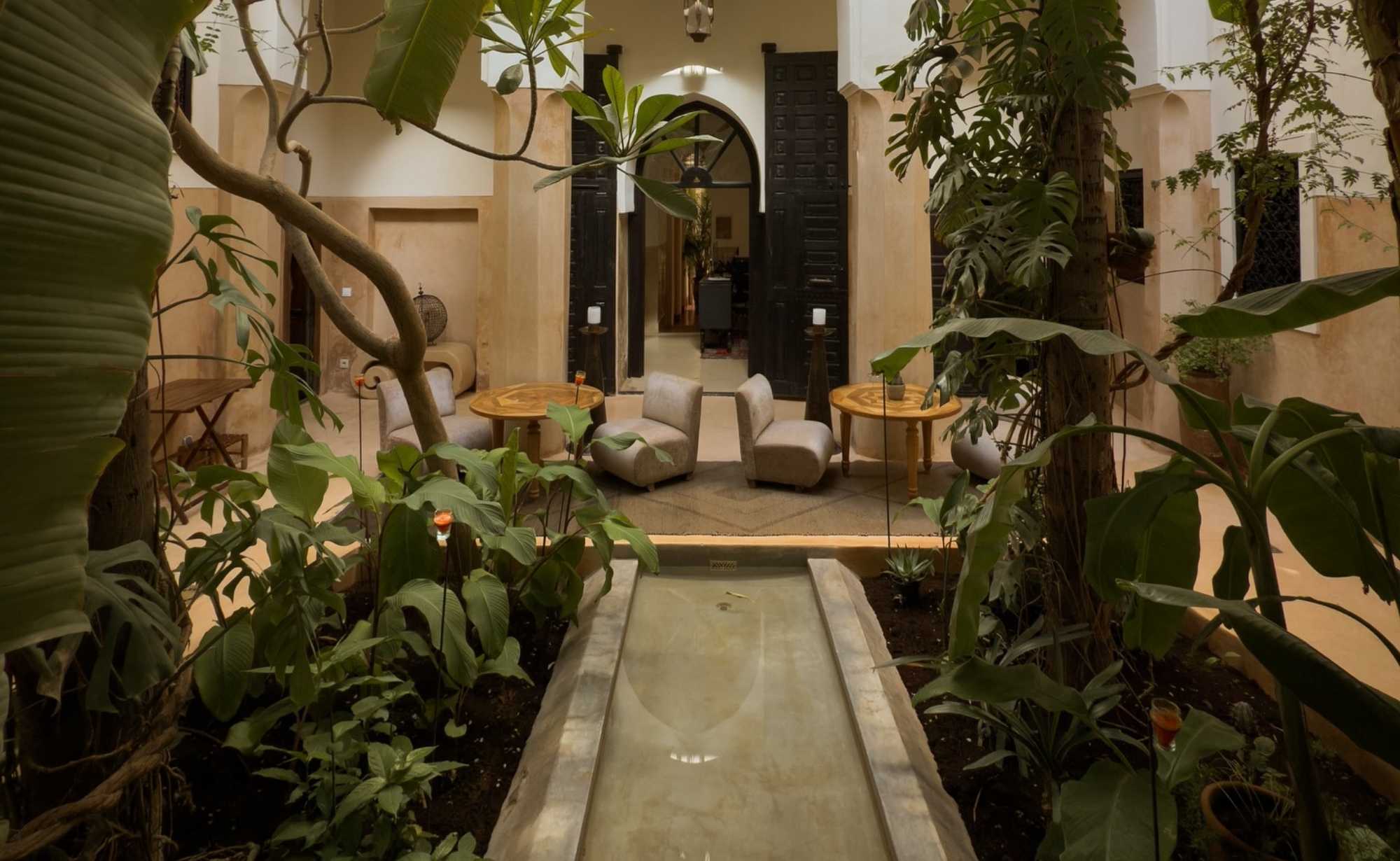 Riad 72 began, with an Italian who fell too hard for the city to leave. In the 1920s, the building was a palace—its construction reportedly the result of a wager between Pasha El Glaoui and a royal companion. Decades later, a Milanese woman on holiday found it, decided she could not be without it, and bought it as a retreat. Her daughter Giovanna Cinel, a designer by training and temperament, eventually inherited both the building and her mother's conviction that Marrakech was where one ought to be. She opened it as a hotel in 2001, creating fourteen rooms arranged around two courtyards, a restaurant people cross the medina for, and a rooftop so high it comes with its own backstory. Today it sits in the MICHELIN Guide Hotel Selection, recognised as much for its rooftop—one of the highest in the medina—as for the two restaurants downstairs that continue to lure diners away from the souks.
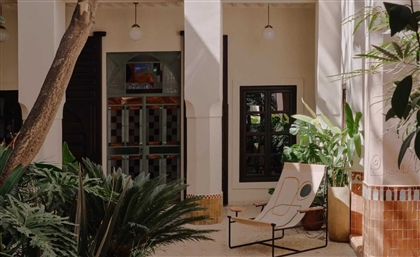
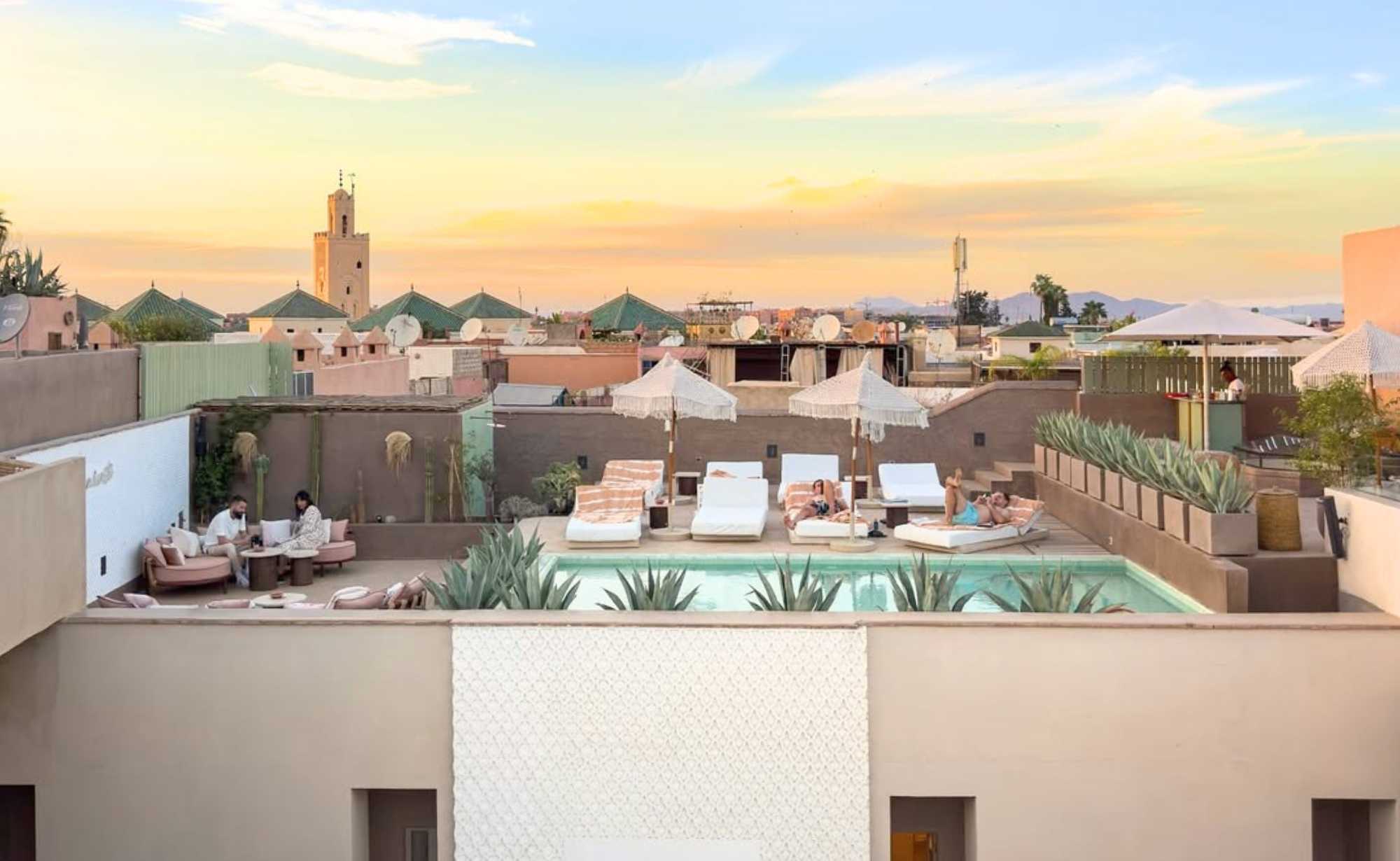
 The architecture, to be clear, is Moroccan in its bones. Zellij tilework runs the lower walls in the deep green of old wine bottles. Carved plaster arabesques cover the ceiling cornices with a patience that makes your own attention span feel a little shabby. The second courtyard, shot from above in the blue hour, looks like something a gifted production designer dreamed up and then forgot to take down. The tiled gallery rim catches the last light; the city spills in every direction; the Koutoubia minaret surfaces from the roofline. The original owner, through some arrangement with the palace whose gardens border the property, secured permission to build one storey higher than anyone else. Royal friendships, it seems, came with architectural privileges. The rooftop, as a result, is genuinely one of the highest points in the medina, and the view from it is the kind that makes you feel disproportionately good about yourself for having found the place.
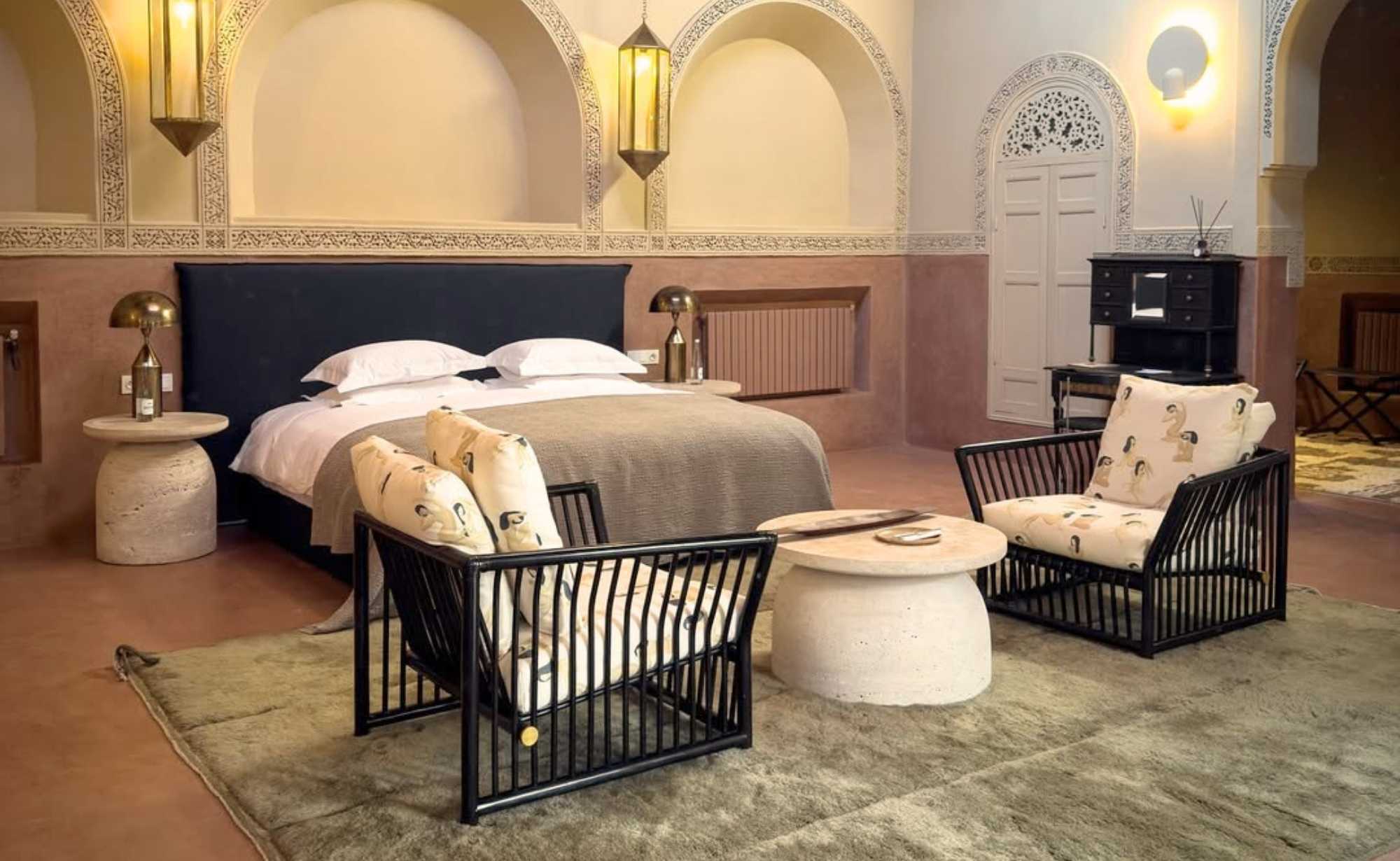
 Giovanna's gift was restraint. She did not overwrite what was already there. She did not paper Moroccan walls with Italian ego. The rooms are large and unhurried. The Suites have leather furniture the colour of cognac and generously spaced bathrooms. The suites with private terraces and jacuzzis face the roofscape of the medina, and in the early morning, after the call to prayer has settled back into silence, the light does its best work. From a private terrace above Bab Doukkala, that light feels almost unfairly good. Good enough to make you forget why you planned to go out at all.
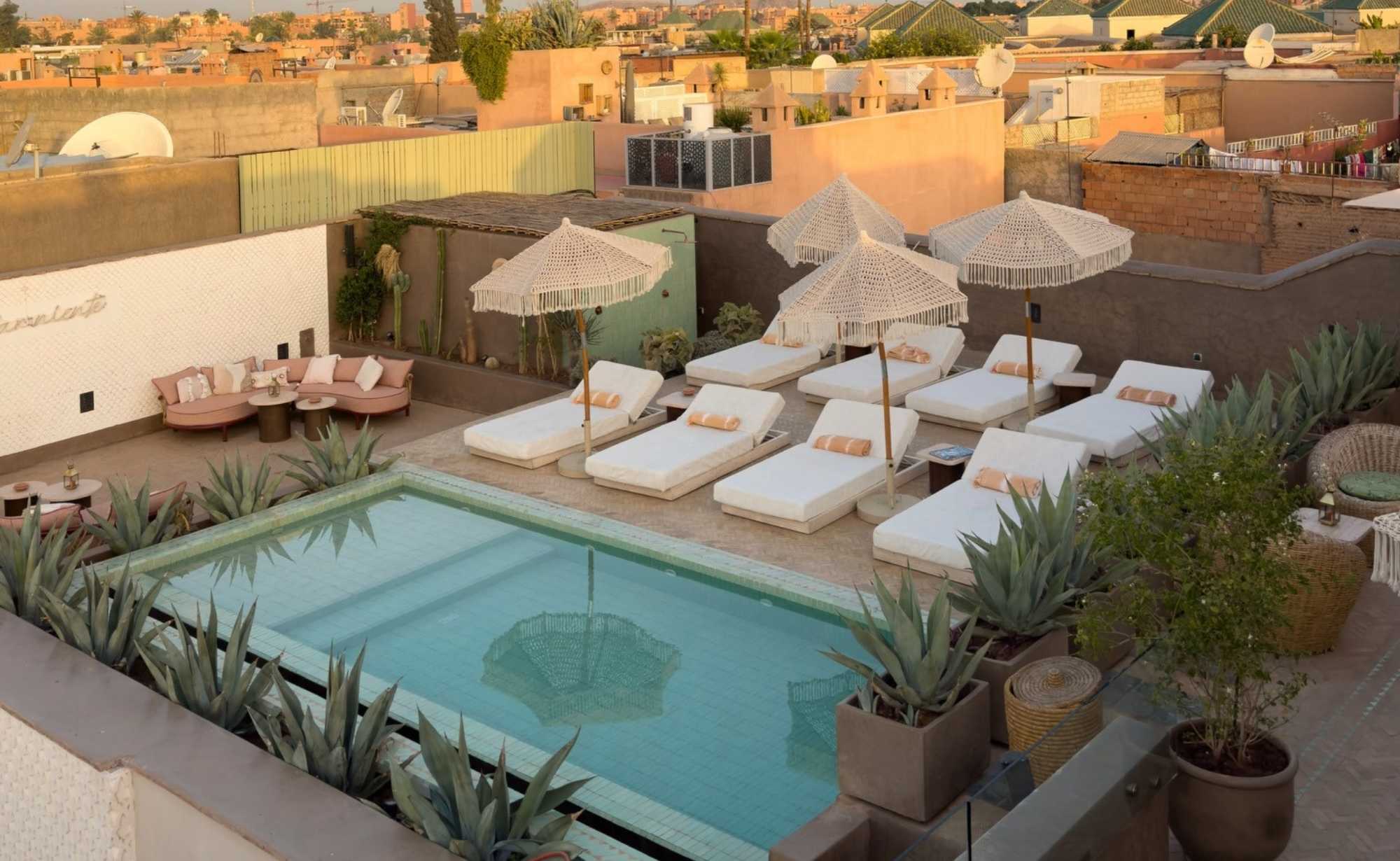
Which brings us to the neon sign on the rooftop bar—pink script on white tile, glowing over a pool edged with agave: dolce far niente into the Marrakech dusk. It is a funny thing to find on a Moroccan riad until you remember Giovanna is Italian, and then it makes complete sense, and then you stop thinking about it because you are sinking into a low sofa while the Koutoubia turns from gold to charcoal and the mint tea goes cold because you kept forgetting to drink it, too busy watching the city undo itself at a frequency only visible from this height.
Giovanna's gift was restraint. She did not overwrite what was already there. She did not paper Moroccan walls with Italian ego. The rooms are large and unhurried. The Suites have leather furniture the colour of cognac and generously spaced bathrooms. The suites with private terraces and jacuzzis face the roofscape of the medina, and in the early morning, after the call to prayer has settled back into silence, the light does its best work. From a private terrace above Bab Doukkala, that light feels almost unfairly good. Good enough to make you forget why you planned to go out at all.
Which brings us to the neon sign on the rooftop bar—pink script on white tile, glowing over a pool edged with agave: dolce far niente into the Marrakech dusk. It is a funny thing to find on a Moroccan riad until you remember Giovanna is Italian, and then it makes complete sense, and then you stop thinking about it because you are sinking into a low sofa while the Koutoubia turns from gold to charcoal and the mint tea goes cold because you kept forgetting to drink it, too busy watching the city undo itself at a frequency only visible from this height.
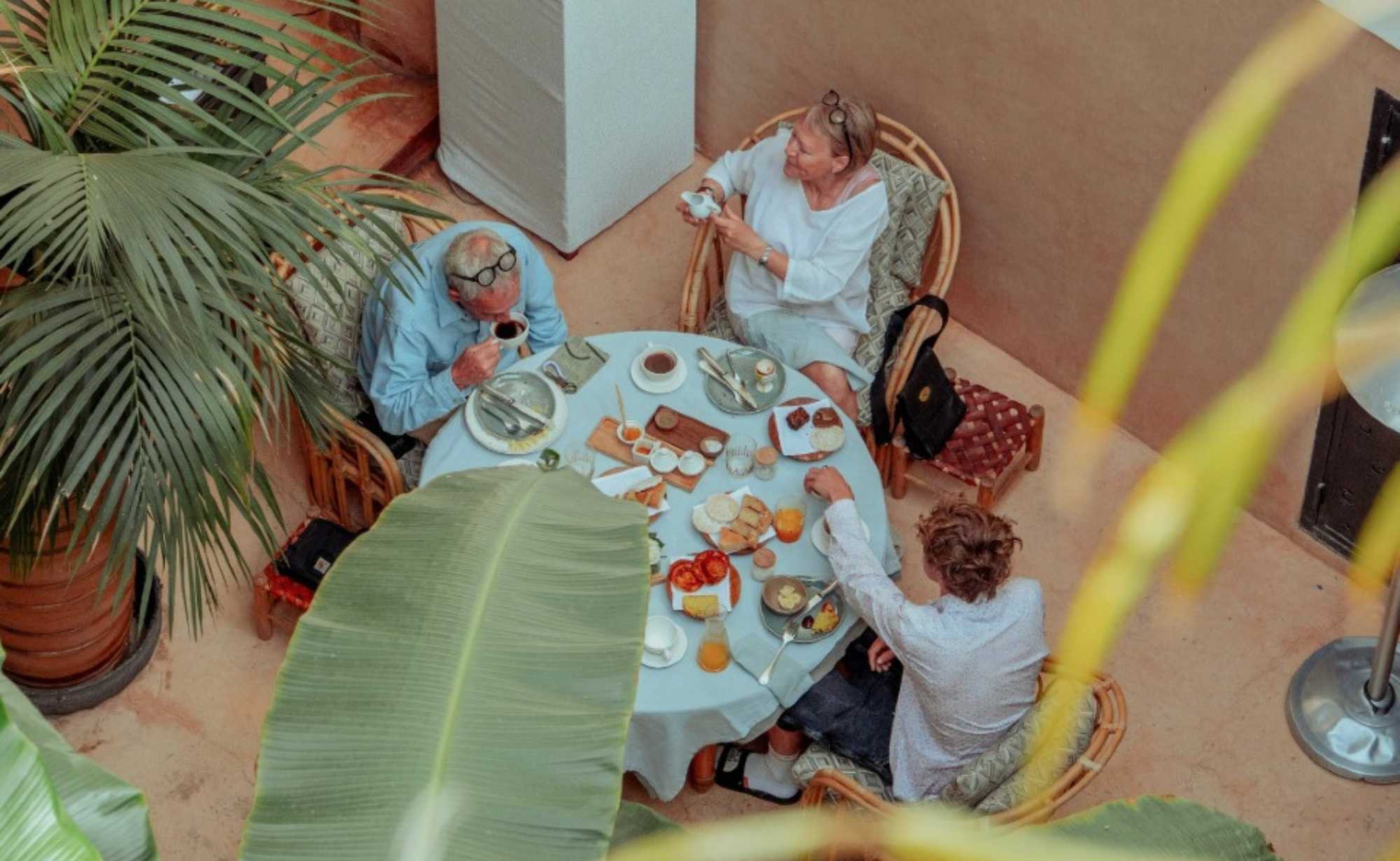 The restaurant, La Table du Riad, serves Moroccan cooking at its unhurried best—a tanjia of lamb cooked for six hours in a terracotta amphora in a bread oven, a couscous hand-rolled and requiring most of a day to prepare. Breakfast, served wherever you like—terrace, rooftop, courtyard, room—arrives as a spread of bread, pastry, fresh fruit and eggs. And the WA Hammam downstairs, with its argan oil treatments and its philosophy of restoring the body to something approaching its best self, makes a compelling case for a late afternoon that extends, somewhat guiltlessly, toward dinner.
 Marrakech doesn't ease you in. The souks want your attention and your dirhams and will negotiate for both with stamina and creativity. Djemaa el-Fna at dusk is a square that has been staging the same gorgeous chaos for centuries and sees no reason to change the programme. The lanes will disorient you productively, regularly, and without apology. You go out. You get marvellously lost. And then the lanes begin to feel familiar, the turns come back to you, and there is the door again—still giving nothing away, still easy to miss. But you find it. And the corridor bends, and the courtyard opens, and whatever the city just did to you, the riad quietly begins to undo.
- Previous Article SceneNoise x Amsterdam Dance Event Present CROSSFADE: Egypt
- Next Article The Intricate Beauty of Ben Youssef Madrasa