





Studio Meshary AlNassar Turns Its Ground Floor Into a Walk-in Gallery
At 22 Alserkal Avenue, Meshary AlNassar has taken the velvet rope down, opening its ground-floor gallery to walk-ins while keeping the working studio alive just one floor above.
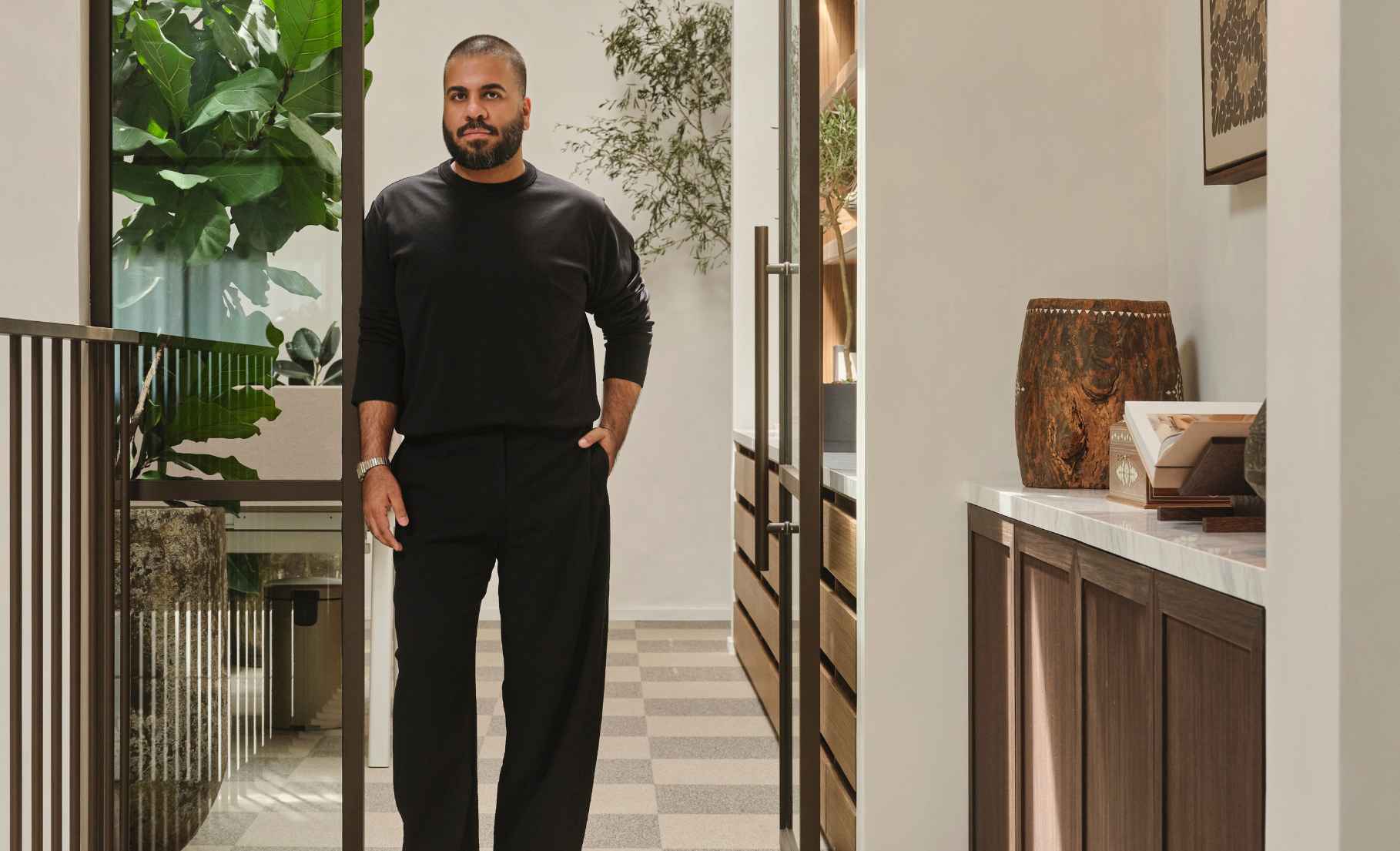
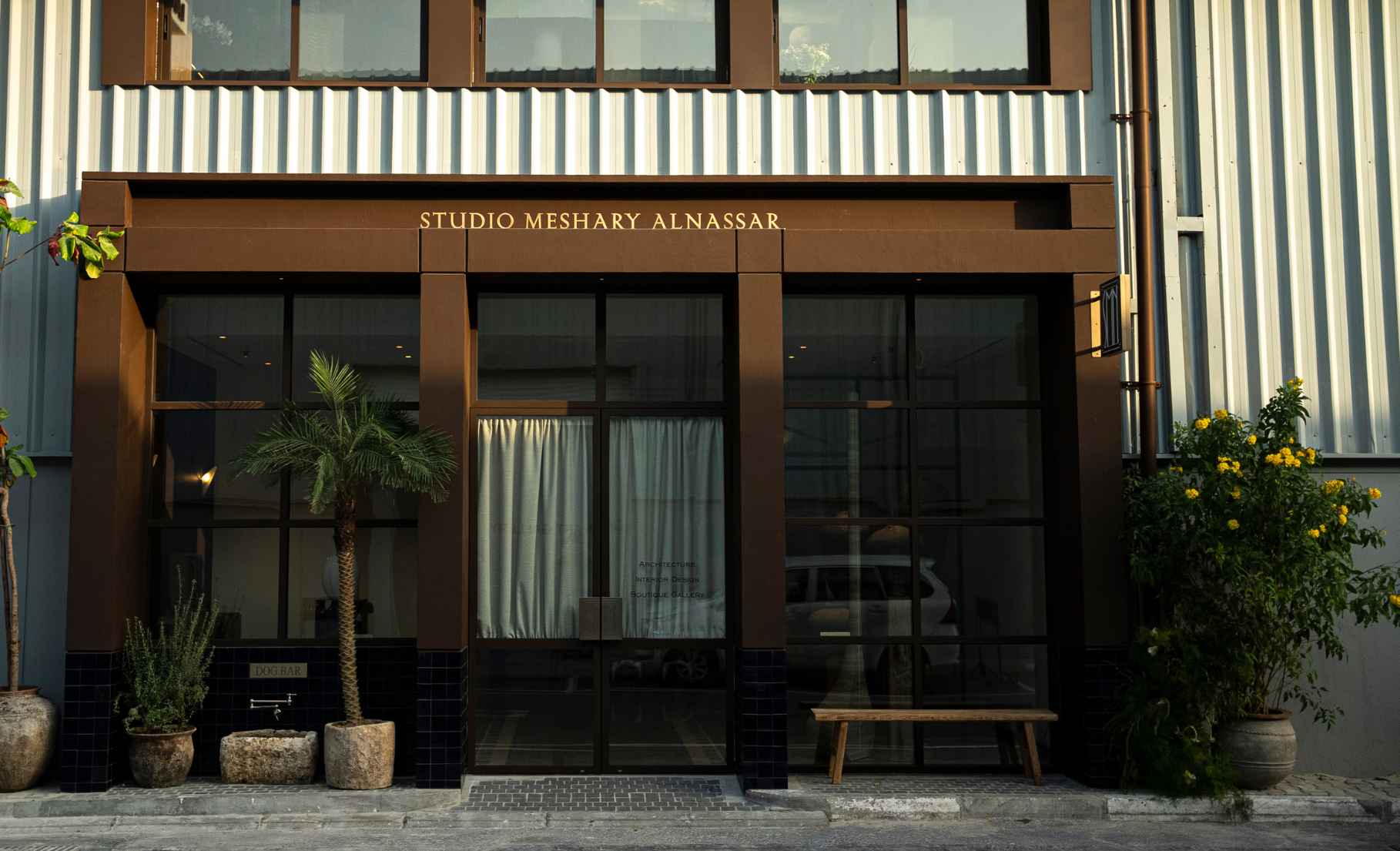
For years, Studio Meshary AlNassar was a place that would only ever be found if you were already looking for what the studio had to offer. Clients discovered the studio through word of mouth, and departed with the confidence that the studio could deliver on its promises. Now, at 22 Alserkal Avenue in Dubai, the ground floor of the studio is open to whoever walks past. "The gallery is less about expansion and more about creating a place for dialogue around objects, materials, and design culture within the region," AlNassar explains.
Gallery Meshary AlNassar is the newest addition to Al Quoz's creative corridor. From the very first brushstroke to the final piece of art that will grace the walls of the gallery, every aspect of the space has been thought about by the studio's founder and artist Meshary AlNassar since he was a young boy in Kuwait. Growing up, AlNassar would spend much of his days amidst the construction sites of his family and the home of his grandfather. Each floor of the family home belonged to a different branch of the family, yet all of the balconies faced inwards into the same courtyard.
AlNassar brought all of that to the warehouse. The first thing the space gives you is calm. "The gallery pushes against that rhythm a little. It reminds me personally to stay connected to process, materiality and contemplation," AlNassar explains. You enter through a modest façade into a volume defined by raw concrete, polished floors, and walls left deliberately quiet so the objects can breathe. Above, generous skylights carve a shaft of natural light through the centre of the building, illuminating an internal courtyard that connects both floors. The staircase that bridges them is unadorned allowing the architecture to recede and the experience to surface. Upstairs, visible through that courtyard, the working studio hums with the noise of practice: deadlines, site visits, the intensity of a team mid-project. Below, things move at a different speed. “Upstairs is where projects are challenged. Downstairs is slower and more emotional. But both are still part of the same language,” AlNassar says.
The internal courtyard that connects both was not part of any construction plans for the space. "I didn't plan the courtyard at all," AlNassar explains. "The space was built with the intention of reconstructing the typology of my grandfather's house. The same inward-facing openness. There is intimacy in simply knowing that people are around you."
When AlNassar first set foot into the space, he began to design the space in his mind before a lease was even dotted with his signature. He considered the façade that would greet people the first time they entered the space and thought about the various days of the week and the different hours that the space would be open for the public. Even before the construction began, AlNassar had romanticised the space that he would create within it for his friends and collaborators in the art world. "I actually want people to sit, touch, ask questions, spend time, and feel comfortable returning. The intention was never to create distance. If anything, I wanted to remove it."
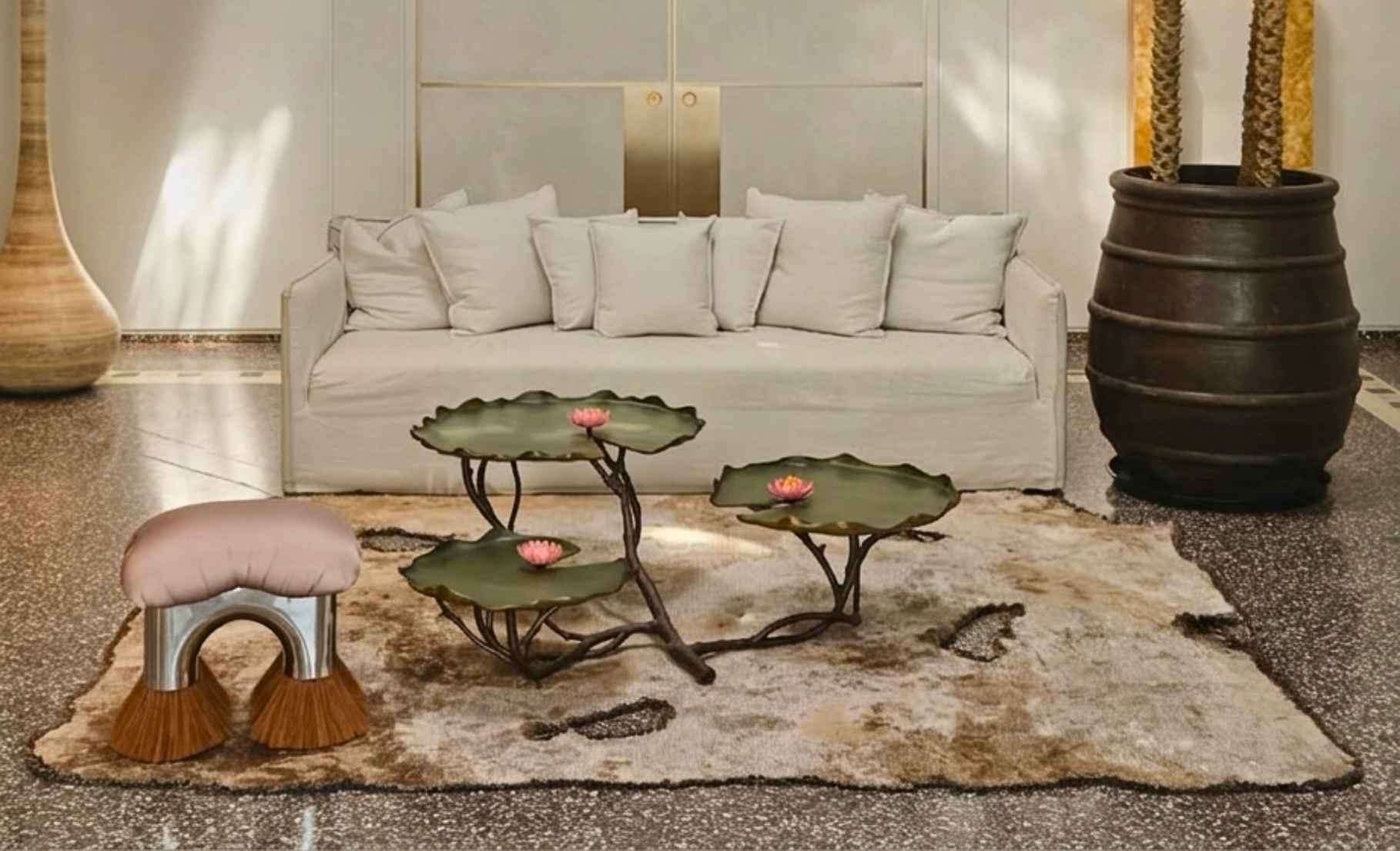
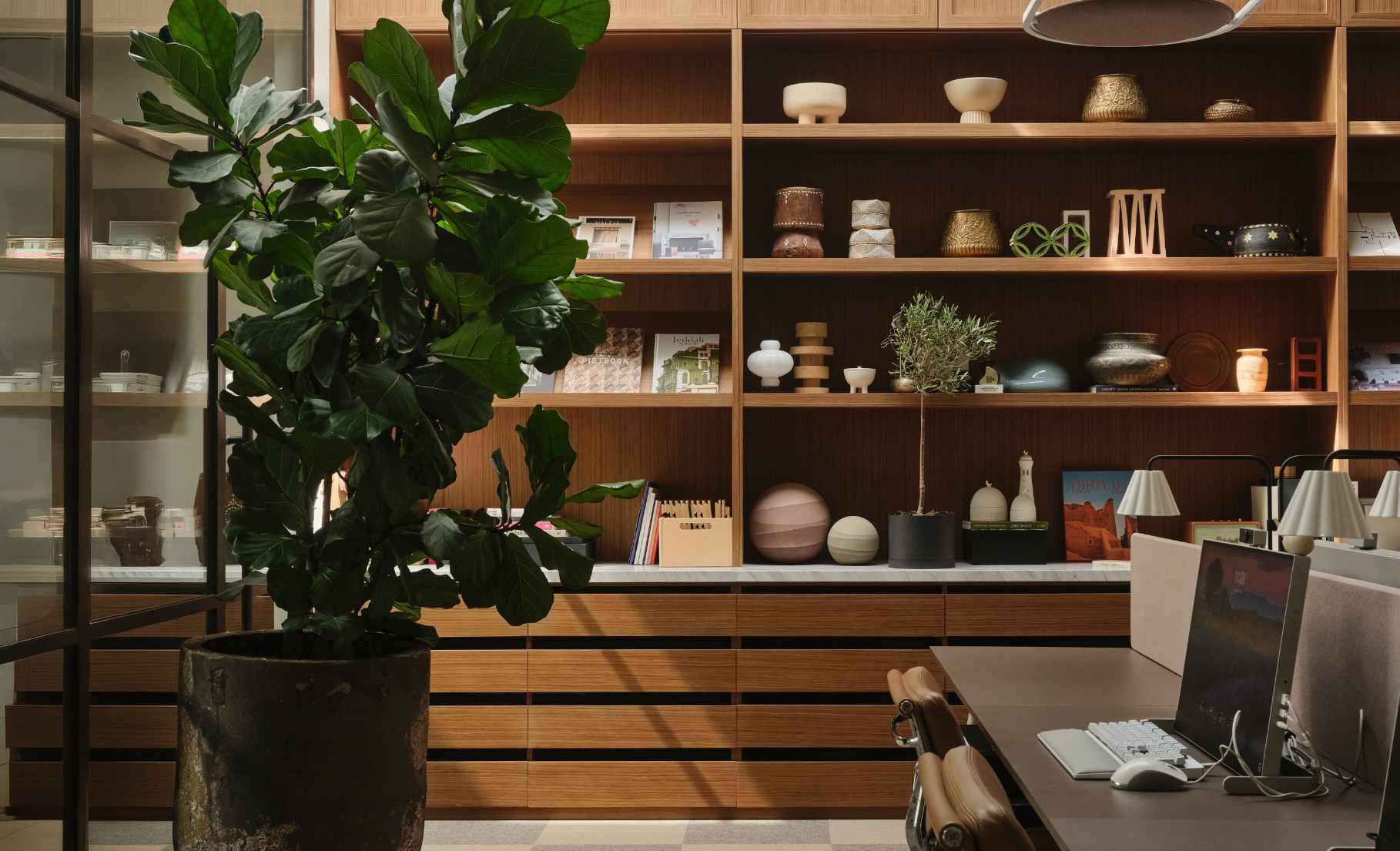
The opening of the gallery features art by some of the individuals that AlNassar holds the most affection for. Pieces by ceramics artist Marcin of Gropk are displayed alongside high-end Italian vintage pieces and antiques that were sourced from Istanbul's Gem Alf gallery. Arguably, one of the most striking works of art in the space is the woven tapestry gifted to the gallery by Dutch artist Mila Novo. Pakistani designer Yousaf Shahbaz of Strata gifted the gallery a few of his finest pieces that exemplify "the craftsmanship and beauty of Pakistan, seen through Yousaf's own eyes." Finally, the space is also adorned with lights created by renowned Polish artist Daniel K. "I've fallen in love with everything Daniel makes, him being an incredible human being is the cherry on top," says AlNassar of the lighting fixtures that adorn the space.
These are the objects that AlNassar holds the most affection for and they are displayed in the space as a result. "Good curation is still storytelling, just through a wider lens."
The logic of selection doubles as AlNassar's design philosophy made portable. When he considers whether something belongs in the gallery, the first question is simple: will this object still feel honest in ten years without needing explanation? Then proportion. Then materiality. Then restraint. "Objects that rely too heavily on novelty tend to reveal themselves very quickly," he says. "Timeless pieces usually feel quieter. They do not beg for attention immediately, but they stay with you."
This is the same instinct that shaped the 410 Collection—the stone light sculptures that announced AlNassar on the international stage a few years ago, their forms echoing trees from his grandfather's garden, their name taken from his grandfather's first licence plate. Personal to the point of being almost private, and yet universally legible, which is exactly the kind of paradox good design lives inside.
The gallery will change adding collaborations and thematic events. It will change in the way a space changes when someone who loves it keeps returning with fresh attention. A new object. A lighting adjustment. Sometimes the deliberate removal of things, letting emptiness carry the weight. "I like the idea that someone can return after a month and feel that something has changed emotionally," AlNassar says, "even if they cannot immediately identify what it is."
What he wants, when a visitor spends twenty minutes here and walks back out into Al Quoz, is simple: for them to feel welcomed. Grounded. "I think people are overstimulated constantly—visually, emotionally, digitally. I wanted the gallery to feel like a quiet exhale. I would love for it to become a place people revisit without needing a specific reason."
But when asked what he's manifesting next, AlNassar points inward. "Honestly, I think I am manifesting a slower and more intentional way of living while still continuing to build. For a long time, ambition meant movement, growth, output, expansion. Now I am becoming more interested in permanence, legacy, and creating things that can outlive trends and even outlive me. I do not think the next chapter is necessarily bigger. I think it is deeper."
- Previous Article SceneNoise x Amsterdam Dance Event Present CROSSFADE: Egypt
- Next Article The Intricate Beauty of Ben Youssef Madrasa
Related Articles
Trending This Week
-

-
-
 Sep 28, 2026
 -