From Beirut to Cairo, these bookshops stand as cultural sanctuaries where paper, politics, and memory endure in a region still writing itself.
Books, as all the intellectuals know, are more than just words on paper. They are the heartbeat of cities, the quiet guardians of memory, and the stubborn vessels of ideas that refuse to vanish. In the Middle East and North Africa, the shops which carry them have seen it all: wars, revolutions, shifting borders. Each bookshop’s shelves reflect its city’s character: political theory and philosophy in Cairo, architecture and design in Oran, local poetry in Tripoli, Kurdish scholarship in Erbil.
And then there is the charm of discovery: a handwritten note tucked into a shelf, a rare edition of a novel you’ve long sought, a conversation with the owner who has lived through more history than most textbooks will ever tell. These six bookshops scattered all around the region are proof that culture survives not in monuments alone, but in the careful accumulation of stories and ideas, page by page, shelf by shelf.
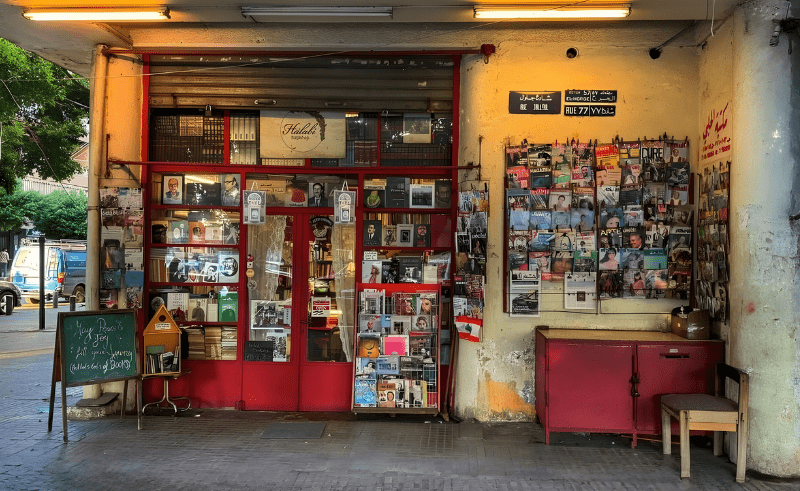
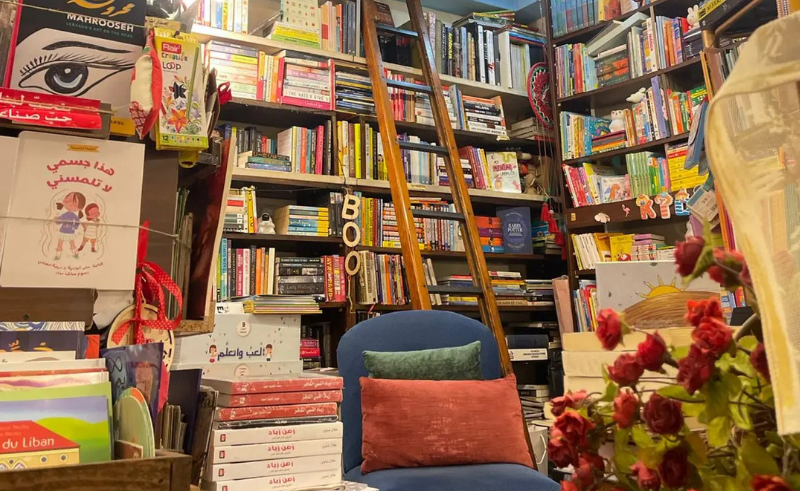
Halabi Bookshop — Beirut, Lebanon
Founded in 1958 as a small neighbourhood grocery before evolving into a bookstore in the early 1990s, Halabi Bookshop existed as a near-forgotten space for years—its entrance blocked by decades of accumulated books—until it was revived in 2016 by Lana Halabi. Today, the tiny shop has transformed into a cultural hub, drawing readers, writers, and creatives back to a neighbourhood that once thrived as Beirut’s artistic heart.
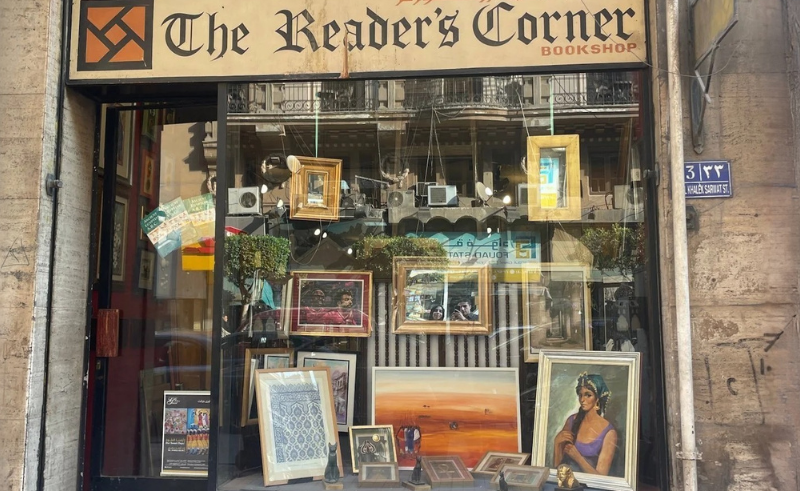
Reader’s Corner — Cairo, Egypt
Dating back to the 1940s and rooted in Cairo’s Armenian community, this tiny family-run space in Downtown has evolved from a traditional bookseller into a layered creative space—housing books, art, and vintage pieces—while remaining a familiar fixture of Cairo’s historic centre and its ever-shifting literary and artistic scene.
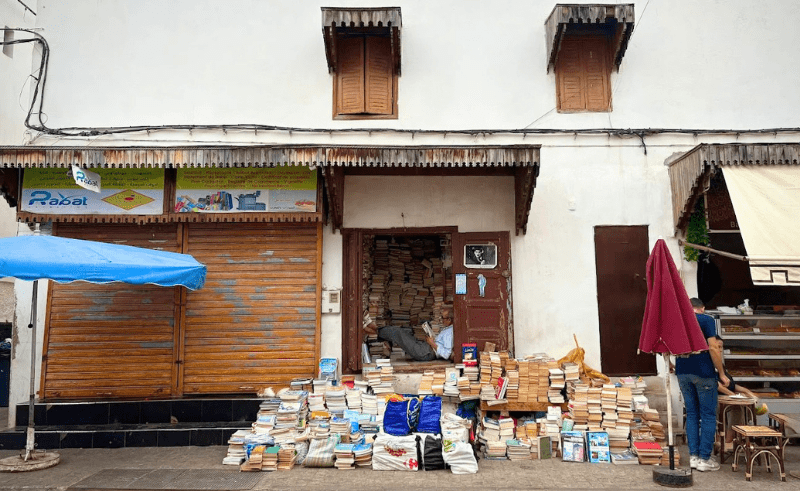
Bouquiniste El Azizi — Rabat, Morocco
Active since the late 20th century and run for decades by Mohammed Aziz, one of Rabat’s most recognised medina booksellers, Bouquiniste El Azizi has long been part of the Old Medina’s informal book trade. Through changing economic tides and evolving reading habits, the stall has remained a steady presence, its shelves of second-hand books reflecting years of accumulation, circulation, and quiet literary exchange.
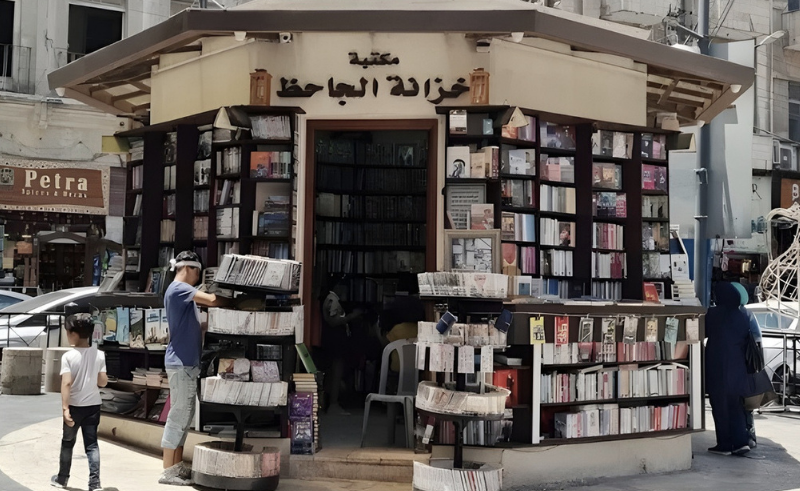
Al-Jahith’s Treasury — Amman, Jordan
Tracing its origins to the 1890s in Karak before moving through Jerusalem and ultimately settling in Amman in 1948, Al-Jahith’s Treasury is a multi-generational family-run bookstore founded by the al-Maaytah family. Operating continuously across four generations, it has survived Ottoman rule, the fall of the British Mandate, and regional conflict, evolving into one of Amman’s most historic literary spaces. Known for its vast archive of rare manuscripts and its long-standing lending tradition, the bookstore remains a living institution dedicated to making books accessible to all.
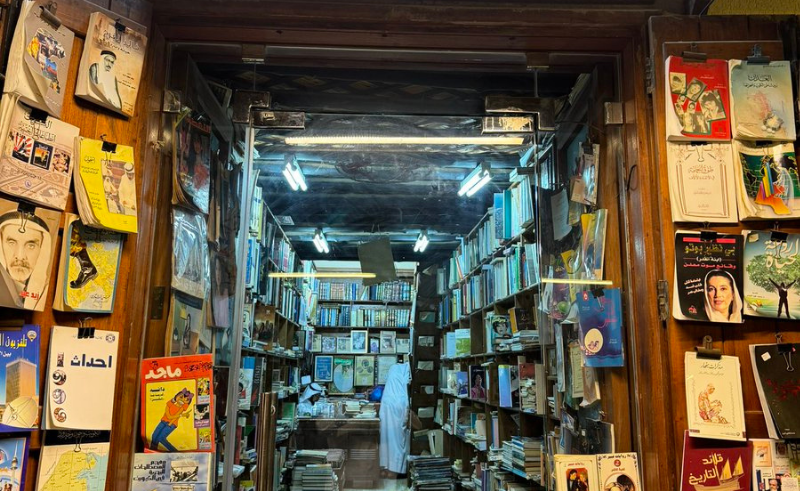
Al Ruwayeh Bookstore — Kuwait City, Kuwait
Established in 1920 in the heart of the Old Market, Al Ruwayeh Bookstore is among Kuwait’s longest-running cultural institutions. A central stop for periodicals and books throughout the 20th century, it helped shape the reading habits of generations in Kuwait. Its longevity—through modernisation, shifting media, and urban change—makes it not just one of the country’s oldest bookshops, but one of its most enduring witnesses to the evolution of reading culture.
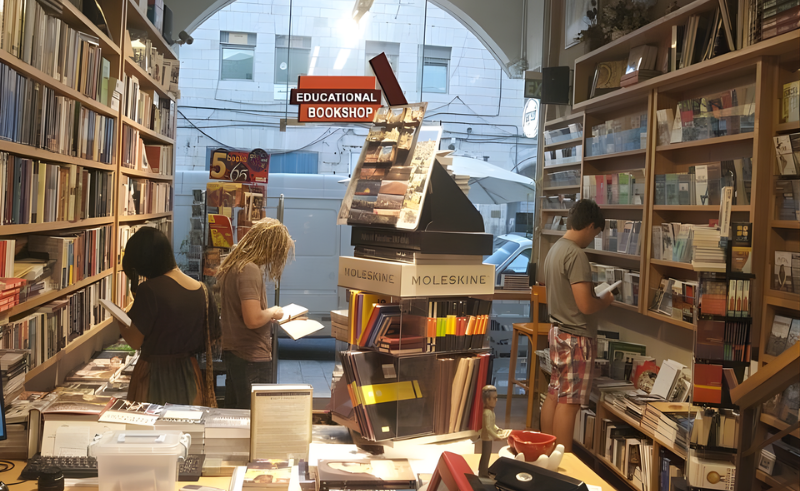
Educational Bookshop — Jerusalem, Palestine
In the heart of holy lands, history, and turmoil, the Educational Bookshop in Jerusalem is one of the most important spots in the world. Established in 1984, it welcomes architects and journalists from all over the world not only to read, but to trace, through its shelves, the spatial language of occupation and resistance.