




A Tetouan Family Funded This House Museum With No State Help
Once shuttered for two decades, a 1927 family home in Tetouan's medina has now been fully restored into a museum tracing the city's history through paintings, postcards and stamps over four centuries.
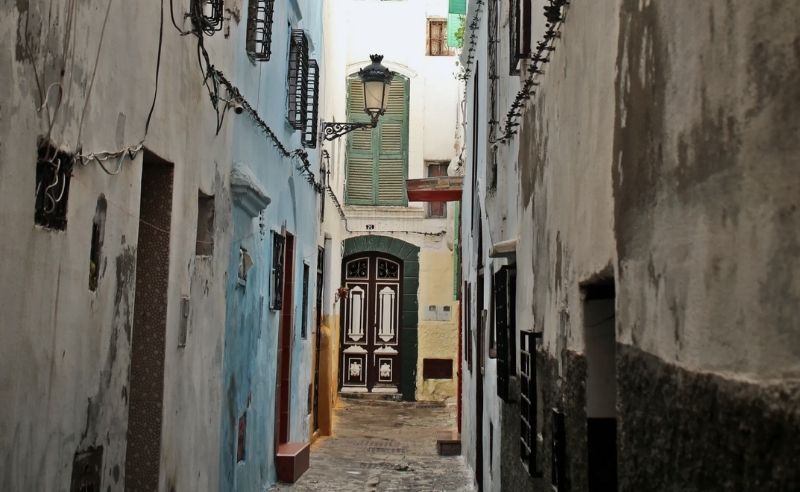
Tetouan rarely makes anyone's short list of Moroccan cities, despite having run, for four decades of the twentieth century, as the administrative capital of the Spanish protectorate, the seat from which northern Morocco was governed from abroad.
An hour's drive from Tangier, its medina was founded in the fifteenth century by Muslims and Jews fleeing Spain and is now a UNESCO World Heritage Site.
Most visitors arrive knowing none of this. A museum near the centre of the medina was built with exactly that gap in mind.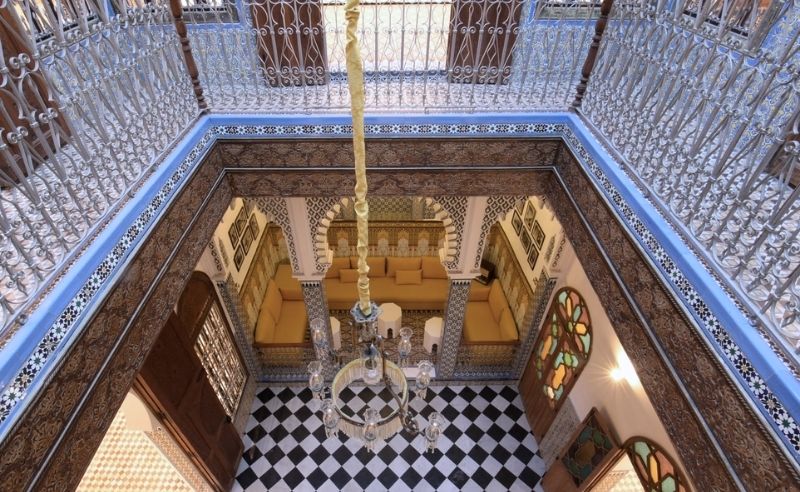 In a column published in late July, the Moroccan writer Fouad Laroui described wandering into a house in the Tetouan medina and finding, behind an unmarked door, what he called an example worth following.
What struck him more than the four centuries of the city held inside was how the place had been paid for. No money had come from the city, the state, or the ministries of culture or tourism. The entire restoration, and everything on its walls, had been funded by one family.
Laroui went on to note that some four hundred family houses in the Tetouan medina are said to be crumbling for lack of exactly this kind of investment, complicated further by inheritance laws that leave properties divided among scattered heirs. Dar El Oddi, he suggested, is what it looks like when one family finds a way around that.
The house was built in 1927 by Ahmed El Oddi, a gold and spice trader who did business with England. Generations of the family lived there after him. Then in 1991 the doors closed, and stayed shut for twenty years.
"It's a family house par excellence," said Salma Omrani, who manages the space today, a tidy way of saying nobody built the house to be looked at.
That changed around 2011, when Ahmed's grandson Jalal decided the house should reopen. His brother Nawfal, an engineer, took charge of the renovation and overruled every specialist who suggested modernising the foundation. "Everything you see today is original," Omrani said.
The restoration itself took three years. Sourcing the images and building the seven-room exhibition around them took considerably longer than that, and it was another few years before the doors actually opened to the public.
Jalal never set out to restore a house. He set out to find pictures of Tetouan, and discovered there weren't any left in the city.
Most had left Morocco during the decades of the Spanish protectorate, when the city's images circulated through Spanish and European institutions and were never returned. Jalal wrote to the institutions holding them and asked for reproductions.
One of the paintings that came back was by Mariano Bertuchi, a Spanish-born painter who settled in Tetouan in 1928 and remained there until his death in 1955, after years spent travelling through Granada, Málaga, Tangier and other Moroccan cities that shaped his early style. He became the founder of what would grow into Tetouan's Institute of Fine Arts. "He's a very important figure in Tetouan," Omrani said.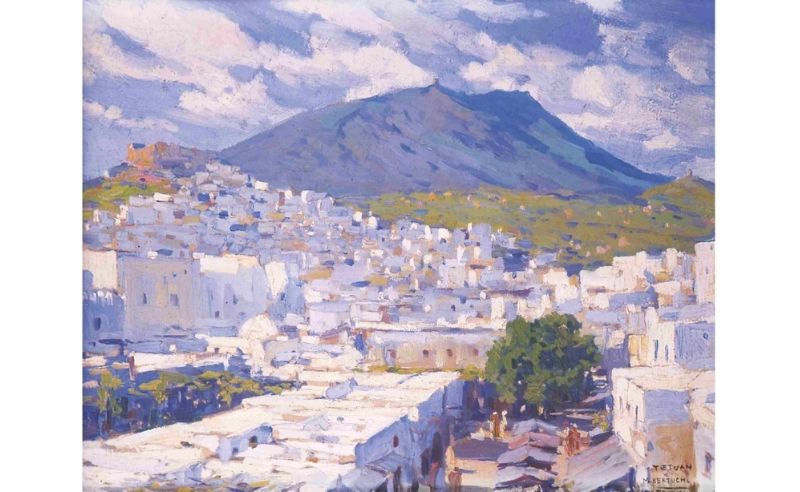 The pictures kept arriving faster than anyone had somewhere to put them, and the family house eventually solved that problem too, though putting seven rooms of it together properly was its own slow undertaking.
It opened to the public in July 2018. Mohamed Laaraj, Morocco's Minister of Culture and Communication, attended the inauguration, which closed with a concert of Andalusian music.
Inside, the architecture makes its own argument before any exhibit does. "The house is half Tetouan, half Spain," Omrani said, a legacy of the era when the city served as the seat of the Spanish protectorate, from 1912 to 1956, and absorbed Spanish tastes alongside Moroccan ones.
The Moroccan half is in the layout, the woodwork, the gypsum carving. The Spanish half is mostly underfoot. "We don't have traditional zellige tiles," Omrani explained, referring to the mosaics of small, hand-cut, glazed tiles set into geometric patterns that are common across Moroccan architecture. "What we have are tiles cut into squares, patterned the same way zellige is."
A fountain set into the wall instead of the courtyard floor, and glass ceilings where Tetouan houses of that era usually left the sky open, round out the departures. Nothing was added to compensate.
An old radio from the 1960s still sits where the family once gathered to listen to Umm Kulthum, and the family photographs on the walls exist mainly to answer the question visitors keep asking: did people actually live here?
They did, and the seven rooms of the permanent exhibition, "Visions of Tétouan, 16th–20th Centuries," pick up the story from there. "The first room covers the Tetouan landscape, specifically between the 16th and 20th centuries," Omrani said. "The oldest picture here dates back to 1575."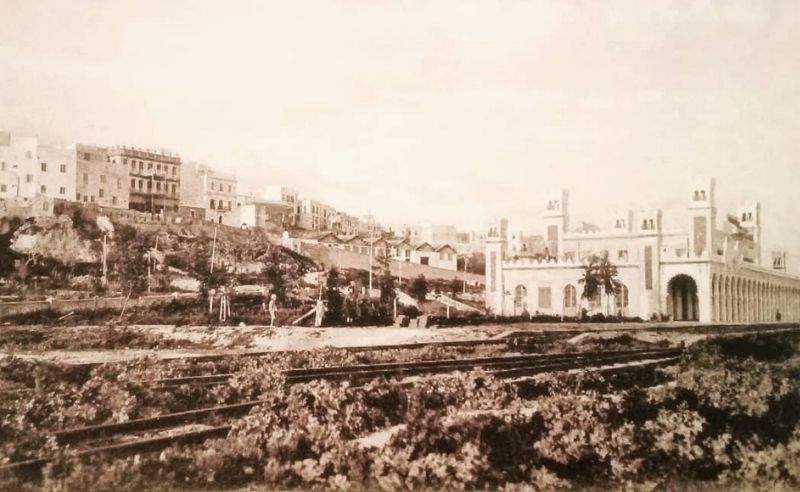 Four of the seven rooms are devoted to paintings, engravings, and postcards; a fifth holds the stamp collection; a sixth gathers other period formats, including posters, magazines, and books; the last is set aside for the story of the house's own restoration.
The collection totals roughly 120 images by around 40 artists, mostly Spanish, French, British and German, alongside 350 postage stamps and 200 postcards.
Together, the museum says, they document the city between 1525 and 1955, including work by the Danish writer and diplomat Georg Høst and the German landscape painter Paul Emil Gabel. Wall text and an accompanying booklet run in Arabic, Spanish, French, and English.
There is a patio for tea, a small shop, and the hidden stamp room, which more than one visitor has singled out as the unexpected highlight of the visit.
Dar El Oddi is at 5, Derb Oddi, open Tuesday through Sunday, 10 a.m. to 6:30 p.m. Admission is 25 dirhams.
"Anyone who wants to see the real Tetouan should start the journey here, then go out and explore," Omrani said. The museum was built to send people out the door with questions, not answers, on whether the city outside still looks like the one on the walls.
Eight years on, the doors are still open, funded the same way they always were, by the Oddi family alone, with nothing from the city, the state, or the ministries Laroui named.
Sending visitors out with more questions than answers, it turns out, is the easy part. Keeping the lights on, while some four hundred houses in the same medina continue to fall apart for lack of anyone willing to do what the Oddi family did, is the part without an ending yet.